Michael Cohen has information ‘of interest’ to Mueller: lawyer

news image

Michael Cohen, the former lawyer of US President Donald Trump, who pleaded guilty on Tuesday to campaign finance violations, may have “information that would be of interest” to the special counsel investigating Russian attempts to interfere in the 2016 presidential election, according to his lawyer. 

In a series of interviews with US television outlets on Wednesday, Lanny Davis said he believes his client has information that would be of interest to Special Counsel Robert Mueller, suggesting in an interview with MSNBC that it was directly tied to Russian efforts to interfere in the 2016 election. 

Cohen has “information … regarding both knowledge of a conspiracy to corrupt American democracy by the Russians and the failure to report that knowledge to the FBI”, Davis told MSNBC. 

On CNN, he added that his client “has knowledge that would be of interest to the special counsel about whether Donald Trump knew ahead of time about the hacking of emails.” 

Mueller is investigating Russian attempts to influence the 2016 election and whether there was any cooperation or links with the Trump campaign. 

Trump lashes out

On Wednesday, Trump lashed out at Cohen, as well as the Mueller investigation, tweeting it was an “witch hunt”, a phrase he has repeatedly used in the past.  

One tweet specifically referenced the trial of Paul Manafort, Trump’s former campaign chairman, who was convicted of eight financial crimes on Wednesday in a case stemming from the Russia probe. The judge declared a mistrial on the 10 other counts the jury could not agree on. 

“A large number of counts, ten, could not even be decided in the Paul Manafort case. Witch Hunt!” Trump tweeted. 

Trump also tweeted that he feels “badly” for Manafort, saying “tremendous pressure” was put on him and “unlike Michael Cohen, he refused to ‘break’ – make up stories in order to get a ‘deal’.” 

There has been no indication that Cohen will talk to or cooperated with Mueller’s team. 

Implicates Trump

In addition to pleading guilty to campaign finance violations, Cohen also admitted to tax and bank fraud. 

In court on Tuesday, Cohen said he made payments to influence the 2016 election at the direction of a candidate for federal office. 

Questioned by the federal judge, Cohen said he had paid sums of $130,000 and $150,000 each to two women who claimed they had affairs with Trump, acting at his boss’s request, in a bid to buy their silence “with the purpose of influencing the election”. 

Cohen did not specify the women’s names, but the sums correspond to a payment known to have been made to adult film star Stormy Daniels just before the election to silence her claims of a one-night stand with Trump – and another destined for former Playboy model Karen McDougal. 

He also did not name Trump, but said it was “in coordination and at the direction of a candidate for federal office”, and the other was made “under direction of the same candidate”.

The payments to the women could be regarded as an illegal campaign expenditure if the money was clearly meant to influence the 2016 election. Trump, on Twitter, maintained otherwise, saying, “Michael Cohen plead guilty to two counts of campaign finance violations that are not a crime.”

Trump’s personal lawyer, Rudy Giuliani, said in a statement on Tuesday that “there is no allegation of any wrongdoing against the president in the government’s charges against Mr Cohen.”

In Wednesday’s interviews, Cohen’s lawyer, Davis, also said his client would not accept a presidential pardon from Trump. “He will not, and does not want anything from Donald Trump,” Davis told MSNBC. 

SOURCE: Al Jazeera and news agencies

Read More

from Trusted eNews https://ift.tt/2MGXmj4
via IFTTT

Police radio and ambient music is an oddly calming combination

news image

This post is part of Hard Refresh, a soothing weekly column where we try to cleanse your brain of whatever terrible thing you just witnessed on Twitter.

After hours looking at a screen and dealing with whatever trash the internet has to throw at me, my brain is frazzled.

When I need to stitch my mind back together, there’s a panacea I often rely on: The oddly calming combination of police radio and ambient music. 

youarelistening.to blends never-ending streams from police scanners around the world, airport traffic control, spooky numbers stations, or even speeches from John F. Kennedy, with a playlist of ambient music from SoundCloud.

Image: mashable screenshot

It started as fluke, according to its creator Eric Eberhardt, telling FACT he was listening to police radio in San Francisco after the Giants had won the World Series in 2010, before getting bored and switching on some music.

“I started playing some electronic music from my iTunes, and that combination of the police scanner audio and the ambient electronic music that I was playing worked really, really well together,” he told the publication. “It sounded like the soundtrack to a film or something.”

Indeed, listening to the indistinguishable murmurs of humans talking over the soft atmospherics of ambient music has a cinematic quality to it.

It might just be an LAPD officer reporting a narcotics spot over the radio, or a pilot requesting to land at Sydney Airport, but the addition of gently rising strings behind their voices makes it so much more compelling. Don’t knock it until you get immersed in it.

The website has expanded to a monthly radio show on London-based station NTS, in which one episode features scanner audio around the eruption of the Kilauea volcano.

Certainly the concept of interspersing field recordings and music is nothing new. 

Musicians have immortalized recordings in albums like the seminal “Chill Out,” by British group the KLF, or in the works of Scottish duo Boards of Canada, who heavily sample public broadcasting TV of the ’70s.

But the mostly improvised nature of youarelistening.to makes for a fascinating experience, and one that my mind appreciates getting lost in after a long day. 

Https%3a%2f%2fvdist.aws.mashable.com%2fcms%2f2018%2f8%2f9ce0735b 8fda fccf%2fthumb%2f00001

Read More

from Trusted eNews https://ift.tt/2MPbWW0
via IFTTT

Halloween to premiere at Austin’s Fantastic Fest

news image


Halloween (2018)

type
Movie
Genre
Horror
release date
10/19/18
performer
Jamie Lee Curtis, Judy Greer, Andi Matichak
director
David Gordon Green
distributor
Universal
mpaa
R

Laurie Strode will be visiting this September. It was announced today that director David Gordon Green’s new Halloween (out Oct. 19) will receive its U.S. premiere on the opening night of Austin’s Fantastic Fest with star Jamie Lee Curtis in attendance. A direct sequel to John Carpenter’s original 1978 Halloween, the film finds Curtis reprising her signature role as the Michael Myers-battling Laurie Strode. “The first movie I was running more, and in this movie I’m hunting more,” Curtis recently told EW. “[You] watch this woman take back the narrative of her life.”


Other films officially added to the Fantastic Fest schedule today include Jeremy Saulnier’s Alaska-set thriller Hold the Dark, Gaspar Noé’s Climax, Timo Tjahjanto’s May the Devil Take You, Peter Strickland’s In Fabric, and Girls with Balls, in which a female French volleyball team takes on an entire countryside of maniacs.

Fantastic Fest takes place, Sept. 20-27. Learn more about the festival at the event’s official website.


Read More

from Trusted eNews https://ift.tt/2NeTkeE
via IFTTT

After Manafort conviction & Cohen plea, Donald Trump is so desperate he could do anything

news image

Chris Truax, Opinion contributor
Published 11:00 a.m. ET Aug. 22, 2018

Michael Cohen knows about all the skeletons in Trump’s closet. Manafort could begin to cooperate with Mueller. For Trump, this is crunch time.

One of the few things that all Americans can agree on regardless of their political leanings is that the non-stop barrage of scandal and controversy is getting exhausting. Once upon a time, August was the silly season when everyone, including politicians and reporters, took a well-deserved break and the news was dominated by stories about weekend traffic and water-skiing squirrels.

Alas, no longer. Yesterday, in the course of less than an hour, two separate bombshells dropped. In more innocent days, either one of these would have rocked the country for months. First, after a twelve-day trial, a jury found President Donald Trump’s ex-campaign manager, Paul Manafort, guilty on eight felony counts involving bank fraud and tax evasion. The judge declared a mistrial on ten other counts which could, if the prosecution chooses, be re-tried later. Second, Trump’s former personal attorney, Michael Cohen, pleaded guilty to eight felony counts involving one count of bank fraud, five counts of tax evasion and, crucially, two felony campaign finance violations. These last two are critical because they directly implicate the president in a felony conspiracy. Even by current standards, this is not normal.

Trump could pardon Paul Manafort

As shocking as it is, the Manafort case does not — at least not yet — implicate Trump in any illegal activity. But Manafort faces yet another trial next month and Robert Mueller, the special prosecutor tasked with investigating matters related to Russia’s interference in the 2016 election, would very much like Manafort’s assistance. So far, Manafort has refused to cooperate. But not, we can be sure, out of loyalty to Trump.

Now that Manafort is facing the possibility of spending the rest of his life in prison, there are two possibilities. He either fully cooperates in the hope of limiting his eventual sentence, or Trump pardons him. I have no idea what, if any, information Paul Manafort might have that would interest Robert Mueller. But Trump knows, and if there is any such information, Trump may well decide to pardon him and accept the political consequences. 

Michael Cohen, who was being prosecuted by the U.S. Attorney’s Office rather than Robert Mueller’s office is, if possible, an even worse nightmare for the president. First, while Cohen appears to have entered his guilty plea without any formal cooperation agreement with the prosecution, it seems clear he is pretty cooperative already. The two campaign finance felonies he admitted involved paying off Stormy Daniels and Karen McDougal which, according to Cohen’s guilty plea in open court, he did “in coordination with and at the direction of a candidate for federal office.” In other words, he made illegal payoffs to these women on Trump’s orders.

More: Paul Manafort’s conviction means only Donald Trump can keep him out of prison now

Manafort trial will test Mueller’s Russia investigation and Trump’s ‘witch hunt’ charge

Michael Cohen’s playmate payoff tape with Donald Trump puts both men in legal crosshairs

This is bad enough. These charges aren’t going to disappear. While it is extremely unlikely Trump will be indicted while he is in office — Department of Justice guidelines forbid indicting a sitting president — it is hard to imagine that the next ambitious U.S. Attorney for the Southern District of New York would not prosecute these charges. Rudy Giuliani made his name as a U.S. attorney prosecuting mobsters and insider traders. Imagine prosecuting a president of the United States.

But it gets worse. If anyone knows where the bodies are buried, it’s Michael Cohen. He was, after all, Trump’s grave digger-in-chief for many years. Whatever else may be out there, it’s all going to be in the hands of the U.S. attorney. And, unlike Manafort, Cohen was prosecuted by the regular U.S. attorney’s office which has a mandate to investigate any federal crimes they discover, whether it has anything to do with Russia or not.

Trump could undermine the rule of law

So what does all this mean? It means that, if Trump has anything to panic about, he’s panicking now. He’s likely to do something desperate and damaging: fire Mueller, pardon Manafort, pardon himself. The only thing that has restrained him so far is his fear of political retribution. But now that the fear of political retribution is being replaced by the certainty of legal retribution, there is no telling what he will do.

The next several weeks are critical. If Trump is going to take steps to interfere with Robert Mueller’s investigation or subvert the justice system through use of the pardon power, it will likely be soon. 

I don’t know what, if anything, Trump is guilty of. But I do know that no one, including Trump, is worth sacrificing the rule of law. In a way, this is all kind of thrilling. The rule of law is the cornerstone of our constitutional system of government, one of those things we learned about in seventh grade civics class and that people like Washington, Jefferson and Madison fought for. So regardless of whether, in our opinion, Trump is being treated “fairly” or not, it is something that each one of us needs to stand up for and defend. Because the rule of law is not a Republican or a Democrat thing. It’s not a liberal or a conservative thing. It’s an American thing

Chris Truax, an appellate lawer in San Diego, is on the legal advisory board of Republicans for the Rule of Law

Read or Share this story: https://usat.ly/2BBjwyX

Read More

from Trusted eNews https://ift.tt/2MPbG9u
via IFTTT

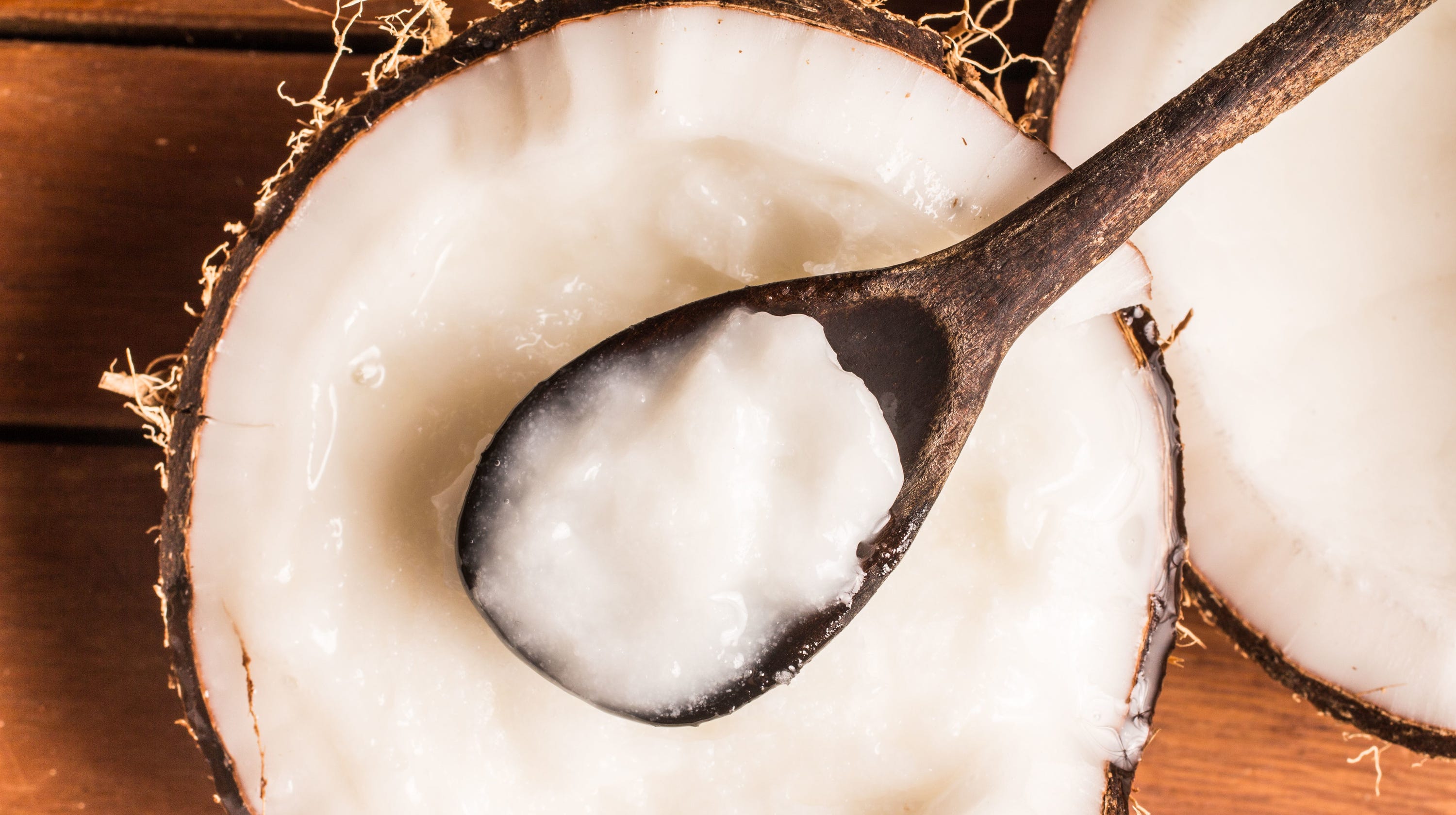
Coconut oil is ‘pure poison,’ Harvard professor says in talk on nutrition

news image

A lecture by a Harvard professor calling coconut oil “pure poison” has gone viral on YouTube, nearing 1 million views on Wednesday. 

In a talk titled “Coconut oil and other nutritional errors,” Karin Michels, who is an adjunct professor of epidemiology at Harvard T.H. Chan School of Public Health, says coconut oil is not healthy, calling it “poison” at least three times in the widely-circulated video, and “one of the worst foods” she can name. Michels is also the director of the Institute for Prevention and Tumor Epidemiology at the University of Freiburg in Germany. 

Comments for the video, which posted in July, have been disabled. 

While coconut oil has been advertised as a health food of sorts, nutrition experts say there is little evidence to back that claim. Alice Lichtenstein, a Tufts University professor of nutrition science and policy who is vice chair of the federal government’s dietary guidelines advisory committee, recently told The New York Times “there’s virtually no data to support the hype.” 

It’s not “poison,” but American Heart Association data has shown more than 80 percent of the fat in coconut oil is saturated — far beyond butter (63 percent), beef fat (50 percent) and pork lard (39 percent). 

Donald Hensrud, medical director of the Mayo Clinic Healthy Living Program, told USA TODAY last year that “there’s a disconnect between people’s general beliefs and what the data actually show.” He recommends instead using oils high in monounsaturated fats (including olive oil and avocado oil) and those high in polyunsaturated fats (such as canola oil). 

More: Coconut oil is out. These are the oils you should be using, experts say

The AHA, which advises against the use of coconut oil, recommends eating no more than six percent of saturated fat as part of total daily calories for those who need lower cholesterol. The oil has “no known offsetting favorable effects,” the AHA said in an advisory last year, and it could actually increase LDL (“bad”) cholesterol, a cause of cardiovascular disease.

But, saturated fat is a loaded term. While the AHA warns against it, people who cut saturated fat out of their diet might not necessarily lower their heart disease risk, a 2015 BMJ review suggested. That’s because some people fill the void with sugar, white flour and empty calories. Also, some fat is important to help bodies absorb nutrients from other foods.

CLOSE

Turns out coconut oil has more saturated fats than lard!
USA TODAY

Duke Behnke of The (Appleton, Wis.) Post-Crescent contributed to this story. Follow Ashley May on Twitter: @AshleyMayTweets

Read or Share this story: https://usat.ly/2LmO5rW

Read More

from Trusted eNews https://ift.tt/2P0BlcH
via IFTTT

Kyle Lafferty: Rangers recruit Hearts striker for second Ibrox spell

news image

Titles, trophies & the robot – Lafferty’s Rangers highlights

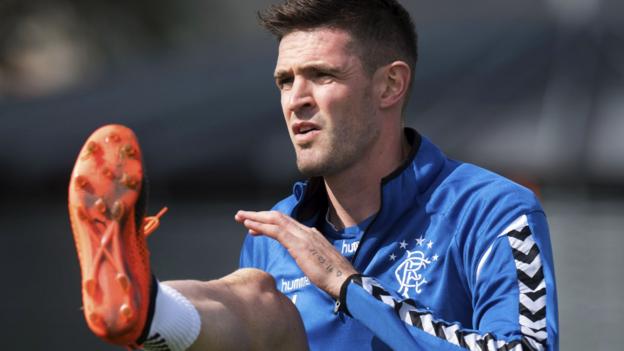
Kyle Lafferty has returned to Rangers after Hearts accepted an improved offer for the Northern Ireland striker.

The 30-year-old, who spent four years at Ibrox from 2008 to 2012, has signed a two-year deal at Ibrox.

Rangers had a bid of £200,000 rejected in July for the forward, who scored 20 goals after joining Hearts last summer.

“When a player has his mind fully set on moving, it is difficult to reach an alternative conclusion,” said Hearts owner Ann Budge.

“It is no secret that this has been a particularly difficult and drawn-out affair. But the deal will suit all parties.”

Lafferty could make his debut in Thursday’s Europa League qualifier against FC Ufa at Ibrox, with clubs permitted to register two ‘wildcard’ signings the day before a Uefa competition fixture.

Speaking before the deal was announced, Rangers manager Steven Gerrard said if it was completed in time “of course he will be available and involved”.

‘What Hearts have done for me is superb’

After Rangers’ initial bid was rejected, Lafferty conceded the lure of a return to Ibrox was strong, while acknowledging the support Hearts have given him in dealing with a gambling addiction.

“I think everyone knows I’m a Rangers supporter,” he told BBC Scotland after scoring the winner against Celtic earlier in August.

“What Hearts have done for me has been superb,” Lafferty added. “Hopefully I’ve repaid them with the goals.”

He scored 20 in his 48 appearances for the Edinburgh club, who he joined from Norwich after spells with Sion in Switzerland and Palermo in Italy.

Lafferty, who began his career with Burnley and has won 67 caps for Northern Ireland, handed his shirt to a young fan at the end of last Saturday’s League Cup win at Dunfermline Athletic, after coming on as a substitute in what proved his final Hearts outing.

He becomes Steven Gerrard’s 12th signing since taking over at Ibrox this summer.

Lafferty scored 38 goals during his four seasons at Rangers

‘Lafferty scores important goals’ – analysis

Former Rangers captain Lee McCulloch

He gives you so many options. He can play on his own and he could possibly be a great foil for Alfredo Morelos. He’s got pace, he can stretch a defence, and he has presence. I don’t see him as a prolific goalscorer but he scores important goals and I think that’s what Rangers need.

Former Celtic striker Scott McDonald

I wouldn’t imagine he would play every week, but the beauty of Kyle though is he can play in the wide areas as well, which helps the squad. He can fill in somewhere and cause chaos. I think he will be a great addition.

Read More

from Trusted eNews https://ift.tt/2MPbozq
via IFTTT

Bobi Wine’s arrest and what it could mean for Uganda

news image

Kampala, Uganda – There’s only a few bars of uplifting music before Bobi Wine’s commanding voice takes over.

“This is a message to the government, expressing what’s exactly on the people’s mind,” he declares defiantly in English, before switching to Luganda.

“We are fed up of those who oppress our lives / and everything that takes away our rights / Uganda seems to be moving backwards / this is almost making hate our own nation.”

Bobi Wine, the stage name of Ugandan pop star-turned politician Robert Kyagulanyi, released Freedom late last year to protest against a constitutional amendment that proposed the removal of the presidential age limit of 75, allowing long-time President Yoweri Museveni to be eligible to run in 2021.

This is one of the many times in recent years that Kyagulanyi, 36, has used his music to address the country’s political and social issues.

Since his surprise election to parliament as an independent candidate in July 2017, under his popular “People Power” slogan, the self-styled “Ghetto President” has continued using his fame and influence to speak out against the decades-long rule of Museveni, whom he accuses of being a “dictator”.

Political tensions rose further last week when Kyagulanyi was arrested in northern Uganda and his driver was shot dead amid clashes between opposition supporters and security forces.

Kyagulanyi – as well as Museveni – was in the town of Arua to campaign for a by-election to pick a new legislator after the previous one was gunned down in June. Kyagulanyi had shown his support for Kassiano Wadri, whose popularity shot up instantly following the charismatic musician’s endorsement.

According to the president’s office, Museveni’s motorcade was pelted with stones, leading to clashes between security forces and protesters.

Kyagulanyi later uploaded an image on Twitter showing his dead driver slumped on his car seat, accompanied with a post reading: “Police has shot my driver dead thinking they’ve shot at me. My hotel is now coddoned off by police and SFC.”

Kyagulanyi, along with other opposition MPs and dozens of supporters, was whisked to prison.

Several days later, he was brought before a military court in a closed-doors session and charged with illegal possession of firearms. He is set to make another martial court appearance on Thursday.

Apart from his wife, brother and lawyer, no one else – including journalists – have been allowed to see him.

Barbara Kyagulanyi said on her Facebook page that her husband had been tortured and needed urgent medical attention.

“He was carried into the room where we saw him. He was in great pain in the left side ribs and hip. He bled a lot through the ears and through the nose. Blood stains are still visible,” she said. “I could not believe that an innocent man could be taken through all this because he has a different political opinion.”

The government has denied allegations of torture.

Museveni, who took power in 1986 and has since been elected five times, has also refuted claims that Kyagulanyi was unwell. In a statement on social media, he said that army doctors are taking good care of Kyagulanyi and that he has no serious injuries.

‘Deep concern’

Days after the arrests, sporadic protests broke out around the capital, Kampala. Police and military deployed heavily in Kamwokya, a poor area in the suburbs where Kyagulanyi grew up.

Opposition leader Kizza Besigye, who for years was the most visible opponent of Museveni before Kyagulanyi’s rise, called a press conference where he demanded for the MP’s immediate release.

He also described the situation as a state of terror that must worry all Ugandans.

“Trumped-up charges are the rule in how NRM [ruling National Resistance Movement] addresses and criminalises opponents,” he said.

“I have been charged with treason, rape, terrorism, illegal possession of guns … These people have been detained in the context of state inspired violence. The idea choreographed in the media that people had guns must be dismissed with contempt.”

The European Union expressed “deep concern” over the arrests and unrest that have “caused much suffering to citizens and damaged the image of Uganda”.

“There is no room for repression nor violence in a modern democratic Uganda,” the EU said in an official statement.

The US Embassy in Kampala also called upon authorities to respect human rights and the constitution.

“All those detained have a right to humane treatment, due process, access to lawyers and to their families, and a prompt, fair and transparent trial. Those who need medical attention should be granted immediate access to a doctor of their choice,” it said in a statement.

Nicholas Opio, the executive director of human rights NGO Chapter Four Uganda who has also been working with Kyagulanyi’s lawyers and family, said the MP’s condition was “improving”.

“He is talking and eating,” said Opio, adding that Kyagulanyi’s persecution is no surprise.

“Both Bobi Wine and Barbie knew this would one day happen,” he said, referring to the MP and his wife.

“The response of the state will make him even more popular. People power is a generational call and people are hungry for courage – for someone who can take the beating.

“With the right structures, the hunger and energy of People Power can lead to a change in governance.”

Read More

from Trusted eNews https://ift.tt/2OYLoyU
via IFTTT

Xiaomi’s Pocophone F1 is crazy cheap for what it offers

news image

Xiaomi, the Chinese smartphone brand known for affordable smartphones (and loads of other gadgets) with formidable specs, has launched a new brand. 

It’s called Pocophone, and by the looks of its first phone, the Pocophone F1, it appears it will launch similarly cheap phones with even better specs than Xiaomi. 

On the surface, the Pocophone F1 is just another Android-based iPhone clone, with a notch on top, and pretty slim bezels on the sides. On the back, it resembles OnePlus, with a plastic (or aramid fiber, depending on the trim) cover and vertically positioned dual cameras and fingerprint sensor. 

But the Pocophone surprises in terms of cost/benefit ratio. It launched in India on Wednesday starting at 20,999 rupees ($301), which is less than a third of the cost of an iPhone X or a Galaxy Note 9. And yet, it has specs that match or even eclipse those flagship phones. 

For that price, you get a 6.18-inch, 2,246 x 1,080 pixel screen, a Snapdragon 845 processor (yes, the same one that the Note 9 has), 6GB of RAM, 64GB of storage, a 12/5-megapixel rear camera, a 20-megapixel selfie camera, a 4,000mAh battery, a fingerprint sensor, an IR-based face recognition technology (meaning that it works in the dark). It also has cool little tidbits that typically aren’t found on cheap phones, such as liquid cooling. 

For 23,999 rupees ($344), you get the same phone but with 8GB of RAM and 128GB of storage. For 28,999 rupees ($415) you get 8GB of RAM and 256GB of storage, and for 29,999 ($429) you get the “Armoured Edition” of the phone, which also packs 8GB of RAM and 256GB of storage, and comes with an aramid fiber back case.  

Pocophone’s approach appears to be very OnePlus-like: Launch an affordable phone that matches the top dogs in specs, and sprinkle a little something extra on top to make it feel like a real flagship. The difference, however, is in the price. When OnePlus 6 launched earlier this year, it started at $529 for the base model, and the top trip was $629. That’s pretty good compared with, say, an iPhone, but the Pocophone F1 is so much cheaper still. 

Granted, the Pocophone F1 is a bit behind the OnePlus 6 when it comes to pure specs, as it has a nominally weaker camera and an LCD instead of AMOLED screen. And we haven’t tested the Pocophone F1 yet. From my experience with other Xiaomi phones, they do tend to be put together a bit more sloppily than phones from top brands; we’ll see if that’s true for Pocophone as well. 

The Pocophone F1 doesn’t appear to be headed to the U.S., at least not at this point — in fact, Xiaomi in general hasn’t made any moves in that direction lately. But its first phone is impressive, and it’ll be very interesting to see what the Pocophone brand does next. 

Https%3a%2f%2fvdist.aws.mashable.com%2fcms%2f2018%2f8%2f660f3109 1cdd 1ac9%2fthumb%2f00001

Read More

from Trusted eNews https://ift.tt/2wcdjVd
via IFTTT

Idris Elba confirms he won’t be the next James Bond

news image

Not only did James Bond just lose his director, but he’s now apparently lost the people’s choice to take on the iconic role.

After almost a decade of rumors that Idris Elba was in line to play 007, the speculation recently ramped up once again and was even fueled by the 45-year-old actor on social media. But, at Tuesday’s premiere for his directorial debut Yardie, Elba definitively said he won’t be Daniel Craig’s successor.

When asked by Good Morning Britain if they were looking at the next Bond, Elba flatly replied, “No.”

Craig is set to drink another martini in next year’s Bond 25, which lost director Danny Boyle on Tuesday due to “creative differences.”

And while Elba won’t portray Bond, fans will still get to see him as a popular British law enforcement character. Later this year, the actor returns for a fifth installment of Luther, the BBC series that has earned him four Emmy nominations.

Watch the full video above.

Read More

from Trusted eNews https://ift.tt/2Lkzygp
via IFTTT

Mollie Tibbetts murder case: Here are the facts on immigrants committing crimes in US

news image

CLOSE

Police are charging a Mexican immigrant with first-degree murder in the death of 20-year-old Mollie Tibbetts. She went missing on July 18 while jogging in her hometown of Brooklyn, Iowa.
USA TODAY

The arrest of an undocumented immigrant in the murder of a 20-year-old Iowa college student has reignited a debate over the dangers — real and perceived — posed by illegal immigration.

During a Wednesday morning discussion about the case on Fox & Friends, a favorite of President Donald Trump, commentator Tomi Lahren summed up what many conservatives have been arguing since it was revealed that the man charged with killing Mollie Tibbbets had entered the country illegally from his native Mexico.

“Illegal immigration kills Americans,” Lahren said. “It’s Mollie Tibbetts (today), and it could be your daughter, your sister, your friend tomorrow.”

Missing from that discussion was any proof that immigrants are more likely to commit crimes or acts of terrorism than native-born Americans. Immigration experts, including academic researchers, have said that’s because all available national crime statistics show immigrants commit fewer crimes, not more, than those born in the U.S. Even opponents of increased immigration lack evidence linking immigrants to higher crime rates. 

“There’s 100 years of data from all different sources that all point in the same direction,” said Walter Ewing, senior researcher at the American Immigration Council, which advocates on behalf of immigrants. “If you don’t believe one study, there’s 10 more behind it that say the same thing.”

Ewing and others acknowledge that assessing the criminality of immigrants has always been difficult because statistics are hard to come by. Local police do not list the immigration status of those arrested, meaning it’s impossible to determine exactly how many crimes are committed by legal immigrants, undocumented immigrants and native-born citizens.

Immigration researchers have spent decades trying to work around the problem.

One method uses prison data to determine the immigration status of convicted criminals. Those who are foreign-born make up more than 13 percent of the U.S. population, but the Department of Justice released a report in January that found only 5.6 percent of inmates in federal, state and local prisons are foreign-born. 

The libertarian Cato Institute used similar data when it concluded that the incarceration rate for native-born Americans is 1.53 percent compared to 0.85 percent for undocumented immigrants and 0.47% for legal immigrants. When Cato subtracted people in prison solely for immigration violations, the incarceration rate for undocumented immigrants fell to 0.5 percent.

Ewing used another approach to look at national immigration trends. From 1990 to 2013, both legal and undocumented immigrants came pouring into the U.S. The percentage of the U.S. population that is foreign-born increased from 7.1 percent to 13.1 percent. Yet over that time, violent crime rates plummeted 48 percent across the country.

In 2014, a team of university professors took a different approach. They examined crime habits of juveniles convicted of felonies in Arizona and Pennsylvania. Their study found that native-born juveniles were more likely to become repeat offenders than immigrant juveniles.

Department of Homeland Security statistics offer another way to look at the question. Nearly 800,000 undocumented immigrants brought to the country as children have received deportation protections under the Obama-era Deferred Action for Childhood Arrivals (DACA) program, which Trump is in the process of ending.

DACA enrollees are required to maintain a clean criminal record to remain in the program. In the six years since the program started, only 2,127 DACA enrollees (0.27%) have been removed from the program after committing crimes or being identified as gang members, according to data from Homeland Security. 

Jessica Vaughan of the Center for Immigration Studies, a group that has advised the White House on ways to limit legal and illegal immigration, said each of those approaches contains significant flaws. For example, she said the number of immigrants in U.S. jails and prisons may be low because some criminal immigrants get deported and others are released into the community by so-called “sanctuary cities.” 

Vaughan’s team has researched the question of immigrant criminality for years and concluded it’s impossible to determine whether immigrants commit crimes at a higher rate than the native-born. Vaughan said the answer doesn’t even matter.

“Kate Steinle’s parents I’m sure don’t care one bit whether the crime rate in San Francisco is higher or lower than anywhere else,” she said, referring to the 32-year-old who was shot and killed by an undocumented immigrant in 2015. “The issue is not crime rates. The issue is what we do with that small fraction of immigrants that is committing crimes and causing problems.”

Trump repeatedly mentioned Steinle’s death on the campaign trail. And during his State of the Union Address in January, he introduced the parents of two teen girls killed by undocumented immigrants allegedly belonging to the MS-13 gang, an international gang formed in Los Angeles and mostly made up of Salvadoran immigrants.

Moira O’Neil, who studies the public perception of immigration for the FrameWorks Institute in Washington, D.C., noticed how Trump used the age-old tactic of repetition during that speech to drive home his point. He mentioned the MS-13 gang four times, and said the word gang five times.

“It’s very effective,” said O’Neil, who studies the public perception of immigration for the FrameWorks Institute in Washington, D.C. “People are hearing that over and over and over again.”

O’Neil said immigration advocates have not been able to match the Trump administration’s rhetoric when framing the immigration debate. She said Trump has been hammering the idea that immigrants are criminals, while Democrats and other immigration supporters have been unable to keep up.

As a result, she said the public may associate immigrants with crime, leading to a stereotype that sticks.

“Think about it like exercising,” O’Neil said. “Every time he says MS-13, that association between immigrants and criminality is being activated in their minds. The way to counter that is to remind people of a very positive vision that lots of people have about immigrants. They are us. They are human beings.”


Read or Share this story: https://usat.ly/2w6k7U1

Read More

from Trusted eNews https://ift.tt/2w5LsWF
via IFTTT

Design a site like this with WordPress.com
Get started