In John McCain’s final resting place, his legacy isn’t politics but a life of service

news image

CLOSE

John McCain chose the United States Naval Academy Cemetery as the place he will lay rest. He’ll lie next to his former classmate and lifelong best friend.
USA TODAY

ANNAPOLIS, Md. — He will overlook the Severn River, surrounded by birds chirping from the large maple and sycamore trees that flank his final resting place.

At the bottom of a green hill speckled by hundreds of gravesites for Naval lieutenants, midshipmen, commanders and admirals — some of whose service concluded centuries ago — Sen. John McCain will have a front-row view of sailboats and ships passing on the river while a new generation of naval officers play soccer on Sherman Field at the U.S. Naval Academy.

It’s the place where his career began. It’s where he wanted it to end. 

McCain died Saturday evening after a year-long battle with a rare form of brain cancer. He was 81. He will be buried at the U.S. Naval Academy Cemetery.

MoreSen. John McCain, American ‘maverick’ and political giant, dies at 81

MoreJohn McCain’s top quotes through the years

His legacy here in Annapolis isn’t focused on his six terms as an Arizona senator or his two presidential bids. In the place where he will be put to rest, McCain is thought of as a national treasure, a respected hero and one of the city’s most prized naval officers in recent memory. 

“It’s not necessarily political,” Amy Bleidon, a 1998 Navy Academy graduate, said of McCain’s legacy.

Autoplay

Show Thumbnails

Show Captions

Rather, she added, he will be remembered in the community for both his “lifelong service” to the country and as a leader who exemplified the respect and character the Navy instills in its officers. 

“That lifelong devotion I think is what made him so well thought of by everyone,” she added.

Bleidon, who jogs through the large, colonial-style campus every weekend, says this is the place where so many, including herself, “grew up” and matured. 

That’s what it seems the academy did for McCain, who was a well-known rebel when he attended.

The future senator stuck his nose up at the strict rules of the school, drawing demerits, but just as many friends who gravitated to his quick wit and adventurous ways. His rebel attitude would later inspire his “maverick” persona.

He was one of the most popular midshipmen in his 1958 class, becoming a legend of sorts because of his no-rules attitude. 

It was at the academy where McCain met who would become a lifelong friend, Charles “Chuck” Larson.

Autoplay

Show Thumbnails

Show Captions

The pair were known as the “odd couple.” McCain was nicknamed “McNasty” for his no-rules attitude that in-turn left him near the bottom of his graduating class, while Larson was a high-achieving naval student who scored good grades. McCain has said he always looked up to his friend. 

Larson grew up in Nebraska and rose from an aviator, flying missions in Vietnam, to naval aide to President Richard Nixon. He twice served as the superintendent of the U.S. Naval Academy. 

McCain, meanwhile, served during the Vietnam War, surviving at least two near-death encounters, including five years as a prisoner of war, before his transition into politics. 

McCain and Larson remained close friends over their careers and will stay close even in death. 

Larson died in 2014 at age 77 and was buried at the Naval Academy Cemetery in Annapolis. Before his death, McCain picked a burial plot right next to his, both at the edge of a hill overlooking the Severn River.

McCain’s resting place was marked Saturday afternoon with two wooden stakes, one marked with the location and McCain’s name. Parked in the middle of the plot was an orange cone.

A Navy hat and American flag sat nearby at Larson’s grave. 

“It’s really only fitting,” said Navy lieutenant Raymond Dennis, gazing out at the cemetery. “He’s so loved here and celebrated. I mean, he was a prisoner of war, tortured for five years, then continued to serve our nation. This is his home and where he should spend eternity.”

Annapolis is a Navy city. The downtown streets are sprinkled with officers in their white uniforms. And McCain seems to be taught almost like a school lesson. His biography is memorized like trivia by many, including Dennis. 

As his dog, Maverick, dried off from a swim in the Severn River, Dennis said many young naval officers jog through the cemetery as almost a guide through history, remembering the leaders of yesterday. 

“It’s a way for them to connect with the past,” he said. “I’m sure everyone here will want to maintain that closeness with McCain and his legacy.”

That legacy and his code of honor is what so many at his alma mater say defined him over any headline or any political maneuvering. 

It’s what made him likable to nearly everyone, no matter political affiliation or beliefs. 

“Everyone can learn from him, that sense of resilience and decency and respect,” Dennis added. “It’s very sad. I think his death will cause a void.” 

Read or Share this story: https://usat.ly/2wfdgYz

Read More

from Trusted eNews https://ift.tt/2Nko527
via IFTTT

Jemele Hill to leave ESPN in September, per reports

news image

Jemele Hill’s run at ESPN will end Friday as she and the company have reached a buyout of her contract, according to multiple reports. ESPN declined comment.

Hill, who left the 6 p.m. SportsCenter earlier this year, has become one of, if not the most controversial Bristol talent in recent times. Last September she tweeted that President Donald Trump was a “white supremacist” leading to the White House to call for her firing during a press briefing. Last October she was suspended after criticizing Dallas Cowboys owner Jerry Jonesand pointing out what would be an effective way to hurt his pocketbook.

Since leaving SportsCenter, Hill has been far from the public’s eye at The Undefeated. Anyone paying attention has known this day was coming, as the marriage had become hopelessly strained. She was a bad fit at this ESPN, the version of seemingly afraid to be seen as overly political. The one timid in the face of bad-faith actors.

There’s no doubt she pushed the envelope when it came to expressing personal views. There’s no doubt she upset a huge faction of the country by going after those in power. But one wonders why she became the avatar for the “stick to sports” crowd’s rage. She is not the only ESPNer who dips into social, racial, and political issues. She’s just the one who paid the most public price.

Hill’s departure comes after 12 years at the company. It may be the best thing for her personally, as there’s undoubtedly a place for her on cable news or another outlet willing to let her speak freely. Her legacy will be a complicated one, and much of it will hinge on what ESPN does in the future to solve its political problem. Or, if one day it decides it’s not a problem at all.

Read More

from Trusted eNews https://ift.tt/2PFMaBR
via IFTTT

Motherwell 3-3 Rangers: Steven Gerrard’s side 11 unbeaten

news image

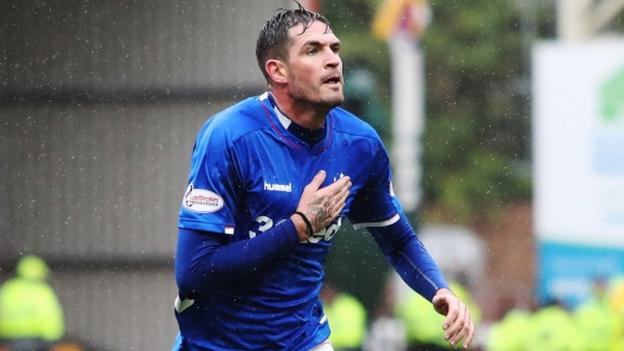
Peter Hartley (second left) tapped home an injury-time corner to earn Motherwell a point

Peter Hartley’s 94th-minute goal denied Rangers a win at Motherwell, but Steven Gerrard’s side still stretched their unbeaten record to 11 matches.

Hartley, who apologised on Friday after saying it was “fun to watch” ex-Rangers defender Fabio Cardoso “weeping” after breaking his nose against Motherwell last term, tapped in a stoppage-time corner in a frantic conclusion to a gripping contest.

Gerrard’s men had trailed twice, for the first time in his tenure, to goals by Danny Johnson and Carl McHugh.

But a double from Kyle Lafferty – a volley and a header – brought the visitors level, before Ovie Ejaria had put them 3-2 ahead at the end of a stunning opening half.

The two dropped points left Rangers four points behind early Scottish Premiership frontrunners Hearts as they enter another taxing week.

Gerrard’s side take a 1-0 lead to Russia for Thursday’s second leg of their Europa League play-off tie against FC Ufa, before the first Old Firm game of the season next Sunday at Celtic Park.

Motherwell’s first league point of the season moved them off the bottom of the table.

Rangers’ defensive solidity unravels

Rangers’ rearguard have earned deserved praise for their resolve so far this season, with only four goals conceded in their first 10 competitive games under Gerrard.

But they looked anything but solid in the opening stages, breached twice inside 18 minutes as Motherwell set about reversing a run of 40 matches since their last league win over Rangers on Boxing Day 2002.

Richard Tait’s long ball should have been dealt with comfortably, but Connor Goldson slipped horribly to allow Johnson in to lift the ball left-footed over the advancing Allan McGregor.

Chris Cadden’s dangerous ball across the face of the Rangers box might also have found a recipient as the hosts rediscovered some of last season’s vigour.

If Goldson’s error was unfortunate, the marking for Motherwell’s second was non-existent. Gael Bigirimana swung in an enticing free-kick, but McHugh was given the freedom of Fir Park as he steered a precise header into the far corner.

After a fitful second half punctuated by stoppages, Motherwell laid siege to the Rangers goal in the final 15 minutes, with Hartley heading over and Curtis Main nodding a good chance wide.

Their onslaught paid off in the fourth minute of injury time as the visitors failed to deal with another set-piece.

Bigirimana’s corner from the left eluded everyone and the unmarked Hartley could hardly miss from three yards out.

Lafferty’s second coming

Lafferty, given a second full debut for Rangers 10 years after his first, was clearly eager to make an early impression, and his partnership with Alfredo Morelos offered plenty of promise as Motherwell’s back three struggled to cope.

An early header forced Trevor Carson into a save, but the Northern Ireland striker did not have long to wait for the first goal of his second Ibrox spell.

When Hartley’s headed clearance fell to him on the edge of the area in the 15th minute, Lafferty showed superb technique to volley it right-footed into the net with the help of a deflection off Tait.

Lafferty’s second arrived seven minutes before the interval to restore parity for a second time. This time his movement to the front post eluded Tom Aldred and he buried James Tavernier’s superb in-swinging cross with a downward header.

Incredibly, Rangers were in front by half-time. Borna Barisic, who provided a regular supply of ammunition from the left flank, found Ejaria on the edge of the Motherwell penalty area.

The 20-year-old midfielder, on loan from Liverpool, controlled the ball with his first touch before turning and curling an effort towards the right corner. Carson got a hand to it, but the Motherwell keeper could not prevent it bouncing over his line.

Kyle Lafferty bagged two goals on his first start since returning to Rangers, the first a sweet volley

‘Slip-ups, square-ups & goals to remember’ – analysis

BBC Scotland’s Chris McLaughlin at Fir Park

What a game. What stunning entertainment in the pouring Lanarkshire rain. From the start it was obvious this was never going to be ordinary. The Goldson slip and the early goal set the scene and what follows left everyone inside Fir Park breathless.

We got slips-ups, square-ups and goals to remember; debut strikes and a last-minute leveller to make amends for unwise words. This one had just about everything.

Both managers feel they should probably have taken more, but any neutral watching will tell you a point each was fair.

When the dust settles, both bosses will look at the positives.

Rangers showed good mentality to fight back from a goal down, and then looked like the side who might run away with it. And Motherwell showed again what made them feared by many last season – a group of players up for the physical fight but also more than capable of playing football.

A cracking advert for the Scottish game. More of the same please.

Read More

from Trusted eNews https://ift.tt/2Nhkrpr
via IFTTT

Between bureaucracy and violence, Pakistanis in Greece push back

news image

Athens, Greece – Well before the sun came up on January 17, 2013, Shahzad Luqman woke up, hopped on his bicycle and took off for work in a suburb of the Greek capital, Athens.

The 27-year-old Pakistani, who had been in Greecefor six years, was going from his home in the Peristeri neighbourhood to nearby Petralona to unload oranges at the farmers market.

Undocumented & under attack: Pakistani migrant workers | This is Europe

But before he could reach work, he was stabbed seven times and left to bleed out in the street.

When police swept the homes of the killers, they found leaflets published by Golden Dawn, the Greek neo-fascist party that currently has 16 seats in the country’s parliament.

The incident wrought trauma in Greece’s migrant community, particularly among Pakistanis, who are estimated to be around 50,000 in number and have been migrating in ebbs and flows to the Mediterranean country since the 1970s.

Javied Aslam, the 50-year-old president of the Pakistani Community of Greece and head of the Union of Immigrant Workers, remembers the day Luqman was killed as a turning point.

“They [had] targeted and attacked around 1,000 workers. And not one Golden Dawn member was punished until Luqman was killed and his two murderers were arrested,” Aslam told Al Jazeera.

“That was the first time anyone from their party was arrested.”

Five years later, Aslam said migrant workers continue to bear the brunt of far-right violence.

In 2017, the number of hate crimes motivated by race, skin colour and national origin almost tripled compared to the year before, according to police.

Qamar Zaman was among those attacked when he got off a bus in Athens. A group of young Greeks followed him, beat him up and fled with some of his belongings when passersby approached.

“My life was saved because of that [people approaching],” said Zaman. “Otherwise, I would’ve probably died.”

Read More

from Trusted eNews https://ift.tt/2PFpjGP
via IFTTT

Taylor Swift sang ‘Tim McGraw’ with Tim McGraw and Faith Hill

news image

Image: Jon LeMay/ABC via Getty Images

When you think Tim McGraw, you probably think Taylor Swift too. 

Her first single, “Tim McGraw,” had a big moment on Saturday night thanks to a special appearance by McGraw himself, along with Faith Hill. The country music power couple joined Swift in Nashville — where it all began for her — and fans went absolutely nuts. 

Swift sang the first half of the love song with Hill, before introducing “the actual Tim McGraw” to finish it off in front of the sold out crowd.

Swift first wrote the song in high school, and since then has performed other material with McGraw and Hill over the years as her career has taken off. She even opened for the couple on tour in 2007, which made this Nashville moment a special one. 

The significance of it all sunk in with fans during and after the show, and many tweeted excitedly about the performance. 

Until the next time this magical moment happens, we’ll just be watching this classic on loop. 

Https%3a%2f%2fvdist.aws.mashable.com%2fcms%2f2018%2f8%2ff866b889 8089 2772%2fthumb%2f00001

Read More

from Trusted eNews https://ift.tt/2PCDWuh
via IFTTT

I lost my husband to cancer. I’m forever thankful he didn’t choose assisted suicide.

news image

Kristen Hanson, Opinion contributor
Published 6:00 a.m. ET Aug. 26, 2018

The so-called “death with dignity” movement gives in to despair and preys on terminally ill patients when they are most vulnerable.

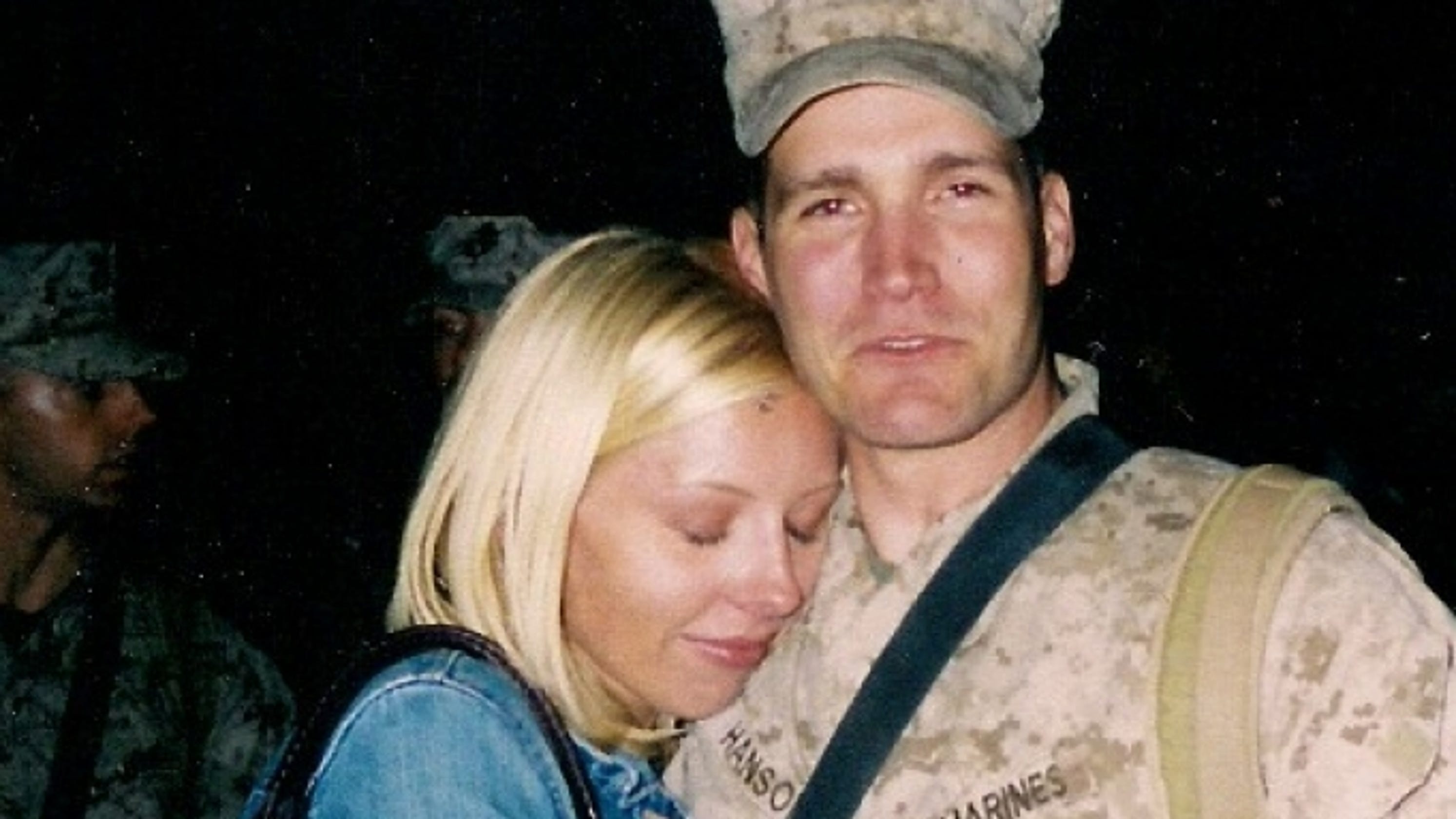
On Dec. 30, 2017, as snowflakes fell outside his window, my husband and the love of my life, J.J. Hanson, took his last breath. He was 36 years old. I was with him, holding our two young sons in my arms. We had known the day would come — J.J. had been living with terminal brain cancer for three and a half years. But that was more than three years longer than his doctors had expected.

Learning you or a loved one has a terminal illness is devastating and scary. In our case it was also a shock. J.J. was a Marine Corps veteran of Iraq, a new father, and he had a job he loved. We were living the American dream and thought we had a long future ahead of us, until we learned J.J. had stage 4 glioblastoma multiforme, one of the most aggressive and deadliest forms of brain cancer.

Living through that kind of illness day-to-day is a constant struggle that requires immense courage and great strength. J.J. had both. But even then, he — like many people who receive terminal prognoses — went through dark periods of depression.

Struggling against despair

Our struggle was taking place around the same time Brittany Maynard’s story made headlines across the country. Maynard suffered from the same cancer as J.J. and was roughly the same age, but she famously decided to end her own life through assisted suicide in Oregon and to advocate its legalization in her home state of California.

I didn’t know it then, but J.J. later admitted that during his illness, he sometimes felt such despair that he may have taken a lethal prescription had it been legal in New York, where we lived, and if he had it in his nightstand during his darkest days. He was tempted to believe that ending his life would relieve the burden on his caretakers and allow him to bypass the experience of illness-induced disability that the disease would otherwise cause.

More: Am I the only mom who secretly wishes my kid won’t play football?

Don’t blame immigration for Mollie Tibbetts’ death, blame misogyny

Why — despite sexual abuse scandal — I am still a faithful Catholic

Many people who consider or go through with assisted suicide have similar fears. Data from Oregon — where assisted suicide first became legal — show the main end-of-life concerns that people considering assisted suicide report relate to existential suffering, such as becoming burdensome to caretakers and facing disability. In fact, “inadequate pain control” or concern of physical pain isn’t even in the top five reported reasons.

There’s no telling what would have happened to J.J. and our family if lethal pills were available to him during that dark period. What we do know is that, as J.J. said, the support and hope of loved ones carried him past that difficult time and toward a different conclusion than the one Maynard reached. 

Enduring in hope

Hope inspired us to try standard and experimental treatments to combat J.J.’s cancer. Those treatments extended his life beyond the initial four-month prognosis to three and a half years. If we had relied on the initial prognosis, given in to the depression and given up on hope, we would have missed out on so very much. Our oldest son, James, would never have gotten to know his father; our youngest son, Lucas, would never have been born.

Getting through his darkest moments and the temptation to despair made J.J. realize that assisted suicide presents a very real risk for terminally ill patients like him. J.J. and I resolved to fight efforts to legalize assisted suicide, laws that prey on terminally ill patients when they are most vulnerable. Assisted suicide is currently legal in seven states and the District of Columbia. This is a tragedy, and one we can prevent.

J.J. served as president of the Patients Rights Action Fund, an organization that works on behalf of patients to oppose legalizing assisted suicide. We dedicated the last years of J.J.’s life to this because we recognized the “death with dignity” movement for what it is: a well-funded re-branding of euthanasia offering nothing but a message of hopelessness.

If our experience taught us anything, it is to hold on to hope for yourself and for others around you, especially in the face of life-threatening illness. You could be improving their lives, as well as your own.

Kristen Hanson is a community relations advocate with the Patients Rights Action Fund.


Read or Share this story: https://usat.ly/2NjMXXN

Read More

from Trusted eNews https://ift.tt/2wqYNYT
via IFTTT

Belgian GP build-up: Hamilton set to be attacked by Vettel at start

news image

Belgian Grand Prix: Lewis Hamilton loses lead, Alonso crashes – Live – BBC Sport


<!–


<!–

<!–
<!–

<!–
<!–

<!–

<!–

<!–


Summary

  1. Vettel takes lead from Hamilton on first lap
  2. Alonso crashes heavily after being launched into air
  3. Alonso, Hulkenberg, Leclerc, Raikkonen out


Read More

from Trusted eNews https://ift.tt/2MTLnyL
via IFTTT

Flood-hit Kerala’s tourism industry grinds to a halt

news image

The tourism industry in India’s southern Kerala state has been hit hard as the state reels from the worst flooding in over a century that has left more than 300 people dead.

Incessant rain since August 8 caused the worst floods and triggered landslides, with the death toll reaching 445 with the discovery of 28 more bodies on Sunday.

Tourism accounts for 12 percent of Kerala’s economy and the flooding that forced tourists to cancel their trips, has brought loss to the hospitality business owners in the state. 

“I think about 75 to 80 percent of cancellations have happened during that period,” Ellias Najeeb, president of the Confederation of Kerala Tourism Industry, told Al Jazeera.

“And all the tourists that were staying in the affected areas have gone back.”

The outlook does not look great either. A similar percentage of September bookings have been cancelled. 

The flood damaged roads, rail-lines and airports, making it hard for travelers to reach their destination.

The biggest impact will reportedly be felt from October when the peak tourist season for Kerela begins.

Those in the industry expect a 20 to 25 percent drop for the season as a whole.

However, Kerala’s Tourism Minister, Kadakampally Surendran, is confident the visitors will return.

“Our industry is badly affected, it’s devasted. But I’m confident we will get our former glory back. It is going to take a lot of work,” said Surendran.

The rainfall during the June-September season was recorded as more than 40 percent higher than normal. That forced authorities to release water from dozens of full dams.

But even as the water receded, dozens of people are still missing and around a million are sheltering in thousands of makeshift relief camps, state officials said.

Read More

from Trusted eNews https://ift.tt/2LtxYsC
via IFTTT

What is Glioblastoma? The brain cancer that killed McCain is hard to treat

news image

CLOSE

Dr. Joseph Zabramski, a neurosurgeon at Barrow Neurological Institute in Phoenix, talks about Sen. John McCain’s cancer. Thomas Hawthorne/azcentral.com

It emerges from tissue cells in the brain itself, spreading like an interlocking network of tiny fingers with such speed that pinpointing treatment is chasing a moving target.

It stimulates the abnormal growth of blood vessels around itself to assure it is well fed. And even if the main body of cancerous tissue is removed and the patient is treated with radiation or chemotherapy, a few hard-to-reach cells multiply, divide and grow stronger.

Then the whole process starts again.

This is glioblastoma, the most aggressive of all tumors originating in the brain.

And though researchers have moved forward during the past decade in understanding this deadly brain tumor, the type that afflicts Sen. John McCain remains incredibly difficult to halt. 

Understanding improves, but progress is slow

There has been little progress in developing new U.S. Food and Drug Administration-approved drugs since McCain’s former U.S. Senate colleague, Ted Kennedy, succumbed to the same type of brain cancer in 2009. And it remains deadly: Half of patients with glioblastoma die within 15 months.

Nonetheless, doctors are constantly testing new drugs and drug combinations to slow the growth of these tumors after standard treatments of radiation and chemotherapy have failed.

“I think our understanding is better than it’s ever been,” said Dr. Nader Sanai, a neurosurgeon at Barrow Neurological Institute in Phoenix and director of its Brain Tumor Research Center. “Obviously, this (McCain’s) is a similar situation to Senator Kennedy’s. That was 10 years ago and the field has advanced, though in this day and age, it’s still difficult.”

Medical researchers are pressing ahead with clinical trials testing dozens of drugs, drug combinations and unique methods of delivering therapies to tumors. In Arizona alone, there are 13 clinical trials recruiting patients with glioblastoma, according to the federal government’s ClinicalTrials.gov website.

One of the foremost problems: Finding a workable drug that can reach the tumor. The brain is protected by a membrane called the blood-brain barrier that protects it and the central nervous system.

“Most experimental drugs are ineffective in reaching the area of the brain that you need to reach,” said Sanai. “The brain is designed to keep drugs out.”

Using the immune system to fight tumors

One emerging area, immunotherapy, includes therapies that prod the body’s immune system to attack the tumor. This type of therapy has been used to fight other types of cancer, and researchers are testing whether it would work in the brain.

A type of immunotherapy is chimeric antigen receptor (CAR) T-cells that are genetically engineered to attack glioblastoma. Duarte, Calif.-based City of Hope last December reported in the New England Journal of Medicine that doctors used this therapy on a 50-year-old man with glioblastoma.

The man’s brain cancer had returned six months after being halted by an initial round of surgery, radiation and the chemotherapy drug temozolomide. 

“When he came to us, he had many tumors on his brain,” said Dr. Behnam Badie, City of Hope’s chief of neurosurgery and director of its brain tumor program. “Survivability was really, really dim. You are talking weeks.”

Doctors injected genetically engineered CAR T-cells into the patient’s brain, and his tumors regressed for nearly eight months. However, tumors later spread and the patient died this spring.

City of Hope, which is affiliated with the Phoenix-based Translational Genomics Research Institute, or TGen, has enrolled about 20 patients in the study, Badie said.

“It’s not curative,” Badie said. But, he added, “We are definitely seeing changes in the biology and extending lives.”

‘Cautiously optimistic’ about ‘poliovirus’ study

Other approaches that have received widespread attention include Duke University’s “poliovirus” study that uses a modified version of the polio virus to enter glioblastoma and attack the cancerous cells from within. 

Duke’s first clinical trial enrolled 61 people with the brain tumor after initial radiation and chemotherapy failed. Of those, 20 percent are living at least two years and two people are living more than five years. 

Duke’s study team is “cautiously optimistic” about the phase one study’s results, considering half of all patients with glioblastomas that return after initial treatment die within eight months, said Dr. Henry Friedman, a neuro-oncologist and deputy director of Duke University’s Preston Robert Tisch Brain Tumor Center.

“Obviously, we are not going to jump up and down when we have an 80 percent failure rate,” Friedman said. 

Duke has launched a follow-up study of the poliovirus treatment combined with the chemotherapy drug lomustine.

‘Phase zero’ trials address barriers

Barrow Neurological Institute, meanwhile, has launched a “phase zero” study that aims to rapidly test drugs on patients whose brain cancer tumors have returned after standard treatment.

While conventional clinical trials study drugs over several years, Barrow’s program seeks to quickly test experimental drugs within months.

In this regimen, doctors give patients drugs hours or days before a surgery. When a tumor is removed, doctors analyze the genetic profile of the tumor and evaluate whether the drug penetrated cancerous tissue and slowed its growth.

Sanai said the phase zero trials seek to address two of the main barriers to developing new therapies: verifying that drugs have reached the tumor, and ensuring that the tumors have responded to the drugs. 

The latter is an obstacle in brain-cancer research because experimental drugs that are first tested and show promise in animals might not work in humans. Scientists often assume that a tumor should respond to a drug based on success in early tests in animals. But human brains, brain tumors and genetic signatures are far more complex than what scientists are able to study in animals, Sanai said.

Barrow has tested multiple drugs as part of its study, which has enrolled fewer than 100 patients.

“Currently, what you are hearing about most is immunotherapy,” Sanai said. “These trends come and go. In the end, the fundamental problems always boil down to those two issues” — drugs reaching the tumor, and the complexity of human tumors compared with animal tumors.

‘Just never give up’

A Valley-based foundation, the Ben and Catherine Ivy Foundation, has funded several brain-cancer research efforts at TGen and other research institutions. Catherine Ivy launched the foundation in 2005 after her husband, Ben Ivy, was diagnosed with glioblastoma and died four months later. 

Ivy said her foundation remains committed to supporting brain-cancer research efforts, including new diagnostic tools that can improve treatment. 

She said she was saddened by McCain’s diagnosis, though she also had some advice for the Arizona senator and his family.

“Just never give up,” Ivy said. “There’s a strong community of people working very hard to conquer this disease.”

READ MORE:

Sen. John McCain returning to Arizona to start cancer treatment on Monday

Sometimes the fight against cancer isn’t the fight we expect

Read or Share this story: http://azc.cc/2w8fztM

Read More

from Trusted eNews https://ift.tt/2wpFbo2
via IFTTT

Watford v Palace – plus your mascot stories

news image

Watford v Crystal Palace, Fulham v Burnley & Newcastle United v Chelsea live – Live – BBC Sport


<!–


<!–

<!–
<!–

<!–
<!–

<!–
<!–

<!–
<!–

<!–

<!–

<!–


Summary

  1. Listen to Watford v Palace on BBC Radio London & online
  2. Watford unchanged, Palaces’ Tomkins injured in warm-up & replaced by Kelly
  3. Listen to Newcastle v Chelsea (16:00 BST) on 5 live & online
  4. Blues have two wins from two under Sarri in league
  5. Fulham v Burnley (16:00 BST) – both sides looking for first win


Read More

from Trusted eNews https://ift.tt/2PGGmbB
via IFTTT

Design a site like this with WordPress.com
Get started