Apple’s iPhone XS will be historic, but not for the reason you think

news image

Someone once described the iPhone as a window into our digital lives. Apple’s job, in designing it, is to make that window as large and transparent as possible — preferably to the point where you don’t even know it’s there. The device, in other words, should simply get out of the way.

The hardware does this in numerous ways. To name just a few: A fast processor means web pages and apps launch faster, reliable wireless connections mean your AirPods “just work” when you put them in your ears, and the sophisticated touchscreen lets you use simple, natural gestures (like swiping down on a photo to “close” it) to manipulate content.

But the most direct, obvious way of improving the so-called window is to make it bigger. That’s exactly what the iPhone X, with its edge-to-edge display, does. Now Apple is poised to go all-in on that design: The company is widely predicted to unveil three different iPhones, at three different prices, with edge-to-edge screens at its event on Wednesday, spreading design to even more of its customers.

Certainly, the window isn’t yet perfect. (Hello, notch.) But based on Apple’s earnings reports, it’s clear the iPhone X has been a success; even though the company is selling fewer iPhones, it’s generating significantly more revenue from those sales. The iPhone X, which infamously starts at $999, has clearly resonated with customers, validating Apple’s design choices to push the screen outward and discard the home button. Say what you will about the price and the notch — the iPhone X is a better “window” than the previous design.

Cracks in the window

I find it ironic that, just as Apple is coming very close to perfecting that window, the public is in the midst of a larger re-examination of our relationship with technology. The social networks we came to rely on to connect us turned out to be equally adept at dividing and manipulating us. There’s a renewed focus on privacy, which always seems to be in short supply in the digital realm. And there’s been so much scrutiny on the habits our devices have ingrained in us that the companies designing them have been forced to offer tools to mitigate their use.

This isn’t a coincidence. I don’t mean to imply a direct correlation — it’s certainly not Apple’s or the iPhone’s fault that many people are becoming negatively affected by technology — but the iPhone X is the most tangible example of technology’s tendency (in fact its entire justification) to remove friction. Only now has so much friction been removed that the public at large is starting to question the consequences, which are often not good.

Notifications hit us at all times of the day, wrecking our attention spans. Social networks are so habit-forming that they encourage “zombie scrolling,” as anyone who’s walked into a crowded elevator knows. Then there’s the simple psychological toll it takes on anyone to constantly navigate cyberbullying, FOMO, outrage mobs, and just the empty validation-through-likes lifestyle of social networks, all of which has led to well-meaning public exhortations to purge Facebook, Twitter, and Instagram from our phones, if not our lives.

“This is the natural cycle of an sufficiently impactful technology,” says author Nir Eyal, who studies the habits that personal technology creates, “We adopt it wholesale, everybody loves it and then we figure out, wait a minute, there’s some downsides. This is the exact same story that occurred during the Industrial Revolution. There’s always a reckoning with a technology this profound.”

Phones and apps alone didn’t get us here. By letting Alexa, Google Assistant, and Siri into our homes, we’ve begun to question just how much of ourselves we want to reveal to these tech companies. While the convenience they offer is certainly real, the personal data needed to make some experiences seamless is now starkly apparent.

There appears to be some kind of principle at work here akin to robotics’ uncanny valley: As the smartphone experience gets more and more frictionless — the closer we get to that perfect digital window — the stronger the instinct to recoil from that technology.

The first iPhone designed to be used less

Apple and its peers are certainly aware of the problem, and that’s why they’re offering tools like Screen Time, the name for Apple’s suite of tools in iOS 12 to give users insights into how they’re using their iPhones. The feature can show a user how much time they spend in any particular app as well as how many times a day they unlock their phone, which, in the case of the iPhone X and its progeny, is as easy as looking at the device.

“It’s usually hard to sell people something that hurts them,” Eyal says. “This backlash — people saying, ‘I’m using my device too much, I don’t like what it’s doing to me and my enjoyment of life’ — companies have an economic and moral imperative to respond.”

There’s reason to believe Screen Time isn’t just lip service to a serious concern. Apple’s business model isn’t dependent on how much time you spend with its devices; whether you unlock your iPhone once a minute or once a week, Apple made its money when you bought it. Sure, Apple wants to fuel its burgeoning services business as well, but most of its services (like Apple Music) have straightforward subscription models — as opposed to the devil’s bargain of social media where services are cost-free in exchange for data.

This is why Apple stands the best chance of weathering the current tech backlash. Not only do its customers connect with its products in a physical, intimate way, but it’s also the least interested in keeping you constantly engaged with them. If Screen Time makes you use the device less, but generally improves your experience, the company is totally fine with that.

“With iOS 12 with Screen Time, they’re building into these devices a way for you to use the devices less,” explains Eyal. “You might think that doesn’t make any sense, but it does. It’s like seat belts. It wasn’t regulation that first put seat belts in cars — it was consumer demand. And the cars that had seat belts outsold the cars that didn’t have seat belts.”

Apple has spent the last decade polishing its technological window to near perfection, in turn making the digital world on the other side even more attractive. For all the incredible experiences enabled by that progress, the iPhones revealed on Sept. 12 will be the first ones to acknowledge an obvious truth: Sometimes you just want to pull the shade down.

Https%3a%2f%2fblueprint api production.s3.amazonaws.com%2fuploads%2fvideo uploaders%2fdistribution thumb%2fimage%2f86593%2ff86870c6 d44b 4531 9308 91dcf4115034

Read More

from Trusted eNews https://ift.tt/2oZhhMS
via IFTTT

Stephen Colbert calls out former boss Les Moonves, again, on CBS ‘Late Show’

news image

CLOSE

Former CBS head Les Moonves has spoken out after being ousted for multiple allegations of sexual misconduct.
Buzz60

Stephen Colbert’s “Late Show” may air on CBS, but that doesn’t mean the host is afraid to talk about the network’s former CEO.

On Monday’s telecast, Colbert talked about ousted CBS exec Leslie Moonves in his monologue.

 “Now, folks, if you watched the news, you may have heard, the head of this network, Leslie Moonves, was forced to step down (Sunday),” he said. 

“It’s never a good sign when you’re the subject of a Ronan Farrow double dip,” he added, referencing a second New Yorker story with more accusations of sexual misconduct..

Colbert continued, invoking disgraced comedian Louis C.K.: “Les Moonves is gone… for at least nine months until he does a set at the Comedy Cellar.”

This isn’t the first time that Colbert has taken aim at Moonves on his CBS show. Back in July, after Farrow’s first New Yorker story alleging Moonves sexually harassed six women, Colbert said, “Women over the past year have felt empowered to tell their stories in ways they haven’t before, which is an objectively good thing, because – and it’s strange to have to say this – powerful men taking advantage of relatively powerless employees are wrong.”

He said then, “I don’t know what’s going to happen, but I do believe in accountability, and not just for politicians you disagree with, (but also with) my guy.”

Colbert explained that Moonves hired him, “stood behind this show while we were struggling to find our voice” and “gave us the time and the resources to succeed and he has stood by us when people were mad at me, and I like working for him. But accountability is meaningless unless it’s for everybody – whether it’s the leader of a network or the leader of the free world.”

Relate: Julie Chen skips ‘The Talk’ premiere after husband Leslie Moonves resigns from CBS

Autoplay

Show Thumbnails

Show Captions


Read or Share this story: https://usat.ly/2N3QLAr

Read More

from Trusted eNews https://ift.tt/2CVdl9N
via IFTTT

Ryder Cup: Justin Rose established as Europe’s lead character

news image

Rose has become world number one for the first time after finishing in second place at the BMW Championship in Philadelphia

By ascending to the top of the world rankings, Justin Rose has established himself as the lead character in Europe’s team-room for this month’s Ryder Cup.

Furthermore, he has added one of golf’s rarest and most meaningful achievements to a career resume that includes a US Open, nine PGA Tour wins among 22 professional victories and an Olympic gold medal.

The fact that he did not add to his tally of triumphs in the process of going to number one will hurt. Rose is a winner and would have wanted to do it in style, but he let in champion Keegan Bradley with bogeys on the 72nd and first play-off hole at the BMW Championship.

Twenty years on from embarking on professional life with 21 missed cuts, Rose has become only the 22nd man to reach number one since the rankings were first introduced in 1986.

He is a player whose dedication knows no bounds. Throughout his career he has worked to strengthen mind and body to acquire one of the most respected golf games in the business.

Under the tutelage of the bio-mechanically driven coach Sean Foley, Rose has developed a most consistent swing and an action that works despite continual concerns over the physical state of a problematic back.

He uses brainwave monitoring technology to find his optimal state of mind and nutritional apps govern dietary issues that, he is convinced, ward off the debilitating effects of hay-fever type allergies.

And through it all there is an inbred competitive drive that sets him apart. We saw it best in the way he made himself the last man standing at Merion in 2013 when he landed the US Open, his lone major title.

Since then there has been no sense of resting on his laurels. Rose embraced golf’s return to the Olympics in 2016 and was as proud as punch to hold off his Ryder Cup partner Henrik Stenson to win gold.

Since then his golf has been astonishingly consistent. In the past year Rose has won four titles and has been runner-up three times in his past five starts.

One of those second places came at The Open, a championship week that demonstrated to a tee the new world number one’s cussed competitive instincts.

Rose was being driven to distraction throughout his second round at Carnoustie. He could not buy a putt and was growing increasingly fractious.

Coming to the last needing a birdie to avoid missing the cut, he duly obliged. For someone who was seeing putt after putt miss its intended target, he was able to zone in on that closing hole.

That’s the stuff of a genuine champion and over the weekend he carded rounds of 64 and 69 to rise into a share of second place.

This year he has had seven top-six finishes and only one missed cut. Rose turns up week in, week out and delivers.

It is this consistency that has him at the top of the rankings ahead of Dustin Johnson and Brooks Koepka, the reigning champion in two majors – the US Open and PGA Championship.

Some may say this is unjust and a player with multiple victories in the tournaments that matter most is more deserving of world number one status.

Rose will pay a key role for Thomas Bjorn’s Europe team in the upcoming Ryder Cup

But the rankings have proven themselves over the years and rarely, if ever, have they put the wrong man at the top of the tree.

Rose’s sustained excellence suggests they have once again identified the correct number one, albeit by the narrowest of margins. The top three are covered by .0544 of a ranking point.

It could be all change by the time the Tour Championship has been concluded on 23 September and the players head to France for the Ryder Cup at the end of the month. Regardless, Rose will be a key man in Thomas Bjorn’s team.

Europe’s skipper needs dependable figures around whom to build pairings and Rose will top the list in that regard. He will be playing in his fifth Ryder Cup and boasts an impressive record of 11 wins, six losses and two halves.

Expect him to renew his partnership with Stenson but also to help bring out the best from the five rookies in the European team.

How he assists players such as Tommy Fleetwood and Tyrrell Hatton on their debuts could significantly influence the home side’s quest to win back the trophy from the American holders.

Of course, if Rose still holds the number one spot by the time the teams arrive at Le Golf National, he will be wearing a metaphorical target on his back, one that the likes of Johnson and Koepka will relish having in their sights.

But from the time his career began to this crowning moment, golf’s new top dog has repeatedly shown that he is not one to shy away from such challenges. And that is why he is currently looking down on the rest.

Read More

from Trusted eNews https://ift.tt/2oZ5PRi
via IFTTT

Redefining what it means to be a model

For designers, models, and fashionistas alike, New York Fashion Week is the pinnacle of the season. It comes with the excitement of seeing new faces strut down the catwalk and witnessing the debut collections of emerging designers.

But, this year, there is substantial buzz beyond the runway, thanks in part to Mari Malek, Grace Mahary, Halima Aden and Jillian Mercado. These three women are redefining what it means to be a fashion model. Malek, Mahary, Aden and Mercado are using their personal brands to bring attention to causes they care passionately about. Particularly, access to education, renewable energy, and disability rights. 

Their ability to move between the modeling and activism worlds is partly due to a shift in the fashion community. Now, more than ever, there is an emphasis on not only creating goods, but doing good. But is this awakening a moment or a movement? Just a trend? We pose that question to Malek, Mahary, Aden and Mercado when they join The Stream to discuss fashion activism. 

On this episode of The Stream, we speak with:​

Grace Mahary @GraceMahary
Fashion model
projecttsehigh.com

Mari Malek @DJStiletto
Fashion model and activist
marimalek.com

Jillian Mercado @jilly_peppa
Fashion model and activist
manufactured1987.com

Halima Aden @Kinglimaa
Model

Read more: 

Is Colin Kaepernick’s Nike deal activism – or just capitalism? – The Guardian 
Does fashion activism actually work? – Fashionista 

What do you think? Leave your thoughts in the comments below.

Read More

from Trusted eNews https://ift.tt/2CKbgx5
via IFTTT

Vet sends owner the most adorable photo of very good dog after his surgery

news image

Everyone, at some point, has tried to imagine what dogs would say if they could talk.

Maybe one day some beautiful brainiac will invent a piece of technology that makes that distant dream a reality, but in the meantime all we have are our imaginations.

Well, that and whiteboards:

According to Reddit user u/Emakten, who shared the photo in r/aww on Monday night, Rocco is a nine month-old Yellow Lab/Australian Shepherd cross. He’d been to see the vet to get chipped and neutered.

With 72,000 upvotes in less than 10 hours, Rocco is clearly as much of a popular boy as he is a very good boy.

Https%3a%2f%2fblueprint api production.s3.amazonaws.com%2fuploads%2fvideo uploaders%2fdistribution thumb%2fimage%2f86556%2f9ea22479 c580 4629 9626 285f374803fa

Read More

from Trusted eNews https://ift.tt/2MiTOiX
via IFTTT

Jets LB Darron Lee says team ‘knew everything’ about Lions’ signals, plays

news image

Autoplay

Show Thumbnails

Show Captions

Golden Tate motioned a few steps to his right, and as Matthew Stafford looked his way, New York Jets cornerback Morris Claiborne began pointing emphatically towards the middle of the field.

Tate had come closer to the line of the scrimmage to run a pick route on Jets linebacker Darron Lee in an attempt to free up Theo Riddick for what should have been an easy third-and-1 conversion.

But Lee, with Claiborne’s assistance, recognized the play, jumped the route, intercepted Stafford’s pass and returned it 36 yards for a touchdown in a third quarter that snowballed and led the Detroit Lions to an embarrassing 48-17 loss to the Jets in Game 1 of the Matt Patricia era.

“We were calling out their plays as he was getting up to the line,” Lee told reporters after the game. “We knew his signals. We knew everything. That’s just preparation as a defense. … It just seemed like we were in his head as a defense.”

More:

Mitch Albom: Lions play lousy, get lousy support

Shawn Windsor: Lions remind you why you can never trust them

If not in his head, the Jets at least seemed able to read Stafford’s mind on Monday, intercepting four passes (and nearly a fifth) in what will go down as one of the worst performances of Stafford’s career.

After the game, Stafford, whose last four-interception game came in 2013, said he was to blame for the Lions’ forgettable night.

“I told those guys in there I’ll take this one,” Stafford said. “Hope I never have to say that again. I don’t want to do it. I’ll push myself as hard as I can to make sure I don’t have to. Felt prepared coming into the game, just didn’t make enough good decisions or good throws.”

Stafford was hardly the only Lion at fault for Monday’s debacle.

The Jets ran for 169 yards against a playmaker-less defense that still is struggling to grasp Patricia’s scheme, and the Lions’ usually reliable special teams gave up two long punt returns, including a 78-yard touchdown.

More:

Time to grade Lions’ performance vs. New York Jets

But Stafford’s play was unbecoming of a quarterback who’s one of the highest-paid players in the NFL, especially when compared to Jets rookie Sam Darnold, who bounced back from a pick-six on his first NFL pass to complete 16 of his final 20 throws for 198 yards and two touchdowns. 

“We was able to just take advantage of plays and stuff that we knew that they run a lot of,” Claiborne said. “Our film study this week was great. It was probably one of the best I’ve been around as far as preparing for the game. And one of the big things, us as a defense, we want to talk, and we was out on the field, certain guys were seeing certain things that showed up in reports and they’re calling it out and get everybody on the same page, so at least we have an idea of what’s about to happen or where they’re trying to beat us or how they’re trying to hurt us.”

Clairborne stopped short of calling the Lions offense predictable, but with Stafford pulling the trigger and Jim Bob Cooter calling the plays, the implication was clear.

CLOSE

Detroit Lions quarterback Matthew Stafford speaks to the media after the 48-17 loss to the Jets on Monday, Sept. 10, 2018, at Ford Field.
Dave Birkett, Detroit Free Press

“I don’t want to say they was predictable, but we did a good job this week on just executing our game plan and knowing what they like to do, who they like to get the ball to,” Claiborne said.

More: Stock watch: Predictable play-calling gets thumbs down

Stafford’s first interception on Monday came on the Lions’ second possession, when Claiborne made a leaping grab on a sideline route to Marvin Jones.

The Jets turned that turnover into three points, and got 13 points total of Stafford’s four miscues.

Trumaine Johnson picked off Stafford early in the second quarter, after TJ Jones ran into Jets safety Jamal Adams. Kenny Golladay forced a Johnson fumble that the Lions recovered on the return.

And two series after Lee’s touchdown return, the third-year linebacker intercepted Stafford again, this time when Stafford tried to force the ball to Luke Willson into triple coverage.

“Not going to walk through all of (the interceptions), but different circumstances in the game,” Stafford said. “Probably trying to do a little bit too much at certain times, definitely late. But just got to be smarter with the ball.”

Stafford left the game briefly in the third quarter after getting sandwiched by two defenders, and he appeared to injure his knee late in the first half. He downplayed the effect those injuries had on his play, indicated he’ll be fine for Sunday’s game against the San Francisco 49ers, and said he simply has to be better overall.

“The story of the game is turnovers,” Stafford said. “We had too many of them, I had too many of them. Can’t do that to our team.”

Contact Dave Birkett: dbirkett@freepress.com. Follow him on Twitter @davebirkett. Download our Lions Xtra app for free on Apple and Android!


Read More

from Trusted eNews https://ift.tt/2NyykmQ
via IFTTT

Are you middle class? This calculator by Pew Research Center aims to tell you

news image

Share This Story!

Let friends in your social network know what you are reading about

Are you middle class? This calculator by Pew Research Center aims to tell you

Americans can calculate if they are lower, middle or upper class by using Pew Research Center’s updated calculator.

Loading…Post to Facebook

Posted!

A link has been posted to your Facebook feed.

Americans can calculate if they are lower, middle or upper class by using Pew Research Center’s updated calculator.

The interactive asks for state, metropolitan area, household income before taxes and number of people within a household to determine people’s “income tier.” Pew uses government data as recent as 2016 to calculate results.

A couple with a household income of $100,000 in New York is considered middle class whereas the same couple making the same amount in El Paso, Texas is considered in the upper income tier.

Users can also compare themselves to other Americans by selecting level of education, age, race/ethnicity and martial status. 

Pew’s calculator was released the same day the nonpartisan fact tank published an analysis suggesting middle class households are falling farther behind the wealthy. The analysis of government data found that roughly half (52 percent) of American adults lived in middle-class households in 2016. Based on Pew’s previous studies, the size of America’s middle class has been shrinking since 1971.

More: Income disparity: US middle class falling farther behind the wealthy, Pew report claims

Find the calculator on the Fact Tank section of Pew’s website

Follow Ashley May on Twitter: @AshleyMayTweets

Read or Share this story: https://usat.ly/2CGr8Rp

Read More

from Trusted eNews https://ift.tt/2MiTu3J
via IFTTT

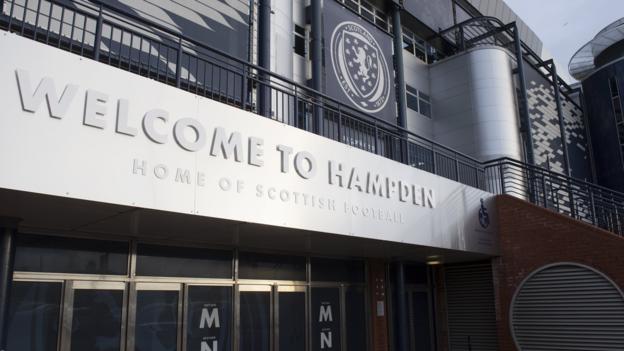
Hampden v Murrayfield: Cast your vote, plus your questions answered on stadium decision

news image

Leigh Griffiths gave Scotland fans a Hampden moment to cherish with his quick-fire brace of free-kicks against England in June 2017

Decision day is looming – again – on the future home of Scottish football.

The Scottish FA will confirm at 15:00 BST on Tuesday whether the national team will play their fixtures at Hampden or Murrayfield from 2020.

After delaying a final decision on 29 August, the SFA will announce whether it favours proposals from Queen’s Park – who have agreed a deal in principle to sell Hampden – or Scottish Rugby, which aims to bring the national football team to the same stadium used by their rugby counterparts.

But what are the pros and cons of each venue? How will the decision be made – and who holds the power to make it? Ask our chatbot, and learn all you need to know about the big decision.


Now you’ve learned more about the decision-making process, and what’s at stake for the national team, we want to know what you would like to happen. You have until 15:00 BST on Tuesday to cast your vote.

Vote

Read More

from Trusted eNews https://ift.tt/2Nyy1bG
via IFTTT

Twitter users slam ‘repugnant, racist’ cartoon of Serena Williams

news image

A cartoon depicting Serena Williams has triggered uproar after it was compared to racist illustrations of the Jim Crow character and images of black people in the Sambo books from the early 20th century.

Published in Rupert Murdoch’s Herald Sun tabloid newspaper, the cartoon depicted the tennis star as overweight, big lipped and bushy haired, stomping on her tennis racket at the US Open final against Naomi Osaka on Saturday.

During the game, Williams received a warning from the umpire for violating a rarely enforced rule against receiving coaching from the sidelines.

An indignant Williams emphatically defended herself, denying she had cheated. A short time later, she smashed her racket in frustration and was docked a point. Williams protested that and demanded an apology from the umpire, who penalised her a game.

Williams went on to lose the championship match against Osaka.

In Mark Knight’s cartoon, the umpire is shown telling a blonde, slender woman – meant to be Osaka, who is actually Japanese and Haitian – “Can you just let her win?”

Speaking to ABC, Knight refused to apologise, saying: “I’m upset that people are offended, but I’m not going to take the cartoon down.

“I can’t undraw the cartoon. I think people have just misinterpreted. Maybe there’s a different understanding of cartooning in Australia to America … It was a cartoon based on her tantrum on the day and that’s all it was.”

The National Association of Black Journalists called the cartoon “repugnant”, adding, “not only does it exude racist, sexist caricatures of both women, but Williams’ depiction is unnecessarily sambo-like.

“The art of editorial cartooning is a visual dialogue on the issues of the day, yet this cartoon grossly inaccurately depicts two women of colour at the US Open, one of the grandest stages of professional sports”.

The Washington Post ran a searing post about the cartoon, calling it “racist” and reminiscent of the era of racial segregation in the US.

“Knight draws facial features reflecting the dehumanising Jim Crow caricatures so common in the 19th and 20th centuries,” Michael Cavna wrote.

While some people defended the cartoon, Knight faced a backlash on Twitter from figures including British author J.K. Rowling and filmmaker Tariq Nasheed, who said it draws on racist tropes of African-Americans.

“Well done on reducing one of the greatest sportswomen alive to racist and sexist tropes and turning a second great sportswoman into a faceless prop,” said J.K. Rowling.

“This is a completely gross depiction of @serenawilliams. This classic Jim Crow era sexist/racist image does nothing but display the complete disrespect of the superstar and perpetuate the stereotype of an ‘angry black woman’ I am appalled,” wrote Jevin Hodge, the vice-chair of the Arizona Democratic Party.

Tariq Nasheed, an African American author and filmmaker, said: “This is how @Knightcartoons and @theheraldsun in #Australia portrayed #SerenaWilliams in their publication today. And notice how they made #Osaka look like a white woman.

This isn’t about ‘gender’. This is simply global anti-Black white supremacy.

TMZ reporter Van Lathan wrote: “Look how big her lips and nose are. We see how y’all see us. You guys ain’t slick.”

“Same stuff. Different day,” wrote Twitter user Hannah Drake.

Knight’s depiction of Williams was not his first cartoon to come under scrutiny.

Last month he faced similar accusations of racism over his take on Victorian Public Transport Minister Jacinta Allan’s call to ban Sky News at Melbourne railway stations, while a secondary debate continued over whether the state had an “African gang” problem.


Read More

from Trusted eNews https://ift.tt/2MjGmLu
via IFTTT

Why the future will forget about meat

news image

Then again, if those same diners are likely to be splattered with red paint when they leave the restaurant, they’re less likely to risk ordering the beef. This is a distinct possibility that the same tactics that were used to marginalize makers and users of fur coats in our century will come to be used against the eaters of what you may come to call “unclean” meat. 

Because here’s the thing: It’s going to get harder and harder to ignore the fact that we are killing living beings, fellow mammals with brains capable of feeling the same emotions as us. We’re killing them by the truckload, every second of every day. I’m no vegetarian propagandist; as a kid in the 1980s I rolled my eyes when a singer named Morrissey (any of you guys still into The Smiths?) warbled about how “meat is murder.” But how long can you keep looking at the end of your fork and not connect what you see with the whole traumatic experience that put it there? 

Steven Pinker’s groundbreaking study of violence, The Better Angels of Our Nature (2011), would support the notion that we are slowly coming around to a vegetarian viewpoint. Pinker points out that everything we now think as barbaric in terms of what we do to other humans — slavery, torture, public executions — was once commonplace in the most civilized societies. People rolled their eyes at abolitionists, too. 

In 16th century Paris, Pinker points out, there were public displays of cat-burning that made spectators including the supposedly-enlightened aristocracy “shriek with laughter.” Over the centuries, western civilization began to ban or shun a spectrum of animal cruelty: bear baiting, cock fighting, dog fighting, fox hunting, animal testing. Can widespread disapproval of animal-eating be that far behind?

Pinker thought, in 2011, that “meat hunger” would prevent this trend from reaching its logical, vegetarian conclusion. Then again, around the same time, his Harvard fellow Pollan never thought he would enjoy a fake meatball sandwich.

If “meat hunger” can be sated by a product that looks and tastes exactly like meat, but in the production of which no animals were harmed, why would a succession of increasingly squeamish, ethical generations not grasp that option? I’m calling it now: Whatever you’re having for your next meal, it wasn’t something that ever thought or felt. 

All we can hope is that you don’t hate us for what we ate, and that we really didn’t think as clearly as you do about what’s for dinner. 

To paraphrase William Carlos Williams: Forgive us. It was delicious. So juicy, so protein-rich, so hard to replicate. 

Yours in meat hunger,

2018

Read More

from Trusted eNews https://ift.tt/2N7vDZM
via IFTTT

Design a site like this with WordPress.com
Get started