Second Paul Manafort trial expected to start next month in federal court

news image

CLOSE

President Donald Trump refused to say whether he would pardon Paul Manafort, calling him a “very good person” as he left the White House for New York. Trump also again called out Turkey, saying the country has been a “problem for a long time.” (Aug. 17)
AP

WASHINGTON — A jury is still deliberating Paul Manafort’s future but even if he’s acquitted, his legal battle will only be halfway over. 

The former campaign chairman for President Donald Trump is due to be back in court in Washington next month for a second trial centered on allegations of lying to the FBI, money laundering and foreign lobbying.

This time prosecutors say they have even more evidence — more than double the amount they showed jurors in Virginia. 

In a court filing Thursday, Manafort’s attorney said special counsel Robert Mueller’s office has supplied “well over 1,000” exhibits for the trial. In the Virginia case, his office had about 400 exhibits. 

The trial is slated to begin in front of U.S. District Judge Amy Berman Jackson on Sept. 17, about a month from now. 

Autoplay

Show Thumbnails

Show Captions

More: Paul Manafort, Trump’s former campaign manager, pleads not guilty; trial set for Sept. 17

More: Five key points that could sway the jury in Paul Manafort’s trial — and determine his fate

The reasoning for the two separate trials stems from where prosecutors say the alleged crimes were committed. The cases in Virginia and Washington could have been combined but Manafort’s attorneys elected to keep them separate. 

The New York Times notes this decision could have been made because Virginia leans more conservative, thus possibly more sympathetic to him, and Washington more liberal. The most serious charges Manafort faces are in Virginia for alleged bank fraud. 

He could spend the rest of his life in federal prison if convicted on all of the 18 counts lodged against him there. Jury deliberations began late last week. 

The charges include five counts of subscribing to false income tax returns, four counts of failing to file foreign bank account reports, four counts of bank fraud and five counts of bank fraud conspiracy. 

He could face a maximum of 20 years behind bars if convicted in Washington. 

Autoplay

Show Thumbnails

Show Captions

Manafort has denied all the allegations and elected to take on the charges in court while his campaign deputy and close associate Rick Gates pleaded guilty and agreed to cooperate with Mueller’s team, even testifying against his former boss in Virginia. 

Federal prosecutors alleged in the indictment filed in Washington against Manafort that he secretly enlisted a group of “former European politicians,” including a former European chancellor to advocate on behalf of the pro-Russian faction Manafort represented in Ukraine.

Prosecutors have asserted that Manafort wired the unnamed officials more than 2 million euros from his off-shore accounts and tried to cover up their work even while holding a senior role in Trump campaign. 

Manafort’s case has been the first taken to trial by the special counsel’s office. The trial in Washington is slated to be the second trial by Mueller’s office. 

Contributing: Kevin Johnson

Read or Share this story: https://usat.ly/2vV6jvH

Read More

from Trusted eNews https://ift.tt/2nOph2p
via IFTTT

Iraq Supreme Court ratifies result of May vote

news image

Iraq’s Supreme Court has ratified the results of the May 12 parliamentary election, its spokesman said, setting in motion a 90-day constitutional deadline for the winning parties to form a government.

“The court has issued a decision to ratify the results of the parliamentary election,” the spokesman said in a statement on Sunday.

Iraq: Manual recount shows few changes to May election results

A nationwide recount of votes showed on August 10 that populist Shia leader Muqtada al-Sadr retained his lead, positioning him to play a central role in forming the country’s next government. 

Many Iraqis, including Kurdish and Sunni Arab groups, disputed the results of the vote, alleging widespread electoral misconduct.

In June, a huge fire destroyed a warehouse housing boxes containing ballots from the May vote. 

Iraqi officials, including its prime minister, Haider al-Abadi, said that the fire was started deliberately with the aim of harming Iraqi democracy.

The fire came just days after parliamentarians ordered a recount of all 11 million of the votes cast. 

MPs also sacked the nine-member independent electoral commission that oversaw the process and replaced the body with judges.

The recount did not change the number of seats Sadr’s bloc won. According to the commission, only one seat from Iraq’s Baghdad Coalition had moved to the Al-Fatih Bloc, which is part of a Hashd al-Shabi-led coalition, giving the latter 48 instead of 47 assembly seats. 

After the initial result, Sadr and Abadi formed an alliance in the aftermath of the vote, in which the former’s Sairoon Alliance won 54 seats to become the largest bloc in Iraq’s 329-seat parliament.

Abadi’s alliance – once seen as a frontrunner – came in third, with just 42 seats.

Incoming MPs will now hold a first session to elect a new assembly speaker. Within 30 days of that first session, the assembly will elect- by a two-thirds majority- the country’s next president.

The president will then task the largest bloc in parliament with drawing up a government, which must be referred back to parliament for approval.

Read More

from Trusted eNews https://ift.tt/2w2SsUf
via IFTTT

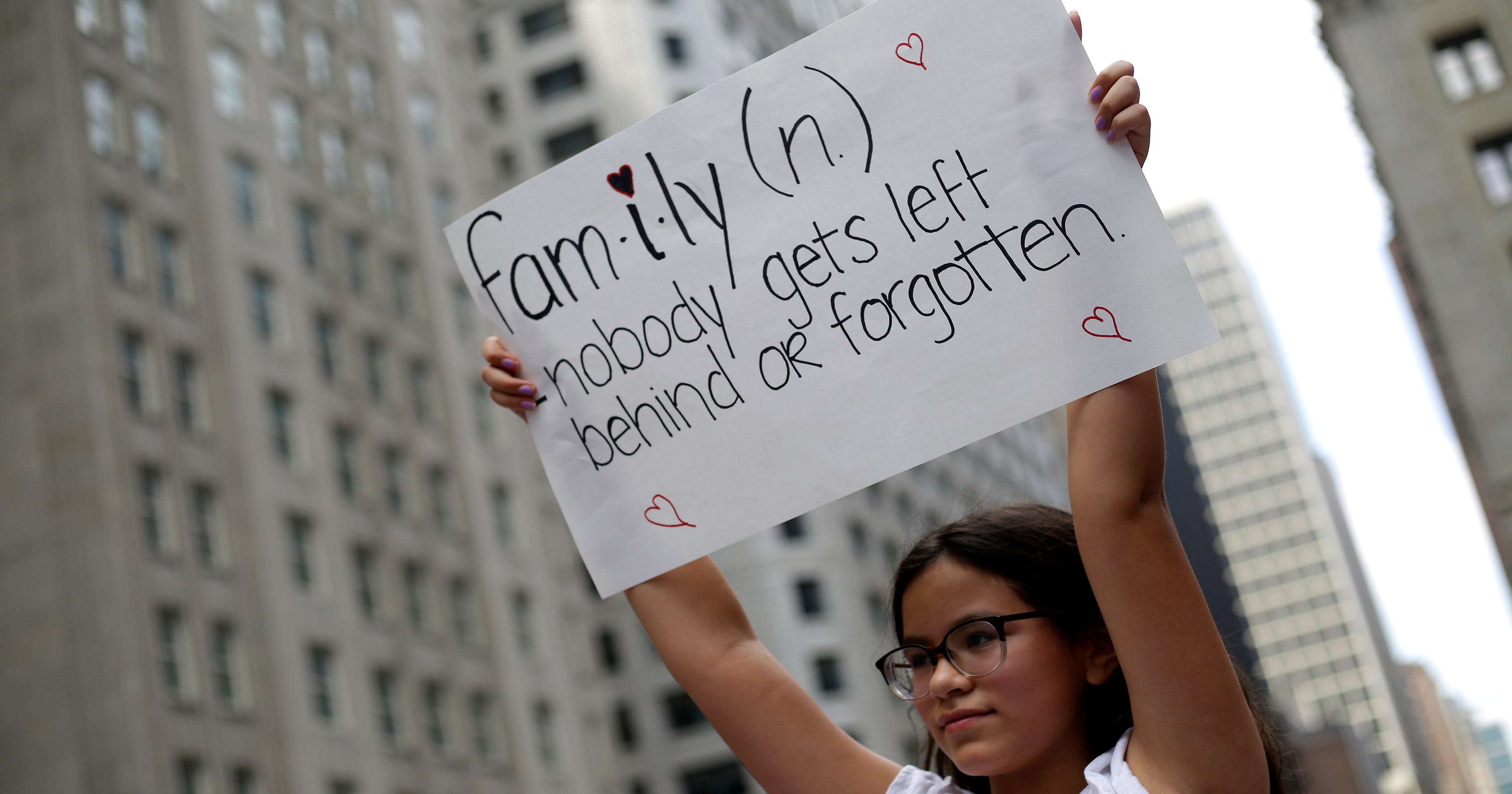
I came to the US because of chain migration. Is there a problem with that?

news image

Abe Kwok: How does ridding the country of people like me – who came here by so-called chain migration – make America any more prosperous or safe?

I’m an American. I’m also apparently part of our immigration problem.

I’m still perplexed as to how. More why than how, really.

I’m equally perplexed as to how ridding the U.S. of people like me would make our country more prosperous and more secure.

It’s a solution Donald Trump continues to tout, even if his wife Melania’s parents became citizens by the exact process that brought me to the United States.

‘Chain migration’ is an ugly phrase

CLOSE

In Trump’s State of the Union address, he proposed changing the family-immigration system that allows legal immigrants to sponsor family members for green cards, an act that some call “chain migration.” Alejandro Barahona/azcentral
Wochit

I’m talking about his plan to end chain migration. Or family reunification. Sponsorship by any other name that in some quarters now breeds contempt and suspicion. Or worse.

I don’t see the practice as lax or irresponsible. Certainly not alarming or dangerous, as many of our country’s political leaders have now come to conclude.

The one truth in the political narrative is this: Family members bring over the extended family, one by one. The rest of the story is far less sinister.

In my family’s case, the person most culpable — from my perspective, the person I’m most indebted to — is my mother’s eldest biological brother, Leslie Yee, whom I saw a handful of times and thought of mostly as a distant memory, as is often the case for children with adults other than their own parents.

Uncle Leslie started our chain

Uncle Leslie came to the U.S. from the Guangdong province in southern China in 1939, at the time a sprite, really. He arrived in Seattle and, though he loved the area — I suspect the proximity to the water, which was reminiscent of his ancestral home, had something to do with it — he, like many immigrants, took the more practical road.

COLUMN: Is ‘chain migration’ a racist term?

He joined the U.S. Coast Guard in WWII and settled afterwards in Arizona, first in Phoenix, then in Casa Grande. There, he bought the famed Owl Cafe on Main Street in 1950 and ran that and the accompanying boarding house for some nine years before constructing a modest 25 by 60-foot restaurant of his own on Pinal Avenue that served American and Chinese food.

A dogged worker — the restaurant opened 7 days a week — Uncle Leslie also labored at his first love, accounting. According to a profile in the Casa Grande Dispatch in 1971, he took on clients from the town as well as others who were scattered across Arizona.

Even at 9, I had to prove myself

With his earnings, he had married and raised a family of two children. Beginning in the ‘60s, he started sponsoring his siblings to join him, first with my aunt Cuan Kok. Even then it took a good while, so long that by the time she got approval four to five years later, she had already migrated to Canada.

Uncle Leslie in the ‘70s sponsored his mother — my grandmother — who was already in her 70s; another of my aunts, Hanna Ho, and her family; and then my mother and our family. He spent thousands of dollars on each sponsorship, trekking to San Francisco to meet with an immigration attorney and typing out the family tree on onionskin paper as part of the application.

MORE: Trump’s plan to end ‘chain migration’ could take years 

My family immigrated in June 1975 and settled in Tucson. I was 9. Before we were approved, my parents had amassed volumes of information — bank accounts, passports, professional and education background, business and personal affiliations and associations, and letters attesting to our character and community standing. 

On my mother’s side — she was one of 12 children that her father had from two wives — none of the siblings remained in China. Those still alive are all living in the U.S. save for my aunt Kok, who still resides in Canada.

Our family’s the rule, not the exception

My youngest uncle, Joe Yee, operated two Farmer’s Market grocery stores and apartments in Tucson; Aunt Hanna ran Chinese Village Restaurant and another, also in Tucson; my late mother and my dad operated China Restaurant in east Tucson. None of them, or their children, had serious brushes with the law. Or depended on government subsidies. Or pledged their loyalty and allegiance to China instead of the United States, or consider themselves anything but American.

That’s because we are Americans. We became naturalized citizens, waiting for years as legal citizens to become even eligible. We all call America home.

I don’t believe our extended family is an outlier. We represent the chain-migration rule, not the exception.

That the immigration debate has pitted legal immigrants — citizens, in many cases — against those who entered unlawfully is unsettling. That chain migration has become demonized is unforgivable; and that some continue to peddle that false narrative is unconscionable.

The angriest Americans may see chain migration as something sinister. But my Uncle Leslie, who spent his final years bringing over among the last of his siblings, viewed it as nothing less than family responsibility.

His actions and intent should not be debased.

Reach Kwok at akwok@azcentral.com.

MORE FROM KWOK:


Read or Share this story: http://azc.cc/2nOojUc

Read More

from Trusted eNews https://ift.tt/2N4J4FK
via IFTTT

Scottish League Cup: Kilmarnock v Rangers

news image

Kilmarnock 0-1 Rangers: Morelos heads in after earlier effort not given – Live – BBC Sport


<!–


<!–

<!–
<!–

<!–
<!–

<!–
<!–

<!–
<!–

<!–

<!–

<!–


Summary

  1. Morelos heads Rangers into lead
  2. Colombian’s earlier effort seems to cross line before O’Donnell clears
  3. Hibs v Ross County (15:00)
  4. Aberdeen, Ayr, Celtic, Hearts, Motherwell & St Johnstone already through
  5. Quarter-final draw takes place after early game
  6. GET INVOLVED #bbcsportscot


Read More

from Trusted eNews https://ift.tt/2PmtHtT
via IFTTT

5 tips to help manage your back-to-school mental health

news image

If you’re headed back to school, chances are you’ve already made at least one checklist. Got your schedule? Check. What about your supplies? Check. Talked with friends about which classes you have together? Bet you checked that one more than once. 

But there’s something likely missing from your list, and it might be the most important thing you take care of all year: addressing your mental health and wellbeing. 

Going back to school can be exciting. It can also be terrifying, particularly for teens who’ve already experienced bullying, anxiety, stress, depression, or trauma. In addition to the nerve-wracking aspects of middle school or high school — crushes, grades, cliques — students today are grappling with intense experiences, including natural disaster anniversaries, school shooting drills, and heightened political and social tensions that disproportionately affect young immigrants and LGBTQ people. 

If you’re feeling a whirlwind of back-to-school stress and anxiety, there are effective ways to respond, says Theresa Nguyen, a licensed clinical social worker and vice president of policy and programs for Mental Health America. (Nguyen also recently wrote a blog post on this subject.)

“You can control your anxiety …” Nguyen says. “The worst thing you can do is ignore it.” 

Here are five of Nguyen’s suggestions for making it through the challenging back-to-school period: 

1. Gauge the problem 

Nguyen says that most students are excited to return to school by the end of summer. But for the 20 percent of teens who live with a mental health condition, being at school again may worsen symptoms of anxiety, depression, and post-traumatic stress. 

It’s important that any student who feels prolonged sadness or nervousness about school pay attention to important signs, such as stomach aches, trouble sleeping, and irritability. Those symptoms could indicate that you’re struggling with stress, anxiety, or depression. Other clues might be Google searches for terms like “I hate school,” “What is depression?” and “What is anxiety?” 

If you want an outside assessment of your feelings and experiences but aren’t yet ready to speak to a friend, parent, teacher, counselor, or doctor, you can use Mental Health America’s free and anonymous screening tool. Nguyen says that 40 percent of those who take the test are under 18, and use spikes during the school year. In other words, you’re not alone. 

If the screening indicates you should seek an evaluation from a medical or mental health professional, Nguyen says you can print the results as a conversation starter with a trusted adult or doctor. If you feel uncomfortable talking to an adult, Nguyen recommends speaking with a friend about how to have that conversation. 

2. Identify coping skills

Some students might already have a list of coping skills because they know going back to school can trigger emotional and mental distress. For other students, this is a new experience with a steep learning curve. Either way, Nguyen says it’s important to ask yourself a series of questions: What worked before to help you feel better? What made things worse? Can you avoid that?

Asking and answering questions like these will prepare you for the moments when stress and anxiety strike. If you need to learn new skills, Mental Health America’s back-to-school toolkit, which comes out every year, includes practical tips for managing your emotions. 

<img class="" data-credit-name='mental health america‘ data-credit-provider=”custom type” src=”https://i.amz.mshcdn.com/0C8lramzWG2U_If4rOe_k5EtD2c=/fit-in/1200×9600/https%3A%2F%2Fblueprint-api-production.s3.amazonaws.com%2Fuploads%2Fcard%2Fimage%2F829440%2F65965135-0d2c-4aaa-8dcb-2ceb7d26168f.png&#8221; data-fragment=”m!ba11″ data-image=”https://ift.tt/2MGppzm; data-micro=”1″>

One of the organization’s most popular resources for young people is its “Stopping Stupid Thoughts” worksheet. This two-page document is designed to help you deal with painful thoughts that can warp a person’s mood, relationships, and self-esteem. It offers strategies for telling yourself the things you really need to hear. 

3. Get educated

The internet is awash in mental health resources and educational materials. First you might check out stigma-busting websites designed for teens like Seize the Awkward and Half of Us. 

Then if you’re interested in mental health resources and advocacy, bookmark the National Alliance on Mental Illness, JED Foundation, American Foundation for Suicide Prevention, National Eating Disorders Association, Born This Way Foundation, The Trevor Project, and Crisis Text Line, 

For health and science research, including details about symptoms and treatment, consult the Centers for Disease Control and Prevention, Substance Abuse and Mental Health Services Administration, and National Institute of Mental Health. 

Educating yourself about mental health is a way to empower yourself, says Nguyen. 

4. Know where to draw the line with the internet  

While the internet can connect you to vital information and support, it can just as easily make you feel miserable. Nguyen says it’s imperative for students experiencing psychological distress to know when the internet has stopped being useful or has even become harmful. That line can be hard to distinguish when, for example, posting on an anonymous social media platform simultaneously brings you support from new friends as well as attacks from strangers or bullies. 

“If you’ve gone down that rabbit hole and you’re on sites that are not healthy for you, you have to get off, break up, step away from that,” says Nguyen. “Stay away until you’re in a better spot if you’re going to dabble.”

5. Reach out

Nguyen says it’s normal for people experiencing mental health issues to feel unsure about what to do next. But the longer we wait to open up, the worse we feel. She urges young people to reach out to a friend, parent, counselor, coach, or someone else they trust. 

It can also be helpful to join extracurricular activities, which provide opportunities to boost self-esteem, learn new skills, and heighten your sense of belonging. But that’s not a simple step for teens who feel alone because they’ve been bullied, are questioning their sexuality and gender identity, or are undocumented. 

“For kids who have anxiety, especially if they’re bullied or extra isolated, it’s hard for them to think about how to join a group,” says Nguyen. “They’ve been strategically isolated at school.” 

That’s when making connections on the internet can help. School groups like gay-straight alliances can also be a welcoming environment for marginalized kids, and the same may be true of community arts organizations and nonprofits.  

“There are some situations where if you’re struggling, please reach out sooner than later.”

“There are some situations where if you’re struggling, please reach out sooner than later,” says Nguyen. That includes if you’re experiencing suicidal thoughts or engaging in self-harm. The same holds true if you’re not sleeping, you’re having strange thoughts, and things don’t make sense. Though rare, that could indicate the onset of psychosis or bipolar disorder.   

Nguyen says that by taking action, learning more, and reaching out, teens worried about their mental health can make a big difference in their own lives. 

“You got this. You are the expert,” she says. “You can get control, so let’s start thinking about it.”

If you want to talk to someone or are experiencing suicidal thoughts, text the Crisis Text Line at 741-741 or call the National Suicide Prevention Lifeline at 1-800-273-8255. Here is a list of international resources.

Https%3a%2f%2fvdist.aws.mashable.com%2fcms%2f2018%2f5%2f5a26b4b3 99cb 5fcc%2fthumb%2f00001

Read More

from Trusted eNews https://ift.tt/2Pmka6b
via IFTTT

Do you trust your lender? How to borrow money without being bamboozled

news image

When was the last time you heard someone raving about their lender?

If it’s been a while, there may be a good reason for that: Predatory lending practices do exist. But if you know what to look for, it’s possible to find a bank, credit union or online company you can trust.

Here are the attributes of a lender that won’t rip you off:

  • Clarity. Does the company drown you in financial jargon, or does it explain things in plain English? A good lender clearly spells out how to qualify, what the loan terms are, how the application process works and what happens if you run into trouble making payments. If you encounter a confusing website or a vague customer service representative, that’s a red flag.
  • Transparency. Do you need detective skills to hunt down the cost of your loan? “A good, honest product will tell you what the cost is going to be,” says Lauren Saunders, associate director at the National Consumer Law Center, a Boston-based consumer advocacy organization. All lenders have to disclose the annual percentage rate — the sum of interest and all fees — on a loan, but good lenders go a step further to break down upfront charges, late fees and the total cost of the loan in dollars.
  • Affordability. All reputable lenders pull your credit information, check your current debt  and ask for your income to see whether you can afford to repay the loan. A good lender gives you a loan amount that closely matches your financial need, says John Thompson, chief program officer at the Center for Financial Services Innovation, a Chicago nonprofit research organization. Your loan offer should fall into the Goldilocks zone: Too much money makes it unaffordable; too little forces you to borrow again.
  • Trustworthiness. The best way to identify a reputable company is to learn about others’ experiences through online searches and by asking friends and family. Good lenders should have positive reviews from independent consumer advocacy websites or product comparison websites, along with strong user testimonials on social media websites. In addition, they should not have regulatory fines from government agencies such as the Consumer Financial Protection Bureau or the Federal Trade Commission.
  • Rewards good behavior. A good lender reports your payments to the major credit bureaus. This helps your credit scores if you pay on time and hurts them if you do not. By reporting your payment activity, the lender lets you build your credit, which can give you access to cheaper financial products in the future.

Now that you know how to spot a good lender, shop around to see where you can get the lowest rate to save money on your loan.


Read More

from Trusted eNews https://ift.tt/2OP8QyC
via IFTTT

National Aviation Day: Love planes? Then you’ll love these pics

news image

CLOSE

A Delta 747 makes a low pass over an airline “boneyard” in Arizona where it will be retired.

Autoplay

Show Thumbnails

Show Captions


Calling all frequent-fliers and aviation buffs: Today is your day.

Sunday is National Aviation Day, so proclaimed by U.S. President Franklin Delano Roosevelt in 1939. The date – August 19 – was chosen to honor the birthday of aviation pioneer Orville Wright.

To celebrate, we’re offering up some best aviation photos that we’ve featured on our site during the past few years.

Like swanky airline seats? We’ve got pictures of those, including everything from Singapore’s luxurious new first-class “suites” to the latest rolled out by Atlanta-based Delta. If you’ve always want to visit one of the world’s top air shows, we’ve got that too; scroll down for some of our collection of photos from the Paris and Farnborough events. Or if you just like to look at airports and airplanes, we’ve also got plenty of those. 

Scroll down to see some of our photo galleries that have been popular with our readers.

Enjoy, and happy National Aviation Day!

Detroit’s old City Airport crumbles; can (should) it be revived?

Autoplay

Show Thumbnails

Show Captions

Swivel chairs, double beds, 32″ TVs: Check out Singapore Air’s swanky new ‘suites’

Autoplay

Show Thumbnails

Show Captions

Buyer’s guide: The world’s swankiest private jets

Autoplay

Show Thumbnails

Show Captions

Delta Air Lines sends its last Boeing 747 to Arizona ‘boneyard’

Autoplay

Show Thumbnails

Show Captions

Boeing’s centennial: A look into the photo archives

Autoplay

Show Thumbnails

Show Captions

The world’s 20 busiest airports (2017)

Autoplay

Show Thumbnails

Show Captions

A look at some of US Airways’ airplane liveries from the past 35 years

Autoplay

Show Thumbnails

Show Captions

What’s it like to refuel fighter jets mid-air? A rare up-close look

Autoplay

Show Thumbnails

Show Captions

The world’s Airbus A380 fleet

Autoplay

Show Thumbnails

Show Captions

First look: Delta shows off first Boeing 777 retrofitted with new cabin interior

Autoplay

Show Thumbnails

Show Captions

Photo tour: Behind the scenes at the Boeing factory

Autoplay

Show Thumbnails

Show Captions

Emirates shows off its Airbus A380 superjumbo at Washington Dulles

Autoplay

Show Thumbnails

Show Captions

43 cool aviation photos: Behind the scenes at Zurich Airport

Autoplay

Show Thumbnails

Show Captions

Planespotting at San Francisco International Airport

Autoplay

Show Thumbnails

Show Captions

United’s new Boeing 777-300ER, Polaris cabin gets splashy debut flight

Autoplay

Show Thumbnails

Show Captions

Scenes from the 2015 Paris Air Show 

Autoplay

Show Thumbnails

Show Captions


Tears, tales and champagne flow on US Airways’ last-ever flight

Autoplay

Show Thumbnails

Show Captions

United’s Boeing 747 farewell flight was one to remember

Autoplay

Show Thumbnails

Show Captions

United frequent-fliers splurge on miles to see Boeing 747 ‘disassembly center’

Autoplay

Show Thumbnails

Show Captions


Read or Share this story: https://usat.ly/2OMGuEV

Read More

from Trusted eNews https://ift.tt/2PiwPY1
via IFTTT

Premier League: Man City v Huddersfield & Burnley v Watford

news image

Manchester City v Huddersfield, Brighton v Man Utd, Burnley v Watford – Live – BBC Sport


<!–


<!–

<!–
<!–

<!–
<!–

<!–
<!–

<!–
<!–

<!–

<!–

<!–


Summary

  1. Three Premier League games on Sunday
  2. Man City face Huddersfield (13:30 BST)
  3. Fixture ended goalless at end of last season
  4. Burnley host Watford (13:30)
  5. Brighton v Man Utd (16:00)


Read More

from Trusted eNews https://ift.tt/2MXinTG
via IFTTT

Uttarakhand: The climate change widows of Indian villages

news image

Uttarakhand, India – Haruli Devi sat on the ground in front of her new two-room house in Singhali village in the hilly northern state of Uttarakhand.

For early winter, the afternoon sun was unusually strong as the 65-year-old removed her sweater and wiped her eyes.

“My husband was killed in the landslide,” she said, remembering the day she became a widow in July two years ago. Her 72-year-old spouse died in a cloudburst in the nearby village of Bastari.

She now lives alone, while her two sons work in New Delhi.

“The rain didn’t stop, even for a minute. Thunderous lightening made us deaf all through the night,” she said.

The following day at about four in the morning, a neighbour woke the villagers, calling them to help save a family from the deluge.

As everyone gathered, there was a huge explosion. Dust and debris flew in the air. The rain continued unabated.

“It was as if a bomb went off,” said Haruli Devi, wiping her tears with an end of her sari. “Pillars came out from houses. A huge surge of water came down from above, carrying boulders, engulfing trees, houses and people.”

‘Nonexistence for society’

The state government announced that nine people had died, they had been submerged in the soil along with their houses. They were never found.

“The soil was like quicksand that sucked them along with it,” said Haruli Devi.

Since that day, Bastari has become known as a “ghost village”.

Disaster management officials declared the land uninhabitable and relocated 24 families to Singhali.

The government compensated Haruli Devi $6,200 for her husband’s death and gave her $4,700 to build a new house in Singhali.

But the cost of constructing the house was higher – $15,600 – a sum she arranged with the help of bank loans and money from relatives.

Haruli Devi says the widows have become as lifeless as the ruins of Bastari village [Arpita Chakrabarty/Al Jazeera]

She now lives on a monthly widow’s pension of $15.

The land she owned in Bastari, on which she grew vegetables to feed the family, is now barren. She remembers a spring where enough water for everyone in the village could be drawn.

Now, in Singhali, she buys water from the government.

She is one of five Bastari women who lost their husbands in the landslide.

“We are now turned into a life of nonexistence for society,” said Haruli Devi.

A man who lost his entire family in the same disaster has now remarried, she said.

“Men are allowed to do everything. It’s easy for them.”

Dozens of natural disaster deaths a year

Two days before tragedy struck in Uttarakhand, the Meteorological Department had warned of heavy rainfall and flash floods.

The state recorded more than 100 mm of rainfall in just two hours on July 1, leaving 48 people dead in the districts of Pithoragarh and Chamoli.

Natural disasters in the state kill dozens every year.

Cloudbursts, landslides and floods are common, and large companies are often called in to manage evacuation and rescue efforts.

Extreme rainfall, geological scientists have warned, weakens the mountains.

Meanwhile, construction in the hills in the name of development has also increased the number of casualties and amount of damage.

Haruli Devi’s old house [Arpita Chakrabarty/Al Jazeera]

According to disaster management officials, more than 800 people died in the state from 2010 to 2017 due to events triggered by heavy rainfall. Hundreds of people have been injured or gone missing.

But this death toll doesn’t include the flash floods of June 2013, which killed more than 5,700 people and wiped away entire villages.

Locals who survived the floods disputed the official number, saying more than 15,000 people died.

Piyoosh Rautela, who heads Uttarakhand’s disaster mitigation and management department, said the state is witnessing the fury of climate change.

“There will be phases of severe rainfall in years to come. We are aware of the vulnerable zones and, we know, sooner or later, landslides will strike at these places,” Rautela told Al Jazeera.

‘Village of widows’

Women suffer most in the aftermath of a disaster, and those from unprivileged castes face further exclusion with limited access to resources.

The 2013 catastrophe left hundreds of women alone, after their husbands and sons died.

The district of Rudraprayag alone has 296 widows. In some sections of Indian society, widows are discouraged from leaving their houses or meeting people.

Rita Devi – not her real name – is from the village of Deoli-Bhanigram, home to 32 widows. She was six months pregnant when her husband, a priest, died.

“Widows like us are cursed. We bring shame to the family,” she told Al Jazeera, explaining that she rarely gets a good night’s sleep on account of her anxiety about the future.

“Being a widow is difficult. Who will look after my son? I have no income. When I am alone, some men make dirty remarks at me,” she continued.

A recent graduate, she is now studying for a master’s degree. She wants a government job in the city, where she believes she won’t be labelled as cursed.

Sitting with her mother-in-law, she said: “Remarrying is a taboo in the community of upper-castes. If I get a job, I can spend the life with my son. At least I wouldn’t be a burden to this family.”

Most of the compensation she received after the disaster has dried up.

Deoli-Bhanigram is known as Uttarakhand’s “village of widows”.

Opportunities amid the wreckage

Several non-profit organisations attempted to support the women of Deoli-Bhanigram after the June 2013 floods, providing them with work to become self-sufficient.

Ranjana Devi, another widow, is among those who received help. She now works at Mandakini Women Weavers in Deoli-Bhanigram as a handloom weaver, earning a monthly salary of $28.

She used the compensation money for her daughter’s marriage and looks after her two sons, one of whom is physically disabled.

“God willing, my sons and I will survive,” she said.

Houses are partly submerged in the flooded River Ganges in Uttarakashi district, in the northern Indian state of Uttarakhand, India, June 18, 2013 [AP]

Another NGO, Sulabh International Social Service Organisation, paid $31 a month to disaster-affected families for three years.

Sewing machines and flour mills were also distributed to some women.

However, NGOs and the government offered little assistance to women outside Deoli-Bhanigram.

Rautela argued that the state government’s budget was limited.

“We don’t have enough funds for counselling and rehabilitation efforts of disaster-impacted people, especially women. Our work ends when the disaster ends,” he said.

The struggling women, who say the state government had promised them jobs, are left to deal with the prospect of more unpredictable weather and an uncertain future.

“We aren’t their vote banks,” said Rita Devi, commenting on the lack of support from the state government. “We don’t feature in their policies.”

The cooperative of Mandakini Women Weavers in Deoli-Bhanigram employs 33 village women [Arpita Chakrabarty/Al Jazeera]

Read More

from Trusted eNews https://ift.tt/2Mz1ba1
via IFTTT

Create your own website, free on WordPress.com.Create your own website.
Start free