Tens of thousands of people gathered in Ukraine’s rebel stronghold Donetsk on Sunday to mourn the killing of separatist leader Alexander Zakharchenko.
Mourners queued to view the flag-draped coffin of the leader of the self-proclaimed Donetsk People’s Republic at a local theatre.
Zakharchenko died in a blast at a coffee shop in Donetsk on Friday. His bodyguard was also killed and 12 more people were wounded.
He was the most prominent figure from the Russia-backed side to be killed in Ukraine’s four-year conflict. Zakharchenko had been wounded twice in combat and survived a car bomb in August 2014.
Authorities estimated the turnout for the funeral was about 100,000 people, while a correspondent from AFP news agency put the number closer to 30,000.
Donetsk’s city centre was cordoned off and public transport temporarily suspended as people gathered to pay their respects.
Billboards displayed pictures of Zakharchenko and his quotes, including “All of us have one Motherland – Russia.”
Russia accused Ukraine of assassinating the 42-year-old, but Kiev blamed the explosion on separatist infighting.
Many mourners pointed a finger at Ukraine’s government for being behind the attack. “We will never forget this tragedy, we will never forgive,” said Sergei Kapustin, 35.
‘A cool guy’
Anatoly Bibilov, leader of Georgia’s breakaway region South Ossetia, and Alexander Borodai, a Russian journalist and former prime minister of the Donetsk republic, were in attendance.
Vladislav Surkov, an aide to Russian President Vladimir Putin, issued a statement carried by Donetsk’s official news agency calling Zakharchenko a “brother”.
“You are a cool guy, a true hero and it’s a huge honour to be your friend,” it read.
Mourners queued in Donetsk to pay respects to Zakharchenko, described as ‘a true hero’ [Alexander Ermochenko/Reuters]
Zakharchenko, a former coal mine electrician, joined pro-Russian separatists in an armed uprising in Donetsk in 2014 and sold his business to help fund the movement.
He took the reins as the leader of the Donetsk People’s Republic in November 2014 from a number of Russians, in a bid to show Ukraine’s separatist movement wasn’t a Russian-led operation.
Other rebel leaders say he was handpicked for the role by Moscow. A vote held by separatists confirmed him in office.
Zakharchenko introduced Soviet-style military parades with tanks in Donetsk and usually wore military fatigues despite his political role.
Ongoing conflict
Putin called his death a “dastardly” crime aimed at destabilising a fragile regional peace.
“I expect that the organisers and executors of this crime will get the deserved punishment,” he said in a telegram of condolences released by the Kremlin.
On Saturday, Russian Foreign Minister Sergey Lavrov said Zakharchenko’s murder would derail long-delayed international peace talks on Ukraine.
Russia, Ukraine, France and Germany are involved in the talks, known as the Normandy format, which was established to seek a peaceful settlement to the conflict.
More than 10,000 people have been killed since rebels in the eastern Donetsk and Lugansk regions overthrew Ukrainian central rule in April 2014 following Russia’s annexation of Crimea.
A shaky internationally brokered ceasefire has been in force since 2015, halting large-scale fighting. But there are still frequent firefights on the front line between separatists and Ukrainian forces.
Kiev and its Western allies have accused Russia of sending troops and arms into Ukraine. Moscow denies the allegations but has admitted Russian “volunteers” are assisting the rebels.
The summer movie season may be coming to an end, but Crazy Rich Asians is still going strong. Warner Bros’. ritzy romantic comedy is on track to collect an estimated $22.2 million in ticket sales at 3,865 theaters in the U.S. and Canada from Friday through Sunday, topping the box office for a third consecutive weekend. Factoring in Monday’s holiday crowds, the film could bring in around $27 million to $28 million.
The three-day haul represents a decline of just 10.4 percent from last weekend, and it will push the film’s domestic total to about $111 million through Sunday. Overseas, Crazy Rich Asians will add an estimated $10.4 million this weekend, for an international total of $19.9 million and a worldwide total of $130.9 million. The film cost about $30 million to make.
Based on Kevin Kwan’s best-selling 2013 book about a Chinese-American professor (played by Constance Wu) who travels to Singapore with her boyfriend (Henry Golding) to meet his wealthy but unwelcoming family, Crazy Rich Asians comes as the first major contemporary Hollywood movie to feature a predominantly Asian cast since The Joy Luck Club in 1993. Jon M. Chu directed Crazy Rich Asians, and the ensemble cast includes includes Michelle Yeoh, Gemma Chan, Awkwafina, and Ken Jeong.
Led by Crazy Rich Asians, this year’s Labor Day weekend box office marks a sharp increase from last year’s two-decade low, which didn’t even feature a new wide release. Comparing the Friday-Sunday frame, this year’s total box office is up 28 percent, according to ComScore. (Overall box office is up 9.9 percent year-to-date.)
New at the multiplex this weekend are MGM’s historical drama Operation Finale, which will earn about $6 million at 1,818 theaters, good for fourth place, and Lionsgate’s sci-fi thriller Kin, which will earn about $3 million at 2,141 theaters, putting it in the No. 12 spot.
Rounding out the top five are Warner Bros’. shark flick The Meg, with about $10.5 million; Paramount’s spy sequel Mission: Impossible — Fallout, with about $7 million, and Sony’s desktop thriller Searching, with about $5.7 million. The latter film, starring John Cho as a father trying to track down his missing teenage daughter, expanded to 1,207 screens this weekend, up from nine last weekend.
Check out the Aug. 31-Sept. 2 figures below.
1. Crazy Rich Asians — $22.2 million 2. The Meg — $10.5 million 3. Mission: Impossible — Fallout — $7 million 4. Operation Finale — $6 million 5. Searching — $5.7 million 6. Christopher Robin — $5 million 7. Alpha — $4.5 million 8. The Happytime Murders — $4.4 million 9. BlacKkKlansman — $4.1 million 10. Mile 22 — $3.6 million
Protesters led by an activist Chicago minister plan to shut down the nation’s second busiest airport on Labor Day by blocking the primary highway leading into and out of O’Hare International.
The Rev. Gregory Livingston says Monday’s march along the Kennedy Expressway is an effort to highlight the violence and lack of educational and employment opportunities on the city’s South and West sides.
“We must end Chicago’s tale of two cities,” said Livingston, pastor at New Hope Baptist Church on the city’s West Side. “We will shut down O’Hare International Airport.”
Any disruption could cause major headaches for travelers headed home from holiday weekends. Major David Byrd, spokesman for the Illinois State Police, said authorities will not allow the protest to interrupt traffic.
Byrd said authorities had offered protesters alternative venues for the march, adding that he hoped no arrests would need to be made. But he provided no details on how marchers would be stopped.
Livingston has a list of demands ranging from Mayor Rahm Emanuel’s resignation to repurposing closed schools for businesses and other uses that stabilize neighborhoods.
He also wants economic investment on the South and West sides “commensurate” with spending on the North Side and downtown, legislation to encourage hiring of released inmates and resources for black-led anti-violence efforts.
“I’d would rather see my people marching on the expressways than dying in the streets,” Livingston tweeted Sunday.
Chicago tallied more than 1,400 murders and 6,200 shootings in 2016 and 2017. Still, there is a ray of hope: The 2018 murder count through August of 368 marks a 20 percent decrease from the 460 killings from January through August last year, the police department said.
“While incremental progress is being made, we have more work and ahead to continue to make Chicago safer,” CPD said in a weekend statement.
Livingston was among organizers of a rally Aug. 2 that briefly shut down a section of Lake Shore Drive in an affluent neighborhood of the North Side, snarling Wrigley Field traffic for a Cubs baseball game. That protest drew about 400 marchers – and almost the same number of police officers.
On July 7, almost 1,000 marchers briefly shut down the city’s Dan Ryan Expressway, chanting “Shut it down!” and “No justice, no peace!” That protest was led by a Catholic priest, the Rev. Michael Pfleger, who has said Emanuel’s resignation would do no good. Emanuel aligned himself with protesters that day, drawing the scorn of Republican Gov. Bruce Rauner for failing to keep the freeway open.
“I’m disappointed in the Mayor,” Rauner tweeted. “There was an agreement in place. I am calling on the Mayor to take swift and decisive action to put an end to this kind of chaos. I will work with him in good faith and urge him to do his job so that the people of Chicago feel safe.”
Ronica Cleary, Opinion contributor
Published 6:00 a.m. ET Sept. 2, 2018
The White House beat makes reporters into household names. But too many show off with gotcha questions and preening for the camera.
Parts of the press are under fire again for their use of anonymous sourcing, particularly sources that later backtrack on their statements.
When the opportunity presented itself to work as a White House correspondent, I was elated. Unfortunately, during my time in the briefing room, I witnessed the withering of a press corps that I once aspired to join.
Of course, there are those who I admire greatly, who cover the White House with fairness and without bias, and a handful I call friends. But for a sizable minority, the White House briefing room was about theater and making great television, not about journalism. It was a room to elbow one’s peers and show off one’s ability to ask “gotcha” questions. Additionally, it was a priority to get oneself in an all-important “cross shot” — meaning the cameras needed to capture the reporter asking the question, not just the press secretary answering.
Inside the White House press briefing room
Only asking a question when you’re called on is standard protocol in plenty of press conferences; it was certainly a reasonable standard set in the briefing room. That is, until one reporter decided to interrupt, shout freely and criticize the administration mid-briefing. I thought for sure he would be excoriated for the outburst by the press post-briefing; perhaps even labeled a sexist in light of the #MeToo movement. Instead, he was rewarded with a cable news contract.
In the briefing room, all 49 seats are assigned by the White House Correspondents’ Association. I didn’t have one. When reporters didn’t show, those of us relegated to the aisles would work to grab an empty seat.
Before I got pregnant, it didn’t make much of a difference. But when I became pregnant, I agonized over attending the briefings because I worried I wouldn’t be able to find an empty seat. A precious few graciously offered their seats, and I often declined in an effort to try and not be that person who constantly needs a seat, but at times it was greatly appreciated.
One especially memorable day, at nearly nine months pregnant, I was exhausted from standing as we all waited for the late briefing to start. I rotated and balanced myself with all the grace I could muster, resting on the armrest of the very back row. My back brushed up against a reporter comfortably sitting in his seat. He seemed annoyed that I was crowding his space. I was annoyed that he didn’t have any manners to offer his seat to a pregnant woman. I snapped and tweeted my frustration in a fit of fury.
No empty seats today. Briefing running late. Most days I don’t mind, but today I’m less than enthusiastic about the nature of a room full of people who avoid offering a seat to a woman who is 37 1/2 weeks pregnant. I wouldn’t accept it, but that’s not the point. #ThisIsDC@fox5dcpic.twitter.com/0oZOMG2DKo
Blake Burman, a corespondent with FOX Business Network, saw the tweet and quickly got someone to move out of a seat who wasn’t assigned to it anyway. A few reached out after apologizing that they didn’t notice I needed a seat. It was the show of kindness I needed, but my feelings about the room and many in of the people in it were dwindling.
Reporters seeking celebrity status
It’s worth noting that being denied a seat wasn’t the real issue here. It was the fact that giving up one’s seat might mean giving up one’s chance to be seen and make news, not necessarily report it.
While on maternity leave, I decided to take a night away and attend the annual White House Correspondents’ Association dinner. I left before Michelle Wolf’s monologue to attend an after-party. There, I found myself next to two cable news stars. One, a White House reporter, was concerned he couldn’t get in to a particular after-party because he wasn’t on the list. The other, shouting over the music, suggested that of course he could because of his performances in the briefing room.
The exchange underscored what it means to be a White House correspondent today: This beat makes you a star.
The next day, I heard the reports on Wolf’s offensive monologue. The dinner, much like the briefings, had morphed into a spectacle unto itself: to shock, offend and make noise. And while I support the right to make offensive noise, just as I support a free press, it felt inappropriate to marry the two under the facade of celebrating the free press.
I simply could not return to the White House press corps upon the completion of my leave. Instead of reporting on the story, the press corps had become the story; taking on a life of their own, with an “us versus them” mentality that felt inappropriate, excessive and charged with bias. I wanted to report on history in the making, never make myself a part of the story.
However you feel about the current administration, remember this: The people who are reporting on it are just that — people. There is no official test of morals, integrity, or neutrality to get a seat in that room. The appeal of fame, the power of ego and the allure of celebrity can affect any one of us, even those of the fourth estate.
Ronica Cleary is a Republican strategist and former White House correspondent for Fox 5 DC. Follow her on Twitter @RonicaCleary.
Marcus Rashford leaned into Phil Bardsley with his head following a tangle with the defender
Manchester United recovered from back-to-back defeats to beat Burnley despite Paul Pogba missing a penalty and Marcus Rashford being sent off.
Romelu Lukaku scored twice in the first half as the Red Devils – beaten by Brighton and Tottenham in their previous two Premier League matches – were largely untroubled by their hosts.
Pogba had the chance to stretch United’s lead midway through the second half but his penalty – after Aaron Lennon fouled Rashford – was saved by former Manchester City goalkeeper Joe Hart.
And two minutes later the visitors were reduced to 10 men when Rashford was sent off for leaning into Burnley defender Phil Bardsley with his head.
That made the closing stages unnecessarily tense for Jose Mourinho’s side, but the Clarets were unable to find a way through.
Victory took United up to 10th in the table – level on points with Everton in seventh.
United defenders keep it clean
The build-up to the match had been dominated by discussion of the Red Devils’ stuttering start to the season. There had even been speculation Mourinho could be one game from being sacked.
And the club’s executive vice-chairman was the target of a banner that flew over the ground before kick-off reading ‘Ed Woodward: A specialist in failure’.
The banner flew across Turf Moor at about 15:40 BST
If the United players were feeling the pressure, they did not show it during a thoroughly professional first-half performance.
Lukaku looked back to his clinical best when he rose highest to power home Alexis Sanchez’s clipped cross after 27 minutes.
And the Belgian reacted well for his second on the cusp of half-time, slamming the ball home after a series of kind deflections.
But, with the game stretched in the second half, he failed to complete a hat-trick – squandering the best chance after rounding Hart under pressure from Ben Mee.
Rashford, who had won the penalty shortly after coming on, then lost his cool in an altercation with Bardsley and was shown the first red card of his career.
More pleasingly for Mourinho, his defence – again changed from the previous match – looked solid, keeping United’s first clean sheet of the season and a 10th in their past 11 visits to Turf Moor.
Rashford is a naive boy – Mourinho
Burnley’s poor start continues
A second home defeat of the season leaves Burnley 19th in the table with just one point taken from their opening four matches.
They offered little throughout, perhaps affected by their Europa League exit to Olympiakos on Thursday.
Even after going behind, Sean Dyche’s men seemed reluctant to attack United, and teenage winger Dwight McNeil had their only shot on target in the opening 45 minutes.
Dyche attempted to give his side more impetus by bringing on Sam Vokes on 58 minutes, and the Wales striker forced United goalkeeper David de Gea into two good saves.
But the Spaniard was not tested enough and Burnley are now without a league win in nine games, a run stretching back to April, meaning they are on the longest winless run of any side in the competition.
The international break gives them a chance to regroup, while their exit from the Europa League at least allows them to focus solely on domestic matters.
But Dyche will not be looking forward to January’s return fixture – after eight attempts, he is yet to beat Mourinho in the Premier League.
Man of the match – Nemanja Matic
Matic made 70 passes against Burnley, more than any other player, with a completion rate of 87.1%
‘Marcus is a naive boy’ – what they said
Manchester United manager Jose Mourinho speaking to BBC Sport: “Burnley played very well as a team, and there were very good individual performances and we should score many more goals. The result shouldn’t have been open until the last minute.”
On Pogba’s penalty miss: “I never blame a player for missing penalties. I blame the ones who refuse to go up there. Paul’s scored some good ones for us.”
On Rashford’s red card: “I don’t know what happened. I would say it was naive. It was a kid and a very experienced man. Bardsley’s been in the game for 20 years and Marcus is a naive boy.”
Burnley boss Sean Dyche speaking to BBC Sport: “Disappointment is quickly thought about in the same process as the reality. Manchester United are a very good side – they started hard and fast with the ball and defended strong.
“Sometimes there is balance to the disappointment. We got about them – the goal on half-time is a sickener for us. I thought Lukaku was excellent. It’s a strange one because we come out of a useful period for experience but a tough period.”
Facts are facts, Man Utd are a good side – Dyche
Clarets struggle against United – the stats
Burnley have won just one of their past 18 top-flight meetings with United (D8 L9), with that victory coming in their first Premier League meeting back in August 2009 (1-0).
Mourinho has won each of his four Premier League games at Turf Moor (P4 W4), including all three in charge of the Red Devils.
United have won each of their past 24 Premier League matches in which they have scored the opening goal.
Lukaku scored his first Premier League double for United since August 2017, when he did so on his debut in the competition for the Red Devils (v West Ham in a 4-0 win).
Rashford became the first substitute to be sent off for the Red Devils in the Premier League since Marouane Fellaini against Hull City in May 2015.
At the age of 18 years and 284 days, McNeil became the first teenager to start a Premier League game for the Clarets.
Fellaini made his 250th Premier League appearance in this game. The only other Belgian to make as many is Vincent Kompany (251).
What’s next
After the international break, United travel to Vicarage Road to face Watford on Saturday, 15 September (17:30 BST). Burnley face Wolves at Molineux the following day (13:30 BST).
Libya’s UN-backed government has announced a state of emergency in the capital, Tripoli, and its outskirts after several days of fierce fighting between rival armed groups.
At least 39 people, including civilians, have been killed in the violence and nearly 100 others wounded.
“Due to the danger of the current situation and for the sake of the public interest, the presidential council declares a state of emergency … to protect and secure civilians, public and private possessions and vital institutions,” the Government of National Accord (GNA) said in a statement on Sunday.
Reporting from Tripoli, Al Jazeera’s Mahmoud Abdelwahed said stray rockets were responsible for the death of several civilians.
“Since the beginning of the clashes that broke out a week ago, many civilians have been killed as a result of random rockets falling onto densely populated areas,” he said.
“Many people here are blaming the Government of National Accord for not doing enough to stop the conflict.”
Fighting in Tripoli
Libya slid into chaos after the 2011 uprising that overthrew and killed longtime ruler Muammar Gaddafi.
The country is currently governed by two rival authorities backed by an array of powerful armed groups: the Tripoli-based GNA, which is recognised by the UN as Libya’s official government; and the Tobruk-based House of Representatives in the east of the country, which has the support of renegade General Khalifa Haftar.
The fighting in the capital erupted last week when armed groups from Tripoli clashed with others from a town to the south, vying for power in the administration based in the country’s west.
Street battles on Monday and Tuesday pitted the Seventh Brigade, or Kaniyat, from Tarhouna, a town 65km southeast of Tripoli, against the Tripoli Revolutionaries’ Brigades and the Nawasi, two of the capital’s largest factions.
The Kaniyat and other groups from outside Tripoli have noticed the success of rivals inside the city with growing unease. Reports about the wealth, power and extravagant lifestyles of some Tripoli rebel commanders have fuelled resentment.
Broken ceasefire
A fragile truce reached in coordination with the UN mission in Libya took effect on Thursday, but was quickly breached.
In its statement, the Tripoli-based government called the rival militias to stop the fighting and respect the ceasefire agreement, echoing a call issued by Antonio Guterres, the UN secretary-general, a day earlier.
“The Secretary-General condemns the continued escalation of violence in and around Libya’s capital and, in particular, the use by armed groups of indiscriminate shelling leading to the death and injury of civilians, including children,” a statement from Guterres’ office said on Saturday.
“The Secretary-General calls on all parties to immediately cease hostilities and abide by the ceasefire agreement brokered by the United Nations and the Reconciliation Committees.”
Also on Saturday, Britain, France, Italy and the United States said in a joint statement that an escalation would hamper the political process in Libya and plans to hold nationwide elections by December.
The four countries said they “warn those who tamper with security in Tripoli or elsewhere in Libya that they will be held accountable for any such actions”.
The Irish rock band U2 canceled a concert in Berlin on Saturday night when lead singer Bono experienced a “complete loss of voice” partway through their performance.
“We’re so sorry for tonight’s cancellation,” bandmates Adam Clayton, Larry Mullen Jr., and the Edge said in a statement posted on the U2 website. “Bono was in great form and great voice prior to the show and we were all looking forward to the second night in Berlin, but after a few songs, he suffered a complete loss of voice.”
Shortly after playing “Beautiful Day,” which concert videos show Bono struggling to sing, the singer halted the performance. In one such video, Bono can be seen apologizing to fans, saying he was “ready to sing for you, so something’s happened, and I think we cannot go on.” He invited fans to wait while the band took a 10-minute break to figure out what was going on, but ultimately, the rest of the show was called off.
U2 are scheduled to continue their 2018 Experience and Innocence tour Tuesday night in Cologne, but there is no word yet on whether they’ll be able to go on. “We don’t know what has happened and we’re taking medical advice,” they wrote. “As always, we appreciate our audience’s understanding and all our fans’ support in Berlin and those who travelled from afar. We will update you very soon.”
The band’s representatives did not immediately respond to EW’s requests for comment or further clarification on the future of their touring schedule.
WASHINGTON – Trupania Bonner is quick to warn groups registering minorities to vote to be alert for cybertricks.
His training class for civic engagement groups now includes discussions about cyberthreats and the Media and Democracy Institute’s new resource guide coming out this month features tips on how to help guard against hackers and interference through social media.
“We’re telling groups not only should they pay attention to what happens in the voting booth on Election Day, but what happens long before Election Day,” said Bonner, a facilitator for the New Orleans-based group that provides get-out-the-vote training across the South. “It’s just being on the lookout for fake websites, fake social media sites or ones nudging you to support a candidate or sway you from a particular candidate.”
The institute’s effort is one of several civil rights and civic engagement groups are adopting to protect against cyberthreats and other attempts to interfere through social media ahead of midterm elections as many organizations ramp up get-out-the vote campaigns targeting minorities.
The campaigns rely heavily on social media to reach voters and share information, including where and how to register. But groups worry that comes with the risk of manipulation and hacking so they’re taking it upon themselves to beef up security.
“That is a serious concern,” said Derrick Johnson, president of the NAACP, which has launched a national GOTV effort. “I am actually shocked that Congress and this administration are not taking much more serious the threat of a foreign nation tampering with our election.”
The effort comes in the wake of U.S. intelligence reports that Russians attempted to meddle in the 2016 elections.
Ray Block, a political scientist and associate professor of African-American and Africana studies at the University of Kentucky, said he’s not sure Russian hackers will try again but noted that many believe they will.
“Whether we can fight is up to us,” Block said. “The idea is you don’t want people to start thinking that people on the outside could have more sway over what happens in our elections than we do on the inside. I feel like that sentiment is strong enough that I would suspect that there should be some bipartisan effort before the midterm election rolls around to ensure that the public doesn’t feel like the legitimacy of the upcoming elections hasn’t been compromised by the specter of what happened in 2016.”
Civil rights group said they can’t wait for Congress.
The NAACP set up a system for its members to text the word NAACP to a special number so they communicate directly to share information and alerts about problems at the polls.
Johnson said the NAACP developed the program to counter reports that hackers used social media to push false information.
“We don’t want to take anything for granted considering the lack of action this administration and Congress have taken to ensure the integrity of the midterm election,” he said.
Bonner said he urges civic engagement groups to anticipate more attacks.
“The alarms are already going off,” he said, noting the Microsoft announcement. “I do believe this will intensify in coming months.”
The Rev. Gregory Holston, executive director of POWER (Philadelphians Organized to Witness, Empower and Rebuild), is relying on direct contact with voters to counter misinformation attempts. He said it’s also important to focus on local issues.
“That Russian piece is not about the local piece, so give people a reason to vote on the local level and then they’ll be less susceptible to those” outside influences, he said.
LaTosha Brown, co-founder of Black Voters Matter, which has been registering blacks to vote across the South, plans to hire experts to protect her group’s effort.
“They basically scared the daylights out of us about how much our information can be exploited,’’ she said.
Brown said someone tried to use her picture and her organization to collect money.
“Grassroots and community groups have to be really, really conscience around cybersecurity,” she said.
But Helen Butler, executive director of the Georgia Coalition for the Peoples Agenda, said her group hardly mentions the threat of Russian interference because it doesn’t want to scare potential voters who are already wary of election systems.
“I’m concerned about anything that would dissuade voters from participating, and we’re trying to counter that and ensure that people know it’s easy to vote and we’re here to help you,” she said. “We’ll hold your hand if that’s what you need.”
Social media companies, including Facebook, also have an obligation to do more, said Melanie Campbell, president of the National Coalition on Black Civic Participation.
They should be “making sure that they’re monitoring, making sure they do what they can,’’ Campbell said. “Our democracy is being adversely impacted by misinformation and fake sites.”
Civic engagement groups said they’re also concerned social media can be used to disseminate false information about their leaders and organizations. They’re not sure it’s just the Russians.
During the civil rights movement, some state and federal officials tried to quash efforts to register blacks to vote often by smearing leaders.
“There’s always been an effort to undermine and discredit those who are leading the movement,” Brown said. “We are acutely aware of how there’s always been (attempts at) infiltration in our movement to exploit and abuse messages. It didn’t start with Russia. Russia is just following suit where we’ve seen even the U.S. government do with black leaders in this country.”
Experts said there have been other efforts to target minorities with misinformation, including flyers or robocalls with wrong polling sites or days to vote.
“Overwhelming the polls with (voters) has always been a useful strategy against something like that,” Block said. “That’s the reason why mobilization is extremely important. If there’s an information war GOTV efforts can help with the balance of the information.”


 (@RonicaCleary)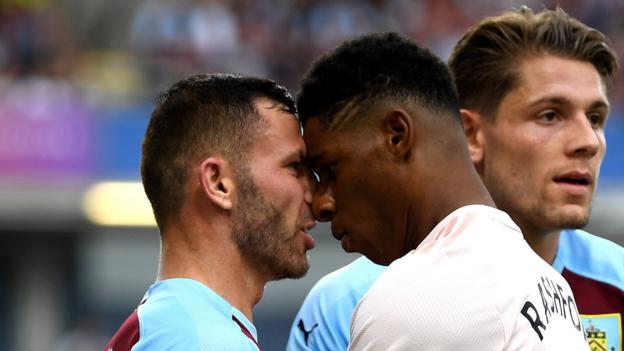


 trustedenews