Massive fire rips through 200-year-old Rio National Museum

news image

A massive fire has engulfed Brazil’s 200-year-old National Museum in the city of Rio de Janeiro, putting its valuable collection of 20 million items, including human fossils and ancient Egyptian artefacts, under threat. 

Firefighters and museum workers raced to save the historical relics from the blaze which broke out at 7.30pm (22:30 GMT) on Sunday. 

The esteemed museum in the city’s north, which houses artefacts from Egypt, Greco-Roman art and some of the first fossils found in Brazil, was closed to the public at the time of the fire.

There were no reports of injuries, the museum said in a statement, and it wasn’t immediately clear how the fire began.

Roberto Robadey, a spokesman for the fire department, said 80 firefighters were battling the blaze and that by midnight local time it was “just about under control” and should be out within a few hours.

President Michel Temer called it “a sad day for all Brazilians”.

“Two hundred years of work, research and knowledge have been lost,” Temer said in a statement.

Jewel of Brazilian culture

Robadey said firefighters got off to a slow start fighting the blaze because the two fire hydrants closest to the museum were not functioning. Instead, trucks had to be sent to get water from a nearby lake.

But he added that some of the museum’s pieces had been spared.

“We were able to remove a lot of things from inside with the help of workers of the museum,” Robadey told Globo News.

The museum was founded in 1818 by King Joao VI and is considered a jewel of Brazilian culture.

According to its website, the museum has a vast collection related to the history of Brazil and other countries, and many of its collections came from members of Brazil’s royal family.

The museum’s deputy director, Luiz Fernando Dias Duarte, voiced “profound discouragement and immense anger” as the treasured institution burned, accusing Brazilian authorities of a “lack of attention”.

He said the museum, a former palace that was once the official resident of the royal family, had never had necessary support.

The National Museum, which is linked to the Federal University of Rio de Janeiro, had suffered from funding cuts.

As the fire raged researchers, professors and university students expressed a mix of sorrow and indignation, with some calling for demonstrations on Monday in front of the ravaged building.

Latin America’s largest nation has struggled to emerge from its worst recession in decades.

The state of Rio de Janeiro has been particularly hard hit in recent years due to a combination of falling world oil prices, one of its major revenue sources, mismanagement and corruption.

Read More

from Trusted eNews https://ift.tt/2N6QyeX
via IFTTT

Fear the Walking Dead recap: An unnamed threat undoes the good in this world

news image

We still don’t have a name for the mystery character played by Tony Award winner Tonya Pinkins, but we know some things — like the gal loves her markers. Whether she’s actually sniffing them (maybe that’s why she seems so messed up in the head) is another story.

Also, we know that: She has some sort of connection to the truck stop (confirmed by the showrunners). She has a walker named Pervis (well, had a walker named Pervis that she traded in for a new walker that used to be Quinn). She’s been using Pervis as her lapdog. She always has some sort of mud on her personage (perhaps to mask her scent among the dead). And she doesn’t like the whole “take what you need, leave what you don’t” thing because it breeds weakness (Quinn was weak, but he was then reborn strong as a walker). Additionally, on the press site for AMC, the character is labeled as “Filthy Woman” in photos — which, come on, folks. Let’s do slightly better.

Whoever this woman is, she seems to act as a conglomerate of the group’s collective darker tendencies, an evil doppelgänger of sorts who turns the good intentions of everyone against them. The “take what you need” boxes were meant to help people, and we find her now tainting the water bottles. June confronts Quinn, a man who jacked Al’s SWAT van when they weren’t looking, and tries to get him to see the good in the world again. Pinkins’ character then uses that trust against Quinn: he shows up to meet June at what he thinks is the meeting point, only to realize the mile marker had been changed when the “Filthy Woman” (we really need a better name for her) uses Pervis to kill him. Her dreads and walker companion are a nod to Michonne but, again, a warped version of the good that we know.

This is also why I think Pervis is actually the man who initially started the “take what you need” boxes and whose truck now lies with Sarah and Wendell. “Take what you need, leave what you don’t” was his motto and then it became the same phrase marked on zombie Pervis’ face. When Quinn rose again as a walker, she branded him with “People you know,” which is something he said earlier as he pointed a gun at June’s head. “We can work together. We can help each other,” June says in that scene. He responds, “No we can’t. We’re all the same: doing things to protect the people we care about, people we know, people we love. That’s where it stops, right?” That’s why “Filthy Woman’s” hair is so big, it’s full of secrets!

We also know from the season 4 trailer that she ends up writing “I lose people, I lose myself” on Morgan’s forehead at some point, or maybe he does it to himself. Either way, that’s my theory and I’m sticking to it.

She’ll no doubt become a foil for June, who’s following pretty much the exact same progression as Morgan — someone who is trying to be a better person in the face of their past mistakes. This recycled character development made her scenes this week drag. I suppose if everyone is crying all the time about wanting to find redemption, it eventually loses its impact.
(Recap continues on the next page.)

Read More

from Trusted eNews https://ift.tt/2Pt7V7d
via IFTTT

Day One: Massive traffic jams and Iranians’ obsession with white cars

news image

EDITOR’S NOTE: USA TODAY foreign correspondent Kim Hjelmgaard chronicles his journey this summer inside Iran, a country near the top of America’s foreign policy concerns but little known to most Americans.

The six-hour flight from London to Tehran was routine.

We landed in a landscape that resembled Death Valley in California’s Mojave Desert.

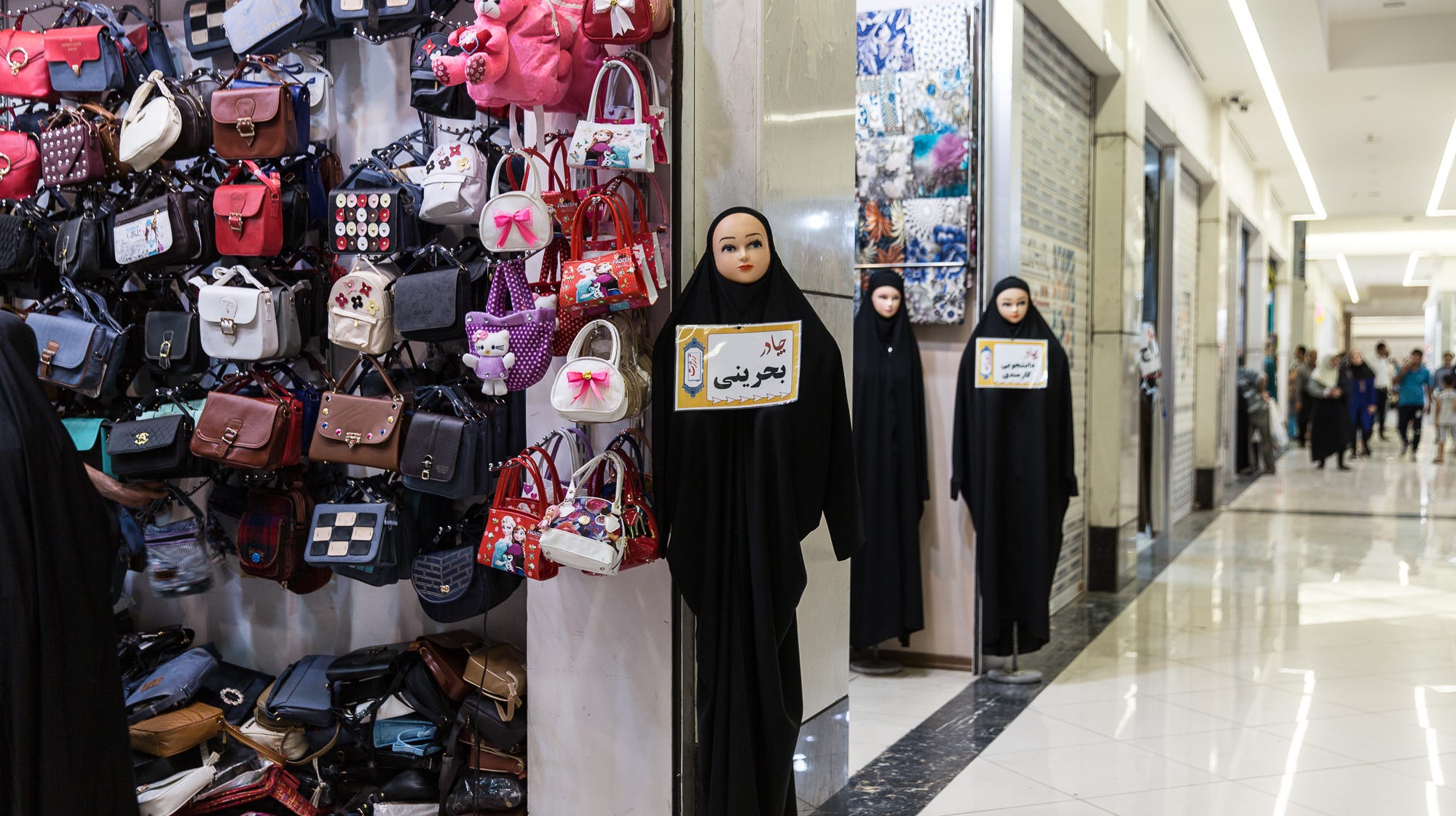
At London’s Heathrow Airport, I noticed that the majority of the women who boarded our flight looked fully Westernized in skirts, tank tops and other normal European summer attire. They disembarked wearing hijab, chador and other “modesty-preserving” items.

The barren expanse between Tehran Imam Khomeini International Airport and north Tehran, where I was staying, yielded little of note to look at in terms of scenery.

Apart from one thing: the mausoleum of Khomeini, the deeply anti-American religious scholar who became Iran’s supreme religious leader and founder of the Islamic Republic.

Khomeini’s shrine houses a marble tomb and has a huge gold dome. It is the size of a football field and contains a shopping mall, a center for Islamic studies and a parking lot with space for 20,000 cars.

Incredibly, the large complex remains under construction – nearly 30 years after Khomeini’s death.

After I checked into my hotel, a 27-story building with views over Tehran’s dry, earthenware-like terrain, I consulted a map. “Evin University,” the prison, was around the corner.

I hoped the authorities would not feel compelled to help me further my education.

My first full day in Tehran was consumed with not getting killed crossing the street.

Tehran is known for its massive traffic jams and spirited drivers. Morning. Evening. Well past midnight.

I don’t know how many cars, trucks and motorbikes there are in Tehran, which is bigger than New York City. It has a population of about 12 million people in the metropolitan area, but at a conservative estimate, I’d put the vehicles on the road at about a gazillion.

In fact, after the captain of my flight from London had announced before takeoff that our arrival into Tehran would be delayed by approximately 30 minutes, an Iranian man sitting next to me on the plane started craning his neck, trying to get the attention of a flight attendant.

“So we’ll get in at 6:15 a.m. local time, right?” the man asked in a nervous tone. He was concerned that this minor delay would totally mess with his carefully calibrated plan to avoid the horrors of Tehran’s traffic.

“Great, no traffic,” the photographer I hired for the duration of my stay in Iran had said in a WhatsApp message a few days before my arrival when I told him what time my flight would land at the airport.

Nevertheless, I was still totally unprepared for Tehran’s traffic.

Not so much the scale of it, which I had seen in comparable volume in Bangkok, Istanbul, Los Angeles, Moscow and other notoriously congested metropolitan areas; it was more the freewheeling, maniacal, video-game-like approach to road safety of Tehran’s drivers.

This I had not previously experienced.

Amazing to me was the average Tehran driver’s ability to make quick decisions and ignore distractions in the service of disregarding red lights, pedestrian crossings and busy intersections. These skills have allowed Iran to distinguish itself by having one of the world’s highest number of per capita road deaths.

It had been awhile since I felt the need for help when crossing a road. In Tehran, I instinctively found myself reaching for my translator’s arm whenever we had to get to the other side of the street. 

“Just stay right next to me. I’ll tell you when,” my translator said on these occasions as I cowered like a nervous school child behind a parent on the first day of classes.

Other pedestrians seemed unperturbed by the tangled mass of taxis, trucks and motorcycles drifting across lanes and stampeding down Tehran’s surprisingly broad avenues while their drivers screamed, weaved, beeped and hand-gestured for every extra inch of road.

Under Iranian law, the car’s driver – in any road accident involving a pedestrian – is always deemed responsible and can even be required to pay blood money to the victim’s family.

How else to account for a scene I saw over and over again on my very first day in Iran?

A man and a woman riding an aging motorcycle. Noisy. Smelly exhaust fumes. While he takes care of the driving and navigation, she takes care of a hijab that is covering her head yet blowing in the wind and gradually untying itself. Sandwiched between them, a child; sometimes, two; once, three. None wears a helmet. All appear to be oblivious to the accident statistic they could become.

Another thing that became apparent quite quickly in Tehran was the abundance of white cars on the road – reportedly caused by the economic sanctions. They are usually cheaper, therefore more affordable to the average cash-strapped Iranian. For reasons no one I met was able to explain, people also seem to just prefer white cars. When a red or black car does appear, it can seem a novelty.

Maybe that’s a good thing. White cars obviously stay cooler in an extremely warm climate. Although it’s not an exact science, research using police data has shown that white cars are among the safest of any color because they are easier to see. I saw the odd Porsche, BMW and Mercedes gliding through Tehran’s wealthy northern neighborhoods. However, the majority of the cars on the street are made by Iran Khodro and Saipa, two local brands that, alongside France’s Peugeot and Renault, dominate the market.

These cars are small, relatively easy to repair and overwhelmingly white.

On my first day in Tehran, I expected to find at least some evidence of a villainous and barbaric terrorist state as portrayed in countless movies, TV shows and right-wing political speeches. It might be out there. I hadn’t seen it. On an extremely narrow side street, as I was leaving an interview with an official, I did notice a taxi parked at a strange angle. It was jutting, dangerously it seemed to me, into the middle of the road, as small as this road was. Both front doors were open. The driver’s bare feet stuck out on one side. His head, tilted back, on the other. He was sleeping. Snoring, I think.

  • DAY TWO: Iranians explain their ‘misunderstood’ country and why it’s not North Korea. Read journal entry here.

Read More

from Trusted eNews https://ift.tt/2NcFj4x
via IFTTT

Ryder Cup 2018: Europe’s wildcard picks – who would you choose?

news image

Eight European players have already booked their automatic places at Le Golf National, Paris as part of Thomas Bjorn’s Ryder Cup team to face the US, but which four golfers will be his wildcard picks?

Who will join Francesco Molinari, Justin Rose, Tyrrell Hatton, Tommy Fleetwood, Jon Rahm, Rory McIlroy, Alex Noren and Thorbjorn Olesen in Paris on 28 September?

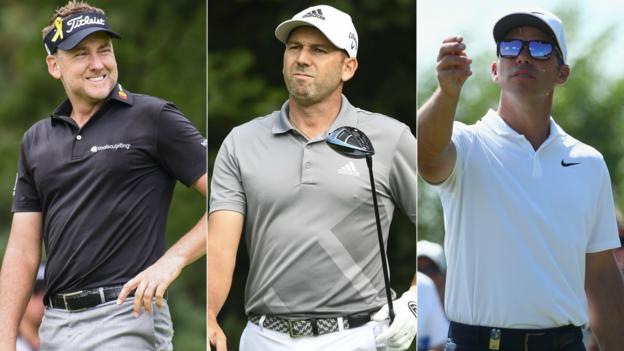
Stalwarts such as Henrik Stenson, Sergio Garcia and Ian Poulter are all hoping to be hand picked by captain Bjorn, but who would you give the nod to?

BBC Sport has chosen 10 players who could be in the running, and now we want you to cut it down to the four who should make the plane to France.

Simply rank your players in order of preference below and BBC Sport will reveal the results on Wednesday, 5 September before the official team announcement at 1400 BST.

The contenders…

Ian Poulter: The Englishman has already summoned some Ryder Cup spirit this year after staging a remarkable comeback to qualify for the Masters via a play-off. An injury meant he was involved as a vice-captain last time out. The 42-year-old, who has lost just four of his 18 matches and is unbeaten in the singles, has been involved in five Ryder Cup wins since making his debut in 2004.

Sergio Garcia: The 2017 Masters Champion has won 22-and-a-half Ryder Cup points, playing in eight editions of the biennial event. But the 38-year-old Spaniard has struggled for form this year, missing all four cuts at the majors and failing to qualify for the PGA Tour’s FedExCup play-offs for the first time.

Henrik Stenson: The Swede has played in four Ryder Cups and holed the winning putt on his debut at The K Club in 2006. The 42-year-old has registered top-six finishes at both the Masters and US Open in 2018, but has slipped out of the world top 10.

Rafa Cabrera Bello: The world number 29’s best performance this year is tied for third at the WGC Mexico Championship, although he did finish in the top 10 at the last of the year’s majors, the PGA Championship. The Spaniard won two-and-a-half points from his three matches at Hazeltine in 2016.

Thomas Pieters: The Belgian impressed on his Ryder Cup debut in 2016, scoring four points – a record for a rookie – and forged a great partnership with McIlroy. The 26-year-old finished tied for sixth at the PGA Championship in August.

Russell Knox: “Welcome to the conversation,” said captain Thomas Bjorn to Knox after the Scot won the Irish Open earlier this year to put himself in contention for a first Ryder Cup place.

Eddie Pepperell: A first European Tour win at the Qatar Masters in February proved the beginning of a strong run of form for the Englishman, who is hoping to compete in his first Ryder Cup after enjoying a top-six finish at The Open.

Matthew Fitzpatrick: The Englishman was unable to get off the mark in two matches on his Ryder Cup debut in 2016. His best finish on the European Tour this season was tied for third in Abu Dhabi in January.

Paul Casey: The Englishman is eligible for selection again after ruling himself out in 2016 by declining to rejoin the European Tour. He missed out on a wildcard in 2010 despite being seventh in the world, but was part of victories in 2004 and 2006 before contributing just a half point at Valhalla a decade ago.

Matt Wallace: What better way of showing your credentials by winning the final qualifying event before the Ryder Cup? That’s what the Englishman did in Denmark on Sunday for his third European Tour win this season.

Make your picks

Read More

from Trusted eNews https://ift.tt/2Pxe5TB
via IFTTT

Pakistan: US aid cut was money owed, not assistance

news image

Islamabad, Pakistan – The significance of United States cancelling $300m in security assistance to the Pakistan has been downplayed by the country’s foreign minister who said the amount was a reimbursement and not assistance.

Relations between the US and Pakistan have been increasingly frayed since January, when US President Donald Trump suspended more than $1.1bn in security assistance to the country over allegations that it was not acting against armed groups such as the Afghan Taliban.

Pakistan denies the charge, saying it has conducted indiscriminate military operations against all armed groups operating on its soil.

On Sunday, Pentagon spokesperson Lt-Col Kone Faulkner confirmed that the US would be finally cancelling $300m in Coalition Support Funds (CSF), which was part of the $1.1bn suspended in January, reassigning the funds to other projects, “due to a lack of Pakistani decisive actions in support of the South Asia Strategy”.

“This $300m was neither any aid nor assistance,” said Pakistan’s new Foreign Minister Shah Mahmood Qureshi on Sunday evening.

“It is our share in CSF. This is the money which Pakistan has already spent through its own resources and [the US] was to reimburse it to us.” 

US Secretary of State Mike Pompeo, accompanied by US military chief General Joseph Dunford, is due for a visit to Islamabad on Wednesday.

Qureshi said that ties between Pakistan and the US are currently “almost non-existent”, but he hoped this would change after Pompeo’s visit.

“With the visit of the US Secretary of State we have an opening and a beginning can be made, and we will try to build a consensus in areas of mutual interest,” he said.

“It is our shared objective to cleanse the region and the world of terrorism.

“We will listen to their point of view, and we will present our position to them,” he said. “Our objective is that we move our relationship forward based on trust, respect and understanding.”

Pompeo visit

Pompeo and Dunford are expected to hold talks with the newly elected government, led by longtime opposition politician Imran Khan, and military chief General Qamar Javed Bajwa.

For over a decade, Pakistan has received CSF assistance to reimburse its military for expenditures incurred in its war against armed groups, including the Pakistani Taliban.

Afghanistan and the US accuse the country of offering safe haven to leaders  of the Afghan Taliban and Haqqani Network, which have been waging a 17-year war since the US invasion of Afghanistan in 2001.

Pakistan denies that it has aided the Afghan Taliban and its allies.

In 2016, Akhtar Mansour, then-chief of the Afghan Taliban, was killed in a US drone strike on Pakistani territory, while travelling in the southwestern province of Balochistan using Pakistani identity papers.

Asad Hashim is Al Jazeera’s digital correspondent in Pakistan. He tweets @AsadHashim.

Read More

from Trusted eNews https://ift.tt/2wBw4kP
via IFTTT

A trio of glorious actresses power the palace intrigue of The Favourite: EW Telluride Review

news image

The Favourite

type
Movie
release date
11/23/18
performer
Emma Stone, Rachel Weisz, Olivia Colman
director
Yorgos Lanthimos
distributor
Fox Searchlight Pictures
mpaa
R
Genre
Drama


We gave it an A

A few movies over the past decade have rocked me back on my heels quite like Greek director Yorgos Lanthimos’ The Lobster back in 2016. It was the kind of movie-going experience for which the phrase “love it or hate it” was coined. Between its straight-faced WTF surrealism, its deadpan line readings, and its stealthy romantic heart beating under its chilly exterior, I was a goner. Here was a director, I thought, that I would be willing to follow anywhere. Well, apparently not anywhere. Because then came last year’s The Killing of a Sacred Deer, a movie that left me as cold and dispirited as one of the director’s characters. Our romance was over before we’d even gotten through the honeymoon phase.

But, after sitting through his latest film at the Telluride Film Festival this weekend, I’m happy to report that we’re back on. Led by three fantastic actresses working at the height of their powers, The Favourite is a snapshot of the scheming court of Queen Anne during the early 1700s. But this couldn’t be further from the corsets and curtsies of your typical Hollywood prestige period piece. It’s more like All About Eve directed by a Satyricon-era Fellini all hopped up with enough sex, deviance, hypocrisy, decadence, and spicy profanity to make your average Masterpiece Theatre patron reach into their PBS tote bag for some smelling salts.

But back to that All About Eve reference for a second. Emma Stone stars as Abigail, a bright young woman from a once-titled-but-now-disgraced family thanks to a degenerate gambler father. Desperate for employment, she journeys to the Queen’s palace to call on her cousin, Lady Sarah, the Duchess of Marlborough, looking for a hand up. Sarah (played by Rachel Weisz, a master of clipped quips who was so great in The Lobster) has become the Queen’s most trusted servant and advisor — and, it turns out, quite a bit more (nudge, wink). As for the Queen, who’s played by a wondrous Olivia Colman, well, she’s not in the best shape. The affairs of her country’s long war with France hold less interest to her than her 17 pet rabbits and she suffers from a laundry list of health problems, including gruesomely weeping sores on her legs that require constant massaging and dressing. This allows Lady Sarah to more or less rule from behind the scenes. Something that drives the ambitious dandy Harley (Nicholas Hoult, barely recognizable underneath a parade of baroque powdered wigs) fuming and in search of an ally close to the Queen.

Meanwhile, Abigail, no naïf in the scheming department herself, quickly works her way up from scullery maid. Like that backstage backstabber Eve Harrington, she seems to have every chess move of her rise to influence plotted out within her first hour in her new opulent surroundings (speaking of which, a special shout-out to production designer Fiona Crombie and, of course, the legendary costume designer Sandy Powell, who’s done some of her finest work here). The moment that Lady Sarah is away from the Queen’s side, the conniving Abigail swoops in to show how indispensable she can be. Soon, the two cousins are locked in a vicious rivalry, jockeying for the Queen’s ear — even if that also includes massaging her disgusting legs.

I suspect that some scholars on the Royals will take issue with some of The Favourite’s more salacious and fact-adjacent subplots, especially concerning Queen Anne. But Colman’s performance is so volcanically great, they may shrug and find themselves giving in to the daffy, fiery vulnerability of her portrayal. As for everyone else, it’s worth mentioning that compared with Lanthimos’ earlier films, including his 2010 breakout Dogtooth, this is by far the director’s most accessible film. Which isn’t to say that he’s finally mellowed or is playing it safe. Not by a long shot. The Favourite is strange enough and original enough and daring enough to please his longtime fans, while hopefully proselytizing a legion of new ones. A

Read More

from Trusted eNews https://ift.tt/2LTPwyl
via IFTTT

Premier League reaction – wins for Man Utd, Watford & Arsenal

news image

Premier League reaction: Man Utd, Watford & Arsenal win, Rashford red, Mourinho backs Woodward – Live – BBC Sport


<!–


<!–

<!–
<!–

<!–
<!–

<!–

<!–

<!–


Summary

  1. Man Utd beat Burnley 2-0; Rashford sent off
  2. Mourinho backs Woodward
  3. Watford come from behind to beat Tottenham
  4. Arsenal edge five-goal thriller at Cardiff
  5. Man City’s Sterling hits Premier League form


Read More

from Trusted eNews https://ift.tt/2wyEhq0
via IFTTT

World reacts to sentencing of Reuters journalists in Myanmar

news image

A Myanmar court has found two Reuters journalists guilty of breaching a law on state secrets during their reporting of a massacre of Rohingya and sentenced them to seven years in prison, sparking an international outcry. 

The US and British ambassadors who were present on Monday at the sentencing of Wa Lone and Kyaw Soe Oo called the verdict a blow for Myanmar’s transition to democracy.

Scot Marciel, US ambassador to Myanmar, said he was “sad for Wa lone and Kyaw Soe Oo and their families, but also for Myanmar”.  

“It’s deeply troubling for everybody who has struggled so hard here for media freedom,” he said, adding that the verdict raises questions over the confidence the people of Myanmar have in their justice system. 

Dan Chugg, British ambassador to Myanmar, speaking on behalf of the UK and member states of the European Union, said: “We are extremely disappointed by this verdict.”

“Freedom of expression and rule of law are fundamental in a democracy, and this case has passed a long shadow over both today,” he said.

“The judge has appeared to have ignored evidence and to have ignored Myanmar law. This has dealt a hammer blow for the rule of law.” 

‘Unfair and one-sided’

WATCH: Myanmar charges Reuters reporters under Official Secrets Act (2:17)

Wa Lone and Kyaw Soe Oo had pleaded not guilty to violating the colonial-era Official Secrets Act, punishable by up to 14 years in prison. They contended they were framed by police. 

The Reuters reporters were arrested on December 12 while investigating the killing of 10 Rohingya and other abuses involving soldiers and police in Inn Din, a village in Rakhine state.

Myanmar has denied allegations of atrocities made by thousands of refugees against its security forces, saying it conducted a legitimate counterinsurgency operation against Rohingya fighters.

But the military has acknowledged the killing of the 10 Rohingya men and boys at Inn Din after arresting the Reuters reporters.

Calling the decision “unfair” and “one-sided”, Wa Lone said the verdict threatened Myanmar’s democracy. 

“It directly threatens our democracy and freedom of the press,” he said as he was driven away along with Kyaw Soe Oo to begin their sentence.

“I would like to say it’s very disappointing as it’s destroyed the system [democracy] of our country and the way we would like to be. We will continue to face it.” 

The case has drawn worldwide attention as an example of how press freedom is suffering under the government of Nobel Peace laureate Aung San Suu Kyi. 

Kristian Schmidt, EU ambassador to Myanmar, in a post on Twitter, said the prison sentences of Wa Lone and Kyaw Soe Oo should be “reviewed and they should be released immediately and unconditionally”. 

Expressing his disappointment, Knut Ostby, UN resident and humanitarian aid coordinator in Myanmar, called for the release of the journalists. 

The United Nations has consistently called for the release of the Reuters journalists and urged the authorities to respect their right to pursue freedom of expression and information,” he said. 

“Wa Lone and Kyaw Soe Oo should be allowed to return to their families and continue their work as journalists.” 

‘A new low for Myanmar’

Stephen J Adler, Reuters’ editor-in-chief, called the ruling a “major step backward in Myanmar’s transition to democracy, cannot be squared with the rule of law or freedom of speech, and must be corrected by the Myanmar government as a matter of urgency”.

He denounded the charges against the reporters as “false” and “designed to silence their reporting and intimidate the press”. 

He added: “We will not wait while Wa Lone and Kyaw Soe Oo suffer this injustice and will evaluate how to proceed in the coming days, including whether to seek relief in an international forum.”

Phil Robertson, deputy Asia director for the Human Rights Watch, called the sentence an “outrageous injustice”. 

“How can Myanmar judicial system justify sending reporters doing their job to a longer prison sentence than the Tatmadaw soldiers who killed the 10 Rohingya in their story in cold blood?” he asked in a post on Twitter. 

The Committee to Protect Journalists also condemned the sentencing of Wa Lone and Kyaw Soe Oo, saying it marked a “new low for Myanmar”. 

“The process that resulted in their convictions was a travesty of justice and will cast Myanmar as an anti-democratic pariah as long as they are wrongfully held behind bars,” said Shawn Crispin, CPJ’s senior Southeast Asia representative in a statement

Read More

from Trusted eNews https://ift.tt/2LLHpUl
via IFTTT

Alfonso Cuarón’s Roma is a masterpiece about remembering the past: EW Telluride Review

news image

Roma

type
Movie
Genre
Drama
performer
Yalitza Aparicio, Nancy García, Marina de Tavira
director
Alfonso Cuarón
distributor
Netflix


We gave it an A

Is there anything Alfonso Cuarón can’t do? Is there any style of film he can’t tackle and master? What other director, in four straight films, could hopscotch from the intimacy of Y Tu Mamá También to the franchise imperatives of a Harry Potter movie to the daredevil dystopian magic-trick of Children of Men, all topped off by taking us to the heavens and back in Gravity? He seems to be constitutionally incapable of repeating himself. That streak continues with his latest, most personal, and I’d argue greatest film, Roma, which made its U.S. debut this weekend at the Telluride Film Festival.

Despite its seeming Italianate title, Roma is a deeply felt and soul-baring autobiographical love letter from Cuarón to the middle-class Mexico City neighborhood of his childhood (the neighborhood was called Roma). The film is shot in the dreamy black-and-white of a long-lost home movie or a neo-realist Vittorio De Sica film. While it primarily revolves around the story of Cuarón’s family in the early ‘70s when he was growing up, it’s also about a slower way of life, a culture in the midst of unrest, and most of all, a woman who became a sort of second mother to him and his siblings while his parents were secretly splitting up.

Played by Yalitza Aparicio, a non-actor who makes a dazzlingly soulful debut, Cleo is the family’s maid, nanny, confidant, and tireless all-around dispenser of comfort (the rest of the cast apart from the mother, Sofiá, played by Marina de Tavira, are non-actors). The bond between Cleo and the family is both unspoken and deeply felt in every frame of this gorgeously compassionate film. She is the family’s servant, yes, but she’s also its loyal protector and, in a way, the glue that holds it together. Roma may only span a year or so, but somehow in that year is the entirety of life itself – its small, fleeting moments of joy and longer, more poignant stretches of heartbreak.

Cuarón’s film has been called a “memory play,” and that feels about right. It starts off slowly, but once you sync up with its rhythm, you’ll be locked in. Like Italian maestro Federico Fellini’s epics about his childhood in Rimini, Amarcord and Roma (a nice coincidence, that), Cuarón’s film is about the senses he still recalls from his youth — the earliest sights, sounds, and smells that seem to have left an impression that he’s never been able to shake.

In one scene, we watch Cleo doing laundry by hand on the roof level of the family’s home; then the camera pulls back and poetically pans across an entire neighborhood of maids just like her doing the same thing. In another, the family’s four children play in the driveway during a hailstorm, catching the golfball-sized balls in buckets. In another, a boozy, joyous New Year’s Eve celebration is interrupted by a forest fire that breaks out in the countryside, pulling revelers into the cause with buckets of water. And in yet another, we see Sofiá tell her four children during a vacation that she and their father are splitting up, followed by a trip for ice cream.

Deep down Cuarón gets that, in life, sometimes the smallest moments can be as indelible in the rearview mirror as the biggest and most important ones. A sunburn from a day at the beach can leave an imprint as strong as a father walking out the door on a business trip and never coming back. Nostalgia is funny that way. Experiencing the lovely and lyrical Roma, you get the impression that at age 56, Cuarón not only wanted to get these still-vivid memories down on film, but that he also needed to. You’ll be glad he did. Because movies with this much empathy and humanity don’t come along very often. A

Read More

from Trusted eNews https://ift.tt/2wDk6rb
via IFTTT

Roseanne Barr says she’s moving to Israel when The Connors airs: ‘I’m staying away from it’

news image

Roseanne Barr is heading all the way to the Holy Land to avoid The Conners.

During her latest appearance on the Rabbi Shmuley Boteach Podcast, the comic said she’ll be in Israel when the upcoming Roseanne spin-off airs without her this fall and will not be watching.

“I have an opportunity to go to Israel for a few months and study with my favorite teachers over there, and that’s where I’m going to go and probably move somewhere there and study with my favorite teachers. I have saved a few pennies and I’m so lucky I can go,” she said, adding, “It’s my great joy and privilege to be a Jewish woman.”

As for how she feels about the new show, Barr said, “I’m not going to curse it or bless it. I’m staying neutral. That’s what I do. I’m staying neutral. I’m staying away from it. Not wishing bad on anyone, and I don’t wish good for my enemies. I don’t. I can’t. I just stay neutral. That’s what I gotta do. I have some mental health issues of depression and stuff. I got to stay in the middle or I’ll go dark, and I don’t want to go dark again. I’ve done it. After all, I was married to Tom Arnold.”

Earlier in the episode, Barr and the rabbi bemoaned her treatment in the media and at ABC since the network fired her from her sitcom for her now-infamous tweet in which she likened former Obama advisor Valerie Jarrett to an “ape.”

After Boteach called her removal from the show “astonishing,” Barr agreed, saying, “That’s what everybody said. My friends called and said, ‘This is unprecedented, nothing like this has ever happened before.’ And I said, ‘Yeah I know, it’s never happened before.’”

Boteach also said Barr went “over and beyond” with her apologies. After writing the tweet, Barr offered multiple excuses for the language, including that she was misunderstood, that she was under the influence of Ambien, and that she didn’t know Jarrett was black. Addressing Varrett directly in her first televised interview after the tweet, she said, “I’m so sorry that you thought I was racist and that you thought my tweet was racist because it wasn’t.” She then added that Varrett “needed” to get a new haircut.

“My friends told me in the beginning, they said, ‘Oh my God, you’ve made a fatal mistake, and it’s all over YouTube, a lot of people are saying it,’” Barr told Boteach when asked about the apology. “They said, ‘You made a fatal mistake… apologizing to the Left.’ Once you apologize to them they never forgive, they just try to beat you down until you don’t exist. That’s how they do things. They don’t accept apologies.”

She then said that she “should never have said I’m sorry,” before the rabbi interjected. She then clarified, “I’m saying in their world. In my world, I had to [apologize], because I was sorry, for crying out loud! I was sorry, jeez. People were so angry, and I have to say a little bit ill-informed about me, that they would put me in the same box where they have people who call for the death of all Jews and want to enslave all black people. [The same box as] real racists that actually exist. They put me in a box with them. And how do they think that’s gonna affect me. They don’t think. They’re under mind control.”

The Connors airs Oct. 16 at 8 p.m. ET on ABC.

Listen to the full podcast with Barr above.

Read More

from Trusted eNews https://ift.tt/2Pr6TZg
via IFTTT

Design a site like this with WordPress.com
Get started