Iraq: Rival blocs vie for majority as new parliament meets

news image

Iraq’s newly elected parliament held its first session on Monday as two rival blocs, both claiming to hold the most seats, vied for the right to form a new government.

The parliament meeting followed more than three months after the May 12 polls, the first since Iraq declared victory over the Islamic State of Iraq and the Levant (ISIL, also known as ISIS) group late last year.

On Sunday, Iraqi political groups, including those led by Shia leader Moqtada al-Sadr and Prime Minister Haider al-Abadi, formed a 16-group alliance to create a parliamentary bloc.

With 54 seats, Sadr’s Sairoon coalition had won the elections, while Abadi’s al-Nasr coalition came in third with 42 seats. However, no electoral coalition secured a clear majority in the polls.

The new bloc includes religious and ethnic groups, such as Shia and Sunni Arabs and Turkmen, as well as Yazidi and Christian minorities.

A total of 166 MPs are required to form a coalition in the 329-seat parliament, which in turn would form the country’s new government and name the new prime minister.

The Sadr-Abadi alliance claimed it had a majority of the seats, which was contested by former Prime Minister Nouri al-Maliki, who formed an alliance with militia commander Hadi al-Ameri.

Neither alliance included the two main Kurdish parties, placing them to reprise the kingmaker role they have historically played, as their combined 43 seats would give whichever alliance they join a sizable numerical advantage.

I don’t think the Americans will accept any role for the Iranians in Iraq.

Ahmed Rushdi, former Iraqi parliamentary speaker

Protracted process

Ahmed Rushdi, a former parliamentary speaker and a member of the House of Iraqi Expertise Foundation told Al Jazeera that due to these differing claims of majority seats, there is still no clear vision yet as to which bloc will end up forming the government.

“The most important thing is that until now [parliament] still hasn’t managed to [put forward] candidates for the prime minister, president and the parliamentary speaker,” he said.

After the US-led invasion that toppled Saddam Hussein in 2003, the leadership positions are held by Iraq’s three largest ethnic-sectarian components – a Shia, Kurd and Sunni respectively.

Rushdi said that a protracted process in forming a government is likely, pointing out that in the previous 2010 election, it took 11 months for a government to be made.

This time around however, there are two foreign players on the ground: Iraqi allies and archrivals, the Iranians and the Americans.

“I don’t think the Americans will accept any role for the Iranians in Iraq and have been threatening to use economic blockage if the next Iraqi government will be close to Tehran,” he said.

Ameri and Maliki are Iran’s two most prominent allies in Iraq. Abadi is seen as the preferred candidate of the US, while Sadr portrays himself as a nationalist who rejects both American and Iranian influence.

Rebuilding the country

In addition to balancing relations between Iran and the US, the new government will be tasked with rebuilding the country after a three-year war with ISIL.

Furthermore, uncertainty over the composition of the new government has raised tensions at a time when public impatience is growing over poor basic services, high unemployment and the slow pace of reconstruction.

Nader Hashemi, a professor at the University of Denver, told Al Jazeera that there is hope that Sadr and Maliki’s alliance, as the “most inclusive and representative since the 2003 US invasions” will begin to address these issues.

“Most of the key players have a nationalist political agenda that is geared towards developing Iraq for all of Iraqi citizens not catering to the ethnic or sectarian interest of a particular group,” he said. “So in that sense there’s a lot to be optimistic about.”

Mamoon Alabbasi, a political analyst focusing on the Middle East and North Africa, was more cautious about just how representative Sadr’s alliance would be.

“It is common for Shia-led political alliances to include members of other communities,” he told Al Jazeera.

“How much influence do these members have or what kind of treatment their communities will receive is the real test. Otherwise the diverse makeup is cosmetic.”

‘Stakes are huge’

Hashemi acknowledged however that whether Sadr alliance will be able to address the immense political and socioeconomic challenges that Iraqi society is afflicted with, such as unemployment, corruption, and the delivering of public services, remains to be seen.

“The stakes are huge,” he explained. “Iraq is a failed state. It’s been deeply affected by a sectarian war and by the rise of ISIL – which has been comprehensively crushed but not defeated,” Hashemi added.

Abbasi said that the rebuilding of Sunni-majority provinces, especially Anbar and Nineveh, has taken a backseat.

“Talk of reconstructing these areas was abundant following Iraq’s victory against the ISIL, and it peaked during the donor conference in Kuwait early this year,” he said.

“But now the focus for the current and incoming governments is on dealing with the protests in the Shia-majority south.”

People gather during a protest near the main provincial government building because of the water pollution and poor services in Basra [File:Essam al-Sudani/Reuters]

For several months now, tens of thousands of Iraqis, in several provinces such as Basra, Najaf and Karbala, have been demonstrating against the lack of clean drinking water and electricity cuts, but their demands have yet to be met.

“The incoming government will likely start by making short term fixes for the unemployment and poor services crises,” Abbasi said.

“However, if the government wants to go deeper than merely addressing the symptoms of some of Iraq’s problems, then there will be no escaping the fight to root out corruption.”

Read More

from Trusted eNews https://ift.tt/2NaiheO
via IFTTT

Your favorite stores are having amazing Labor Day Weekend sales

news image

— Our editors review and recommend products to help you buy the stuff you need. If you make a purchase by clicking one of our links, we may earn a small share of the revenue. However, our picks and opinions are independent from USA Today’s newsroom and any business incentives.

Every time there’s a recognized holiday that gives most of America the day off, there seems to be a boatload of sales that goes with it. Labor Day, which basically signals the fleeting days of summer (and the end of white pants), is no different when in comes to the high volume of sales we’ll be seeing. Right now, there are great deals on everything thing from clothing to furniture to appliances and more.

Since many of us will be using our three-day weekend as an actual break and not spending our holiday and dealing with crowds standing in line in stores, plenty of retailers extend their Labor Day sales for at least a week and make their deals available online too. That means you can spend some time before and after the actual holiday shopping great deals and discounts at some of your favorite stores. To help you plan out what (if anything) you should buy this holiday weekend, we scoured the internet to find the best Labor Day sales out there.

Fashion Deals

  • ASOS: Save 20% on all new season, and save 20% sitewide with the code “DAYOFF.”
  • Carters: Get 50% off plus an an extra 25% off a $40 purchase with the code “LABORDAY.”
  • Draper James: From 9/2–9/4, get up to 75% off online and in-stores.
  • eBags: Get up to 75% off and save 20% with the code “SAVE20.”
  • Eddie Bauer: Get an extra 50% off end-of-summer clearance with the code “PEAKS.”
  • Express: Find BOGO deals on assorted women’s and men’s clothing. Plus, all women’s jeans are $39.90.
  • GANT: Save an additional 30% on sale items. 
  • GAP: Get up to 50% off everything, plus an extra 20% off if you order online.
  • GlassesUSA.com: Alongside plenty of markdowns, you can save an additional 55% with the code “LABOR55.”
  • J.Crew: Get 30% off, plus an extra 10% with the code “BIGSALE.” Final sale items are marked down 50% too!
  • Kate Spade: Save an extra 30% on sale items with the code “ONEOFAKIND” through 9/5.
  • Koral: From 8/30–9/3, get up to 65% off select styles.
  • Levi’s: Get up to 60% off sale items.
  • L.L.Bean: Save 25% on sale items through 8/29 with the code “SALE25.
  • Lord and Taylor: Get up to 40% clothing, woman’s jeans, fall coats, and accessories with the code “FALL.”
  • Macy’s: Save up to 20% on select items with the code “WKND.”
  • Men’s Warehouse: Buy one, get one free through 9/3.
  • ModCloth: Buy 2 Charter School Sweaters and get 30% off until September 10.
  • Nasty Gal: From 8/31–9/3, you can get 50-80% off everything.
  • Nordstrom Rack: Save up to 65% on select designers, including Fenty Puma, Calvin Klein, True Religion and more.
  • Old Navy: From 8/30–9/3, get 50% off all jeans, dresses, tees, sweatshirts, and hoodies.
  • PacSun: From 8/30–9/3, get 20% off anything site wide with the code “HEYFALL.”
  • Rachel Roy: From 8/29–9/4, take an extra 25% off sale.
  • Sanctuary Clothing: Get 30% off full-price items with the code “LD18.”

Home and Appliance Deals

  • Best Buy: Save up to 40% off top appliance deals.
  • Dormify: From 8/31–9/3, get 20% off your order with the code “SEEYASUMMER.”
  • Home Depot: Get up to 40% off select appliances and $10 off one-gallon cans or $40 off five-gallon buckets of select BEHR Paints, Stains and Primers.
  • Houzz: Get up to 75% off of our best sellers and free shipping off select products.
  • LG: Find varied savings on home appliances through September 12.
  • Lowe’s: Get up to 40% off “appliance special values” until September 12 as well as various other savings through September 19.
  • Poo~Pourri: From 8/30–9/3, get 20% off sitewide on orders over $25 with the code “LABOR20.”
  • Sears: Save up to 40% on appliances, plus an additional 10% if you use a Sears Card or with the code “APPLIANCE10.”
  • Target: Get up to 30% off plus an extra 15% off rugs, bedding, home items, furniture, and patio items.
  • Walmart: Get varied discounts on home and outdoor furniture and pool and outdoor supplies.
  • Wayfair: Save up to 75% on Labor Day clearance items.

Mattress Deals

  • Allswell: Save 20% off sitewide and up to $150 off mattresses with the code “LABORDAY” until September 5.
  • Bear Mattress: Get $100 off any Bear mattress with the code “LD100” or $200 off any Bear Hybrid mattress with the code “LD200.”
  • Brentwood Home: Save $200 off Oceano, Crystal Cove, and Cedar mattresses until September 10 with the code “SAVE200.”
  • DreamCloud Sleep: Get $200 off all mattresses.
  • Eight Sleep: Get $50 off when you spend $500 with code “50LABORDAY,” $125 off when you spend $1,000 with code “125LABORDAY,” and $250 off when you spend $1500 with code “250LABORDAY.
  • Layla Sleep: Get $100 off any size mattress and get a free pillow.
  • Leesa: Get $150 off a Leesa mattress or $225 off a Sapira mattress.
  • Nectar Sleep: Get $125 off and two premium pillows free when you purchase a mattress.
  • Nest Bedding: Get $25 to $200 off select mattresses and a free sheet set, a Buy One Get One Pillow 50% off, and $25 off all pet beds.
  • Serta: Save up to $700 on Serta iComfort mattress sets until September 10.

All Other Deals

  • Amazon: Save up to $100 on Amazon devices, including Echo smart speakers, Fire TV streaming devices, and select e-readers.
  • Best Buy: Get a TCL 65-inch Roku 4K TV for its lowest price of $872.99 with the code “TCLUPGRADE.”
  • Dell: Save up to $500 or 50% on select laptops and tech accessories.
  • Dermstore: Get 20% off select brands with the code “LABORDAY” until September 6.
  • Cratejoy: From 9/1–9/3, get 20% off new and trending subscription boxes with the code with the code “CJLABOR20.”
  • Google: Save $250 on Pixelbook laptops.
  • eBay: You can find a wide variety of Labor Day deals on virtually everything.
  • Massdrop: Save big on Samsung QLED Q8FN 4K Smart TVs now until Friday 8/31 at 6 a.m. EST. The 55″ is $300 off ($1,400), the 65″ is $800 off ($2,000), and the 75″ is $1,000 off ($3,000)! 
  • Sephora: The Beauty Insider Appreciation Sale is happening until September 3 with 10-20% off everything depending on your level of loyalty to their insider program. Read more about this sale and find your coupon code here.

Prices are accurate at the time this article was published, but may change over time.

Read or Share this story: https://usat.ly/2PKIYoA

Read More

from Trusted eNews https://ift.tt/2wE3U8T
via IFTTT

LSU dominates Miami, but Tigers still have questions to answer

news image

CLOSE

Recapping the top moments from college football’s Week 1 action, which include Maryland’s upset of Texas and how Ohio State fared without coach Urban Meyer.
USA TODAY

ARLINGTON, Texas — Perhaps because this is LSU, and it’s what LSU does, the quarterback faked a handoff before looking to pass. Never mind that there was not actually a running back in the immediate vicinity.

It was an odd moment, but somehow it worked. Joe Burrow faked to no one, then found an open receiver on a deep crossing route, and hit him. And then a whole lot of people wearing purple and gold cheered very loudly.

We bring up the sequence because the Tigers’ 33-17 victory against No. 8 Miami on Sunday night at AT&T Stadium was an odd amalgam of unexpected dominance coupled with the potential emergence of a functional quarterback. Foundationally, though, it seemed like a large dose of the same old LSU — with all its pluses and imperfections. Somehow it worked.

“Everyone’s been talking about other teams being who they are,” junior rover Devin White said. “At the end of the day, we’re LSU and we wanted to prove it.”

Who are they? It’s too soon to draw any real conclusions. But the first impression was good — even if some important questions remain unanswered.

More: Misery Index: Trouble in Texas as Tom Herman begins second season with another flop

More: Nick Saban apologizes to ESPN sideline reporter Maria Taylor for his testy postgame interview

“We made a big statement,” said LSU cornerback Greedy Williams, and he’s correct.

The Tigers’ performance showed how little preseason polls mean; Miami was ranked No. 8, LSU No. 24. It’s too much to suggest they swap spots – whether LSU is worthy of the top 10, we’ll see — but the Hurricanes definitely weren’t. If nothing else, LSU’s big statement also served as a reminder of how quickly the volatile vibe around the program can swing from one extreme to the other.

“We got a happy football team in there,” said Tigers coach Ed Orgeron, and this was after ‘Coach O’ had lumbered off the field yelling: “One and oh, baby! How ‘bout them Tigers!”

Yeah, how about them? We’d wondered throughout the offseason, when Orgeron got rid of offensive coordinator Matt Canada and elevated longtime assistant Steve Ensminger. August turmoil included transfers, arrests and suspensions. Underlying everything, as always, was the question of whether Orgeron was already on the hot seat heading into only his second full season, or simply headed there fast.

“It’s never about me,” Orgeron said. “It’s about the Tigers.”

Shortly after a 54-yard field goal clipped the cross bar and slid through to extend the lead to 33-3 late in the third quarter, the giant video screen showed a promotion for the College Football Playoff Semifinal at the Cotton Bowl on Dec. 29 and asked: “Who’s in?” At least some of the fans probably considered the idea of the Tigers returning to Arlington very soon.

But hot takes from season openers become old takes exposed, sometimes by Week 2. Or in this case, maybe Sept. 15. That’s when LSU visits Auburn for what has emerged as a very early SEC West showdown.

On Sunday, we saw a fast, angry defense that stuffs the run and scares the passer. The Tigers sacked Miami quarterback Malik Rosier four times and pressured him into a couple of interceptions, including a pick-six before halftime that essentially secured victory.

But a stale, conventional offense remained a given.

In promoting Ensminger, Orgeron promised a spread offense and a 50-50 run-pass split. But it looked a lot more like what we’ve come to expect from the Tigers through the years: tight formations, plenty of runs with occasional play-action passing, not a lot of innovation. Or points, either.

Several times, Orgeron made a point of saying Ensminger’s unit scored 33 points. He was miscounting the interception return. LSU scored two offensive touchdowns and four field goals and was actually outgained by Miami. Sunday provided reason to doubt much will change.

Here’s one thing, though. At long last, LSU might have a quarterback. In his first start since high school, Burrow, a graduate transfer from Ohio State, was not spectacular. He completed only 11 of 24 passes for 140 yards, though there were a couple of drops. But including that 37-yard pass on the play-action fake that wasn’t much of a fake, Burrow at least showed flashes of passing ability that we haven’t often seen at LSU in recent years. 

“Going into the game, we were going to throw the football if we could,” Orgeron said. “You know what? We couldn’t, not like we wanted to, but we could run it.”

More important was Burrow’s poise, including the moment he checked into a run play away from a blitz; senior running back Nick Brossette took it 50 yards for a touchdown.

Burrow said with the lead and LSU’s defense, he was intentionally conservative.

“I didn’t want to take too many chances,” he said, “because I knew how good a defense we have. I didn’t want to turn the ball over. Keep that (Miami) turnover chain in the box.”

It sounded like he could have been reading from his new program’s offensive mission statement. Burrow said he is still adjusting to the humidity, and he recently learned “it’s a sin to eat healthy in Louisiana,” because when he chooses salad and grilled chicken, he gets heckled by teammates. Wait until he figures out how fans heckle the Tigers when the offense stagnates.

“We didn’t do a bunch,” LSU wide receiver Jonathan Giles said. “It was just a little taste. It’s gonna be way more, a lot more passing going on.”

We’ll see soon enough. It would be nice to collect a few more data points, and to see if Burrow completes a few more passes — and if Ensminger’s offense evolves into something at least a tad more creative — before we make sweeping judgments about these Tigers.

“I have a lot of work to do,” Burrow said. “We have a lot of work to do. But that was a good start.”

Autoplay

Show Thumbnails

Show Captions


Read More

from Trusted eNews https://ift.tt/2LU6z2Y
via IFTTT

Alastair Cook: England great to retire from international cricket after fifth Test

news image

England won 24 of Alastair Cook’s 59 Tests as captain

England’s highest Test run-scorer Alastair Cook will retire from international cricket after this week’s final Test against India.

The opener, 33, has scored 12,254 runs and made 32 centuries in 160 Tests – all England records.

“There is nothing left in the tank,” said Cook, who captained his country in a record 59 Tests.

The fifth Test of the series, in which England have an unassailable 3-1 lead, starts on Friday at The Oval.

Cook is sixth on the all-time list of Test run-scorers and has made a record 11,627 runs as an opener.

He added: “I have achieved more than I could have ever imagined and feel very privileged to have played for such a long time alongside some of the greats of the English game.”

However, he has struggled this year, averaging 18.62 in 16 innings, and has not scored a fifty in the current series against India.

Leading Test run-scorers
Batsman Runs Average Tests
Sachin Tendulkar (Ind) 15,921 53.78 200
Ricky Ponting (Aus) 13,378 51.85 168
Jacques Kallis (SA) 13,289 55.37 166
Rahul Dravid (Ind) 13,288 52.31 164
Kumar Sangakkara (SL) 12,400 57.40 134
Alastair Cook (Eng) 12,254 44.88 160

‘I know the timing is right’

In a statement, Cook said his decision to retire from international cricket had come after “much thought and deliberation over the last few months”.

He added: “Although it is a sad day, I can do so with a big smile on my face knowing I have given everything.

“The thought of not sharing the dressing room, again, with some of my team-mates was the hardest part of my decision, but I know the timing is right.

“I have loved cricket my whole life, from playing in the garden as a child, and will never underestimate how special it is to pull on an England shirt.

“So I know it is the right time to give the next generation of young cricketers their turn to entertain us and feel the immense pride that comes with representing your country.”

Cook said he will continue playing county cricket and “can’t wait to get fully involved” with Essex in 2019.

‘No player has given more to the England shirt’

Former England captain Michael Vaughan: “No player has given more to the England cricket shirt. No player has got more out of their ability. No player has shown more mental strength than Alastair Cook. More than that, he is the nicest cricketer we have ever had. Thanks for all the memories Cookie…”

Ex-England captain and Cook’s former coach Graham Gooch: “Alastair has been the rock of England’s batting for the past 12 years and, while we are all sad to see him retire, we must rejoice in what he has done for our country. He is a genuine legend of English cricket.

“He is a legend not only because of his performances, but because of his attitude, his sacrifices, the way he has carried himself and the example he has set. Alastair is a perfect role model and is the image of the game we want to project.”

Former England skipper Nasser Hussain on Sky Sports: “He has been England’s greatest batsman. He is mentally the toughest cricketer I have ever seen. He has been a truly remarkable cricketer.”

Ex-England captain Alec Stewart on BBC Radio 5 live: “He has timed it perfectly. He will still go out as England’s greatest run-scorer. We won’t fully appreciate him until he has gone.

“If someone breaks that England runs record then they will be a very good player and it will take them a long time to get there. He is the heartbeat of the team in such an unassuming way.”

Ex-England spinner and team-mate Graeme Swann on BBC Radio 5 live: “He is one of the nicest men alive. There is a reason why he has lasted so long. He always put in 100% but would look and appreciate the other side of life.”

From last-minute replacement to England legend

The left-hander made his Test debut at the age of 21, replacing Michael Vaughan against India at Nagpur in 2006, and hit an unbeaten century in the second innings.

He missed the third match of that series because of illness, but has made a record 158 consecutive Test appearances since.

Cook won four of the seven Ashes series in which he played, scoring 766 runs at an average of 127.66 in 2010-11 as England triumphed in Australia for the first time in 24 years.

Cook took over as captain from Andrew Strauss in 2012 and went on to win 24 of his Tests in charge. Only Vaughan has more with 26, although Cook lost a record 22 Tests as skipper.

In 2012, Cook led England to their first victory in India for 27 years.

He won two Ashes series as captain – at home in 2013 and 2015 – but was whitewashed 5-0 down under in 2013-14.

Cook became the first Englishman to reach 10,000 Test runs in 2016, although England lost 4-0 in India that winter and he resigned as captain in February 2017.

While he hit 243 against West Indies at Edgbaston last summer, he went through another lean spell before making an unbeaten 244 against Australia in the Boxing Day Test, his fifth double century.

He has passed 50 once in 16 innings since then.

Cook formed a prodigious opening partnership with Strauss, scoring a combined 4,711 runs in 117 innings between 2006 and 2012 – the most by an England opening pair and third most for any country.

Following Strauss’ retirement in 2012, Cook has had 12 different opening partners.

Cook also scored 3,204 runs at an average of 36.40 in 92 one-day internationals, but has not played since 2014. He made four Twenty20 appearances for England.

The record-breaker

  • Most Test runs for England – 12,254
  • Most Test centuries for England – 32
  • Most 150+ scores by England player – 11
  • Most Test appearances for England – 160
  • Most consecutive Test appearances by any player – 158
  • Most Tests as England captain – 59
  • Most catches by England player – 173

Six of the best – Cook’s greatest Test innings

  • 104* v India, Nagpur, 2006: Flown in from West Indies to make his Test debut, Cook followed his first-innings 60 with a brilliant unbeaten century to secure a draw. It was obvious Cook and Test cricket were a perfect match.
  • 235* v Australia, Brisbane, 2010: The first Test of the Ashes against a dominant Australia side. England trailed by 221 on first innings. No matter to Cook, who batted for the best part of two days, taking England to a scarcely believable 517-1 declared and setting the tone for a rare series win down under.
  • 294 v India, Edgbaston, 2011: Cook’s highest Test score, and one central to England’s innings-and-242-run win. That it came after he had managed only 20 runs in his first four innings of the series said everything about Cook’s character.
  • 190 v India, Kolkata, 2012: After scoring 176 and 122 in the first two Tests, captain Cook hit 190 in the third. A 23rd Test hundred made him England’s record centurion and helped England win in India for the first time since 1985.
  • 95 v India, Southampton, 2014: England had been thumped 5-0 in Australia. They had just lost at home to Sri Lanka. Cook had not scored a century in 27 innings. Calls for him to stand down were growing louder by the day. He may not have made it to three figures, but he received a standing ovation for playing what he claimed was the most pressurised innings of his career. England won the series and he remained as skipper.
  • 263 v Pakistan, Abu Dhabi, 2015: If ever an innings defined Cook’s career, this is it. Showing all his fabled concentration and patience, Cook batted for almost 14 hours in the desert heat – the third longest Test innings in history. Only bad light prevented England from pulling off a remarkable victory.

Read More

from Trusted eNews https://ift.tt/2wCbocn
via IFTTT

Mediterranean refugee numbers drop but crossing is deadlier: UN

news image

More than 1,600 people have died or gone missing while attempting to reach Europe so far this year, UNCHR’s new Desperate Journeys report shows. 

The report released on Monday reveals that while the number of crossings has fallen, the deaths have risen, making the voyage more deadly in percentage terms for those who venture across.

According to the report, people smugglers are taking greaters risks in the journey due to increased surveillance.

A total of 2,276 people died last year while trying to cross, this represented one death for every 42 arrivals.

This year, it is 1,095 deaths, or one out of every 18 arrivals. In June alone, the proportion hit one death for every seven arrivals. About 500 people have gone missing. 

“This report once again confirms the Mediterranean as one of the world’s deadliest sea crossings,” said UNHCR’s Director of the Bureau for Europe, Pascale Moreau.

“With the number of people arriving on European shores falling, this is no longer a test of whether Europe can manage the numbers, but whether Europe can muster the humanity to save lives,” she added.

People travelling to Europe continue to do so for different reasons.

Some continue to flee armed conflict and human rights violations, while others seek international protection on account of religious, ethnic or political persecution or to escape different forms of sexual or gender-based violence, the report revealed.

On the Central Mediterranean route so far this year, there have been 10 separate incidents in which 50 or more people died – most after departing from Libya.

“The reason the traffic has become more deadly is that the traffickers are taking more risk, because there is more surveillance exercised by the Libyan coast guards,” said Vincent Cochetel, UNHCR’s special envoy for the central Mediterranean.

Seven of those incidents have been since June alone, UNHCR said.

“This is not new, we have highlighted this for a while now,” Maria Jesus Vega a spokesperson from UNCHR in Spain told Al Jazeera.

“We need a regional response, this not an exclusive problem from those countries that are in the outer border, such as Italy, Greece or Spain.”

And while people risk their lives in the journey, this is not the only time they are at risk. 

“People aiming to reach to Europe risk their lives multiple times,” Vega said. 

“They risk their lives when they try to flee conflict in their countries, when they need to cross the borders with no authorisation, and when they fall in the hands of traffickers and mafias that promise to take them,” she explained.

Monetising tragedy

Libyan authorities intercepted or rescued 18,400 people between August last year and July this year – a 38-percent increase from the same period of 2016 and 2017.

Arrivals by sea from Libya to Europe plummeted 82 percent in those comparable periods, to 30,800 in the more recent one.

UNHCR says a growing worry these days is deaths on land by people trying to get to Libya in the first place, or getting stuck in squalid, overcrowded detention centres.

Many are returned there after failing to cross by sea to Europe.

The problems after disembarkation (is that) those people are sent back to detention centres, and many disappear,” Cochetel said.

“Many are sold to militias, and to traffickers, and people employing them without paying them.”

He said the drop in departures means that traffickers attempt to “monetise their investment, which means they have to exploit more people.”

“That results in more cases of slavery, forced labour, prostitution of those people – because they (smugglers) want to make money off those people.” 

And while this route is deadly, this is not the only one that raises a red alert.

“The route of Morocco or Algeria to Spain has also shown an increase in the death rate,” Vega said.

“So far this year we have a total of 300 people dead.”

“In the same period last year, we had a total of 200 deaths, this is very worrisome, and a lot of this has to do with the mafias that are operating the route, they are taking greater risks every day,” she added.

Spain is the third busiest point of arrival for all refugees and migrants entering Europe by sea, behind Italy and Greece, accounting for 23 percent of all such arrivals to the EU.

Read More

from Trusted eNews https://ift.tt/2LUugs5
via IFTTT

Manchester City have come a long way since Sheikh Mansour’s arrival

news image

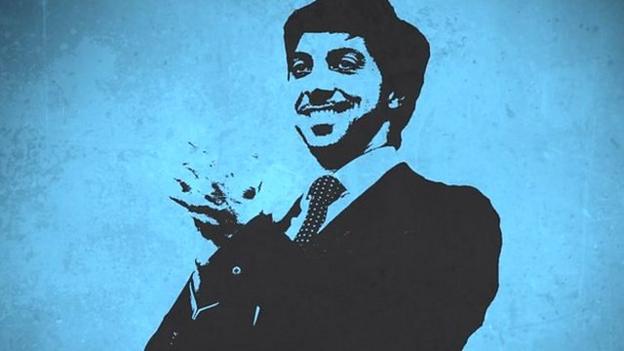
Manchester City have been transformed over the past decade since the arrival of owner Sheikh Mansour – but how much can you remember about the club before the takeover?

READ MORE: Timeline of a transformation since 2008 Sheikh Mansour takeover

WATCH MORE: I am one of the greatest managers in the world – Mourinho

Available to UK users only.

Read More

from Trusted eNews https://ift.tt/2Psb4Ea
via IFTTT

Syria’s war: Iran’s Zarif calls for Idlib to be ‘cleaned out’

news image

Iranian Foreign Minister Mohammad Javad Zarif has said that armed groups must be “cleaned out” of Idlib province in northwestern Syria, Iranian media reports.

Zarif made the remarks while visiting Damascus on Monday, where he arrived for talks with Syrian government officials.

The top Iranian diplomat was scheduled to hold meetings with President Bashar al-Assad and Prime Minister Imad Khamis on bilateral relations and the latest developments in the war.

“All of Syrian territory must be preserved and all the sects and groups should start the round of reconstruction as one collective and the displaced should return to their families,” Zarif said, according to Fars news agency.

“And the remaining terrorists in the remaining parts of Idlib must be cleaned out and the region should be placed back under the control of the Syrian people,” Zarif added.

Syrian government forces, backed by Iran and Russia, seek to conduct an offensive on Idlib, controlled by various rebel groups. 

They have been massing around the last rebel bastion.

Zarif’s visit comes after Amar Hatami, Iran’s defence minister, travelled to Damascus and signed an agreement for defence cooperation with his Syrian counterpart Ali Abdullah Ayoub. Hatami also met Assad duding his trip.

Iranian forces have backed Assad in the country’s seven-year-old civil war by providing steady political, financial, and military support during this period.

‘Iranian advisers to stay’

Separately, Iran’s military attache to Damascus told Iranian media on Tuesday that the country’s military advisers would remain in Syria under a defence agreement signed this week.

“The continued presence of Iran’s advisers in Syria is one of the areas covered in the defensive-technical agreement between Tehran and Damascus,” said Brigadier-General Abolghasem Alinejad, according to the Fars and Tabnak news agencies.

Javad Zarif visited Turkey last week and met President Recep Tayyip Erdogan, who has been a staunch supporter of Syria’s rebel forces against Assad.

Russia and Iran, which support Assad, and Turkey have been in close cooperation over Syria in order to find a solution to the conflict. 

Iranian, Russian and Turkish presidents are scheduled to meet in Tehran to discuss the latest developments in Syria in early September.

Since Russia military intervened on Assad’s behalf in 2015, the regime has regained much of the territory lost to fighters in the early years of the war.

Syria’s war has left more than 350,000 people dead and displaced millions since it broke out with the brutal repression of an initially peaceful uprising in 2011.

SOURCE: Al Jazeera and news agencies

Read More

from Trusted eNews https://ift.tt/2wDYw5J
via IFTTT

Kazakhstan Women v England Women: Phil Neville calls up Reading forward Lauren Bruton

news image

England scored three second-half goals to defeat Wales on Friday and top Group 1

BBC coverage

How to follow:
Watch live on BBC Red Button; text commentary on the BBC Sport website

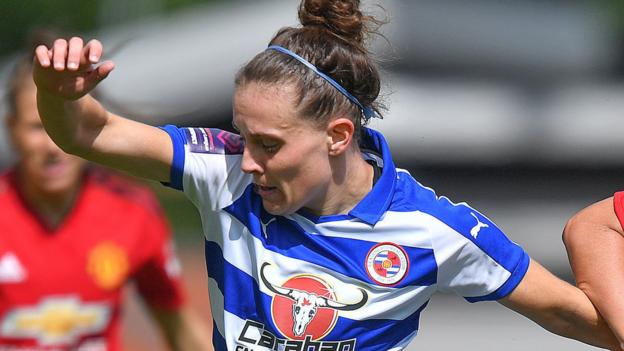
Reading forward Lauren Bruton has been called up to the England squad for their final World Cup qualifying group match against Kazakhstan on Tuesday.

England secured qualification to next year’s tournament in France with a 3-0 victory over Wales on Friday.

Manager Phil Neville has chosen to take a reduced 19-strong squad to Pavlodar, with Chelsea’s Fran Kirby one of six players returning to their clubs early.

Bruton was first called up for England in June but is yet to make her debut.

Joining Kirby in withdrawing from the squad are Jodie Taylor (Seattle Reign), Ellen White (Birmingham City), Alex Greenwood (Manchester United), Jill Scott and Melissa Lawley (both Manchester City).

Kazakhstan are bottom of the qualifying group with no chance of qualifying for the World Cup.

England scored four goals in 12 minutes to thrash Kazakhstan 5-0 in qualifying in November.

England squad to face Kazakhstan

Goalkeepers: Karen Bardsley (Manchester City), Mary Earps (VFL Wolfsburg), Carly Telford (Chelsea).

Defenders: Millie Bright (Chelsea), Lucy Bronze (Lyon), Rachel Daly (Houston Dash), Hannah Blundell (Chelsea), Gabby George (Everton), Steph Houghton (Manchester City), Abbie McManus (Manchester City), Leah Williamson (Arsenal).

Midfielders: Lucy Staniforth (Birmingham City), Isobel Christiansen (Lyon), Jordan Nobbs (Arsenal), Keira Walsh (Manchester City).

Forwards: Toni Duggan (Barcelona), Beth Mead (Arsenal), Nikita Parris (Manchester City), Lauren Bruton (Reading).

Read More

from Trusted eNews https://ift.tt/2N86I7T
via IFTTT

Libya’s chaos explained: Everybody vying for a piece of the pie

news image

Renewed clashes between rival armed groups in Tripoli have plunged Libya in yet deeper chaos, casting serious doubt as to whether the war-wracked country is ready to hold planned elections later this year.

On August 27, fierce fighting erupted in the capital’s southern districts after the Seventh Brigade, an armed group based in Tarhouna, 65km southeast of Tripoli, launched a surprise offensive against rival militias.

At least 39 people have been killed so far, including 18 civilians in gun battles and indiscriminate shelling hitting densely populated areas. Hundreds more were wounded.

A truce was reached on August 28 but clashes resumed shortly after, forcing authorities to close Tripoli’s only functioning airport.

The Seventh Brigade has since assumed control of the airport.

The UN-backed Government of National Accord (GNA) in Tripoli declared a state of emergency on Sunday, saying in a statement it was necessary to “protect and secure civilians, public and private possessions and vital institutions”.

Divisions along regional, tribal and linguistic lines have complicated the North African country’s transition to democracy since the ouster of longstanding leader Muammar Gaddafi nearly seven years ago.

Arms groups now clashing in and around the capital played an integral part in the NATO-backed mission to topple Gaddafi.

Successive governments’ failure to integrate these militias into the formal security structure has led to some groups strengthening their position in the capital – and elsewhere – where they control oil terminals, airports, military barracks and other crucial infrastructure.   

The existence of two rival legislatures – the internationally recognised GNA and the eastern based House of Representatives (HOR) – each with its own central bank and national oil company, highlights another challenge in the country’s plight to enact the necessary reforms and, ultimately hold elections.  

In May, Prime Minister Fayez al-Serraj of the GNA and General Khalifa Haftar of the self-styled Libyan National Army – who control much of eastern Libya – met in Paris and agreed on a timeline to hold nation-wide polls by the end of the year. 

With a September 16 deadline to establish a constitutional and legal basis for elections looming, Al Jazeera takes a look at the different groups vying for power and the prospects for an election this year.

Who’s fighting who?

The Seventh Brigade, otherwise known as the Kanyat – named after three brothers who hail from Tarhouna – are the only armed group to control an entire town. 

The group’s stated aim in the latest surge of violence is to “cleanse Tripoli of corrupt militias […] who use their influence to get bank credits worth millions of dollars while ordinary people sleep outside banks to get a few dinars”.

Joined by fighters from the Misrata and Zintan regions, the group is targeting four armed brigades inside Tripoli which it accuses of usurping power and pursuing its interests at the expense of the Libyan state.

According to Emadeddin Muntasser, a Libyan political analyst and human rights campaigner, the behavior of armed groups inside the capital – their grip on virtually all economic activity – has prompted the current crisis.

“Lack of bank liquidity, corruption, and interruptions of all basic services has made living conditions quite desperate,” Muntasser said.

“These conditions formed the backdrop for the current military action,” he added.

The United Nations’ Panel of Experts has already warned of the threat that armed groups pose to vital state institutions such as the Central Bank, the National Oil Company or even the Libyan Investment Authority.

A report by the Small Arms Survey report (SAS) in June said the Seventh Brigade – which operates under the banner of the GNA – had expanded significantly since mid-2017. 

Analysts say armed groups pledging allegiance to the GNA government however doesn’t mean they will heed civilian authorities’ orders.

“Everybody is under the GNA government because the ministry of interior and ministry of defence pay out salaries but nobody takes orders from them,” said Tarek Megerisi, a political researcher specialising in Libya.

“What happened about six or seven months ago is an alliance that formed between Zintan, Misrata, Tarhouna and Tajura, and they have been planning to attack Tripoli for a long time,” he added. 

Megerisi said other fighters, at times from lesser-known groups, are also participating in the current violence. They too had been pushed out from the capital in the past. 

Why are they fighting?

In a paper brief published in April, Wolfram Lacher, a senior associate at the German Institute for International and Security Affairs, warned of a worrying trend among Libyan armed groups; the rise of a “militia cartel” or “oligopoly”. 

According to Lacher, four groups in particular exerted a disproportionate influence on the government.

These are the Tripoli Revolutionary Brigade, the Nawasi Brigade, the Special Deterrence Force and the Abu Slim unit of the Central Security apparatus.

“The pillaging of state funds – a hallmark of Libya’s political economy – now benefits a narrower group than at any previous point since the 2011,” said Lacher.

“Actors excluded from this arrangement are building alliances to alter the balance of power in Tripoli by force.”

When the Presidential Council of al-Serraj arrived in Tripoli in 2016 by boat, the four groups were among the many that were already active in the city.

According to analysts, the four entities won the favour of the weak UN-backed government because they actively defended it.

WATCH: Inside Story – Who is in control of Libya’s oil ports?

At the same time, they benefited from the legitimacy that comes with being associated with a government.

Experts say recent events show the government’s inability time and again to demobilise irregular forces and integrate them into its defence and security apparatus. 

This failure, in conjunction with the consolidation of military brigades to a handful of powerful factions, has angered rival militias who feel like they have been dealt with unjustly. 

They feel like they have been marginalised and are at risk of losing access to state funds.

In the short run, the consolidation helped make Tripoli safer by decreasing the risk of armed skirmishes but actors who were sidelined were working behind the scenes on making a comeback. 

What is the international community saying?

The United States, France, Italy and the United Kingdom said in a joint statement on Saturday that they condemned the escalation of violence and warned “those who tamper with security in Tripoli or elsewhere in Libya that they will be held accountable for any such actions.”

“These attempts to weaken the legitimate Libyan authorities and hinder the ongoing political process are not acceptable,” the statement published by the French foreign ministry said.

United Nations Secretary General Antonio Guterres also condemned the violence but for many Libyans, the GNA – who the UN supports – has no real authority on the ground.

“The GNA is a paper government with no influence of events,” lamented Muntasser.

“Plagued with incompetence, corruption and infighting, the GNA will come apart as soon as the armed gangs that offer it protection are driven out.”

This, in turn, complicates efforts by the international community and France especially to hold a vote before the end of the year.

Italy, the former colonial power in Libya, has voiced its readiness to host the warring parties in Rome for reconciliation talks that it says would set the stage for elections but not before mid-2019.

Is Libya ready for elections? 

In May, when al-Serraj and Haftar met in Paris, powerful armed groups in western Libya that officially fell under the GNA’s authority rejected the move. 

They said it went against their interests. 

Analysts told Al Jazeera at the time that political leaders agreeing to organise nation-wide polls would not necessarily be a popular measure among their supporters, especially in Tripoli where al-Serraj has to appease armed groups backing the government.

Some of these armed groups are now fighting to take over the capital. 

Experts say they may well be able to break through Tripoli’s defences and establish a foothold in the government where they will try to re-negotiate their relationship with the GNA.

Megerisi said the Seventh Brigade employ a populist narrative of wanting to curb corruption and improve life for the average citizen but there is no gurantee that this is what they will do once in power. 

“Everybody is vying for a piece of the pie,” he added

A more immediate concern is the absence of a constitution to govern the electoral process and set out the mandate of executive, legislative and judicial branches of government.

Muntasser, the Libyan political analyst, suggests authorities take a different approach altogether by holding elections in regions that are under civilian control and deemed to be free and secure enough for a vote.

He said that as elections progress and are held in qualifying regions, a new parliament would be gradually formed.

“The new parliament will possess sovereignty and will have full legislative powers, including the authority to form a government, regardless of the number of members who will be voted in.

“This process will continue and more elections shall be held in an incremental fashion with districts electing their representatives to join the newly formed and functioning parliament,” Muntasser added.

WATCH: Inside Story – What can France offer to end the crisis in Libya?

Read More

from Trusted eNews https://ift.tt/2NHqbJB
via IFTTT

Vuelta a Espana: Briton Simon Yates says taking overall lead a ‘surprise’

news image

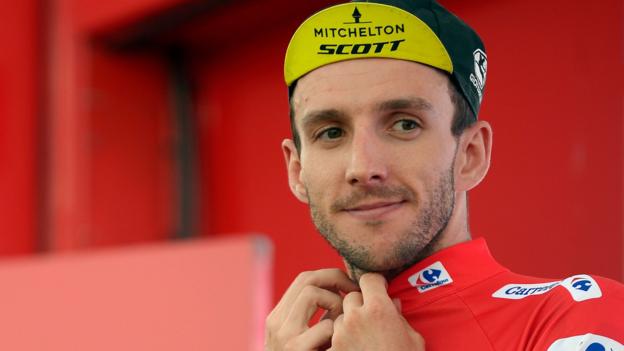
Simon Yates finished stage nine two minutes and 49 seconds behind winner Benjamin King

Vuelta a Espana leader Simon Yates said being in the leader’s jersey is becoming a “bit familiar” after topping the general classification in Spain.

The 26-year-old Briton finished ninth on Sunday’s ninth stage but took the Vuelta’s red jersey by one second ahead of Movistar’s Alejandro Valverde.

In May, Yates led the Giro d’Italia for 13 days but he cracked on stage 19 when eventual winner Chris Froome attacked.

“It is a bit of a surprise, but I am happy,” said Mitchelton-Scott’s Yates.

“Being in the leader’s jersey is becoming a little bit familiar and of course I am very happy, but it wasn’t expected.”

Yates had looked on course to achieve his best Grand Tour result at the Giro, but faded to 21st. He finished sixth at the Vuelta in 2016, and won the best young rider jersey when finishing seventh at last year’s Tour de France.

He started stage nine of this year’s race in fourth place, on a day where an 11-strong breakaway group built a lead before American Benjamin King sealed his second stage win of the race.

Yates crossed the line two minutes and 49 seconds down on King and said he would spend Monday’s rest day formulating a “game plan” for the rest of the 21-stage race.

“I will have to sit down with the team and discuss how we approach being in the jersey over the next few days,” he said.

“It’s difficult to say what I learned from the Giro d’Italia because I still don’t know why I cracked and if I did I would have learned a very valuable lesson, but we don’t know yet and that’s OK because every race is different.

Monday is a rest day and the race resumes with Tuesday’s flat stage from Salamanca to Fermoselle.

Stage nine result

1. Benjamin King (USA/Dimension Data) 5hrs 30mins 38secs

2. Bauke Mollema (Ned/Trek-Segafredo) +48secs

3. Dylan Teuns (Bel/BMC) +2:38

4. Miguel Angel Lopez (Col/Astana Pro) +2:40

5. Nairo Quintana (Col/Movistar) Same time

General classification

1. Simon Yates (GB/Mitchelton-Scott) 36hrs 54mins 52secs

2. Alejandro Valverde (Spa/Movistar) +1sec

3. Nairo Quintana (Col/Movistar) +14secs

4. Emanuel Buchmann (Ger/Bora) +16secs

5. Ion Izagirre (Spa/Bahrain-Merida) +17secs

Read More

from Trusted eNews https://ift.tt/2NIQzCR
via IFTTT

Design a site like this with WordPress.com
Get started