Chicago Mayor Rahm Emanuel makes bombshell announcement: He won’t seek re-election

news image

CHICAGO – Mayor Rahm Emanuel said Tuesday that he won’t seek re-election, making the surprise announcement he won’t try for a third term to lead the nation’s third-largest city.

A former Democratic congressman and top adviser to presidents Barack Obama and Bill Clinton, Emanuel is one of the most high-profile mayors in the nation.

But Emanuel faced a difficult re-election battle when he was due to face voters in February – 12 candidates had already announced their intention to try to oust him – as the city racked up billions in unmet pension debt and a soaring murder rate in recent years.

“As much as I love this job and will always love this city and its residents, I have decided not to seek re-election,” Emanuel said. “This has been the job of a lifetime, but it is not a job for a lifetime. You hire us to get things done – and pass the torch when we’ve done our best to do what you hired us to do.”

With Chicago enduring daunting levels of gun violence, a $36 billion public worker pension crisis and discontent in some corners of the city’s African-American population with his leadership, polls showed Emanuel faced a difficult, but not insurmountable, path to reelection.

A poll commissioned by one of Emanuel’s campaign backers and published last month showed that the mayor had backing of about 32 percent of voters in the crowded field – a 19 point lead over his closest competitor, former police superintendent Garry McCarthy, but not enough to face avoid a runoff. The poll was conducted by New York-based Global Strategy Group.

Emanuel, a former congressman who served as chief of staff in the Obama White House and a senior aide in the Clinton White House, last faced voters in 2015, several months before the release of controversial police shooting caught on video of Laquan McDonald.

The Emanuel administration was forced by court order to make the video public 400 days after the incident and several months after the mayor had won re-election. The mayor’s critics argue that Emanuel, who saw his support erode in the city’s large African-American community following the video’s release, would not have won re-election had it come out earlier.

Emanuel said he did not watch the video, which appears to show that the 17-year-old McDonald was veering away from officers when he was shot 16 times by officer Jason Van Dyke, until it was set to be publicly released.

The officer was charged with first-degree murder on the same day of the video’s release.

Emanuel made his bombshell announcement one day before jury selection was set to begin in Van Dyke’s trial. 

“I have approached public service the only way I know how for the last 23 years – giving 100 percent, 24 hours a day, seven days a week – for President Clinton, in Congress and in its leadership, as President Obama’s chief of staff and finally as your mayor,” Emanuel said. “For the last seven and a half years I’ve given my all every day and left everything on the field.” 

Emanuel has touted improvements in city schools and recruiting several large corporations to relocate in the city among his accomplishments.

But he saw his standing falter in the city’s African-American community in the aftermath of the McDonald incident and as violent crime has plagued several low-income, predominantly black neighborhoods on the city’s South and West Sides.  

Chicago tallied 762 murders in 2016 and 650 in 2017, more than New York and Los Angeles combined in both years. Murders are down 20% so far in 2018 compared to the same point last year, but some critics—including President Trump—have continued to hold up Chicago as the poster child for urban dysfunction.

Trump took his latest swipe at Emanuel last month after Chicago saw more than 70 people shot—including 12 fatally—over a single weekend.

“I guess you have to take it from the leadership,” Trump said. “It’s called bad leadership.”

Read or Share this story: https://usat.ly/2LVpD0R

Read More

from Trusted eNews https://ift.tt/2ChKXyb
via IFTTT

Listen: US Open – Stephens v Sevastova

news image

Listen to live US Open tennis commentary as Sloane Stephens, Juan Martin del Potro, Serena Williams and Rafael Nadal feature in the quarter-finals – BBC Sport


<!–


<!–

<!–
<!–

<!–
<!–

<!–

<!–

<!–


Summary

  1. Live: 2018 champion Sloane Stephens loses first set 6-2 to Anastasija Sevastova
  2. First women’s quarter-final match at Flushing Meadows
  3. Listen to 5 live sports extra commentary at the top of this page
  4. Juan Martin del Potro v John Isner men’s quarter-final follows
  5. Serena Williams v Karolina Pliskova at midnight
  6. Rafael Nadal v Dominic Thiem follows


Read More

from Trusted eNews https://ift.tt/2wKCAps
via IFTTT

Taissa Farmiga’s prayers go unanswered in new clip from The Nun

news image

Horror fans can expect terror and adventure when the new Conjuring universe film The Nun is released Sept. 7, according to director Corin Hardy.

“What really got me sold when I read the script is that which it’s got more of an adventure quality to it,” says the filmmaker. “Father Burke (Demian Bechir) [is] a sort of grizzled priest who’s hired by the Vatican to take a novitiate nun in training, played by Taissa [Farmiga], and investigate some sort of mysterious death that’s happened in an Abbey in Romania. They meet Frenchie the delivery man (Jonas Bloquet), who’s found the body, and they have to go to the Abbey of Saint Carta and determine if the grounds are still holy or if they’ve been compromised.”

How much spooky stuff ensues? A lot, judging by three new clips which have just been released from the film. Watch one of those clips above and the other two, below.

The Nun is released in theaters on Sept. 7.

Read More

from Trusted eNews https://ift.tt/2MNUguk
via IFTTT

Honda, Toyota, Nissan car sales plunge, but SUVs rise: U.S. auto sales likely up in August

news image

CLOSE

These warning signs should scream danger and prompt you to walk out of the dealership without that new car.
USA TODAY

Americans continued to flock to crossovers, SUVs and pickup trucks and abandon passenger cars in August, likely resulting in a slight increase in overall U.S. auto sales.

Forecasters at Edmunds.com and Cox Automotive predicted industry sales increases of 1.2 percent and 0.8 percent, respectively.

The results showed that the auto industry remains healthy as shoppers buy more profitable vehicles.

But it’s not all great news. For one thing, rising interest rates are scaring off some buyers. Zero-percent loans are drying up, and discounts are hard to find as automakers preserve profits.

“That means monthly payments for car buyers are going to get that much more difficult to meet,” said Charlie Chesbrough, senior economist for Cox Automotive. “The buying conditions are expected to deteriorate, which may cause consumers to get into the market today rather than wait.”

What’s more, passenger-car sales continue to plunge. Japanese automakers Toyota, Nissan and Honda — all known for their stalwart sedans — each reported dismal car sales for August.

Passenger cars dropped below 30 percent of the market in August for the first month ever, according to Cox Automotive. A few years ago, they made up half of the industry.

Overall, sales of mid-size cars and compact cars fell 15.6 percent and 13.6 percent to 130,000 and 160,000 vehicles, respectively, according to Cox Automotive. Passenger cars are flailing as shoppers choose roomier rides amid relatively low gasoline prices.

But average vehicle prices continue to rise largely because customers are buying more expensive types of vehicles: crossovers, SUVs and pickups.

The average vehicle price for the month, before discounts, was $35,541, according to Cox Automotive. That was up 1.8 percent from a year earlier.

Sales of compact crossovers and SUVs rose about 14.8 percent to about 285,000 vehicles, easily making it the largest segment in the market, Cox projected.

The next biggest, mid-size SUVs and crossovers, rose 9.7 percent to 220,000.

Here’s how the major automakers fared in August:

General Motors

Edmunds forecast: -8.5 percent

Cox Automotive forecast: -7.5 percent

Actual results: GM no longer reports monthly sales results.

Ford Motor

Edmunds forecast: -1.8 percent

Cox Automotive forecast: -3.4 percent

Actual results: 4.1 percent (218,504 vehicles)

Ford surprised analysts with an overall sales increase despite abysmal sales of passenger cars, many of which the company is poised to discontinue altogether.

The namesake Ford brand was up 4.2 percent, while the luxury Lincoln lineup increased 2.7 percent.

The company’s Ford F-series pickup truck lineup, which qualifies as the best-selling vehicle in the U.S., rose 6.3 percent to 81,839 units for the month.

Overall, Ford’s SUVs posed a 20.1 percent sales increase, while car sales declined 21.3 percent.

Fiat Chrysler

Edmunds forecast: 15 percent

Cox Automotive forecast: 10.8 percent

Actual results:  10 percent (193,718 vehicles)

Fiat Chrysler’s Jeep brand continues to lift the automaker, increasing 19.6 percent for the month to 87,502. That included whopping 85 percent and 76 percent increases for the Cherokee and Compass SUVs, respectively.

The Ram truck and van brand enjoyed a 26.5 percent sales increase. But the Chrysler, Dodge and Fiat brands were down 3.4 percent, 18.4 percent and 35.2 percent, respectively. The fledgling Alfa Romeo brand nearly doubled to 2,240 units.

Toyota

Edmunds forecast: 0.5 percent

Cox Automotive forecast: 1 percent

Actual results: -2 percent (223,055 vehicles)

The Japanese automaker’s stalwart passenger cars struggled mightily for the month, fallin 15.6 percent.

But its SUVs, crossovers and pickups increased 7.4 percent.

The Camry sedan plummeted 18.6 percent. But the 4Runner, Highlander and Land Crusier SUVs rocketed up 24.2 percent, 23.6 percent and 22.4 percent, respectively.

Overall, the namesake Toyota brand fell 1.2 percent, while the luxury Lexus lineup decliend 7.1 percent.

Nissan

Edmunds forecast: 11.1 percent

Cox Automotive forecast: 6.2 percent

Actual results: 3.7 percent (101,580 vehicles)

Like its Japanese automaker counterparts, Nissan’s passenger car sales went one day, while its crossovers, SUVs and pickups went the other day.

Sales of the automaker’s cars plunged 16.2 percent, but the rest of its lineup was up 18.9 percent.

The Rogue crossover increased 11.9 percent to 33,400 units, more than doubling the next-closest model for the company.

And the Titan pickup was up 32.4 percent. But the Versa and Sentra small cars fell 53.5 percent and 12.9 percent, respectively.

Overall, the namesake Nissan brand increased 4.4 percent, while the Infiniti luxury lineup declined 1.7 percent.

Honda

Edmunds forecast: 2.5 percent

Cox Automotive forecast: -0.7 percent

Actual results: 1.3 percent (147,903 vehicles)

The fates of Honda’s trucks and cars have diverged considerably.

The Japanese automaker’s U.S. car sales fell 15.3 percent, but its sales of crossovers, SUVs and pickups increased 18.9 percent.

The company’s stalwart Accord and Civic sedans suffered badly in August, with sales down 11 percent and 24.1 percent, respectively.

The CR-V crossover was easily the brand’s best-seller as sales rose 11.8 percent to 34,610.

Overall, the namesake Honda brand fell 0.1 percent, while the much-smaller luxury Acura brand increased 14.8 percent.

Hyundai-Kia

Edmunds forecast: 3 percent

Cox Automotive forecast: 3.1 percent

Actual results: Not yet provided

Subaru

Edmunds forecast: Not provided

Cox Automotive forecast: -0.3 percent

Actual results: Not yet provided

Volkswagen Group

Edmunds forecast: 3.1 percent (does not include Porsche)

Cox Automotive forecast: 4.4 percent

Actual results: The Volkswagen brand was up 0.7 percent to 32,255, powered mostly by the brand’s SUVs.

Follow USA TODAY reporter Nathan Bomey on Twitter @NathanBomey.

Read or Share this story: https://usat.ly/2NQPKbi

Read More

from Trusted eNews https://ift.tt/2LT0jZu
via IFTTT

Trump tweets warning on Syria as offensive targets last rebel stronghold

news image

The Kremlin on Tuesday rejected President Donald Trump’s warning that an attack on the last major enclave of Syrian rebels would be a “grave humanitarian mistake,” saying the Idlib rebels are hindering efforts at a diplomatic solution to the crisis.

“President Bashar al-Assad of Syria must not recklessly attack Idlib Province,” Trump tweeted. “The Russians and Iranians would be making a grave humanitarian mistake to take part in this potential human tragedy. Hundreds of thousands of people could be killed. Don’t let that happen!”

Within hours of Trump’s tweet, Russian warplanes reportedly carried out airstrikes against the rebel positions. Reuters, citing a report from the Syrian Observatory as well as at least one rebel leader, said airstrikes began Tuesday near the city of Jisr al-Shughour in the province that borders Turkey.

Assad has been building up forces for a phased offensive aimed at taking control of the province in northwest Syria. Kremlin spokesman Dmitry Peskov said the rebel drone attacks from Idlib pose a threat to Russia’s temporary bases in the war-battered country.

“It goes without saying that this problem must be straightened out,” Peskov said. “We do know that the Syrian armed forces are getting ready for tackling this problem.”

More: UN verifies over 7,000 child casualties in Syria since 2013

More: Death toll in devastating ISIS attacks in Syria climbs to 216

Peskov called Idlib home to a “nest of terrorists,” but it is also home to more than 2 million refugees.

The rise in tensions comes ahead of meetings aimed at creating a commission to help draft a new Syrian constitution. Representatives from Turkey, Russia and Iran will meet with Staffan de Mistura, the UN special envoy on Syria, early next week. A few days later Mistura will meet with envoys from the U.S., U.K.,  France, Saudi Arabia, Jordan, Germany and Egypt.

Mistura, in Geneva, echoed Trump’s call for calm, saying violence could “hold hostage” efforts at a political settlement. The International Rescue Committee also called on the Syria, Russia and its allies to halt the attacks.

“The world is now watching with bated breath to see what unfolds,” said Lorraine Bramwell, the IRC’s Syria director. “Many civilians in Idlib have survived intense bombardment or fighting elsewhere in Syria and are rightly terrified about what they may now face.”

The war has dragged on for seven years, cost hundreds of thousands of lives and driven millions from their homes. Syrian, Russian and Iranian forces have consistently battered Islamic State forces in the region, but also have battered the West-backed rebels who had hoped to drive Assad from power.

The Trump administration has largely stayed out of the fray, with coalition forces conducting bombing raids against Islamic State positions but avoiding clashes with Assad’s armed forces or their Iranian and Russian backers.

Read or Share this story: https://usat.ly/2MJRyWM

Read More

from Trusted eNews https://ift.tt/2NhyXAX
via IFTTT

Liverpool throw-in coach Thomas Gronnemark ‘has the weirdest job in football’

news image

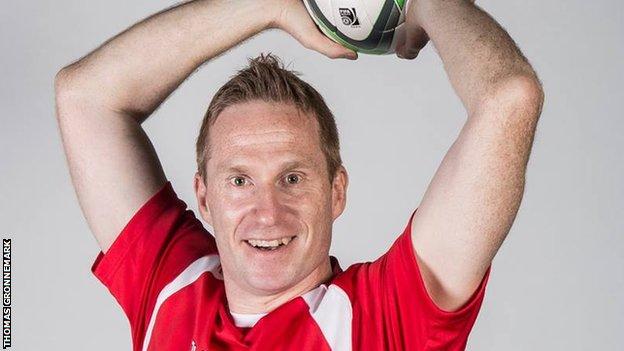
Throw-in coach Thomas Gronnemark working with Danish top-flight club FC Midtjylland

Thomas Gronnemark was perhaps the most surprising arrival at Liverpool this season after a summer of big spending on the likes of Alisson, Fabinho and Naby Keita.

Even manager Jurgen Klopp admitted he had never heard of a throw-in coach before employing the Dane.

The appointment of the 42-year-old, who also holds the world record for the longest throw-in at 51.33m, raised eyebrows and was mocked by TV pundit Andy Gray.

“I know it is totally the weirdest job in the world,” Gronnemark, who thinks he is the world’s first throw-in specialist, told BBC Sport.

Former Stoke midfielder Rory Delap may be the best known exponent of the long throw-in in the Premier League era, but Gronnemark says his brief at Anfield is “not to turn Liverpool into the second Stoke”.

As he explains, there is more than meets the eye to the humble throw-in and it’s a skill that when mastered can lead to goals and even “save the life” of a team.

Already making a difference at Liverpool

Liverpool had 54 throw-ins in their 2-1 win against Leicester on Saturday

“I saw Joe Gomez take some really good throws for Liverpool that I had not seen him do before, he was fizzing it in there,” said former Arsenal striker Ian Wright on Radio 5 live’s Monday Night Club.

“It looks like he [Gronnemark] has taught him something. You have to say Liverpool will benefit from that.”

Klopp believes Gronnemark has “already made a difference” with his work at Melwood.

“To be honest, I’d never heard about a throw-in coach,” said the German. “When I heard about Thomas, it was clear to me I wanted to meet him; when I met him, it was 100% cent clear I wanted to employ him.”

Gronnemark, who has been working with teams since 2004, said Klopp contacted him as he was “curious” about his work and he says it is a “dream” job.

“If I was a defender I would not want to be on the end of one of Gomez’s throw-ins,” said Gronnemark.

“In general against Liverpool I would not want to put the ball out for a throw-in. I am not saying Liverpool will do a lot of long throw-ins, but you never know when they may do it.”

Science of a throw-in

Thomas Gronnemark is a former sprinter and a member of the Danish bobsleigh team

Gronnemark estimates there are 40-50 throw-ins in a game and in Saturday’s 2-1 win against Leicester, Liverpool had 54 – their role and importance, he says, are “underestimated” unlike other set-pieces.

“If you are expecting professional footballers to be world-class throwers without coaching then you are pretty optimistic,” he continues. “Generally the standard is quite poor.

“A focus on throw-ins can save the life of small clubs, as a technique to survive.

“But at the top of the league, it can help with a more fluent style of play. No matter what position in the league, throw-ins are an advantage.”

Gronnemark teaches three types of throw-in – the long throw-in, the fast throw-in – which can launch counter-attacks – and the clever throw-in, which is about keeping possession under pressure.

“I focus on everything you can imagine,” adds Gronnemark, a former international sprinter who was in the Danish athletics and bobsleigh teams. “It is not just the technique of the throw, but how to receive it, how to make the right runs, the positioning, creating space.”

Aside from his freelance work with Liverpool, Gronnemark also coaches at Danish top-flights clubs FC Midtjylland and AC Horsens, and in the German Bundesliga.

Midtjylland, who won the Danish title last year, and Horsen scored 10 goals each last season from long throw-ins.

Danish left-back Andreas Poulsen, who joined Borussia Monchengladbach from Midtjylland, improved his long throw from 25m to 37.9m under Gronnemark’s coaching.

Gronnemark says there are 25-30 technical aspects to a long throw and he uses video analysis to make improvements, which can see players improve their distance by four to eight metres on average and double the throwing area. Flexible, rather than strong players, are best at throw-ins and it is an essential skill for a full-back.

“If Liverpool score a goal or two from long throws that would be perfect for me,” said Gronnemark.” But even more so if it comes as a result of a fast throw or clever throw.”

According to Opta, there have been just 20 goals scored from a “throw-in scenario” in the Premier League in the last five seasons and one scored so far in 2018-19.

Last season, Liverpool had just three shots from throw-ins, while Leicester City led the way with 14.

Goals from fast throws and clever throws are impossible to measure, but Gronnemark says these have a “greater impact” on the game and can make the game faster and more entertaining.

“If you have more possession, you have a greater chance of winning a game,” says Gronnemark. “Sometimes set-pieces develop into set-pieces like corners and free-kicks and they help build pressure.”

‘I can make fun of myself’

“I’m sorry, a throw-in coach? Here’s the ball, pick it up with both hands, take it behind your head and throw it with both feet on the ground,” said former Scotland striker Gray in his criticism of Gronnemark’s appointment.

Gronnemark says he didn’t have a problem with Gray’s comments, but felt the ex-Wolves player could have looked into what his job entailed.

“I know it is the weirdest job in the world,” says Gronnemark, who has been fascinated by throw-ins since he was a child and has developed his own coaching course to fill the gap in the market.

“I am the world record holder and the world-leading expert, but I am not too big to make fun of myself.”

He says some players he works with are “surprised” by his role and have a “bit of a laugh”.

And what about THAT Iran throw-in?

Milad Mohammadi attempts forward roll throw

One request Gronnemark often gets is to replicate his world record throw achieved with a front flip in 2010, but he says he has eaten “too many cakes” to attempt it these days.

Iran defender Milad Mohammadi attempted a similar feat during the World Cup as they looked for a last-minute equaliser against Portugal – but failed.

“His run-up was too slow,” said Gronnemark. “It was a funny situation, but he must have had some bottle to try to make a flip throw-in, but I know it is the hardest thing to do in football.”

Read More

from Trusted eNews https://ift.tt/2LWrkLm
via IFTTT

Can Saudi Arabia diversify its economy without an Aramco IPO?

news image

Few challenges are more existential for Saudi Arabia than the need to wean its economy away from an excessive dependence on oil. The country faces two certainties on the external and domestic fronts: the excessive volatility of oil markets with its attendant consequences on the national budget and a growingly young and educated labour force (more than 50 percent of Saudis are below 25 years of age).

Saudi Arabia has traditionally bought social peace by distributing rents to its citizens through salaries, subsidies, and other welfare instruments. This social pact has become increasingly precarious in the midst of fluctuating oil revenues and expanding expenditure commitments at home.

It is in this context that Saudi Arabia’s Vision 2030 was hailed as a reformist intent, signalling a transformative move towards a post-oil future. A key plank of this strategy was the partial privatisation of Saudi Aramco through an initial public offering (IPO) of around 5 percent of its share in global markets. When the Saudi king recently pulled the plug on this international listing of Aramco, observers have started wondering about the fate of diversification.

Is there still hope for diversification after a central pillar of the Vision 2030 has fallen through? And, is Saudi Crown Prince Mohammed bin Salman’s grand vision still relevant and credible?

Diversifying without an Aramco IPO

The short answer is that it is still too early to write off the prospects for diversification in Saudi Arabia. Equally, diversification would have proven challenging, with or without the partial privatisation of Aramco.

Firstly, although Aramco’s listing in international stock markets has been called off, the national oil company is still planning to raise debt through its acquisition of a strategic stake in SABIC, the country’s petrochemical giant.

With its currently modest debt levels, Saudi Arabia should have little difficulty raising money through capital markets. The only difference would be that the cash would be raised in a roundabout way through bonds rather than equities.

Secondly, even if Aramco’s listing had gone ahead, it wouldn’t have solved Saudi Arabia’s diversification challenge on its own. While a centrepiece of Vision 2030 and despite all the fanfare on the original announcement, the Aramco listing would have only served as a wealth management strategy.

A helpful start, indeed. But diversification is a more serious and intricate development challenge in the context of Middle East’s oil exporters. Quick-fixes or stop-gap arrangements can only provide a temporary breather; they are no substitute for structural economic reforms.

To diversify its economy, Saudi Arabia would need a holistic development vision that recognises the fundamental inseparability of economics and politics.

Diversification is unlikely to result from a technical blueprint delivered by jazzy foreign consultants. For too long, the country has attempted to reform its economy in ways that neutralise the effect of such reform on politics. But the trouble is that any genuine shift in the country’s economic structure will produce political consequences, which neither the rulers nor the consultants they hire wish to confront.

For example, to develop a non-oil economy the regime will have to accommodate the prospect of a truly independent private sector, which can generate new pockets of economic influence whose power could spill over into the political domain.

It is precisely for this reason that authoritarian regimes in the Middle East are suspicious of outsized economic actors who could initiate political action.

This means that regimes only tolerate a private sector that is dependent and loyal. Firms recognise that the standard operating principle to survive (and thrive) is to partner with regime insiders either directly or through brokers and fixers.

The moment a business becomes successful or indicates a potential for growth, it is pressurised to “sell or go into partnership” with the regime’s frontmen. Firms thus face a binary option: partner or perish.

In this scenario, firms prefer to operate under the radar and avoid direct confrontation. When connections with the royal circle become the most valuable asset for firms, small young companies have poor prospects in the marketplace.

Challenges of private sector growth

It is little surprise, then, that the Saudi private sector is dominated by large established players or companies that are simply a front for powerful royals. And, it is usually these large connected conglomerates that benefit from state contacts through opaque procurement and licensing procedures.

With one of the largest construction industries in the Middle East, Saudi Arabia can unlock its economic potential through a systematic reform of this sector, which would involve making bidding procedures genuinely competitive.   

Connected firms also have privileged access to the two essential inputs private firms need – land and credit. Small firms face huge difficulties in accessing land, especially in peri-urban spaces where powerful families tend to leave land parcels idle in anticipation of capital gains.

Until recently, arbitrary land confiscations by members of the royal family were a common occurrence. This land is sometimes sold back to the government for implementing public projects, generating a handsome rent for insiders.

Public land registries are notoriously under-developed. And, when it comes to accessing bank credit, small and medium enterprises (SMEs) face a systematic disadvantage, receiving only about two percent of total loans.

Difficulties in land ownership mean that these firms lack the requisite collateral needed to secure bank loans. With oil-induced uncertainty affecting bank lending and large exposures to a few connected borrowers, commercial banks have limited room or incentive to offer intermediate credit to SMEs, a segment of economy that is most deserving of such capital.

As if entry and survival in the market weren’t hard enough, SMEs also find it difficult to exit the market as insolvency is exceptionally hard to resolve in Saudi Arabia. On this account alone, Saudi Arabia ranks 168th out of 189 countries in the 2018 Doing Business report.

This does not bode well for the forces of creative destruction that define a dynamic firm space where firms can enter, compete, or exit according to the diktats of market competition.

In the midst of these structural barriers, diversification will remain a pipe dream.

The politics of diversifying an economy 

To diversify, the Saudi government needs to introduce radical pro-competition reforms, make land markets more transparent, and de-couple markets from the stranglehold of connected actors and firms. However, any such reform is likely to have grave political consequences, since it will reduce or kill the rents that help to sustain the cooperation of royal elites and their influential business partners.

The larger point I thus wish to make is that a genuine economic open door (infitah) will create both winners and losers. In this context, diversification is not just about creating winners who have a vested stake in a reformed business environment; it also requires compensating losers who could potentially spoil reform efforts.

In East Asia, this was done by striking deals with rent-seeking groups who could throw spanner in the works. As famous economist Pranab Bardhan has argued, these deals were often backed by institutional arrangements to share rents with potential spoilers.

Such arrangements existed, for example, in Japan where potential spoilers in the Liberal Democratic Party were systematically bought off. In Malaysia, the Chinese business conglomerates brought prominent members of Malay political elites on company boards.

Extrapolating this to Saudi Arabia, could one imagine a bargain that keeps ruling clans out of business in exchange for higher royal stipends or in-kind rewards? 

To do so, however, would require an active recognition of the political fallout of economic reform and the creation of new bargaining structures that could balance the interests of reformers and spoilers, and nudge the growth trajectory towards a higher equilibrium.

Had the political fallout of an Aramco listing been worked out before and the buy-in from relevant actors secured in advance, the devastating blow to the credibility of Vision 2030 could have been avoided.

After all, it was clear from the outset that the valuation of Aramco was hugely over-optimistic and that an international listing would necessitate a more transparent disclosure and an opening up of Aramco’s books, something that would face political resistance. In the end, politics trumped whatever economic rationale lay behind the proposed IPO.

Going forward, rather than relying on flashy, big bang approaches to diversification, Saudi policymakers need to adopt a more grounded and constructive strategy for economic reform that recognizes the centrality of politics.

The views expressed in this article are the author’s own and do not necessarily reflect Al Jazeera’s editorial stance. 

Read More

from Trusted eNews https://ift.tt/2Ne0tiH
via IFTTT

The 8 best Google doodle games to waste time at work

news image

The hottest new gaming device isn’t a PlayStation. Or an Xbox. Or a Switch. Nope, the best new gaming comes courtesy of your good friend Google.

Yes, you heard it here first. If you’re in need of a new hobby, or some amusement to pass the time between work meetings, or let’s be honest during work meetings, there are a ton of interactive Google Doodle games to cure spells of boredom.

They don’t require a controller or fancy Blu-Ray disks, they’re simple and the best kind of fun for an undercover gaming session right at your desk. 

Look, we get it. Sometimes work isn’t the most riveting. Sometimes you can’t make the math on spreadsheets equal “F U N.” Maybe you just want to play some Pac-Man. Maybe you want to destroy some cartoon ghosts as a jovial cat wizard. Maybe you want to shoot some free throws.

A quick jaunt through the Google Doodle archives will allow you to do all of this and more to quench your gaming thirst.nWe rounded up some of the best Google Doodle games below. Enjoy.

This game was released on April 14, 2015, to honor the 155th Anniversary of the Pony Express.

This game honored the 155th anniversary of the Pony Express. It lets you play as a courier picking up mail while delivering it to the closest town. It’s a bit like a mobile frogger, with, you know, horses instead of frogs.

Dr. Robert Moog invented the Moog Synthesizer, which was featured heavily by artists like The Beatles, The Doors, and Stevie Wonder.

Ever felt the need to get funky with some keys? You can on this Doodle released to honor Robot Moog, whose Moog Synthesizer was used by musical artists from The Beatles to Stevie Wonder.

This Google Doodle was published on February 11, 2017 to celebrate Valentine's Day.

Roll through Ghana as a pangolin just as if you were Sonic snagging rings, all in the name of love.

This Google Doodle honored Kool Herc and Coke La Rock, the two founding fathers of hip-hop.

This one is less of a game, but it’s still incredibly entertaining. Mix together some of the tracks that laid the groundwork for hip-hop with this interactive turntable. You can even scratch, if you’re feeling wildly ambitious.

Google honored the 2012 Olympic Summer Games with this interactive basketball Doodle.

This game’s one step above pop-a-shot and two steps below NBA 2K18. But if you wanna practice your mid-range jumper, feel free to mash your space bar and put up shots — all while never having to leave your chair. Watch out, Steph Curry. 

Google marked the 30th anniversary of Pac-Man with this fun, interactive Doodle game.

This classic arcade game may now feel primitive, but it’s a perfect cure for all those meetings that could have easily been emails. 

This interactive Rubik's Cube can turn into a full-on keyboard mashing frenzy,.

Look, unless you’re this dude, you’ve probably never solved a Rubik’s Cube. But hey this Doodle lets you use multiple keys on your keyboard to try and solve this one. You may never finish it, but it’s nice if you like seeing colors move.

Turn ghosts into vapor with this incredibly addicting Google Doodle. It's like Harry Potter, but with cats.

Play as a black cat with magical powers and defeat an army of ghosts before they get to you. Swipe your keypad in the direction above the ghouls’ heads to turn them into dust. But be careful, it’s very addicting.

Https%3a%2f%2fblueprint api production.s3.amazonaws.com%2fuploads%2fvideo uploaders%2fdistribution thumb%2fimage%2f82049%2f1120fb4d ccb2 4344 9940 59b3d6e9b3e9

Read More

from Trusted eNews https://ift.tt/2LYMWHc
via IFTTT

Emma Stone and Rachel Weisz battle it out in The Favourite trailer

news image

The Favourite

type
Movie
release date
11/23/18
performer
Emma Stone, Rachel Weisz, Olivia Colman
director
Yorgos Lanthimos
distributor
Fox Searchlight Pictures
mpaa
R
Genre
Drama

Forget the social propriety commonly associated with 18th century England and prepare for a vicious competition between two ruthless corset-wearers.

The Favourite centers on the fragile Queen Anne (Olivia Colman) and her close friend Lady Sarah (Rachel Weisz), who governs the country on her behalf. When a new servant Abigail (Emma Stone) arrives, Sarah finds herself competing for the Queen’s attention, leading to her waging a vicious battle to secure her connection to the throne.

The trailer offers a glimpse at the heated performances delivered by the period drama’s leads, who coldly antagonize one another in ways that, while vial, are irresistibly comedic. We’re also treated to a preview of stunning pieces from veteran costume designer Sandy Powell, which look flawless even when splattered by mud or bird’s blood.

Directed by Yorgos Lanthimos, who helmed the art house shocker The Lobster (also starring Weisz), The Favourite wowed EW’s Chris Nashawaty during the Telluride Film Festival this weekend.

Impressed by “glorious” turns from all three stars, Nashawaty notes the film “couldn’t be further from the corsets and curtsies of your typical Hollywood prestige period piece. It’s more like All About Eve directed by a Satyricon-era Fellini all hopped up with enough sex, deviance, hypocrisy, decadence, and spicy profanity to make your average Masterpiece Theatre patron reach into their PBS tote bag for some smelling salts.”

The Favourite is set to hit theaters on Nov. 23.

Read More

from Trusted eNews https://ift.tt/2MOLX1o
via IFTTT

Supreme Court nomination hearing for Brett Kavanaugh begins with skirmishes, charge of ‘mob rule’

news image

CLOSE

Brett Kavanaugh’s seat on the Supreme Court could mean abortion opponents are closer than they’ve been in 45 years to overturning _Roe v. Wade.
USA TODAY

WASHINGTON – Brett Kavanaugh’s path to the Supreme Court ran into protests Tuesday as Democrats complained about withheld documents and protesters interrupted his confirmation hearing with shouts before being dragged out by Capitol Police. 

Sen. John Cornyn of Texas, the second highest-ranking Republican in the Senate, said the hearing had degenerated into “mob rule” within the first hour. Democrats said they were just seeking respect and accused Republicans of trying to push Kavanaugh through without a proper review.

Before the hearing began, Democrats on the committee gathered on the Supreme Court steps to complain about what they see as a lack of key documents about Kavanaugh’s tenure as staff secretary for former President George W. Bush.

“We go to these hearings under protest,” said Sen. Dianne Feinstein of California, the panel’s senior Democrat.

Before the hearing could even get started, Democrats called for it to be adjourned so thousands of pages of just-released documents could be reviewed. More than a dozen people in the audience stood and shouted intermittently their opposition to the nominee, interrupting the proceedings. About half the public seats in the hearing room were empty after the protesters were removed.

“What is the rush? What are we trying to hide?” Sen. Cory Booker, D-N.J., said.

Democrats and Republicans squabbled over documents withheld from the 53-year-old Washington D.C. native’s years working for Republican causes.

Republicans are determined to push President Donald Trump’s nomination of Kavanaugh to the full Senate later this month, but Democrats want to press the federal appeals court judge on his views on abortion, health care, guns and other hot-button issues.

Pledge to be an ‘umpire’

The nominee planned to tell the senators that he would be “an umpire,” a phrase used by Chief Justice John Roberts when he went before the committee in 2005. 

“I don’t decide cases based on personal or policy preferences. I am not a pro-plaintiff or pro-defendant judge. I am not a pro-prosecution or pro-defense judge,” Kavanaugh will say, according to prepared remarks. “I am a pro-law judge.”

That won’t satisfy Democrats concerned about his past – and his future.

“There will be sparks at this hearing. Sparks will fly,” said Sen. Richard Blumenthal, D-Conn. “And there will be a lot of heat.”

More: Five reasons Brett Kavanaugh’s nomination to the Supreme Court is controversial

The hearing is scheduled to last four days. Tuesday is being devoted to opening statements by committee members, three people chosen to introduce Kavanaugh and, finally, the judge himself. Questioning will begin Wednesday and last at least two days. Friday will focus on panels of supporters and opponents.

If all goes according to Republicans’ plans, the committee will vote later this month – almost surely along straight party lines – to send his nomination to the full Senate in hopes of getting him on the court by the Oct. 1 start of the 2018 term.

More important, however, is making certain nothing stands in Kavanaugh’s way that would delay confirmation beyond the November elections, when Democrats have an outside shot of winning a Senate majority. 

Kavanaugh stands to inherit Justice Anthony Kennedy’s seat on the court, and there is no seat more important. Kennedy, who retired in July, was the perennial deciding vote on 5-4 cases, usually siding with the four conservatives but swinging to the liberals’ side on abortion, affirmative action, gay rights and other social issues.

Trump’s first nominee to the high court, Neil Gorsuch, was confirmed in April 2017, 14 months after the death of Justice Antonin Scalia created a vacancy in President Barack Obama’s last year in office. Senate Republicans refused to consider Obama’s nomination of federal appeals court Judge Merrick Garland for the vacancy.

Kavanaugh topped a list of 25 potential nominees put together by the White House in conjunction with conservative groups such as the Federalist Society and the Heritage Foundation. He has been on the U.S. Court of Appeals for the District of Columbia Circuit for 12 years and has authored 307 opinions, concurrences and dissents.

Massive paper trail

Before ascending to the bench, Kavanaugh assisted in the investigation of President Bill Clinton, which led to his impeachment, and worked for five years in the White House as deputy counsel and staff secretary under President George W. Bush. He has since said that presidents should not be subject to criminal investigations while still in office, a position that could affect Trump in the future.

The paper trail from those jobs proved to be too voluminous for the Senate to pile through in the eight weeks since Kavanaugh’s nomination. So Republicans have released only those documents they consider most relevant – about 440,000 pages for senators to see, and fewer than 300,000 publicly.

That’s far more than for any previous Supreme Court nominee, but millions of pages have been withheld. On Friday, the Trump administration said it would withhold more than 100,000 pages on the basis of presidential privilege.

“We were not able to get a lot of documents we felt we were entitled to,” said Sen. Dianne Feinstein of California, the top Democrat on the committee. “We’re laboring under this disadvantage.”

More: Brett Kavanaugh is President Trump’s nominee for the Supreme Court

More: Brett Kavanaugh: Supreme Court nominee straight out of central casting

More: Will Supreme Court nominee Brett Kavanaugh deliver the change conservatives crave?


Read or Share this story: https://usat.ly/2NKEpct

Read More

from Trusted eNews https://ift.tt/2LYgowO
via IFTTT

Design a site like this with WordPress.com
Get started