Iraq: Protesters torch government buildings in Basra

news image

At least two people have died in Iraq’s oil-rich province of Basra as protesters targeted and set fire to government and political party buildings in the fourth consecutive night of violent unrest.

Thousands of protesters angry over poor public services converged in the southern city of Basra on Thursday. The crowds clashed with security forces and hurled Molotov cocktails at the regional government headquarters. 

Iraq’s Human Rights Commission said two protesters died during the violence, taking the death toll to 11 since the weeks-long protest escalated on September 3.

One protester died on Thursday night from burns sustained during the torching of the government headquarters, health and security sources said.

People attacked the offices of the state-run Iraqiya TV and set fire to the headquarters of the ruling Dawa Party, the Supreme Islamic Council and the Badr Organisation, whose leaders are all vying to form Iraq’s ruling coalition. 

Protesters also torched the offices of a powerful Shia armed group, Asaib Ahl al-Haq, and those of the Hikma Movement, and stormed the house of the acting head of the provincial council.

The violence has prompted the temporary head of Iraq’s parliament to call an emergency session on Saturday. 

Legislators would “discuss the problems, the solutions and the latest situation” in Basra, a statement said on Friday.  

The southern city has been the epicentre of protests that have rocked Iraq since July, with anger fuelled by pollution of the water supply that left 30,000 people in hospital. 

‘Government does not care’

Rights activists have accused security forces of opening fire on the demonstrators, while the government has blamed provocateurs in the crowds and say the troops were ordered not to use live rounds.

“The people protest and the government doesn’t care, treats them as vandals,” said Ali Saad, a 25-year-old at the rally Thursday in Basra.

“Nobody [here] is a vandal: the people are fed up, so yes they throw stones and burn tyres because nobody cares,” he told the AFP news agency near the building littered with debris.

Ahmed Kazem, who was also at the protest, urged leaders to respond to the demands of the demonstrators “so that the situation doesn’t degenerate”.

The 42-year-old said their demands included “public services, water, electricity and jobs”.

The headquarters of Asaib Ahl al-Haq (pictured) was among the buildings set on fire by protesters [Essam al-Sudani/Reuters]

Public anger has grown at a time when politicians are struggling to form a new government after an inconclusive parliamentary election in May.

Residents of the south complain of decades of neglect in the region that produces the bulk of Iraq’s oil wealth.

Mortar attack in Baghdad

Meanwhile, in Baghdad, three mortar shells landed inside the city’s heavily fortified Green Zone just after midnight on Friday, according to the Iraqi military.

The mortars landed on an “abandoned lot,” resulting in “no casualties or physical damage,” said a military statement.

No group immediately claimed responsibility for the attack. 

The mortar attack is the first such attack in several years on the Green Zone, which houses parliament, government buildings and many foreign embassies.

SOURCE: Al Jazeera and news agencies

Read More

from Trusted eNews https://ift.tt/2wQ3Nqe
via IFTTT

Poor maternal care leads to hysterectomies, antibiotic resistance

news image

Thyolo, Malawi – In a hospital room in Thyolo, a southern Malawian town among tea plantations, Ngellina Chikopa unwraps her sarong to reveal a long wound filled with pus. 

The cut stretches from her lower abdomen through her belly button and up past her stomach.

The 18-year-old gave birth by caesarean section in April 2018, but the baby died of asphyxia after becoming stuck and suffering brain damage from lack of oxygen.

While she was grieving, the wound became infected. She was given IV antibiotics but it started to release foul-smelling pus. The infection spread to her uterus. Doctors gave more antibiotics but they didn’t work. 

Next, medics performed a hysterectomy, an operation to remove her womb.

But afterwards she suffered another infection and was transferred to Queen Elizabeth Central, a big referral hospital in the city of Blantyre, where she had another two operations to clear the pus and close the wound.

By removing her uterus, they have taken away the entire future clan away from us.

Bester, father of patient Ngellina Chikopa

She was discharged but is back at Thyolo hospital because her stomach is not healing. She shares a room with a young woman called Margaret, who also lost her baby to asphyxia.

Chikopa fears she will be ostracised now she cannot have children. There is a stigma attached to being both unmarried and childless. 

“I know that I will never ever have children in my lifetime, I have accepted it with a lot of pain as there is nothing I can do about my situation,” she Chikopa. “Some relations are aware of my situation and by now I know the social discrimination that I will be facing out there.” 

She hopes to return to school when she recovers.

Scores of women in Malawi face having their wombs taken out because of infection. 

Martha Makwero, acting head doctor of the maternity department at Queen Elizabeth Central Hospital, said 36 women had hysterectomies due to infection between March and May this year.  

At Zomba Central Hospital, around five people a month have their wombs removed, said Dr Maguy Kabeya, head of the maternity department, who carried out a three-month observation this year.

He said they were referred from district hospitals and health centres where infection prevention is substandard.

Some of the women died.

Other central hospitals in Malawi did not provide figures on hysterectomies.

Many hospitals in Malawi lack the facilities to treat infections, which has led to overzealous procedures and antibiotic resistance [Madlen Davies/Al Jazeera]

In Malawi, malnourishment or diseases such as HIV – an illness affecting around 10 percent of the country – suppress immune systems.

Infection control in rural health centres and district hospitals is poor. 

Half of healthcare facilities lack clean water and sanitation. Electricity blackouts mean equipment used in labour may not be sterilised properly. Hospitals frequently run out of essential supplies such as chlorine, soap and antiseptic gloves. 

Women are also asked to bring certain items to the hospital for the birth: a plastic sheet called a macintosh, a razor-blade to cut the cord and a plastic tub to bathe the baby.

These aren’t sterile, which increases the chance of a mother catching an infection.

Clearly getting the right antibiotics and blood cultures would be a better way of dealing with this.

Pat O’Brien, consultant obstetrician at University College London Hospitals

Florence Matandika, 18, cries out in pain at Queen Elizabeth Hospital.

Her mother Judith comforts her when she occasionally vomits.

After a prolonged labour on May 10, she gave birth to a stillborn baby by C-section. 

The wound became infected and her stomach started to swell. The infection spread to her uterus and doctors were forced to perform an operation to remove it. 

She has been given two types of antibiotics but still has an infection. 

“I have given up on the husband,” says Judith, commenting on her daughter’s partner. “I know he will marry another woman because my daughter cannot have children anymore. I’m in pain but I will accept God’s will.”

To prevent infection, women can be given a dose of antibiotics before a C-section. This is not always practised in Malawi. 

A blood culture test could also be carried out if the woman did catch an infection – technicians would identify which bacteria is causing the problem and which antibiotics might work.

But blood culture facilities are expensive; they require sophisticated laboratory equipment and trained staff. 

Most hospitals in Malawi don’t have the resources. 

Even Zomba, a referral hospital, sends samples to the lab at Queen Elizabeth in Blantyre, where blood culture facilities are provided by the Malawi Liverpool Wellcome Centre, the research institution next door. 

The tests are prioritised for adult and paediatric patients, and rarely sent for women on maternity wards. 

There is also a limited number of antibiotics available in most hospitals.

Pregnant women with infections are usually given penicillin, gentamicin and ceftriaxone. 

Antiobiotic resistance

Rising antibiotic resistance, meanwhile, is another challenge.

A study by Malawi Liverpool Wellcome Centre showed while the number of bloodstream infections fell between 1998 and 2016, the proportion resistant to antibiotics increased.

The data are for adults and paediatric patients. There are no statistics relating to resistance patterns in mothers.

In Klebsiella, an infection causing bloodstream infections, resistance to the two major classes of antibiotics available in the hospital – penicillin and cephalosporin – rose from 12 percent to 2003 to 90 percent in 2016. 

In E.coli, a leading cause of sepsis, resistance rose from 2 percent to 30 percent over the same time period.

Dr Makwero, acting head of the maternity department, believes resistance is hampering treatment of women with infections.

The antibiotic ceftriaxone does not work for many, she said. 

“It really affects our management. We tend to clear the infection through surgery but it is not always working … It would be catastrophic if we could not use ceftriaxone any more,” she said.

She has to seek permission to use meropenem, an expensive antibiotic which the hospital doesn’t always stock. There are also concerns over resistance with using it more frequently.

Pat O’Brien, a consultant obstetrician at University College London Hospitals, accepts that hysterectomies are sometimes life-saving, but says operations are more expensive and traumatic than a blood culture. 

“If it’s truly the case that doing a hysterectomy is the only way to save someone’s life then clearly that’s a better option regardless of all of this. But clearly getting the right antibiotics and blood cultures would be a better way of dealing with this,” he explains.

Women are being given hysterectomies in Malawi to stem infection, but the procedure is not always effective [Madlen Davies/TBIJ]

Back in Thyolo, Ngellina’s father Bester worries for his daughter.

It was difficult to see her in pain and to shoulder the medical bills. 

“I’m concerned that she lost her baby and she had her uterus removed,” he said.

“In our culture, this means a girl has no future at all as no man would be interested to marry her. By removing her uterus, they have taken away the entire future clan away from us.”

This story was written by Madlen Davies of The Bureau of Investigative Journalism, and edited and published in partnership with Al Jazeera.

Read More

from Trusted eNews https://ift.tt/2MW52z2
via IFTTT

Where did the trash in the Great Pacific Garbage Patch come from? How do we stop it?

news image

CLOSE

This odd vessel looks like a cross between an oil rig and a floating swimming pool and may help clean up the Great Pacific Garbage Patch.
USA TODAY

The water bottle could be from Los Angeles, the food container from Manila, and the plastic bag from Shanghai….

But whatever its specific source, almost all of the trash in the infamous Great Pacific Garbage Patch comes from countries around the Pacific Rim. 

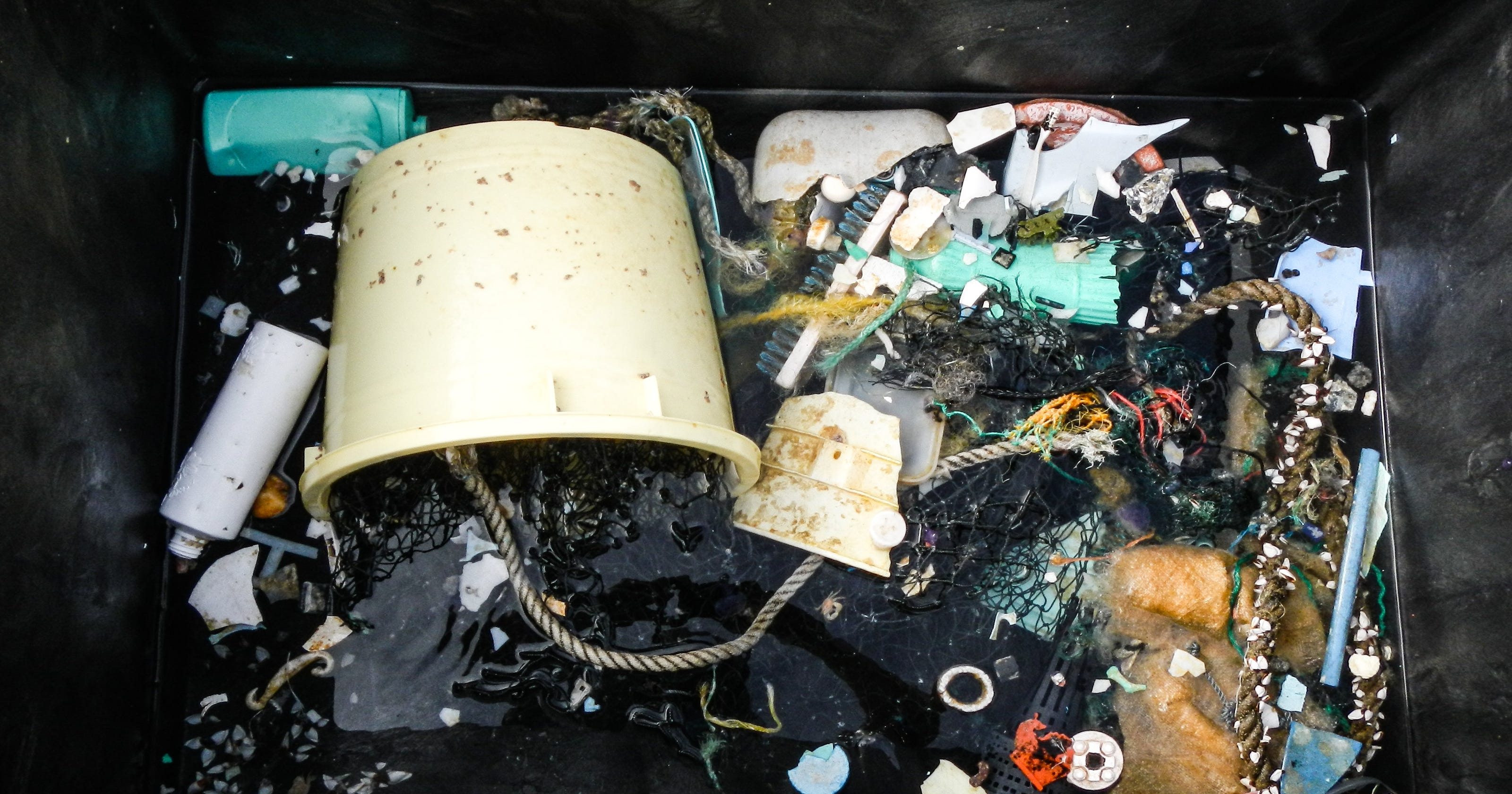
Concerned about the millions of tons of garbage in the patch – a floating blob of trash halfway between California and Hawaii that’s twice the size of Texas – the Ocean Cleanup project is sending out a giant floating trash collector to try to scoop it up. The first of its cleanup systems launches Saturday near San Francisco.

It’s a daunting task: The patch includes about 1.8 trillion pieces of trash and weighs 88,000 tons – the equivalent of 500 jumbo jets. 

And while many scientists say it’s great that people are trying to clean up the patch, others say most of our efforts should instead go towards stopping the out-of-control flow of plastic garbage into the ocean.

How much more? Try putting 95 percent of our efforts on stopping plastic from entering the ocean, and only 5 percent on cleanup, says Richard Thompson, head of the International Marine Litter Research Unit at the University of Plymouth in the United Kingdom.

Thompson said a massive, global-scale effort is needed to combat the problem, one that includes contributions from individuals, policymakers and industry. “The way we use plastics – from design, to use to disposal – must be done more efficiently and in a more environmentally friendly manner.”

George Leonard, chief scientist with the Ocean Conservatory, said that “the clock is ticking; we must confront this challenge before plastics overwhelm the ocean.”

Go deeper: See how the Great Pacific Garbage Patch feeds off our throw-away culture

Where does it come from?

First discovered in the early 1990s, the garbage patch’s trash comes from countries around the Pacific Rim, including nations in Asia and North and South America, according to Laurent Lebreton of the Ocean Cleanup Foundation

But specifically, scientists say the bulk of the garbage patch trash comes from China and other Asian countries. 

This shouldn’t be a surprise: Overall, worldwide, most of the plastic trash in the ocean comes from Asia. In fact, the top six countries for ocean garbage are China, Indonesia, the Philippines, Vietnam, Sri Lanka, and Thailand, according to a 2015 study that appeared in the journal Science.  

The United States contributes as much as 242 million pounds of plastic trash to the ocean per year, according to that study.

China has begun to take steps to stem the tide of trash that’s floating away from its shores. The country recently banned the import of most plastic waste, according to a study published in June in Science Advances. 

China has imported about 45 percent of the world’s plastic waste since 1992 for recycling, the study found. In the U.S. alone, nearly 4,000 shipping containers full of plastic recyclables a day had been shipped to Chinese recycling plants.   

Now where will all that waste go? 

“It’s hard to predict what will happen to the plastic waste that was once destined for Chinese processing facilities,” said Jenna Jambeck, associate professor at the University of Georgia’s College of Engineering and co-author of the study. “Some of it could be diverted to other countries, but most of them lack the infrastructure to manage their own waste let alone the waste produced by the rest of the world.”

That decision means the U.S. and other industrialized countries that have been exporting their plastic waste to China for recycling will need to find new ways to handle the disposal of their trash, as much of it is already starting to pile up in landfills. 

The trash in the ocean could be around for a very long time:  “Most plastics don’t biodegrade in any meaningful sense, so the plastic waste humans have generated could be with us for hundreds or even thousands of years,” Jambeck said.

Since plastic has been around only since the 1950s, there’s no way of knowing exactly how long it will last in the ocean. If left alone, the plastic could remain there for decades, centuries or even longer, Jambeck said. 

And we’re talking a lot of trash. 

Every year, 8 million metric tons of plastics enter our ocean on top of the estimated 150 million metric tons that are already in our marine environments, according to the Ocean Conservancy.

Whether by errant plastic bags or plastic straws winding their way into gutters or large amounts of mismanaged plastic waste streaming from rapidly growing economies, that’s like dumping one New York City garbage truck full of plastic into the ocean every minute of every day for an entire year.

From the tiniest plankton to the largest whales, plastics impact nearly 700 species in our ocean. And, incredibly our trash has reached the stomachs of some of the deepest fish in the ocean.

Researchers said 73 percent of deepwater fish in the North Atlantic Ocean had eaten particles of plastic, known as microplastics. This is among the highest percentages ever found in fish on Earth, according to a recent study.

Another study by the British research firm Eunomia said there may be as much as 70 million tons of plastic waste on the sea floor alone.

And it’s not just fish or marine life, it’s us, too: Rolf Halden, a professor of environmental health engineering at Arizona State University  said that every human being in the developed world has traces of plastic in their blood.

More: Top 10 trash items found littering our beaches and waterways — and the weirdest

More: Boba, or bubble tea, shops wrestle with plastic straw ban

More: Starbucks to scrap plastic straws globally by 2020


Read or Share this story: https://usat.ly/2wOgIZH

Read More

from Trusted eNews https://ift.tt/2NnCOMU
via IFTTT

CDC investigates two American Airlines flights after passengers report flu-like symptoms

news image

Share This Story!

Let friends in your social network know what you are reading about

CDC investigates two American Airlines flights after passengers report flu-like symptoms

Arriving passengers at Philadelphia International Airport were briefly held for a medical review.

Loading…Post to Facebook

Posted!

A link has been posted to your Facebook feed.

Autoplay

Show Thumbnails

Show Captions

A dozen passengers on two American Airlines flights from Europe to Philadelphia reported flu-like symptoms upon arrival Thursday, prompting airport officials to notify the Centers for Disease Control and Prevention and other authorities.

The airport said in a statement that a combined 250 passengers and crew members from American Flight 755 from Paris and Flight 717 from Munich were were held for medical review “as a precaution.” 

CDC spokesman Benjamin Haynes said CDC and Philadelphia public health officers worked with emergency medical service personnel and Customs and Border Protection officials to evaluate the ill passengers for influenza and other respiratory illnesses.

Twelve passengers from the two flights reported having a sore throat and cough but not fever, Haynes said via e-mail.

“None of the passengers are severely ill, and they will be released and informed of test results in 24 hours,” the e-mail said. “Passengers from the two flights who were not ill continued with their travel plans.  We will have more information as test results are confirmed.”

American Airlines spokeswoman Leslie Scott said the issue came after the passengers were off the plane and headed to customs. The Airbus A330s used on the flights were not quarantined, she said.

The incidents come a day after passengers fell ill on an Emirates flight from Dubai to New York’s John F. Kennedy International Airport. Many tested positive for flu and other respiratory viruses.

With flu season approaching, the CDC recommends people sick with flu stay home and avoid travel for at least 24 hours after their fever is gone. The agency also recommends the seasonal flu vaccine, preferably by the end of October.

CLOSE

19 passengers were deemed “sick” on an Emirates plane that landed at New York’s JFK airport. The tarmac was littered with ambulances and health officials where the plane was briefly quarantined.
USA TODAY


Read or Share this story: https://usat.ly/2NnL3bD

Read More

from Trusted eNews https://ift.tt/2wOstPP
via IFTTT

England v India – toss & team news

news image

England v India – Alastair Cook’s final Test at The Oval – Live – BBC Sport


<!–


<!–

<!–
<!–

<!–
<!–

<!–

<!–

<!–


Summary

  1. England win toss & choose to bat under sunny skies
  2. India bring in debutant Vihari & Jadeja for Pandya & Ashwin
  3. Cook playing final England game before international retirement
  4. England lead series 3-1


Read More

from Trusted eNews https://ift.tt/2MXHycD
via IFTTT

Defense Secretary Jim Mattis makes surprise visit to war-weary Kabul

news image


Associated Press

Published 4:37 a.m. ET Sept. 7, 2018

KABUL, Afghanistan – U.S. Defense Secretary James Mattis arrived on a surprise visit to Afghanistan’s war-shattered capital on Friday, the U.S. command in Afghanistan said, just days after a suicide bomber killed 21 people in the city and wounded 90 others.

As helicopters patrolled the skies over Kabul, Mattis arrived accompanied by Gen. Joseph Dunford, chairman of the joint chiefs of staff. He was expected to meet President Ashraf Ghani, presidential spokesman Mohammad Haroon Chakhansuri told The Associated Press. He was also expected to meet Afghan, U.S. and NATO military commanders.

Mattis’ arrival comes amid brutal assaults against the country’s minority Shiites and a fresh round of insider attacks this week that have claimed the life of one American service member and eight local police.

More: Jim Mattis once wanted to rocket Marines into space, foreshadowing Trump’s Space Force

More: Sexual assault study by base must be released by Pentagon, senators say

While in Kabul, Mattis is expected to discuss the escalating violence against both civilians and military personnel.

The U.S. has been supporting Afghan forces in an aggressive campaign against Islamic State group insurgents in eastern Nangarhar province, yet the IS affiliate has repeatedly been able to carry out horrific and brazen attacks in the heavily fortified capital of Kabul.

The victims have most often been Afghanistan’s minority Shiite Muslims. The radical Sunni Islamic state reviles Shiites as apostates.

On Wednesday, a suicide bomber blew himself up at a wrestling center killing 21 people and wounding 90 others. Two of the dead were journalists who died when a second bomber blew himself up as first responders and journalists rushed to the scene.

On Friday, Afghanistan’s Islamic State group affiliate issued a statement claiming responsibility for the attack on the wrestling center. The statement was accompanied by a picture of a young man with a masked face, who was identified as suicide bomber Saber al-Khorasani.

The second explosion was a vehicle filled with explosives, according to the statement, which could not be independently verified. The discrepancy between the IS account and the Afghan government’s initial report of two suicide bombers was not immediately clear.

The Afghan affiliate is known as IS in Khorasan province, the ancient name of an area that once included parts of modern-day Iran, Afghanistan and Central Asia.

Mattis’ visit to Kabul comes as Washington seems to be ramping up efforts for a negotiated end to Afghanistan’s protracted war and Washington’s longest military engagement.

U.S. Secretary of State Mike Pompeo announced this week the appointment of Zalmay Khalilzad as Washington’s new point man for Afghan reconciliation. Khalilzad, a controversial figure in the region, is a former envoy to Afghanistan.

Mattis arrives in Afghanistan fresh off earlier meetings in Pakistan where Pompeo said the U.S. wanted to “reset” its raucous relationship with Pakistan and newly elected Prime Minister Imran Khan expressed optimism, promising to work with Washington for peace. But Khan has repeatedly said Pakistan is no longer interested in partnering with the United States in war.

“This is my promise – that Pakistan will never again fight someone else’s war,” Khan said on Thursday in a speech to mark Pakistan’s Defense Day. As an opposition leader Khan was a sharp critic of Pakistan’s participation in the U.S.-led war on terror.

Still, Pakistan is seen as key to any negotiated end to the Afghan war because of its close relationship with the Taliban. Both Washington and Kabul have been harsh critics of Pakistan for allowing safe havens for Taliban fighters on its territory, a charge Islamabad has denied.

Khalilzad’s appointment was also unwelcome news in Pakistan because of his outspoken attacks on its military and powerful ISI intelligence agency, even suggesting Washington should declare Pakistan a state sponsor of terrorism.

Washington last weekend announced it canceled a $300 million Coalition Support Fund payment to Pakistan, which is a payment for costs incurred by Pakistan’s military in the war on terror.

––––

Gannon reported from Islamabad, Pakistan. Associated Press writer Munir Ahmed in Islamabad and Maamoun Youssef in Cairo contributed.

Read or Share this story: https://usat.ly/2M6OMpx

Read More

from Trusted eNews https://ift.tt/2M6LSBe
via IFTTT

Ryan Giggs: ‘Magnificent’ Wales must maintain form, says manager

news image

Gareth Bale was in playful mood with Tom Lawrence after Wales beat Republic of Ireland 4-1
Uefa Nations League: Denmark v Wales
Venue: Aarhus Stadium Date: Sunday, 9 September Kick-off: 17:00 BST
Coverage: Live on BBC Radio 5 live, Radio Wales and Radio Cymru, the BBC Sport website and BBC Sport app, plus live text commentary.

Wales manager Ryan Giggs told his “magnificent” team to stay at the standard that helped them hammer the Republic of Ireland 4-1.

The Uefa Nations League win was Giggs’ first competitive game in charge.

“The lads were magnificent, some brilliant goals and great football. I can’t be much happier,” he told Sky Sports.

Tom Lawrence, Gareth Bale, Aaron Ramsey and Connor Roberts scored for the hosts before Shaun Williams replied.

Giggs’ appearance record for Wales as a player made his appointment a divisive one, but fans sang his name at Cardiff City Stadium in his first home match as the national team manager.

And the former Manchester United winger will surely hope for a repeat of Thursday’s display when they travel to face Denmark on Sunday after agreeing they had “set a benchmark” against the Republic.

“I said to the players: ‘The bad news is you have to keep to that standard,’” he added.

“It’s as simple as that. When you drop below those standards, you’re letting me down and you’re letting yourselves down.

“It’s not easy because there were some really good performances and, as a team, they performed well.

“But you have to keep getting better. You’ve got to keep improving. There are loads of things we could have done better. We’ll work on that over the next few days.”

We made a statement – Bale

A 1-0 home defeat by the Republic of Ireland in October 2017 ended Wales’ World Cup qualification hopes, but this was a totally different display by a revived team.

Lawrence set the tone with an emphatic sixth-minute finish from Joe Allen’s through ball, and Bale whipped in an even better second goal from the edge of the area after a raking cross-field pass from Ben Davies.

The hosts 3-0 up before half-time as 17-year-old Ethan Ampadu set up Ramsey for a low finish.

Roberts’ crisp left-footed strike in the second half put Wales four goals up, before the Republic managed a consolation of sorts when substitute Williams seized on an error by Ramsey to score.

Real Madrid forward Bale – such a key figure under Giggs’ predecessor Chris Coleman as Wales reached the semi-finals of Euro 2016 – said there was “a lot to enjoy” about the performance.

“We had to put in a good performance in the first home game of the new regime,” Bale told Sky Sports.

“We wanted to show what we’re capable of and make a statement.

“We’re looking to win every game and win the group. The manager is trying to stamp his own style on the team and there’s still a lot to improve on.”

Lawrence added: “It was a good one to play in, the fans were amazing and we put in a performance for them.

“I think we’ve done exactly what the gaffer wanted.”

Have Wales unearthed a new star?

Giggs reserved special praise for Chelsea midfielder Ampadu, who assisted the third goal.

“Ethan is a talented player,” said Giggs. “But more than that, as a person, he’s so balanced and mature for such a young player. He’ll be a magnificent player.

“You don’t get long [in an international break] but a big thank you to the staff and players.”

Read More

from Trusted eNews https://ift.tt/2Qcgdl2
via IFTTT

Bowing to far-right pressure, Pakistan government removes advisor

news image

Islamabad, Pakistan – Pakistan‘s government has asked a leading academic to step down as an economic advisor, the ruling Pakistan Tehreek-e-Insaf party (PTI) has announced, after far-right groups objected to his appointment based on his religious faith.

Atif Mian, an economist who belongs to the Ahmadiyya sect of Islam, had been appointed to the Economic Advisory Council (EAC) last week, and has now agreed to resign, PTI senator Faisal Javed Khan announced on Friday. 

Fawad Chaudhry, the country’s information minister, confirmed the decision, saying it was taken because the government wished to maintain unity.

“The government wishes to move forward together with all religious scholars and social classes,” he said. “If one appointment creates a different impression, then that is not appropriate.”

Pakistan is home to roughly half a million Ahmadis, a long-persecuted minority who are not allowed by Pakistani law to refer to themselves as Muslims, facing prison sentences for doing so.

‘Draconian anti-Ahmadi law’

They are also frequently the targets of mob violence as well as targeted killings. Last month, at least one man was killed and several others wounded when a mob attacked an Ahmadi mosque just outside the central Punjab city of Faisalabad.

Since 1984, when a draconian anti-Ahmadi law was passed, at least 264 members of the community have been killed in hundreds of incidents of targeted attacks, bombings and mob violence, according to data compiled by the community.

“We have a right to equal citizenship and we should be granted that right,” said Saleemuddin, the Ahmadi community’s spokesperson.

Mian is currently a renowned professor of economics at Princeton University in the United States, serving as the director of the Julis-Rabinowitz Center for Public Policy and Finance. He has previously taught at the University of California at Berkeley and the University of Chicago.

Far-right religious groups such as the Tehreek-e-Labbaik Pakistan (TLP), led by firebrand cleric Khadim Hussain Rizvi, object to the Ahmadi belief that the sect’s founder, Mirza Ghulam Ahmad, was a “subordinate prophet”, saying it violates a central tenet of Islamic doctrine.

Last year, Rizvi and hundreds of TLP protesters blockaded a major highway into the capital Islamabad over a minor change in a parliamentary oath, accusing the government of having committed “blasphemy” by softening the language of the declaration against Ahmadi beliefs.

During the election campaign in July, now-Prime Minister Imran Khan, the leader of the PTI, frequently raised the issue, saying his rival Pakistan Muslim League-Nawaz (PML-N) had committed “blasphemy” by changing the oath.

‘Backtracking on appointment’

This is not the first time Khan has backtracked on appointing Mian to a senior position. In 2014, when he was in opposition, he named Mian as an example of the kind of academic expert he wanted in charge of Pakistan’s economy, rather than career politicians.

On being informed that Mian was a member of the Ahmadi sect, however, Khan backtracked, saying he only meant his statement to apply to academic experts generally, and Mian was just an example.

Last week’s announcement that the Princeton professor was to serve on the country’s 18-member Economic Advisory Council (EAC) came as a surprise to many, given the earlier controversy.

At the time, however, the government defended the decision, with Information Minister Chaudhry saying his government would not bow down to “extremists”.

“I don’t think anyone should have objections [to Mian’s appointment], and those who do, they are basically extremists and we will not bow to extremists,” he told reporters on Tuesday.

His comment drew the ire of TLP and other far-right groups, who demanded that Mian resign and asserted that the government’s decision to appoint a member of the Ahmadi sect to a senior position was “unacceptable”.

Opposition lawmakers in parliament and the provincial assemblies, too, passed resolutions against the move, declaring that Ahmadi citizens should not be appointed to ay senior government posts.

Asad Hashim is Al Jazeera’s digital correspondent in Pakistan. He tweets @AsadHashim.

Read More

from Trusted eNews https://ift.tt/2M3pokw
via IFTTT

Iron Fist premiere recap: Catching up with the Meachums

news image


Marvel’s Iron Fist

type
TV Show
Genre
Superhero
run date
03/17/17
performer
Finn Jones, Jessica Henwick, Jessica Stroup
broadcaster
Netflix
seasons
2


We gave it a C+

Well well well, here we are again. Season 1 of Iron Fist was probably the single weakest offering from the Marvel/Netflix franchise yet, and I know that because I watched the whole thing alongside my co-recapper Chancellor Agard (check here if you need a quick refresher). We’re not doing that this time; instead, we’ll only be writing about the season premiere and the season finale.

So, based on the season 2 premiere, has Iron Fist improved at all?

The short answer: Kind of? We open with a fight scene that embodies both the promise of the new season and the deeply embedded problems it might not be able to avoid. For one thing, Danny Rand (Finn Jones) wears a mask now when he goes out to fight crime. This presumably makes it easier to use body doubles, which is a relief since last season really suffered from Jones’ subpar martial arts skills on what was supposed to be a martial arts-focused superhero show. As a result, the action is both more entertaining and easier to follow, right from the get-go.

But this opening sequence, which finds Danny trying to thwart the robbery of an armored car, also shows some of the problems in the entire Iron Fist concept. When we first meet these robbers, they act a lot like the Joker’s clown-masked goons from the beginning of The Dark Knight — as in, shooting everyone on sight. They shoot the truck driver and the guards hiding in the back, but when Danny shows up they suddenly can’t aim anymore. He manages to take out the first two one at a time by sneaking around the truck, but soon finds himself surrounded by a miniature army. His solution is to use the iron fist to punch the ground and knock them all back with a shockwave, but it’s barely plausible. One guy near the bottom left corner of the screen still manages to have his shotgun pointed ahead as he falls, but doesn’t fire it for some reason. Times like this, you remember that the character was created in the ‘70s, back when criminals might conceivably walk around New York City with only knives in their hands. Decades-old superheroes like Batman have managed to stay up to date by constantly upgrading their arsenal, but one glowing fist really doesn’t pack the same punch it used to when everyone else has automatic weapons.

After the fight, Danny comes home to his girlfriend/crime-fighting partner Colleen Wing (Jessica Henwick), and you remember another key failure of Iron Fist: The lack of believable romantic chemistry between the two leads. Colleen is a great character, and Henwick’s performance is the most engaging in the entire show. Luckily, she begins her own quest this episode in the form of tracking down an old family heirloom. It’s just a shame she still doesn’t get much help from Jones.

Most of season 1’s supporting cast is back, albeit now with different trajectories. Ward Meachum (Tom Pelphrey) is trying to move on from the manipulations of his father Harold and their involvement with the Hand. So far, he’s doing that by going to AA meetings, but he’s not really interested in sharing the story of his struggle with addiction; he much prefers having sex with the group leader in a broom closet. Hey, at least he’s happy! Once again, I find myself constantly forgetting that Ward isn’t played by Billy Crudup, and I mean that as a compliment! He should be a totally insufferable character, but Pelphrey makes his pain relatable. After all, he does have a point when he talks about Danny walking around with total privilege and getting weirded out that everyone else isn’t as happy as him.

Read More

from Trusted eNews https://ift.tt/2wTLNvK
via IFTTT

Design a site like this with WordPress.com
Get started