Analysis: What Cory Booker’s ‘Spartacus’ moment at the Kavanaugh hearing accomplished

news image

CLOSE

During the third day of Judge Brett Kavanaugh’s Supreme Court confirmation hearing, Senator Cory Booker challenged his colleagues to try and expel him for breaking a rule that he opposes by releasing confidential emails.
USA TODAY

WASHINGTON – Supreme Court nominee Brett Kavanaugh’s contribution to a 2002 email chain with the subject line “racial profiling” was no smoking gun.

Republicans even argued – after it became public – it showed Kavanaugh in a good light, though Democrats disputed that.

Yet because the emails were relatively benign, Sen. Cory Booker’s defiance – to the point of daring the GOP to try to expel him – of rules that had declared them “confidential” emphasized what he called a “sham process” developed by Republicans to cut off scrutiny while rapidly advance Kavanaugh’s nomination through the Senate Judiciary Committee.

It earned Booker, a New Jersey Democrat and potential candidate for president in 2020, applause from groups battling Kavanaugh’s nomination, some of whom have complained about a less than spirited effort at the hearings.

His Democratic colleagues also promised to back him up if he was punished for breaking the rules, leading Booker to declare, “This is about the closest I’ll probably ever have in my life to an ‘I am Spartacus’ moment.”

The GOP response evolved. Initially, a senator questioned whether Booker “deserves to sit on this committee or in the Senate” for what he did. Then the documents he wanted were cleared for release, so they were no longer confidential when Booker put them out. So the response shifted to mocking Booker’s “Spartacus” comment and arguing he was grandstanding over nothing.

Booker’s team responded by continuing to release more “confidential” documents about issues such as affirmative action in university admissions and Kavanaugh’s dealings with a Republican who hacked Senate Democrats’ computers throughout the day.

There was no sign, however, any of it had an effect on the outcome of the nomination.

The emails were among of thousands of documents relating to Kavanaugh’s service in President George W. Bush’s White House that were labeled “committee confidential” by the panel’s chairman, Sen. Charles Grassley, R-Iowa.

They show the administration in the months after 9/11 talking about how to increase screening of passengers at airports. Kavanaugh wrote in one email that he and others favor “effective security measures that are race neutral,” a phrase highlighted by his supporters. But he also appeared to accept the need to start screening before comprehensive standards to prevent profiling were developed, which Booker questioned. 

As a committee member, Booker was allowed to read the emails, but he could not talk about or share them unless he asked for permission in advance. That, of course, would have tipped Republicans that Booker would raise profiling at the hearings.

On Wednesday night, Booker broke the first rule, reading from the emails before asking Kavanaugh what he thinks about profiling today. Kavanaugh asked to see the email and Booker did not provide it. 

Sen. Mike Lee, R-Utah, objected. He said Booker should not be able to ask a witness about a document without the witness being able to see it, and that Booker was quoting a confidential document.

Lee, who has worked closely with Booker on sentencing reform legislation despite their wide differences on other issues, offered to work with the Democrat to make the document public, and Booker thanked him.

Attitudes were more testy the next morning. Sen. John Cornyn, R-Texas, complained that it was “outrageous” Democrats would try to question Kavanaugh about a document he could not see, and also that they would not respect a decision President Bush and his lawyer had made to keep legal advice he got confidential.

More: Booker releases confidential ‘racial profiling’ Kavanaugh emails

More: Cory Booker grills Supreme Court nominee Brett Kavanaugh

More: Read the confidential Brett Kavanaugh ‘racial profiling’ emails Cory Booker released

“It’s important that we remind one another that there are clear rules about the discussion of confidential material and that there can be consequences to the violations,” Cornyn said.

Booker responded by criticizing the rules and saying he would make the emails public even if that meant he faced expulsion, calling it an act of “civil disobedience.” Several Democratic colleagues said they would stand with him. 

Cornyn said it was “irresponsible and dangerous” for a senator to decide to release classified information “because you happen to disagree with the classification decision.”

“Running for president is no excuse for violating the rules of the Senate,” Cornyn said. At another point, Cornyn read a Senate rule Booker may have violated. Booker challenged him, asking if he was expressing “political bluster or sincere feelings.”

“If he feels that I, and now my fellow colleagues who are with me, have violated those rules, if he’s not a tempest in a teapot, but sincerely believes that, then bring the charges,” he said. 

Speaking to reporters later outside the hearing room, Booker questioned whether Cornyn was trying to bully him, telling the Texan to “bring it” if he wasn’t. Those two words morphed into a Twitter hashtag, promoted by his media team. One Tweet combined pictures of Booker with Martin Luther King Jr. and Gandhi.

Bob Bland, co-chairman of the Women’s March, a group that staged a sit-in Thursday at  Grassley’s office, released a statement saying: “Senator Booker is modeling exactly what we expect of every member of the Senate: we need to stop Kavanaugh by any means necessary.”

Kristen Clarke, president of the Lawyers’ Committee for Civil Rights Under Law, said Booker’s effort highlighted how “shrouded in secrecy” the confirmation process has been even if the emails did not contain a smoking gun that undid Kavanaugh’s nomination.  Clarke said the point was that they had been classified to keep Democrats from bringing them up, even thought hey contained no information that merited secrecy.

“I think this morning was a game-changer,” Clarke said. “What other information is in the hundreds of thousands of documents that haven’t been turned over? There is a looming feeling there is something they’re hiding.”

Booker had to know that expulsion would never happen when he invited it. To begin with, that penalty requires 67 votes, meaning 16 of his fellow Democrats would have to join in the vote.

More importantly, by the time his office distributed the racial profiling email, the committee had worked with administration lawyers and agreed to waived confidentiality.

“We were surprised to learn about Senator Booker’s histrionics this morning because we had already told him he could use the documents publicly,” Bill Burk, Bush’s records representative on Kavanaugh papers, said in a statement.

Booker’s office responded by releasing more documents throughout the day.

“Senate Republicans are doing everything they can to distract from their sham process,” Booker spokesman Krisitin Lynch.

“Cory and Senate Democrats were able to shame the committee into agreeing to make last night’s documents publicly available, and Cory publicly released those documents as well as other committee confidential documents today. And he’ll keep releasing them because Republicans are hiding Brett Kavanaugh’s record from the American people,” Lynch said.


Read or Share this story: https://njersy.co/2wRAgfJ

Read More

from Trusted eNews https://ift.tt/2Cw62VI
via IFTTT

As Idlib offensive looms, residents fear chemical attacks

news image

Antakya, Turkey – For Ahmad, a father of two in Idlib, the last rebel stronghold in Syria, there is not much he can do to protect his young family.

Like many others across the northwestern province, the 29-year-old is fearful of a chemical weapons attack in the event of a large-scale Syrian government offensive.

“The people here are afraid that chemical weapons would be used to put pressure on the armed groups and to facilitate the advance [of government forces],” said Ahmad, who is from the village of Sararif and asked for his real name not be used in this article.

The growing fear has led locals to start taking precautionary measures, added Ahmad.

“Some people bought face masks, others [bought] heavy-duty gas masks that can protect against poisonous gases.”

But Ahmad possesses just one gas mask he bought for $40 a while back. The only other thing he has been able to do to provide at least some protection to his family was to seal off the bathroom of their house and transform it into an improvised shelter.

More than 60 percent of the people in his village, in the south of the province, have already fled to the areas near the border with Turkey, fearing the imminent offensive, says Ahmad.

A makeshift shelter in an underground cave in Idlib [Khalil Ashawi/Reuters]

Growing concerns

The United States has warned the Syrian government against the use of chemical weapons and has threatened another military response – in April, Washington and its allies responded to the Syrian government’s alleged use of chemical weapons against rebels in the town of Douma with missile strikes.

On Thursday, Jim Jeffrey, special adviser on Syria to US Secretary of State Mike Pompeo, said the US government has “lots of evidence” that the Syrian government is preparing a chemical attack on Idlib.

“I am very sure that we have very, very good grounds to be making these warnings,” he said.

But Russian officials have rejected the US claims, maintaining that the Syrian government no longer has any chemical weapons. In 2013, after mounting international pressure following a chemical attack in the Damascus suburb of Eastern Ghouta, Assad government’s surrendered what it claimed were all the chemical weapons it possessed.

Meanwhile, Russian Foreign Minister Sergey Lavrov has repeatedly suggested that Syrian rebels are preparing to “stage” a chemical attack in Idlib in order to provoke Western intervention.

“We have warned our Western partners not to play with fire,” Lavrov said during a press conference last week.

According to Marwan Kabalan, director of the Arab Center for Research and Policy Studies, the statements by the Russian officials may indicate that the Syrian government forces plan to use chemical agents in the looming battle for Idlib.

Damascus is unable to amass enough troops to capture the province, which hosts at least 60,000 rebel fighters, he told Al Jazeera, adding that urban areas are particularly difficult to penetrate because of the networks of underground tunnels built by the rebel groups.

“The only way they manage to smoke people out of the tunnels is by using chemical weapons. Why did [Assad] use chemical weapons in Ghouta – because that was his only way to win,” Kabalan said.

Protests and arrests in Idlib

On Friday, Russian and Syrian fighter jets continued to bomb various areas of southern Idlib province, activists said.

According to the London-based Syrian Observatory for Human Rights, some of the air raids targeted local headquarters of rebel groups, including members of former al-Qaeda affiliate Hay’et Tahrir al-Sham (HTS, formerly known as Jabhat al-Nusra) and moderate opposition formation al-Jabha al-Wataniya lil-Tahrir (the National Liberation Front).

At least four people were killed and seven wounded in the air raids, local activists and rescue workers said.

Earlier on Friday, as the presidents of Russia, Iran and Turkey met in Tehran, thousands of people took to the streets of major cities across Idlib province to protest against the possible offensive and Russian pressure on the opposition to accept a reconciliation deal with the Syrian government.

Ahmad joined the protests in Jisr al-Shoghour, a town close to his village, which was pounded by air raids on Wednesday.

“I am worried about the talk of a forced reconciliation and the Russians and the regime entering [Idlib]. Today we protested against [this possibility]” says Ahmad. “There are two possibilities: it is either the Russians [entering], which would mean I lose my land and my house forever, or the Turks take control which means stability and a return back to normal.”

Ahmad fears that the armed opposition could be cornered and forced into surrender, similar to what happened in Eastern Ghouta in the spring and in Deraa and Quneitra provinces in July.

To preclude support for a reconciliation deal from taking root in Idlib, local armed factions have resorted to arresting people suspected of supporting, sources on the ground say.

According to the Syrian Observatory of Human Rights, hundreds have been arrested so far by the two dominant armed groups in Idlib – HTS and al-Jabha al-Wataniya lil-Tahrir.

One Syrian media activist, who asked not to be named for fear of retribution, told Al Jazeera that he knows personally at least eight people who were arrested by the HTS in the past week. The activist says the accusations are often false and HTS is using the arrests to extort money from the families of the detainees.

According to Kabalan, the idea of reconciliation is not very popular in Idlib and it is unlikely that local people will accept such a deal. More than half of Idlib’s three million population are internally displaced people, with most having either fled the advance of the government forces elsewhere or decided to leave the areas under Assad’s control, he said.

“They came from [all over the country] because they didn’t want to accept such a situation [reconciliation],” added Kabalan.

idlib who controls what map infographic

Read More

from Trusted eNews https://ift.tt/2NrQQgt
via IFTTT

21 films to watch for at 2018’s Toronto Film Festival

news image

This Is Us creator Dan Fogelman’s ambitious family drama unspools several timelines of intertwined characters across international borders. Featuring Oscar Isaac, Olivia Wilde, Antonio Banderas, Mandy Patinkin, Laia Costa, Sergio Peris-Mencheta, Olivia Cooke, and Annette Bening, the film showcases ripples of human emotion — as well as its cast’s searing dramatic chops.

Read More

from Trusted eNews https://ift.tt/2QcnQYw
via IFTTT

Woman treated with antibiotics develops ‘black hairy tongue’

news image

Share This Story!

Let friends in your social network know what you are reading about

Woman treated with antibiotics develops ‘black hairy tongue’

A woman treated with antibiotics after a car crash developed a rare case of ‘black hairy tongue,’ according to the New England Journal of Medicine.

Loading…Post to Facebook

Posted!

A link has been posted to your Facebook feed.

A woman treated with antibiotics following a car crash developed an unusual side effect: black hairy tongue. (Warning: Graphic image below.)

The woman, 55, was involved in a motor vehicle accident where both her legs were crushed, according to the case details published by the New England Journal of Medicine.

After developing an infection, she was treated with two antibiotics: an oral dose of minocycline and meropenem given intravenously. One week later, she developed “black discoloration of her tongue,” as well as nausea and a bad taste in her mouth.

The most common side effects associated with both antibiotics include nausea, vomiting or diarrhea.

Black hairy tongue is a condition where small bumps on your tongue grow larger and change into a brownish-black color. In images showing a case of black hairy tongue, the condition looks as though small hairs sit on top of the person’s tongue.

Yasir Hamad and David K. Warren, doctors at Washington University in St. Louis, say several things can cause black hairy tongue, including poor oral hygeine, using tobacco or irritating mouthwashes, or antibiotic treatments.

Four weeks after doctors swapped out the minocycline for an alternative treatment, her tongue turned back to normal.  

Follow Brett Molina on Twitter: @brettmolina23.

Read or Share this story: https://usat.ly/2NVMqeX

Read More

from Trusted eNews https://ift.tt/2MaigTD
via IFTTT

GoFundMe says man will get his $400K as investigators search couple’s home in case

news image

CLOSE

When a homeless man gave his last $20 to a stranded couple in Philadelphia, they started a Gofundme campaign for him raising nearly $400K. But now, lawyers are involved and the money is missing.
USA TODAY

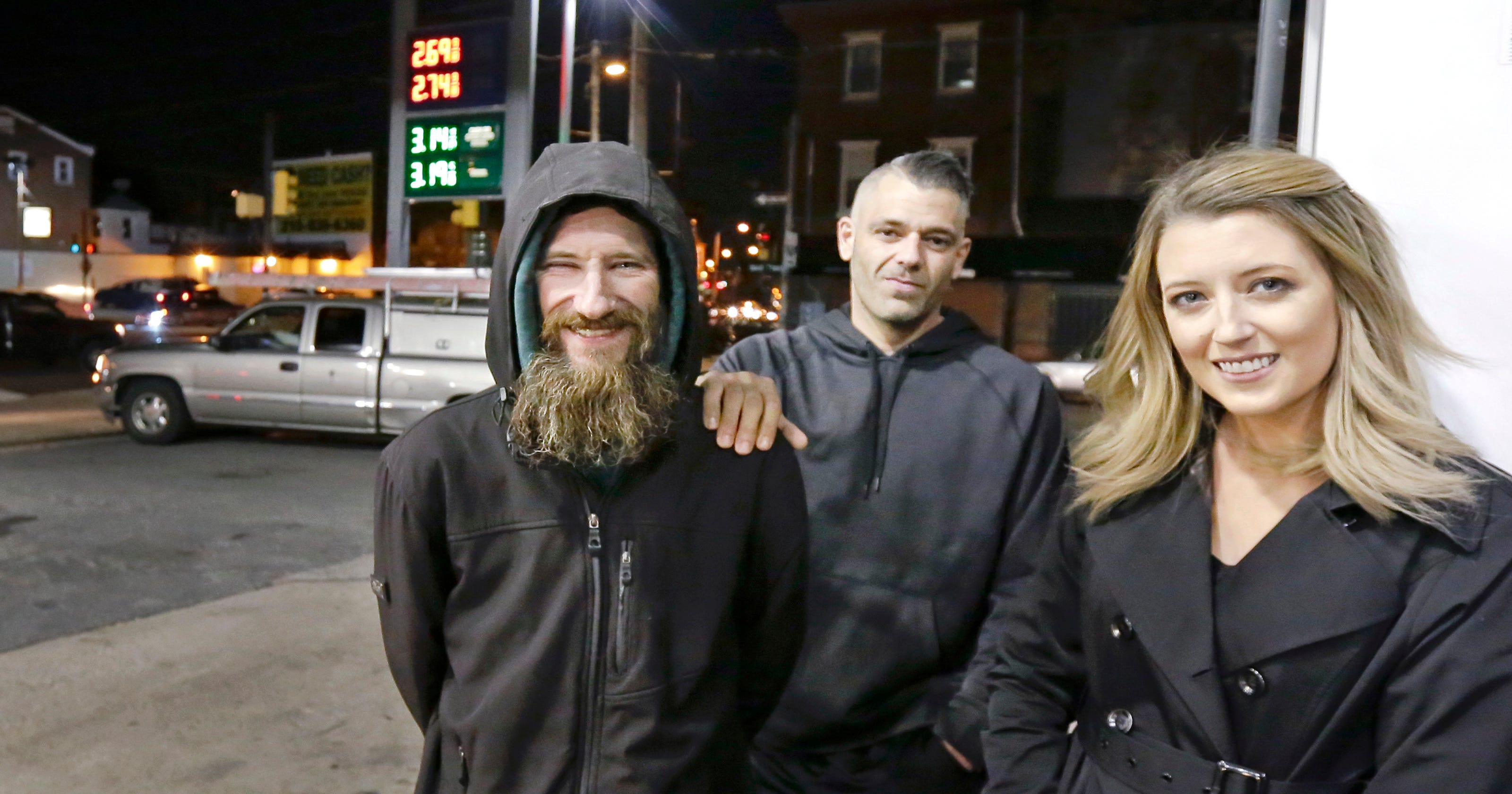
FLORENCE  – While the legal battle continues over nearly a half-million dollars in online donations for a homeless Samaritan, the crowdfunding platform that hosted the campaign is vowing the Philadelphia man will get his money.

GoFundMe, the online site used to raise the money, has made a commitment to see that that homeless veteran John Bobbitt Jr. gets all of the $402,000 raised to help him last year.

“We are pleased to report that Johnny will be made whole and we’re committing that he’ll get the balance of the funds that he has not yet received or benefited from,” the online fundraising company announced Thursday night in a joint statement with Cozen O’Connor, the law firm representing Bobbitt in a civil lawsuit filed only last week in an effort to retrieve all of the funds.

“GoFundMe’s goal has always been to ensure Johnny gets the support he deserves.”

The promise comes on the same day investigators descended on the Burlington County home of the couple who kicked off the viral campaign last year.

On Thursday morning, Burlington County law enforcement authorities executed a search warrant at the Florence home of Katelyn McClure and Mark D’Amico, the couple who raised the money after Bobbit helped her when she was stranded last fall in Philadelphia.

“We’ll continue to assist with the ongoing law enforcement investigation,” the GoFundMe statement continued.

“As we’ve said, our platform is backed by the GoFundMe Guarantee, which means that in the rare case that GoFundMe, law enforcement or a user finds campaigns are misused, donors and beneficiaries are protected. We’re fulfilling that commitment today and we will continue to work with Johnny’s team to make sure he’s receiving all donated amounts.”

Law enforcement officials offered little information about the criminal investigation.

Burlington County Prosecutor Scott A. Coffina confirmed in a brief statement that investigators from his office worked with Florence Township police in executing the search warrant, “in connection with a criminal investigation,” into the case.

“As of this time, there have been no charges filed,” Coffina said in the statement Thursday morning. “Further updates will be provided as circumstances warrant.”

Bobbitt, a homeless veteran from Philadelphia, has sued McClure and D’Amico to recover much of the $402,000 they solicited through an online crowdfunding campaign late last year.

Earlier this week, Bobbitt’s attorney said he learned all of the money is gone. He could not be reached for comment Thursday on the criminal investigation development.

Bobbitt met McClure in November when she ran out of gas on an exit ramp of Interstate 95 in Philadelphia. The homeless man used his last $20 to walk to a station to buy her gas.

McClure and D’Amico revisited him with food and gifts, and later started the online fundraiser for Bobbitt that eventually went viral as news of his good deed spread.

More than 14,000 people contributed to the campaign.

It’s not yet clear what police were looking for at the couple’s Cedar Lane Extension home, but a local TV reporter posted video of a BMW in the driveway being loaded onto a truck and investigators were seen removing boxes of materials from the property. The couple was home at the time of the search.

A “no trespassing” sign was posted Thursday on the edge of the property, which is tucked into woods in Florence.

In Superior Court on Wednesday, Judge Paula T. Dow ordered the couple to provide to the court by Friday afternoon documentation on how much of the donations has been spent, how it was used and what remains.

The judge also directed the couple to give sworn statements in legal depositions Monday about their handling of the money, some of which the couple’s defense lawyer Ernest Badway confirmed was co-mingled with his clients’ personal funds.

Badway indicated in court Wednesday that his clients intend to invoke their Fifth Amendment right against self-incrimination and refuse to give testimony about where the money went.

Badway did not respond to requests for comment Thursday.

It’s unclear if the criminal probe will impact the judge’s civil court orders.

In the courtroom Wednesday, a detective and assistant prosecutor from the Burlington County’s Office were sitting in the back but did not participate in the hearing.

McClure and D’Amico have claimed they spent roughly $200,000 on Bobbitt by buying him a trailer and a used vehicle, and providing him with living expense money that he partly used to buy drugs and to give away to family.

Bobbitt claims he received only $75,000 in cash and the value of the truck and camper.

Fallon admitted his client suffers from drug addiction and is now in a rehabilitation facility.

The camper had been parked on land that McClure’s family owns, but Bobbitt said he became homeless again after D’Amico told him in June that he had to leave the property.

In court last week, Bobbitt’s attorney said there was more than $150,000 in donations left, but Fallon said he learned in a subsequent phone conversation with Badway that the money was gone.

A GoFundMe spokesman said the company is working with law enforcement to ensure Bobbitt gets all the money he is due. The company said it also put $20,000 in an account set up by his attorney to aid in his investigation.

The Associated Press contributed to this report.

More on Samaritan story 


Read or Share this story: https://ift.tt/2wJs3Kw

Read More

from Trusted eNews https://ift.tt/2QbvQt1
via IFTTT

Kristina Vogel ‘can’t walk any more’ after injuring spine during crash

news image

Kristina Vogel won gold and bronze at the Rio Olympics and has also claimed 11 world titles

Double Olympic champion Kristina Vogel says she “can’t walk any more” after sustaining a serious spinal injury when she crashed during training in June.

The 27-year-old German was involved in a high-speed collision with another cyclist on a track in Cottbus.

Vogel, who is also a part-time police officer, won team sprint gold at London 2012 and the individual title in Rio.

“I believe that the sooner you accept a new situation, the sooner you learn to deal with it,” she told Der Spiegel.

At the time of the crash, Vogel’s compatriot Maximilian Levy wrote a letter encouraging race winners in Cottbus to donate their prize money to Vogel and her family.

“We will start funding for her, her family and beloved ones, to cover their support, the transport to get her home, or her rehabilitation,” said Levy.

Vogel has won 11 world titles, and the crash in Cottbus is not the first of her career.

She was put into an artificial coma for two days in May 2009 after hitting a car during a training session.

Read More

from Trusted eNews https://ift.tt/2M7C3Tq
via IFTTT

Houthis will attend Geneva talks ‘if demands are met’

news image

Yemen’s Houthi rebels are prepared to attend UN-sponsored peace talks in Geneva if three of their demands are met, a member of the group’s delegation has told Al Jazeera.

The talks, which would have been the first in nearly two years, were scheduled to take place in the Swiss city from Thursday but have been delayed twice in two days after the Houthi delegation failed to leave Sanaa.

Hameed Assem, part of the Houthi delegation that was supposed to fly to Geneva, told Al Jazeera on Friday that the three demands from the Houthi group included “transport of wounded rebels to Oman, repatriation of rebels who have already received treatment there and a guarantee that the Houthi delegation attending the talks in Geneva would be allowed to return to the rebel-held capital Sanaa after the talks end”.

The Saudi-UAE military alliance, which has been at war with the Houthis since March 2015, blamed the Shia group for its absence at the talks saying it was acting “recalcitrantly”.

Hamza al-Kamali, a spokesperson for the Yemeni government, added that the flight to take the Houthi group to Switzerland was given clearance three days ago.

Yemen: Protests continue as Geneva peace talks stalled

“We are here to put an end to Yemen’s suffering … but today we are alone. The Houthis prove that they don’t want peace, they don’t believe in peace,” said al-Kamali on Thursday.

“We want them to come, and we are pushing them to come. [However] if they don’t come in the next 24 hours, we will leave.”

One source in the Yemeni government delegation in Geneva told Reuters news agency that if the Houthis did not leave Sanaa “by 12pm” [09:00 GMT] on Friday, “I think the government delegation will decide to leave”.

The Houthi-run Saba news agency defended the the group’s absence, reporting that the Saudi-led alliance was “refusing to give required authorisations to an Omani plane in the capital Sanaa to transfer the [Houthi] delegation to Geneva”.

The news agency reported that the Houthis “blamed the UN for failing to secure the authorisations from the alliance which controls Yemen’s airspace”.

Mohammad Abdul-Salam, the Houthis’ main spokesman who has previously held secret talks with the Saudi-UAE alliance in Oman, also blamed the UN, saying it should “speak to the Americans”, who he claimed control Yemeni airspace.

The Saudi-UAE alliance has controlled Yemeni airspace since March 2015.

‘Flickering signal of hope’

In a statement issued late on Thursday, Martin Griffiths, the UN Special Envoy for Yemen, said efforts were being made to overcome last minute obstacles.

His office said it was “hopeful” to see the Houthi delegation present at the Geneva talks to expedite the political process.

Griffiths said “informal consultations” with the government would begin immediately, and described the talks as a “flickering signal of hope” to end the war in which at least 10,000 Yemenis have been killed.

“The Special Envoy is mindful of the challenges associated with bringing the parties together to Geneva, bearing in mind that they haven’t met for two years,” Griffith’s office said in a statement released on Thursday.

The last UN-backed peace negotiations for Yemen were held in Kuwait two years ago.

The talks continued for several months but no constructive results were reached due to serious differences between rival parties.

Yemen remains wracked by violence since the Houthis overran much of the country, including the capital Sanaa, in 2014.

The conflict escalated in 2015 when Saudi Arabia and allies – who accuse the Houthis of being Iranian proxies – launched a massive air campaign in Yemen aimed at rolling back rebel gains.

Iran and the Houthis deny the accusations.

Now entering its fourth year, the war has pushed more than 22 million people to seek humanitarian assistance.

According to UNICEF, 11 million children, a number greater than the entire population of Switzerland, need humanitarian assistance every day.

Read More

from Trusted eNews https://ift.tt/2No15m1
via IFTTT

Spiritualized’s new album, And Nothing Hurt, had its songwriter hurting

news image

“Now I can listen to music again.”

Jason Pierce says he hasn’t heard all that many songs except his own for the better part of six years. That’s the amount of time he says it’s taken him to create And Nothing Hurt, the eighth album by Spiritualized, the rock project he’s fronted for nearly three decades. As he works on his own music, “I have a hard time listening to music by other people I really love,” he says.

Spiritualized’s latest effort was just that — an effort. Pierce, a.k.a. J. Spaceman, says And Nothing Hurt took too long to make. He started it with a producer and ended up making most of it solo. “I went looking for producers. Its so much easier to please other people than it is please myself,” he says, mentioning he’d gone out to John Cale and Tony Visconti before turning toward his own laptop. He says rock and roll is “effortless when you’re young,” but now the former Spaceman 3 rocker struggled to “find a place for it” in his own songwriting. And he didn’t have the funding for the album he wanted. “It doesn’t sound like the thing I was going after,” he says, mentioning he aspired to craft a “Columbia studio record.” A Ray Charles vibe. “Disappointment hangs over this record,” he told EW slowly over the phone.

And yet the nine tracks on this are cohesive and major-key memorable, blissfully even, and replete with the isms that have made ladies and gentlemen feel like they’re floating in space since 1990: whirring keyboards, choice electric guitar riffs, looping choral vamps, orchestral thrums, and a mix of the sincere with the tongue-in-cheek.

One inspiration that occurs to songwriter Pierce over and over again are drives. Long drives, in a car, on the way to nowhere in America on a dark road, “in Texas or the West Coast.” That space, isolation, and sandy psychedelia is punctuated in sound, as well as in his words. “I’m Your Man” has the English singer offering: “If you want wasted, loaded, permanently folded / Doing the best that he can / I’m your man, I’m your man.” He’s a “lonely rock’n’roller” on sparkling “Let’s Dance”; and “Here It Comes (The Road) Let’s Go” features the crackle of a radio dial as a user seeks a proper frequency. It is a record “that is very much my age,” the 52-year-old continues.

And it’s very much the full album that Spiritualized will play front to back during the mere eight tour stops slated for this fall. “I’ve always thought his album would be presented as a full album. I’m OK if it fails,” he says, lighting up for a moment.

Spiritualized’s And Nothing Hurt is out now.

Read More

from Trusted eNews https://ift.tt/2Nrth7v
via IFTTT

Yellowstone’s wolves are back, but they haven’t restored the park’s ecosystem. Here’s why.

news image

CLOSE

Wolves are thriving at Yellowstone National Park, even more than they did when the park was first established in 1872. Video by Brian Kaufman, Detroit Free Press.
VPC

YELLOWSTONE NATIONAL PARK, Wyoming – Yellowstone’s wolves are back, helping revive parts of the ecosystem that changed drastically when this top-of-the-food-chain predator was killed off nearly a century ago. But Yellowstone is still not 100% back to normal – and it may never be.

“You put the predator back, that’s great, but conditions have changed so much in the intervening decades that putting the predator back is not enough to restore the ecosystem,” said Tom Hobbs, a Colorado State University ecology professor. “There’s not a quick fix for mistakes like exterminating apex predators.”

It’s a sign of both the promise – and the limitations – of a multi-decade wildlife recovery effort. The reintroduction of the wolf nearly 25 years ago to the country’s first national park has brought change: Overpopulated elk herds have thinned, allowing some willow and aspen groves to return and thereby creating better habitat for songbirds and beavers. 

But even as this ecosystem shows signs of recovery, a complete restoration is nowhere to be found.

“In some places, I don’t expect a full recovery of the ecosystem,” said Bill Ripple, a distinguished professor of ecology at Oregon State University, who started working in Yellowstone in 1997. “It’s going to be a mixed bag for the longer term now in coming decades.”

Yellowstone’s vanishing wolves

The park radically changed after humans exterminated the gray wolf from Yellowstone in the mid-1920s due to predator control efforts. Elk herds ballooned over the next 70 years, overgrazing vast tracts of land and trees such as willow and aspen. Fewer trees sent the songbird population into decline. Beavers lost their food source and the lumber to build their dams. The lack of those dams caused streams to erode, making them deeper and not as wide and further degrading the conditions willow need to grow. 

Today, nearly 25 years after wolves were reintroduced into the park, the top predators have helped parts of the ecosystem bounce back. They’ve significantly reduced elk herds, opening the door for willow, aspen, beaver and songbird populations to recover. But the wolves haven’t been a silver bullet for the ecosystem as a whole. 

“This idea that wolves have caused rapid and widespread restoration of the ecosystem is just bunk,” Hobbs said. “It’s just absolutely a fairytale.” 

More about the park: Breathtaking Yellowstone sparkles in the off-season

Going to the park?: 10 tips to make the most of your visit

‘You don’t know what you’ve got here’: Why Yellowstone is one unique national park

Yellowstone’s partial recovery has set off a heated debate in academia over how much bringing back an apex predator, such as the wolf, can help restore a devastated ecosystem. It’s one with consequences stretching from the U.S. to India and Africa, where naturalists have pinned their hopes on keeping fragile ecosystems as intact as possible by avoiding the elimination of lions, tigers, sharks and other top predators.

“Maintaining intact ecosystems may be easier than fixing them after you’ve lost some of the parts,” Hobbs said.

Fewer elk, more songbirds

Most ecologists agree that Yellowstone has rebounded some. When Doug Smith, Yellowstone National Park’s wolf biologist, first arrived in 1994 shortly before wolves were reintroduced, some willow and aspen trees only came up to his knees. “Now I can’t see through it,” he said. “It’s like a forest.”

But the trees aren’t coming back in every corner of the park: In many spots willow groves haven’t returned. Because willows need beaver to keep the streams from eroding and beavers need the willows to build their dams, it’s rather hard for both to come back simultaneously and in large numbers, said Hobbs, whose team has been conducting a long-term willow growth study in the park for 17 years.

The decrease in elk hasn’t allowed willows to recover because the streams changed significantly when wolves were absent.

“It doesn’t really matter very much whether they’re being browsed or not. They don’t have adequate habitat to thrive,” Hobbs said. “The conditions that changed while wolves were absent created conditions that made it very difficult to restore willows.”

Grizzly population rebound

It’s not all about the wolves, even if they get the most attention. Over the past several decades, the number of other carnivores like the grizzly bear and mountain lion have also climbed, multiplying the impact of the top predators on the ecosystem.

“As a scientist, the challenge is to figure out how much ecological change since wolf reintroduction is attributable to wolves and how much of that change is due to other forces,” said Dan MacNulty, an associate professor at Utah State University who studies the ecology of wolves and elk in the park.

How large the wolf’s impact on the Yellowstone ecosystem is difficult to tease out in part because of nature’s complexity and capacity for frequent change, he said. But money also plays a large role: It is difficult to adequately monitor all the potential drivers of change when funding for long-term research is so limited, he said.

“One of the grand challenges in ecology is to understand the consequences of predator removal and restoration in large-scale systems like Yellowstone. But the resources aren’t there. That really limits our power to know what’s going on,” he said. “A key reason why there’s so much scientific disagreement is that we haven’t been able to take all the necessary measurements over a long enough time and over a large enough number of organisms to come up with a more definitive answer.”

Despite all the disagreement, most ecologists say removing predators today would be a mistake. 

“The way ecosystems put themselves back together after such a problem is still something that scientists are trying to understand,” Ripple said. “The lesson is let’s not let things get as bad as they did with 70 years without wolves.”

But there’s an even broader question that needs to be addressed: Can we restore apex predators and coexist with them?

“There’s not many places in the rest of the United States where this is happening,” Smith said. “There are lessons here that we can do this on human-dominated landscapes in other places, but I don’t know because it might involve more wolves, cougars and bears, and right there you have a problem because people have trouble living with those three carnivores.”

Autoplay

Show Thumbnails

Show Captions


Read or Share this story: https://usat.ly/2wQpHtf

Read More

from Trusted eNews https://ift.tt/2NTOhRu
via IFTTT

Design a site like this with WordPress.com
Get started