Mike Pence, ‘Christian supremacist’: 6 key takeaways from a new book

news image

CLOSE

The “Pence rule,” which says men shouldn’t travel or dine in private with women who aren’t their spouse, can be a barrier for women. Here’s why.
Dwight Adams, dwight.adams@indystar.com

WASHINGTON – Democrats may not like President Donald Trump, but do they want the alternative?

“That is probably what we hear most from Democrats,” said Kevin Mack, lead strategist for the “Need to Impeach” President Donald Trump campaign. ” ‘Well, if we get rid of Trump, then we end up with (Mike) Pence.’ “

As Trump’s presidency became more endangered this week with the conviction or guilty plea of two of his former aides, a new book about the vice president will stoke concerns about Pence.

1. Is he a ‘Christian supremacist’?

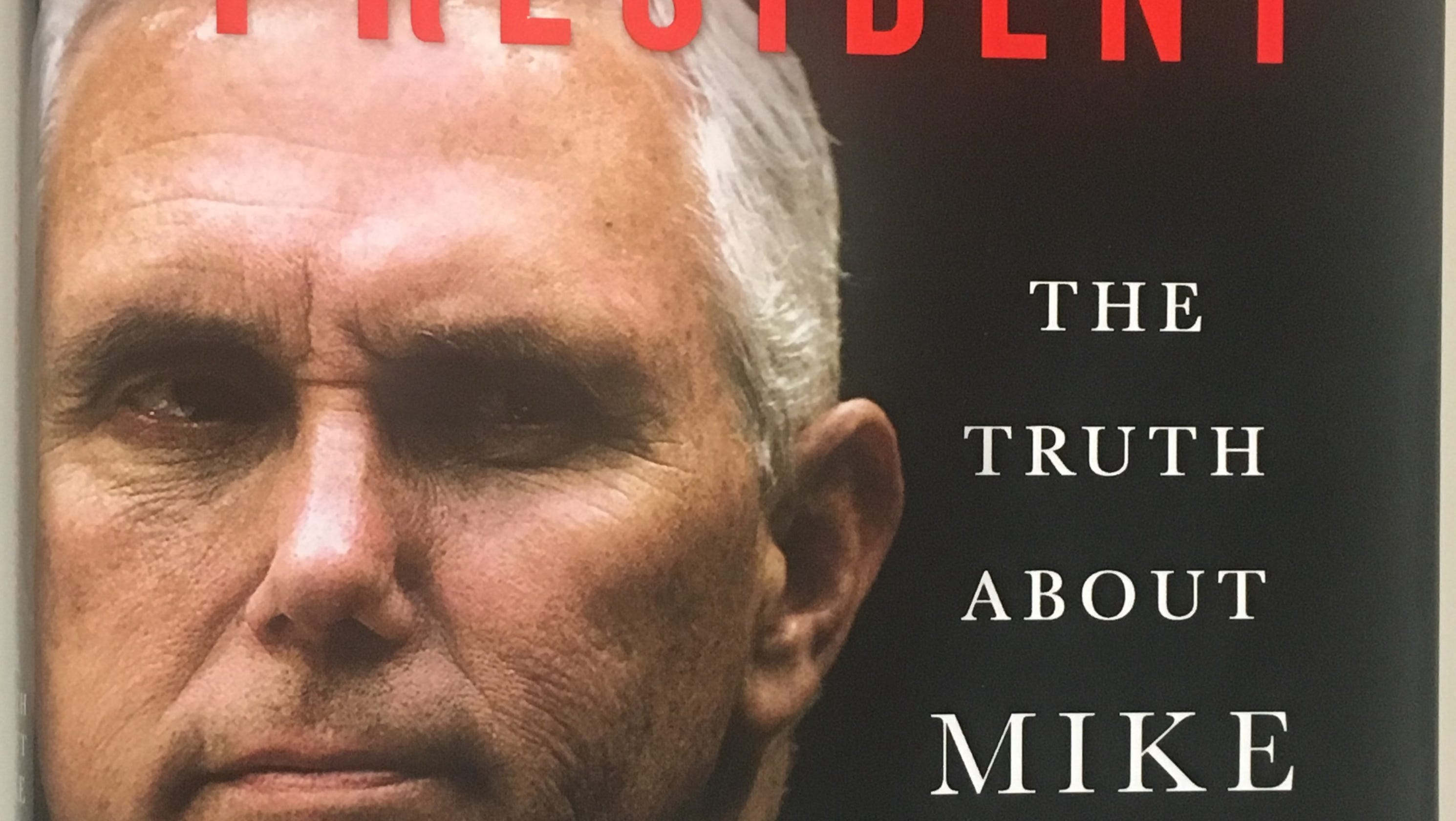
In “The Shadow President: The Truth About Mike Pence,” on sale Tuesday, authors Michael D’Antonio and Peter Eisner cast Pence’s background – congressman, Indiana governor, Trump VP – in a harsh light, arguing that “the most successful Christian supremacist in American history” is already functioning as a “kind of replacement president” and is preparing to “fashion a nation more pleasing to his god and corporate sponsors.”

A flattering preview of the book by New York Times columnist Frank Bruni – that ran under the headline “Mike Pence, Holy Terror” – already has religious leaders and other Pence supporters accusing Bruni and the book’s authors of religious bigotry. Saying he’d “never heard such hatred poured out against such a good man,” evangelist Franklin Graham urged supporters to pray that God will put a “hedge of protection” around Pence and his family.

More: Here’s why powerful women don’t use the ‘Mike Pence rule.’ Spoiler alert: They can’t.

2. It’s not the first Pence warning

The authors are not the first to raise alarms about who is waiting in the wings should Trump leave office – voluntarily or involuntarily.

Arguing Pence has taken advantage of the chaos of the Trump administration to amass “enormous power” under the radar, the Human Rights Campaign launched a campaign earlier this year to highlight Pence’s record on issues important to the LGBTQ community.

Former White House aide Omarosa Manigault Newman writes in her new memoir that Pence is biding his time until Trump resigns or is impeached.

“As bad as you think Trump is, you should be worried about Pence,” she said on “Celebrity Big Brother” in February after leaving the White House. “He thinks Jesus tells him to say things.”

Autoplay

Show Thumbnails

Show Captions

3. ‘Weaponized’ niceness

Authors D’Antonio and Eisner are no fans of Pence.

While Pence may have cited convicted Watergate conspirator Charles Colson as a “dear friend and mentor” because of the religious conversion Colson underwent in prison, the authors assert – without substantiation – that it’s “just as likely that Pence was drawn to Colson’s lingering aggressive tendencies.”

They comment on Pence’s favorite movie by noting that he loved “The Wizard of Oz” “despite the feminist power of its main characters.”

And Pence’s trademark “extreme niceness” is not benign in the authors’ eyes. Instead, Pence has “weaponized” his niceness as “a tool of persuasion and deflection.”

4. What is Pence deflecting?

While Trump is who he said he was, the authors write, Pence’s “pious and cautious exterior hid a desire for power equal to Trump’s.”

The book asserts that many of Pence’s evangelical friends believed his ultimate purpose is to establish a government based on biblical law, what they called “Christian Dominionism.”

But some of the examples of how religion has guided Pence as a policymaker leave out important details. For example, while the authors suggest religion is behind Pence’s rejection of policies to address climate change, they don’t factor in Indiana’s reliance on coal-fired power plants, a reason even some Democrats in Indiana opposed the Obama administration’s efforts to restrict greenhouse gas emissions.

Autoplay

Show Thumbnails

Show Captions

5. President in the shadows

The authors paint a conflicting portrait of Pence’s abilities. They say he was the least qualified vice president since Sarah Palin and Spiro Agnew, with his background as an “inept” legislator in Congress and a “middling” governor who didn’t like to work hard and was more interested in the status of the job than the job itself. (Pence, they write, was the first governor to order up a collection of custom-embroidered clothes decorated with his name and the words “Governor of Indiana.”)

Yet despite that lackluster background, the authors say Pence has been functioning as a kind of shadow president, “taking on so many domestic, foreign and partisan political assignments that he seemed more engaged in serious matters than the TV-addicted president himself.”

More: Donald Trump will work mostly Senate races; Pence will focus mostly on the House, aide says

More: 10 takeaways from a new biography of Mike Pence

6. Pushback on ‘religious bigotry’

There is one area where the authors and Pence’s supporters may agree. The book asserts that white conservative Christians, despite their “vast numbers and influence,” see themselves as victims. They cheer when Pence asserts, “No people of faith today face greater hostility or hatred than followers of Christ.”

In fact, in reacting to the book as it was portrayed in Bruni’s column, former Pence spokesman Marc Lotter told the Christian Broadcasting Network that the column is indicative of the “never-ending attack on Christianity.”

Conservative columnist Rebecca Hagelin wrote that the media is trying to discredit Pence “simply because he is a committed Christian.”

Meanwhile, Mack of Need to Impeach has his answer ready for why those worried about a Pence presidency should still push to get rid of Trump.

“It’s kind of like saying, ‘I have terminal cancer but I don’t want to deal with it because I might get diabetes,’ ” he said. “You have to deal with the first problem, and then we’ll deal with the second problem.”

Autoplay

Show Thumbnails

Show Captions


Read or Share this story: https://usat.ly/2BDZUdt

Read More

from Trusted eNews https://ift.tt/2BDH6eh
via IFTTT

2025 phase out: Kroger CEO Rodney McMullen says ‘plastic shopping bag’s days are numbered’

news image

CLOSE

Kroger plans to eliminate plastic bags by 2025
Albert Cesare, acesare@enquirer.com

Kroger said it will ban all plastic checkout bags by 2025.

America’s largest supermarket chain said it will transition from single-use to reusable bags and ultimately eliminate 123 million pounds of garbage annually sent to landfills. That would quadruple the amount of plastic the retailer currently recycles.

Kroger currently sells reusable bags starting at $1 each. Kroger will ramp up the availability of those bags. Shoppers for the foreseeable future will still have the option of asking for paper bags.

Kroger said it is also looking to cut back or phase out plastic bags for produce and meat, but it’s focusing on eliminating checkout bags for now.

The ban will directly affect a wide swath of consumers: Kroger serves 9 million customers every day at its nearly 2,800 stores in 35 states and the District of Columbia.

Kroger’s Seattle-based QFC subsidiary, with 63 stores in the Pacific Northwest, will be the first division to eliminate the bags by 2019.

More: Opinion: Kroger, America’s largest supermarket chain, bids farewell to the plastic shopping bag

Besides hundreds of its namesake stores in the Midwest and the South, Kroger operates hundreds more under the Harris Teeter, Ralphs, Fred Meyer, Fry’s and other nameplates.

Kroger officials said they are responding to growing environmental concerns raised by shoppers, employees, communities and nonprofits.

“The plastic shopping bag’s days are numbered,” Kroger CEO Rodney McMullen wrote in an editorial submitted to The Enquirer and USAToday. “Our customers have told us it makes no sense to have so much plastic only to be used once before being discarded – And they’re exactly right.”

Kroger’s decision will pressure other major competitors to follow suit. With nearly $123 billion in annual sales, Kroger is the second-largest grocer (behind Walmart, which is a mass discount retailer that gets half its $500 billion in sales from food).

“We’re the first major retailer in the U.S. to do this,” said Jessica Adelman, Kroger’s vice president of corporate affairs, which oversees company environmental and sustainability efforts.

Kroger uses 6 billion such bags annually, while the industry discards an estimated 100 billion bags each year.

Only 5 percent of supermarket bags are recycled by consumers. Last year, Kroger collected almost 38 million pounds of plastic for recycling in those in-store bins at the front of stores.

Additionally, Kroger recycled another 28 million pounds of plastic from other operations for a total of 66 million pounds.

The ban comes as individual cities concerned about environmental impact have moved to outlaw such waste.

Kroger officials said they decided to implement the transition at QFC because of the division’s small size and half its stores already are under a ban enacted by Seattle in 2012.

The debate over plastic shopping bags has spread across the nation.

Last year, a statewide referendum on California’s 2016 ban of plastic bags fell short of repealing the law, so it remains in effect.

Kroger’s Los Angeles-based subsidiary Ralphs operates under the California law. The legislation banned plastic single-use bags, but authorized a heavier plastic bag (different than standard reusable bags) designed for multiple uses that shoppers can buy for 10 cents apiece.

Hawaii (where Kroger has no stores) has a de facto statewide as its largest counties have outlawed them.

CLOSE

Kroger is Cincinnati’s largest employer. Here are five facts to know about the company.
Wochit

Other cities that have enacted bans on plastic shopping bags are Austin, Boston, Chicago, Los Angeles and San Francisco.

Other cities and counties that are beginning to crack down with fees are: Boulder, Colorado; Brownsville, Texas; Montgomery County, Maryland; New York City; Portland, Maine; and Washington, D.C.

Meanwhile, several states in the Midwest, South and the West have passed laws preventing local governments from enacting their own bans: Arizona, Florida, Idaho, Indiana, Iowa, Michigan, Minnesota, Mississippi, Missouri and Wisconsin.

“Though the majority of bills propose a ban or fee on bags, or improve recycling programs, most enacted legislation in recent years deals with preemption of local government action,” said the National Conference of State Legislators in May.


Read or Share this story: https://cin.ci/2w8h6Th

Read More

from Trusted eNews https://ift.tt/2o0WVCj
via IFTTT

NWSL: Players take extra breaks and oxygen tanks made available

news image

Providence Park is the home ground for Portland Thorns

Players took breaks every 15 minutes and oxygen tanks were made available because of poor air quality during a National Women’s Soccer League match.

Portland Thorns played Sky Blue FC after days of hazy skies caused by wildfire smoke in Oregon.

Although air quality tests taken six hours before kick-off measured outside the healthy range, the game went ahead.

A crowd of 17,986 saw Portland qualify for the play offs with a 2-1 victory at Providence Park.

Read More

from Trusted eNews https://ift.tt/2BzM4c9
via IFTTT

South Africa calls Trump ‘misinformed’ over land policy

news image

South Africa rejected a tweet by Donald Trump about the country’s land reform policy and the “large-scale killing” of farmers saying the US president was “misinformed”.

Trump said on Wednesday he directed Secretary of State Mike Pompeo to “closely study the South Africa land and farm seizures”.

“The presidency has noted Trump’s tweet, which is misinformed in our view,” President Cyril Ramaphosa‘s spokeswoman Khusela Diko said on Thursday.

“South Africa totally rejects this narrow perception, which only seeks to divide our nation and reminds us of our colonial past,” a tweet by the president’s office said. 

“South Africa will speed up the pace of land reform in a careful and inclusive manner that does not divide our nation.”

Diko said South Africa’s foreign minister will ask the US ambassador for clarification.

Large-scale killing?

Trump’s tweet appeared to be a response to a Fox News report that focused on South Africa’s land issue and murders of white farmers.

Ramaphosa on August 1 announced the ruling African National Congress (ANC) is forging ahead with plans to change the Constitution to allow the expropriation of land without compensation.

The plan aims to address racial disparities, as whites still own most of South Africa’s land more than two decades after the end of apartheid.

Ramaphosa has said the government’s land reform policy will be undertaken in a way that does not threaten food security or economic growth.

South Africa’s state-owned Land Bank, however, said on Monday the plan to seize land without compensation could trigger defaults that could cost the government 41 billion rand ($2.8bn), if its rights as a creditor are not protected.

Critics of the land policy say instead of seizing farmland from whites, such households should be given title deeds, turning millions into property owners. They point to the case of neighbouring Zimbabwe, where the economy collapsed after land reform was carried out.

Agriculture accounts for less than three percent of national output but employs about 850,000 people, or five percent of South African’s workforce. 

The South African government says the expropriation of land will address racial disparities [Reuters]

Land disputes

South Africa has a long history of colonial conquest and dispossession that pushed the black majority into crowded urban townships and rural reserves.

The 1913 Native Lands Act made it illegal for Africans to acquire land outside of these reserves, which became known as “homelands”.

The 17 million people who reside there, a third of the population, are mostly subsistence farmers working tiny plots on communal land.

While blacks account for 80 percent of South Africa’s population, the homelands comprise just 13 percent of its land. They are largely controlled by tribal authorities, rather than ordinary residents and farmers.

Since the end of apartheid in 1994, the ANC has followed a “willing-seller, willing-buyer” model, under which the government buys white-owned farms for redistribution to blacks.

SOURCE: Reuters news agency

Read More

from Trusted eNews https://ift.tt/2o0qO5H
via IFTTT

8 Snapchat pranks you can pull off from the comfort of your phone

news image

With Snapchat, you can nail pranking from the comfort of your own phone.

The app, aside from being a great way to transform yourself into a cartoon dog, is a veritable prank playground — and after you pull off the perfect Snapchat prank, the evidence will be gone forever.

Snap away, pranking millennials.

1. Snap a picture of a beach stock photo, then pretend you’re on vacation.

<img class="" data-credit-name='youtube/howtoprankitup‘ data-credit-provider=”custom type” src=”https://i.amz.mshcdn.com/uBVOa7oc7rVGxkTiRYE8xt32MCc=/fit-in/1200×9600/https%3A%2F%2Fblueprint-api-production.s3.amazonaws.com%2Fuploads%2Fcard%2Fimage%2F44138%2FScreen_Shot_2016-03-30_at_10.11.28_PM.png&#8221; alt=”Fake vacation Snapchat prank” data-fragment=”m!7e56″ data-image=”https://ift.tt/2wl6S15; data-micro=”1″>

Your acquaintances will wish they were at the real, not fake beach with you.

2. Confess a “big secret” in a one-second Snap.

Fake secret Snapchat prank

Image: mashable/chloe bryan

They’ll know something happened, but they won’t be sure what.

3. Tell lots of people you’re going to take their photo, then take a video instead.

Then, create the ultimate April Fool’s Day snap story.

4. Take selfies near people so they think you’re photographing them.

Just be prepared for retaliation.

5. Announce a fake engagement in your Snap Story.

Fake engagement prank on Snapchat

Image: snapchat/lira mercer

If you can’t find a ring, just use a celebrity Snap.

6. Announce your fake birthday in your Snap Story.

Fake birthday prank on Snapchat

Image: mashable/jonathan keshishoglou

And rake in the congratulatory Facebook posts.

7. Send a Snap that looks like it’s for someone else.

Snapchat prank: Send a snap that looks like it's for someone else

Image: mashable/chloe bryan

Sit back and wait for the confused responses — or for someone to appear at your home with a bag of fertilizer.

8. Make viewers think their phone volume is broken by mouthing your words.

Tee hee.

Read More

from Trusted eNews https://ift.tt/2o0M37t
via IFTTT

The King and I with Kelli O’Hara and Ken Watanabe is coming to movie theaters

news image

Shall we dance?

If the answer is yes, you won’t want to miss the two-night only showing of the Lincoln Center revival of The King and I in movie theaters this fall. Following its Tony-winning run at the Lincoln Center and a national tour, The King and I is currently playing at the London Palladium in London’s West End in a production featuring its three original leads, Kelli O’Hara, Ken Watanabe, and Ruthie Ann Miles.

That production will be released in cinemas this fall by Trafalgar Releasing. The King and I: From the Palladium will come to U.S. movie theaters for two nights only, Friday, Nov. 29 and Tuesday, Dec. 4.

The classic Rodgers and Hammerstein musical is set in 1860s Bangkok and tells the story of the unconventional relationship between the King of Siam and Anna, a British schoolteacher whom the King hires to tutor his wives and children. The two strike up an unlikely friendship and end up learning from each other on issues ranging from tradition, gender roles, leadership, and more.

In addition to the three leads, the production also features Takao Osawa as The Kralahome and Dean John-Wilson and Na-Young Jeon as the young lovers, Lun Tha and Tuptim. O’Hara and Miles both won Tony awards for their performances in the original Lincoln Center production, which they are reprising in London.

“The response from the theatre audiences on Broadway, throughout America on tour and now in London at the Palladium has been phenomenal,” said director Barlett Sher in a statement. “They have really taken this show into their hearts. I’m delighted that the worldwide cinema release will now give a greater number of people the opportunity to enjoy this production of which we are all so proud.”

Tickets for the special screening event go on sale Aug. 31, and the production, which was filmed onstage at the Palladium, will screen for two nights — Nov. 29 and Dec. 4.

Read More

from Trusted eNews https://ift.tt/2BzZaWE
via IFTTT

One killed, 2 wounded in Paris knife attack; Islamic State claims responsibility

news image

Share This Story!

Let friends in your social network know what you are reading about

One killed, 2 wounded in Paris knife attack; Islamic State claims responsibility

The Islamic State (ISIS) claimed responsibility for the attack on its Aamaq news agency. The claim couldn’t immediately be independently verified.

Loading…Post to Facebook

Posted!

A link has been posted to your Facebook feed.

One person has been killed and two others seriously wounded when a man attacked pedestrians with a knife in Paris, French authorities said Thursday. The attacker was killed by police.                       

BFM-TV reported that the attacker carried  out the stabbings in Trappes, a suburb in western Paris, and sheltered in a house before he was shot by police.

Reuters reported that police “neutralized” the attacker, citing a police source.

The Islamic State (ISIS) claimed responsibility for the attack on its Aamaq news agency. The claim couldn’t immediately be verified.

There have been a number of high-profile terror attacks in Paris and other locations in France in recent years, many of them claimed by ISIS.                        

Read or Share this story: https://usat.ly/2o3lPB8

Read More

from Trusted eNews https://ift.tt/2o4johY
via IFTTT

Popular Ugandan opposition MP charged with treason

news image

Military prosecutors in Uganda withdrew weapons charges against jailed government critic Robert Kyagulanyi, a pop star turned opposition parliamentarian who goes by the stage name Bobi Wine.

After the weapons charges were dropped, however, he was quickly re-arrested by police on Thursday and now faces potentially more serious charges of treason in a civilian court.

Kyagulanyi, 36, appeared before a military court in the capital Kampala after his arrest last week prompted large protests and clashes with the police.

His appearance was the first time the legislator had been seen in public since his detention and there were allegations that he had been beaten while in custody. He clenched his fists and greeted supporters and walked with a limp.

Uganda pop star-turned-opposition leader Bobi Wine to face court

“The bogus charges have been dropped,” attorney Medard Sseggona told local broadcaster NBS. “They claim they prefer charging him with the more serious offense of treason.”

The popular musician has emerged as an influential critic of President Yoweri Museveni after winning a seat in parliament last year. 

The lawmaker had been arrested with four other opposition lawmakers, three of whom face treason charges. A fifth legislator has been hospitalised with injures allegedly sustained during detention.

“All along people knew he was going to appear in a military court here in Kampala but lawyers of Bobi Wine and his family were just told by the military last night that the hearing is actually going to be in Gulu,” Al Jazeera’s Catherine Soi in Kampala reported.

Dozens of other Ugandans have been charged with treason and illegal possession of firearms over their alleged role in the stoning of the president’s convoy after a local election rally.

In recent days, Uganda’s government has faced pressure to free Kyagulanyi, with dozens of musicians around the world speaking out against his alleged beating in detention.

#FreeBobiWine

In a statement late Wednesday, Museveni accused “unprincipled politicians” of luring youth into rioting.

Responding to calls on social media to #FreeBobiWine, the president said he had no power to do so. “Let us therefore wait for the courts and see what they decide.”

Museveni took power by force in 1986 and has since been elected five times. Although he has campaigned on his record of establishing peace and stability, some worry those gains are being eroded the longer he stays in power.

The 74-year-old Museveni is now able to seek re-election in 2021 because parliament passed legislation last year removing a clause in the constitution that had prevented anyone over 75 from holding the presidency.

SOURCE: Al Jazeera and news agencies

Read More

from Trusted eNews https://ift.tt/2BDh7Uf
via IFTTT

6 problems with the foster care system — and what you can do to help

news image

When Tenaja Jordan came out to her parents at 17 years old, they kicked her out of their home. As a teenager, she was still considered a child in the eyes of the state, and was immediately placed into New York City’s child welfare system.

Following the trauma of the situation, one question remained on Jordan’s mind: Where was she going to live?

Jordan made her needs clear to child welfare workers: She didn’t want to live on Staten Island or with a homophobic guardian. But that’s exactly where she ended up.

“Her first words to me were, ‘Did any of those lesbians at the children’s center hit on you?’” Jordan tells Mashable about her guardian. “ACS put me exactly where I didn’t want to be.”

Advocates say there’s a lot wrong with a system that desperately needs to get it right.

Jordan, now an adult who has worked in the foster care system herself, isn’t unique in her struggle to navigate child welfare. Foster care has long been criticized for failing to meet the needs of children, from allowing kids to age out of the system without safety nets in place, to struggling to adequately support youth and families.

Advocates like Jordan say there’s a lot wrong with a system that desperately needs to get it right.

According to the latest statistics available, as of September 2014, more than 415,000 children and teens were in the foster care system at any given time. These young people live in temporary housing provided by the state, are cared for by relatives or unrelated foster parents, or are placed in other residential facilities like group homes. And they’re constantly frustrated with a system that feels unmanageable.

But getting to the root of frustration with child welfare systems isn’t easy. Advocates say there are a lot of complicated and intertwining factors that make foster care ultimately unsuccessful for many who enter the system.

Consider this a critical starting point to reframe how we think of child welfare. Here are six problems advocates say hinder foster care in the U.S., and what you can do to make a change.

1. Group homes are too often a go-to.

More than 56,000 children in child welfare systems are living in group settings — and advocates say that number is far too high. Many argue children have more success when placed in family settings from the start, and that defaulting to group settings is a troubling practice.

“We believe that all kids who have to be removed from their families should be placed with other families.”

“We believe all kids who have to be removed from their families should be placed with other families,” Tracey Feild, director of the Child Welfare Strategy Group at the Annie E. Casey Foundation, tells Mashable. “That’s the most important criterion for placement — or it should be.”

Aside lacking in adequate support for children in care, group homes also make little financial sense. Group settings are about seven to 10 times more expensive per child than placement with a family.

But, Feild admits, there’s one major obstacle when it comes to getting children out of group care: There are rarely enough foster families to achieve that goal.

Denise Goodman, a child welfare professional and consultant with the Annie E. Casey Foundation, adds that there’s often a dependency on group homes for teenagers in particular, because “not enough people want to step up for teens.”

What you can do to help: Become a foster parent, if the new role fits your life and your family.

“What we want is to stabilize youth in one family — and have that family understand what they are going through, and address and meet their needs,” Feild says.

To learn more about the process to become a foster parent, state-by-state, visit here.

2. Teens age out of the system without proper support.

When children, especially teens, are placed into group homes, they’re denied the ability to connect with a permanent, adoptive family. Without those connections, they’re likely to age out of the system without a supportive network in place.

“At a certain point, a decision is made that a child is old enough that we can let them age out,” Feild says. “Now, we are realizing that that’s a mistake.”

And the realities of aging out of the system are devastating for youth. One in five young people who age out of the system will become homeless. One in four will be involved in the justice system within two years of leaving foster care. And it’s estimated that more than 40% of youth who age out won’t complete high school.

“The best independent living, transitional support teens in foster care can have is a family.”

“The best independent living, transitional support teens in foster care can have is a family,” Goodman says. “There wasn’t a whole bunch of us who were truly ready to be 100% on our own at 18.”

Goodman adds that many jurisdictions have recently extended foster care beyond age 18 to age 21, because states are starting to understand that young adults are in need of much more support from caregivers and case workers.

“Even kids who have grown up with families and have gone to college — very few can be independent at 21,” Feild says. “And we expect these kids to go off and succeed on their own? It’s unlikely and unfair to think that’s going to happen.”

What you can do to help: Become a mentor for foster youth in your community — and be a vocal advocate for stronger transitional measures for young adults aging out.

“You need a connection to an adult that is going to be there for you,” Jordan says. “Young adults need that kind of mentorship and support.”

To become a mentor, reach out to agencies in your state or local families in your community that could use support. To learn more about the challenges facing young adults aging out of the system, read first-person accounts of the crisis here.

3. Foster parents need more support to achieve success.

Guardians need more support, too, which Feild says is essential for foster parents to work through any difficulties they may experience.

“An entire community needs to have a positive attitude toward people who do this difficult … work of becoming foster parents.”

“They are often taking kids who have experienced trauma in their early years,” she says. “They have to be trained about what’s going on in a child’s life, and how to best address those concerns.”

Though advocates say family placement is ideal over group homes, children and teens in the system — especially those who are LGBTQ — are often reluctant to leave congregate care because many foster care families can’t meet their needs the way group care workers can.

With almost half of all children in the child welfare system living in foster homes with non-relatives, Feild says early support while families are forming relationships is especially key to curbing disruptions in placement. And because it’s common for foster kids to hop from placement to placement, addressing that trend through child and parental support is crucial.

What you can do to help: Support foster families in your community in big and small ways — tutor, babysit or simply ask how you can make their lives a little easier. Goodman says there needs to be an “all hands on deck” mentality to support foster families, especially since not every family can be a foster family.

“An entire community needs to have a positive attitude toward people who do this difficult, challenging but ultimately rewarding work of becoming foster parents,” she says.

Organizations like the National Foster Parent Association recruit, train and support foster parents in a more structured manner. You can donate to its efforts here.

4. There isn’t enough focus on reunification.

We often talk about adoption or aging out as the only two options after foster care, but reunification with a parent is an option often overlooked. It’s actually common, with about half of all youth who leave foster care becoming reunited with their parents.

“We need to be saying, ‘Lend a helping hand to children and their families by becoming a foster parent.’”

But, advocates say, the system as a whole often ignores reunification as a viable option when thinking about a young person’s future. Feild says that’s a major misstep, especially because children who are removed from their families don’t necessarily want to be.

For these youth, Goodman adds, talking about foster care with reunification in mind is essential.

“We aren’t ‘giving this child the gift of a family’; this child has a family,” Goodman says. “Family needs to be part of the conversation. We need to be saying, ‘Lend a helping hand to children and their families by becoming a foster parent.’”

What you can do to help: Reframe how you talk and think about foster care. Don’t assume parents who have children taken away are forever unable to provide for those children.

Abuse or neglect aren’t always the issues at hand. The realities of mass incarceration for minor convictions — especially for black families — may place a child out of parental care, or a family struggling financially may temporarily lose the ability to take care of their children.

There are many reasons for lapses in the ability to care for a child that can be solved, allowing families to move forward. Let reunification become one of the end goals you talk about when speaking about foster care, not just adoption or aging out.

5. Children’s needs often go unheard.

For many children in the foster care system, their frustrations stem from one main source: They feel their voices go unheard.

“I do think that sometimes we aren’t very good at listening to kids or engaging with kids,” Goodman says. “Some people just don’t value the youth voice — and I think we should.”

“Some people just don’t value the youth voice — and I think we should.”

Sometimes, that voice can be angry or frustrated, leading adults to cut off communication and leave a child’s needs unmet, simply because they don’t like how they’re being articulated. But both Goodman and Feild agree that anger, especially when dealing with a complex foster care system and past trauma, is understandable.

“You’ve got kids who have had terrible things happen to them — so bad that they’ve had to be removed from their families,” Feild says. “They have a lot going on and a lot to deal with, along with growing up and becoming independent.”

What you can do to help: Be someone who listens to children and teens in foster care — and encourage others to do the same. An adult advocating for an unheard child acts as an amplifier for that child’s needs.

6. The system is filled with too many rules, regulations, and players.

Some children may feel frustrated with the foster care system because they’re constantly under surveillance. There are often a lot of players in the lives of foster children: guardians, advocates, social workers, courts and more.

“You have to go through 12 layers of people to find the right person to talk to about something,” Feild says. “You are bound by the rules of the system — and they are not the normal rules a parent would have for a child.”

“You are bound by the rules of the system — and they are not the normal rules a parent would have for a child.”

Feild says seemingly normal tasks for foster children and teens, like getting a driver’s license or playing on a sports team, require extensive approval and paperwork. As a result, it’s easy for children to feel like their lives are impossible to navigate.

“That’s a lot of people controlling your life and making decisions for you,” she says. “At least in a biological or adoptive family, you can have a dialogue about that.”

And for young people in foster care to assert themselves against these rules can be especially tricky. It often involves a lot of risk.

“[In the foster care system], there’s no room for error. If I’m a teenager and I make a stupid mistake, my foster parents may say to an agency, ‘Hey, move this kid,’” Feild says.

What you can do to help: Become a court-appointed special advocate for foster youth, if the new role fits your life. A special advocate in the courts ensures foster youth are getting all their legal needs met by getting to know those children and their situations, and then vocalizing their opinions of a positive and sensitive care plan in the courts.

To learn more about how to become a volunteer, visit here

To learn more about youth rights within the system, start with this breakdown.
Read More

from Trusted eNews https://ift.tt/2BD8V6v
via IFTTT

Trump talks to ‘Fox & Friends,’ Hurricane Lane eyes Hawaii: 5 things to know Thursday

news image

Editors, USA TODAY
Published 4:42 a.m. ET Aug. 23, 2018

Trump weighs in on Cohen, Manafort with ‘Fox & Friends’ interview

President Donald Trump will weigh in on Michael Cohen and Paul Manafort during an interview with “Fox & Friends” at 6 a.m. ET on Thursday. Cohen, who is Trump’s former attorney, told a federal court this week that he paid off two women to silence them before the 2016 election at Trump’s “direction,” and admitted that the payments were illegal. Trump told Fox that the payments weren’t a campaign violation since they came from his personal funds. Also in the interview, Trump is expected to talk about Manafort — found guilty on eight of 18 criminal charges related to bank fraud and tax evasion — and a possible pardon for the ex-Trump campaign head.

CLOSE

Tuesday was a bad day in court for former associates of President Donald Trump, and it could foreshadow tough days ahead for the president. AP’s Washington Bureau Chief Julie Pace looks at what it all means for Trump’s White House. (Aug. 21)
AP

With Hurricane Lane approaching Hawaii, Kilauea volcano simmers down

As Hawaii braces for the impact of Hurricane Lane, island residents can at least feel comforted they won’t be hit by a double-whammy of natural phenomena. The Kilauea Volcano in the Big Island has settled down in the last two weeks, and it doesn’t figure to interact much with the approaching storm. Projections call for the storm, which strengthened to Category 5 early Wednesday, to dwindle into a Category 2 by the time it gets closest to the islands late Thursday. The U.S. Geological Service said “Hurricane Lane is forecast to pass to the west of the (Big Island) and should not have a significant effect on the eruption aside from minor rockfalls at the summit and increased’’ steaming. 

CLOSE

NASA is tracking the Category 4 storm that has maximum winds of 150 mph with this 3D rainfall map.
Buzz60

Another round of tariffs on Chinese imports goes into effect

A second wave of tariffs on $16 billion worth of Chinese imports kicks into effect Thursday as the United States and China resume talks amid an escalating trade standoff between Washington and Beijing. The tariffs are part of $50 billion in duties the Trump administration announced earlier this summer, and the second round includes a 25 percent tariff that will impact 279 product lines including electronics, plastics and railway freight cars. While analysts and business leaders warn that they don’t expect anything concrete to come from this week’s negotiations, the talks could set the stage for more discussions before a meeting between President Donald Trump and Chinese President Xi Jinping later this year. 

Orchard Supply Hardware to begin store closing sales

Orchard Supply Hardware stores will hold store closing sales starting Thursday after Lowe’s announced its plan to close the hardware chain nationwide by Feb. 1.Orchard Supply Hardware, founded in 1931 in San Jose, California, and acquired by Lowe’s in 2013, has 99 stores in California, Oregon and Florida. Lowe’s is closing the stores to focus on its core home improvement business, the company said. 

CLOSE

The company, acquired by Lowe’s in 2013, will be closed so Lowe’s can focus on its core home improvement business.
USA TODAY

A week after her death, Aretha Franklin is one of America’s most-streamed artists

America is listening to a whole lot of the Queen of Soul, a week after her death last Thursday. Since then, her songs have been streamed nearly 57 million times in the U.S., making her the fourth most-streamed artist, according to data from BuzzAngle Music. She’s been bested during that period only by hot rap hit-makers Drake, Post Malone and the late Xxxtentacion. On the day of her death, Franklin’s song streams increased more than 1,400 percent from the previous day, and album sales jumped by nearly as much.

Autoplay

Show Thumbnails

Show Captions


Read or Share this story: https://usat.ly/2BzGKFu

Read More

from Trusted eNews https://ift.tt/2o1hXR7
via IFTTT

Design a site like this with WordPress.com
Get started