Robin Leach, the celebrity journalist who made a career of ogling lavish living on TV’s “Lifestyles of the Rich and Famous,” died early Friday in Las Vegas, where he had been working for the Las Vegas Review-Journal. He was 76.
His death was reported by the Review-Journal Friday.
“Despite the past 10 months, what a beautiful life he had. Our Dad, Grandpa, Brother, Uncle and friend Robin Leach passed away peacefully last night at 1:50 a.m. Everyone’s support and love over the past, almost one year, has been incredible and we are so grateful. Memorial arrangements to follow,” said the statement from Leach’s sons Steven, Gregg and Rick Leach.
Leach moved to Las Vegas in 1999, and spent most of the last two decades chronicling star-studded events around town as a celebrity columnist, most recently for the Review-Journal but also for the Las Vegas Sun.
On Friday, Clark County, Nevada, which includes Vegas, tweeted farewell to Leach.
“Remembering #RobinLeach, he was British but adopted Las #Vegas. He loved it here, made his home here and was one of the biggest promoters of #LasVegas and the #LasVegasStrip. #RIP Robin and thank you,” the tweet read.
The London-born Leach began his career as an entertainment and celebrity reporter at age 18 at The Daily Mail, one of Britain’s rowdiest tabloids keen on celebrity gossip. He was made Page One editor, the youngest ever at 18.
In 1963, he moved to the U.S. where he worked for multiple publications, including the New York Daily News and just launching People magazine, where he wrote the first 11 cover stories for what has become the powerhouse celeb publication.
He also worked in the U.S. as the show business editor of another British tabloid, The Star, and later joined CNN in 1980 on the network’s “People Tonight” show. He also helped start the syndicated TV show “Entertainment Tonight.”
But he really made his mark in 1984 with “Lifestyles of the Rich and Famous,” which he co-created. The syndicated show, which ran from 1984 to 1995, focused on celebrities’ lavish homes and favorite destinations, demonstrating there was widespread audience interest in celebrity-centric shows.
The Saudi-UAE military alliance fighting Houthi rebels in Yemen has been slammed by Human Rights Watch, which has accused the pair of reaching “dubious conclusions” in its post-air attack analysis and failing to properly investigate alleged war crimes.
In a damning 90-page report released on Friday, the rights group accused the alliance’s investigative body, the Joint Incidents Assessment Team (JIAT), of “absolving coalition members of legal responsibility in the vast majority of attacks”.
“Many of the apparent laws-of-war violations committed by coalition forces show evidence of war crimes,” said HRW in the report.
“JIAT investigations show no apparent effort to investigate personal criminal responsibility for unlawful air attacks. This apparent attempt to shield parties to the conflict and individual military personnel from criminal liability is itself a violation of the laws of war.”
The Saudi-led coalition, which has been at war with Houthi rebels since March 2015, has repeatedly denied allegations of war crimes, saying its air attacks are not directed at civilians.
However, data collected by Al Jazeera and the Yemen Data Project, revealed that almost one third of the 16,000 air raidscarried out on Yemen since March 2015 have struck non-military sites.
These attacks have targeted weddings, hospitals as well as water and electricity plants, killing and wounding thousands.
At least 10,000 people have been killed since the start of the conflict, according to the UN. Analysts say that toll is likely to be higher.
For more than two years, the coalition has claimed that JIAT was credibly investigating allegedly unlawful air strikes, but the investigators were doing little more than covering up war crimes.
Sarah Leah Whitson, Middle East director at Human Rights Watch
Downplaying air attacks
Previous investigations by the Saudi-led alliance also absolved itself of any real responsibility and instead put the blame on the Houthis, the report added.
The HRW said that JIAT often appeared to find that an air attack was lawful “solely because the coalition had identified a legitimate military target, but did not appear to consider whether the attack was lawfully proportionate or if precautions taken were adequate”.
WATCH: Bomb that killed 40 children on a school bus in Yemen was US-made (1:29)
The rights group also said that JIAT downplayed air attacks on a residential complex in the port city of Mokha, which killed at least 65 people, saying the complex was “partly affected by unintentional bombing”.
An attack on a water well in September 2016 was termed an “unintended mistake” by the JIAT.
An HRW investigation later found at least 11 bomb craters at the site where dozens of civilians were killed and wounded.
“For more than two years, the coalition has claimed that JIAT was credibly investigating allegedly unlawful air attacks, but the investigators were doing little more than covering up war crimes,” said Sarah Leah Whitson, HRW Middle East director.
“Governments selling arms to Saudi Arabia should recognize that the coalition’s sham investigations do not protect them from being complicit in serious violations in Yemen.”
Royal pardon of military personnel
The US, UK, Canada, France and Spain have all sold weapons to Saudi Arabia in recent years despite repeated petitions from human-rights groups.
Some of those weapons have been used in the conflict.
Following a recent air attack on a school bus that killed 40 children, individual members of congress called on the US military to clarify its role in the war and investigate whether support for the air raids could render American military personnel “liable under the war crimes act”.
In July this year, Saudi Arabia’s King Salman issued a royal decree “pardoning all military personnel who have taken part in the Operation Restoring Hope [begun in April 2015] of their respective military and disciplinary penalties”.
The sweeping and vaguely worded statement did not clarify what limitations, if any, applied to the pardon.
We can all agree that food served fresh from the oven is delicious, right? But as a food connoisseur and passionate eater I’m here to tell you there’s something even better than hot food: cold food.
To be clear, I’m not talking about foods like ice cream that are normally served in a chilled state. I’m talking about foods that are traditionally served hot, then refrigerated and eaten cold. Leftovers!
Many people choose to warm up leftovers, which is something I’ve never understood, because cold food is freakin’ delicious. Not only does it taste better IMO, but you don’t have to waste time impatiently waiting for it to cool down. There are no tongue burns, and no heat or steam to distract your mouth from enjoying flavors to the fullest. Cold food is the best.
Now, I get that some people will never be on Team Cold Food due to personal issues with texture changes that result from cooling. But to those die-hard reheaters who are simply reluctant to try chilled leftovers, I offer you this ranking of ten of the best foods to eat cold in hopes it gives you to another wonderful way to enjoy food.
10. Shepherd/cottage pie
Shepherds pie
Image: Shutterstock / Robyn Mackenzie
Though there are a number of ways to make Shepherd’s pie, my simplest go-to recipe includes three main ingredients: ground beef, mashed potatoes, and corn. The combination is magical and the three foods complement each other well when hot, but when the dish is refrigerated the separate layers really come together.
The corn wedges itself into the mashed potatoes, which become cold clumps of starchy goodness, and the meat hardens, making it super easy to stick a fork in and enjoy all three components in one bite.
9. Banana pancakes
Image: MiguelMal/getty images
Freshly made pancakes with syrup are an amazing breakfast, but two-ingredient banana pancakes — which are made from bananas and eggs — make for a surprisingly scrumptious cold snack. Make the pancakes around the size of a silver dollar and stick them in the fridge. Then, you can easily grab them on the go. They’re so delicious you won’t even need syrup.
8. Rice
Image: Getty Images/amana images RM
Rice is a tricky cold food, because some dishes like rice pilaf or fried rice with oil, veggies, or a protein are absolutely bomb when devoured chilled. But trying to chow down on plain rice straight from the fridge is one of the most unpleasant culinary experiences you’ll ever have.
Plain rice gets clumpy and hard when kept in the fridge, and can barely be tolerated without a bit of heat and a sauce of some kind if you’re really desperate. So be sure to stick to flavorful, ingredient-heavy rice if you’re not in the mood to reheat.
7. Cake
Cake is not hot, I know. But it’s most often served at room temperature, so it counts. Please hear me when I say that much like revenge, cake is best served cold. Refrigeration causes the cake itself to become more dense and the frosting to thicken, making it taste like a completely different, extra delicious sweet treat. Also, sticking your fork into chilly cake is a significantly more satisfying experience.
6. Meatloaf
Image: LauriPatterson/Getty Images
Cold meatloaf is a gift from the heavens. If you think the hunk of ground beef tastes good when it’s hot, just WAIT until it chills and the flavors of garlic, tomato sauce, and possibly even bacon on top fuse together. *chef’s kiss*
5. Noodles
Image: Getty Images/iStockphoto
Eating cold noodles is sort of like eating cold rice, but much better. It should come as no surprise, because cold pasta salads are so great, but chilling dishes like lo mein and pad Thai is highly recommended. The flavors pop and the noodles transform from warm and cozy comfort carbs to a cool and refreshing comfort carbs.
4. Thanksgiving dinner
Image: Shutterstock / Brent Hofacker
Thanksgiving dinner is great, but have you ever eaten cold Thanksgiving leftovers? Turkey, stuffing, fried cauliflower, cornbread, Brussels sprouts, macaroni and cheese — they’re all wonderful cold. And yes, brace yourselves, because I’m about to add mashed potatoes to the list. They’re delicious and if you haven’t tried them cold don’t you dare fight me.
3. Lasagna
Image: Getty Images/StockFood
No one’s here to complain about the beauty that is hot lasagna, with all it’s saucy goodness and stringy melty cheese, but cold lasagna deserves some love, too. When hot pasta is covered with sauce of any kind really, it often drips off as its form is much more fluid. In the refrigerator, however, sauce solidifies more and really has the chance to absorb into the pasta.
In my opinion baked ziti is the best cold pasta, because of the cheese, of course. And speaking of sauce, eggplant and chicken parmesan are also wise cold food choices.
2. Chicken
Image: Getty Images/EyeEm
There’s a very good chance that chicken in any form will be phenomenal cold. Fried chicken, chicken wings, chicken cutlets, General Tso’s, tenders, quesadillas. Can I get a yum!?
1. Pizza
Image: Shutterstock / BW Folsom
While the options listed above are all excellent starting points, nothing can compare to the fairest cold food of them all: pizza. It may not be the most visually appetizing food in the world, but the combo of cold cheese, cold dough, cold sauce, and cold toppings are phenomenal.
Cold pizza is one of the most commonly beloved chilled foods, often seen as the exception in cases where people prefer their food served fresh and hot or have issues with the texture of cold foods. And to find out why we turned to some experts.
Why cold pizza reigns supreme
In 2000, Dr. Maureen Cooper — a Scottish chemistry lecturer at Stirling University — took an in-depth look at the science behind cold pizza. When attempting to determine what happens to a pie when it’s refrigerated and why some might feel it tastes better cold than hot, she told BBC News the key is in the tomato puree.
According to the publication, “The traditional pizza base has fibres that trap water, preventing it from seeping through to the cooked dough and making it soggy. And since fat and water don’t mix, the melted cheese topping then sits nicely above the puree.”
“Since fat and water don’t mix, the melted cheese topping then sits nicely above the puree.”
Essentially, the pie tastes so good because when the cheese and puree get cold, the dough and crust remain firm.
On the other hand, Kantha Shelke, Ph.D., CFS, a food scientist at food science and research firm, Corvus Blue LLC, thinks the enhanced flavor is a result of the toppings. When pizza is refrigerated its “medley of aromatic ingredients” such as garlic, herbs, and umami-rich toppings like tomatoes, olives, and mushrooms, “all meld together and offer an eye-opening pungency that is actually better in the morning for many and better than something hot and spicy.”
Another pro of cold pizza is that you can eat it for breakfast. Would you ever eat hot pizza at 9:00 a.m.? No. That’s simply not a thing that’s done rules when it comes to cold pizza, and the cold cheesy pizza might be even be healthier than some breakfast cereals.
Let’s hear it for the cheese
Shelke, who’s also a food safety regulations professor at Johns Hopkins University, went on to note that the cheese on pizza is another reason it’s so satisfying cold.
“It should be pointed out that it is pizzas with cheese topping that taste good when cold,” she said. “During cooling, the fat and protein in the cheese congeal and act like a protective blanket to trap in the aromas of the tasty ingredients in the layer below.”
“During cooling, the fat and protein in the cheese congeal and act like a protective blanket to trap in the aromas of the tasty ingredients in the layer below.”
She went on to explain that when one bites into cold pizza melts the cheese warms up in the mouth, which further brings out the cheese’s taste and flavor of the other ingredients.
Eager to hear from someone a bit closer to the pizza kitchen, we checked in with Gary Bimonte, pizza expert and grandson of Frank Pepe, founder of the famous pizza restaurant Frank Pepe Pizzeria Napoletana in New Haven, Connecticut.
Bimonte, who now runs Pepe’s Pizza alongside six other family members, understands the love of cold pizza. While he prefers his pizza hot, he says a lot of customers enjoy the pizza the next day, because like pasta, “the flavors get absorbed into the dough and other ingredients.”
He also noted mozzarella cheese becomes especially flavorful when it has time to mingle with and absorb the flavors of the tomato sauce, which makes leftover pizza extra delicious.
Beware: The exceptions
While I firmly believe the taste of pizza and many other foods improves after being refrigerated, not ALL foods should be eaten cold. There are definitely exceptions to the cold rule — for example, no one wants cheeseburgers fresh from the fridge. I’m not a monster here, people.
Tacos must also be eaten warm, and though cold fries are acceptable, cold chicken nuggets are a big no. As Gilmore Girls warned us, cold egg rolls are not a delicacy, and does anyone enjoy slurping cold soup unless it’s intentionally gazpacho? I hope not.
The moral of the story here is that even cold food might not always work and it’s definitely not for everyone, you shouldn’t dismiss it without giving it a chance. Stay cool, everyone.
Want more clever culture writing beamed directly to your inbox? Sign up here for the twice-weekly Click Click Click newsletter. It’s fun – we promise.
The Mamma Mia prequel/sequel threw it way back to the summer when Donna (Lily James, as a young Meryl Streep) got pregnant — and got her iconic overalls. When one of her three summer flings suggests she try on a dress, Donna steps out in her signature denim one-piece and teases him, “You really don’t know me at all, do you?”
As kids head back to school, you may want to rethink whether your child should play tackle football. Just the FAQs, USA TODAY
BOSTON — Submerged in chemicals in the stainless-steel bowl is the key to life and, researchers hope, death.
It’s a human brain. That of a man who played college football in the 1950s, to be exact. His family donated his brain to get answers for themselves, but what’s found also could lead to more answers about chronic traumatic encephalopathy, the devastating neurodegenerative disease that’s linked to concussions and repetitive head trauma from football and other contact sports.
“Our main objective, our overarching goal, is to help the people that are living. To be able to diagnose this disease during life,” said Ann McKee, chief of neuropathology at the VA Boston Healthcare System, which houses the world’s largest brain bank devoted to CTE research.
“If we can diagnose it, we can monitor it and test therapies to see if they’re effective in treating this disease,” added McKee, who also is director of the CTE Center at Boston University’s School of Medicine. “… It would really dramatically increase our ability to point out genetic susceptibilities for this.
“We’d be able to look at how much is too much in certain individuals, or certain positions in certain sports.”
As another football season gets underway, it inevitably leads to questions and fears about head trauma and its long-term damage. How many hits are too many? What can parents do to protect their children or players do to protect themselves? Are athletes in certain sports more susceptible?
And, most importantly, which athletes will develop CTE – or Parkinson’s or ALS (Amyotrophic Lateral Sclerosis) – and why?
The answers will come from brains like the one McKee dissected earlier this month, when USA TODAY Sports toured the brain bank.
The brain bank has more than 500 brains, most donated by former athletes or their families who suspected CTE because of mood swings, behavioral changes, depression or dementia. Of those brains, more than 360 had CTE, McKee said.
Searching for clues
The arrival of a brain sets two teams in motion. One set of clinicians talks to the family to find out more about the individual. Did he or she play any sports? If so, what and for how long? When did they start? Did they experience any other kind of head trauma, say from an automobile accident, domestic violence or military service? Did they have drug or alcohol issues? How did their mental health change and when did that occur?
Separately, and usually without any information about the person whose brain it is, McKee and her researchers study the brain. It is cut in half, and one half is stored in a minus-80 degree freezer so it will be available for molecular, genetic and biochemical studies.
The other half is then photographed and sectioned. After removing the brain stem, McKee uses what looks like a bread knife to cut slices of the brain about a quarter-inch thick.
Simply by looking at the brain, McKee can tell a few things. The brain of this man, who was in his 80s when he died, has shrunk, noticeably smaller than it should be for a man who once played football. The folds of the brain, normally pressed tightly against each other, are loose and have gaps between them, some large enough that the tip of a finger could be inserted.
She points to the ventricles, chambers in the middle of his brain that are filled with fluid during life. They should be small, but these are “just gigantic.”
“As the brain shrinks, they expand. What this indicates is there’s been enormous shrinkage of the brain,” McKee said. “Those are huge.”
The hippocampus, a section in the middle of the brain that controls memory, is small but not abnormally so for a man in his 80s. If it was, that could be an indication of Alzheimer’s. But a membrane that runs from one side of the brain to the other, normally thick like a rubber band, has shrunk. In some spots, it’s almost invisible.
“This is looking more like frontal predominant atrophy and that could mean CTE because Alzheimer’s almost always affects the hippocampus,” McKee said. “At this point, I always want to know, `What is it? Let’s look under the microscope!’ But you have to wait.”
CTE can’t be seen by the naked eye, and it takes at least three weeks to prepare slides of the brain tissue.
CTE is caused by tau, a protein in the brain released as a result of head trauma. When tau clumps together, it damages brain cells and can change the brain’s function. While tau also causes Alzheimer’s, McKee said the tau that causes CTE looks distinctly different.
Under a microscope, it can be seen in telltale brown spots.
“CTE is very focal. In fact, in its early stages, it’s in the crevices. It just piles up. And that’s around blood vessels,” McKee said. “That’s very different. Alzheimer’s never does that.”
As CTE progresses, those clusters or clumps of tau will spread and the disease will become more severe. That’s why, in the early stages of disease, stages 1 and 2, the symptoms usually relate to behavioral changes or mood swings. In the later stages, stages 3 and 4, it’s exhibited by memory loss.
“We think there may be more pathology in the young players than we’re appreciating just with the tau protein,” McKee said. “We think there’s maybe white matter structural changes or maybe inflammatory changes that are responsible for that loss of control, which is so difficult for the individuals.”
‘Every case is a mystery’
Once the slides have been examined, the pathologists and clinicians will come together for a conference. At this point, neither knows what the other does. The clinicians detail what they’ve learned about the brain donor’s history and suggest a diagnosis. The pathologists will then say whether the brain tissue confirms it.
“Every case is a mystery,” McKee said. “It’s not the same way you usually solve a mystery. I solve the pathology first and then you go back and find out (the history). And then you try and put the two together.”
Some former players and their families once were reluctant to donate their brains, but that stigma largely has disappeared. So much so that McKee said brains arrive at the Boston bank almost every day.
While that lengthens the time it takes to reach a definitive diagnosis, it will shorten the time before a living diagnosis can be found. In addition to the work done in her lab, McKee shares tissue samples with researchers around the world.
“What we want to do is establish the risk, educate people, educate parents, educate players,” McKee said. “So if they’re unwilling to risk that future self, if they’re unwilling to take that risk because it’s too high for them personally, we want to give them enough data so they can make a very sound and wise decision.”
When that day comes, it will change sports forever.
Follow USA TODAY Sports columnist Nancy Armour on Twitter @nrarmour.
Let friends in your social network know what you are reading about
Unknown Amazon tribe discovered by drone footage in Brazilian jungle
A previously unknown Amazon tribe was discovered by a drone flying over the Brazilian jungle, according to the country’s National Indian Foundation.
Post to Facebook
Sent!
A link has been sent to your friend’s email address.
Posted!
A link has been posted to your Facebook feed.
CLOSE
An Amazon tribe with no known contact with the outside world has been spotted by a drone flying over the Brazilian jungle, according to the country’s National Indian Foundation. USA TODAY
A previously unknown Amazon tribe was discovered by a drone flying over the Brazilian jungle, according to the country’s National Indian Foundation.
It’s likely the tribespeople in the Javary River valley, near the Peru border, have never seen the outside world.
Several people are seen walking through a clearing in the video footage posted online this week. At least one figure is holding a type of spear or stick. The area is difficult to get to by foot, but the agency, FUNAI, said its team, along with police, traveled about 112 miles through the dense forest using boats, trucks and motorcycles in attempt to reach indigenous people.
The group discovered hollowed-out tree trunk canoes, a hut and an ax during a 2017 expedition, as shown in photos posted on the agency’s site. They also found two illegal hunting teams, a landowner trying to occupy indigenous land along with two farmers.
FUNAI is the only government protection agency aiming to protect indigenous people who have little or no contact with national society or other tribes, according to advocacy group Survival International.
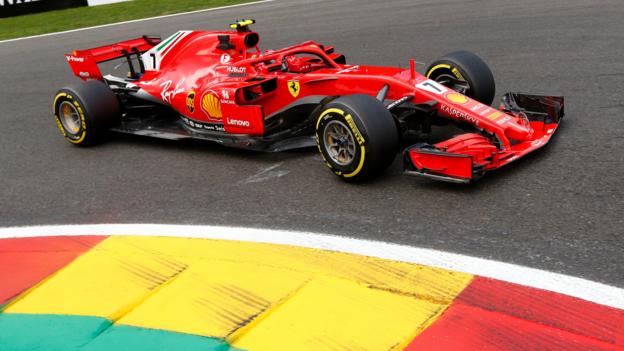
The second Mercedes of Valtteri Bottas was third, 0.448secs away, while Hamilton’s title rival Sebastian Vettel had a scrappy session and was fifth.
Vettel made errors on his fastest laps and was beaten by Red Bull’s Max Verstappen.
However, Mercedes and Ferrari appear to be very closely matched – not just from the qualifying pace but also from the drivers’ performance when they ran on race fuel loads later in the session.
Mick Schumacher – My dad is my idol
Then, Hamilton, Bottas and Vettel were all lapping within 0.1secs of each other on average on the super-soft tyres on which they are expected to start the race, suggesting the race is very tough to call and that the fight for pole position will be intense on Saturday.
Hamilton might have more time in him – his lap did not look the cleanest.
But it is hard to make any judgements after Friday’s running, not least because both Mercedes and Ferrari have upgraded engines for this weekend and will not be running them anywhere near their maximum until qualifying on Saturday.
Fernando Alonso looks set for a dispiriting first weekend with McLaren after announcing he will retire from Formula 1 at the end of the year.
The Spaniard managed only 16th fastest time, with team-mate Stoffel Verstappen closest of all.
The McLaren’s high drag levels are being exposed on this track where the importance of straight-line speed and engine power is among the highest of the season.
There was a huge gap between the top three teams and the rest.
Sergio Perez was an outlier in the Force India, just 0.4secs behind Daniel Ricciardo’s sixth-placed Red Bull and 1.3secs off the pace.
But Carlos Sainz’s Renault in eighth place was 0.8secs slower than Perez, 1.2secs slower than Ricciardo and 2.1secs behind Raikkonen.
The Saubers of Marcus Ericsson and Charles Leclerc completed the top 10, ahead of Renault’s Nico Hulkenberg, the quickest Haas of Romain Grosjean and Force India’s Esteban Ocon.
Signing off: Fernando Alonso’s announcement that he is to leave F1 at the end of this season was the biggest story of the summer breakAfter 12 races of the 2018 season, Lewis Hamilton leads the standings on 213 points, with Sebastian Vettel second on 189 points
Zimbabwe‘s Constitutional Court has unanimously dismissed a bid by the largest opposition coalition to annul the results of last month’s presidential election, which gave a victory to incumbent Emmerson Mnangagwa.
Chief Justice Luke Malaba said on Friday that the Movement for Democratic Change (MDC) alliance, led by 40-year-old Nelson Chamisa, had failed to prove fraud accusations during the vote.
“The application is dismissed with cause … Emmerson Dambudzo Mnangagwa is duly declared the winner of the presidential elections held on the 30th of July 2018,” Malaba said in his ruling.
Mnangagwa, 75, said he was “not surprised by the court’s decision” and called for unity and peace.
“Nelson Chamisa, my door is open and my arms are outstretched, we are one nation, and we must put our nation first. Let us all now put our differences behind us. It is time to move forward together,” Mnangagwa wrote on Twitter shortly after the court announced its ruling.
I once again reiterate my call for peace and unity above all. Nelson Chamisa, my door is open and my arms are outstretched, we are one nation, and we must put our nation first. Let us all now put our differences behind us. It is time to move forward together. (4/4)
The MDC had filed alegal challenge, citing a catalogue of alleged discrepancies, including incorrect counting and fake polling stations, as well as instances at voting centres where there were more ballots cast than registered voters.
“There has been a massive doctoring of evidence,” Thabani Mpofu, a lawyer representing the MDC, told the top court when it started sitting on Wednesday.
Mnangagwa, of the ruling ZANU-PF party, won the election with 50.8 percent of the vote – just enough to pass the 50 percent threshold needed to avoid a runoff against Chamisa, who finished second with 44.3 percent.
European Union observers said that the ZANU-PF candidate had benefitted from an “un-level playing field” and some voter intimidation, though international monitors largely praised the conduct of the election.
The legal challenge delayed Mnangagwa’s planned inauguration for August 12. According to the Constitution, the inauguration should take place within 48 hours of the court’s ruling.
Opposition leader Nelson Chamisa said the vote was rigged in favour of the president [Reuters]
Mnangagwa took over after a military intervention in November 2017 resulted in the resignation of 93-year-old President Robert Mugabe, who ruled Zimbabwe for 37 years.
Mnangagwa, who has promised to revive the country’s ruined economy, had vowed that the vote would be free and fair amid hopes that it would open up a stream of foreign investment and aid.
Wilf Mbanga, political commentator and editor of The Zimbabwean, said the court challenge would put in question ZANU-PF’s election victory.
“Global acceptance will be difficult. Investors may be difficult to attract,” Mbanga told Al Jazeera.
Campaigning was more open than previous votes, but the election was marred by violence and a crackdown on opposition activists.
On August 1, clashes broke out in central Harare between security forces and opposition supporters. Six protesters died after soldiers opened fire, in a response that the opposition alliance called “disproportionate and unjustified”.
“Praetorian politics will continue to define the political landscape and this is unsettling not only because the presence of the military on the foreground of our politics is likely to result in repression and plunder as evidenced by the killing of unarmed civilians,” Michael Choto, a political analyst, told Al Jazeera.
He called for the disbanding of “the patronage and corruption network that has characterised our country’s politics for the last 38 years”.
Coalition government?
In the parliamentary elections, also held on July 30, ZANU-PF secured a clear majority by winning 145 seats in the 210-strong parliament. The MDC came second with 63.
The ruling party, which has been in power since independence in 1980, has ruled out any form of political alliance with the opposition.
Opposition supporters were arrested during post-election violence in the capital, Harare [Reuters]
But some analysts said a coalition would ease political tensions in the country.
“This would be first prize and would solve a lot of problems but is highly unlikely given the extreme polarisation which has actually been worsened by the court case and the post-election killings,” Mbanga said.
“The winner-takes-all attitude will be disastrous but I fear that is what will happen. Although I hope Mnangagwa is pragmatic enough to see that would be counterproductive,” he added.
Choto said the MDC, which has historically been ZANU-PF’s biggest challenger, “should regroup, re-evaluate … and reshape” its strategy with a focus on ensuring victory in the 2023 elections.
“Nelson Chamisa has time on his hands,” he said.
“He has the changing demography of Zimbabwe on his side, he should not allow himself and the alliance to be swallowed, to legitimise a military government that has come to power not through the ballot but by the barrel of a gun.”






 trustedenews