Are #MeToo men ready for a comeback? Not all accused figures have slunk away in shame

news image

On Sunday night, nearly 10 months after he acknowledged sexual misconduct against five female comedians, Louis C.K. gave his first stand-up performance. Comedy Cellar club owner Noam Dworman told The New York Times that his set consisted of “typical Louis C.K. stuff” and that it “sounded like he was trying to work out some new material, almost like any time of the last 10 years he would come in at the beginning of a new act.”

And five months after CBS anchor Charlie Rose was fired in the wake of sexual misconduct allegations by multiple women, reports surfaced in New York that he had a plan for a redemption vehicle: a new interview show in which he would talk to other powerful men like himself brought down by #MeToo allegations.

Of course, it never happened. But the report in The New York Post that Rose, 76, thought he (or someone) could make it happen illustrates the current, mixed-up landscape as we approach the #MeToo movement’s one-year anniversary, sparked by a pair of exposes from The New York Times and The New Yorker in October 2017 detailing decades of alleged abuse by movie mogul Harvey Weinstein. 

Since then, more than 100 men in entertainment and media have been accused of misconduct on a scale that begins with sophomoric behavior and progresses through harassment and reprisal all the way to coercion and rape. Scores of accusers – most of them women, but not all – have come forward to share their stories of abuse and their anger over what they say happened to them, sometimes decades in the past.

The conventional wisdom holds that, once a man is accused, it’s all over; there’s no comeback.

And while Weinstein, Rose and several high-profile men such as “Today” anchor Matt Lauer, Oscar-winning actor Kevin Spacey, former U.S. Senator Al Franken and Louis C.K. have lost their jobs, careers and reputations, to date only Weinstein has been charged with a crime. No matter what happens to him in a New York criminal courtroom, he will never work in Hollywood again. 

The jury is still out on some of the accused. Will Oscar-winner Morgan Freeman, accused by multiple women of sexual harassment that he strongly denied, help promote his new Disney film, “The Nutcracker and the Four Realms,” opening in November? Will “Black-ish” star and Emmy nominee Anthony Anderson, currently under investigation in Los Angeles County for alleged sexual assault that he “unequivocally disputes,” show up for the Emmys next month and help promote the return of the ABC series? 

Also up in the air is the long-term effect, if any, from the stunning revelation that Italian actress Asia Argento – a leading #MeToo voice as an early accuser of Weinstein – is herself accused of having sex with an underage boy in a Los Angeles hotel room in 2013, and that late last year she quietly agreed to pay him $380,000 in hush money.

(Now 42, she denies having sex with former child star Jimmy Bennett, now 22; he insists the encounter did happen, that he was too traumatized to report it at the time and decided to sue her only after she became a global #MeToo hero.) 

Weinstein immediately seized on the news to attack Argento for a “stunning level of hypocrisy” that calls into question the vetting of all the accusations against him, even though Argento’s accusations are not at issue in the New York criminal case.

Meanwhile, a surprising number of other accused figures are on the comeback trail – or never really left in the first place. They’ve taken different approaches to dealing with their PR crises, but they refuse to slink off in shame:

More: List: All of the Hollywood power players accused of sexual assault or harassment

The contrite: Casey Affleck

Some decided to apologize and go away for a spell, hoping that acknowledging their behavior and regrets would be enough to receive forgiveness. 

Oscar-winning actor Casey Affleck, 43, accused of sexual harassment while directing 2010’s “I’m Still Here,” paid off his accusers nearly a decade ago. But in the wake of #MeToo, he was pressured to bow out of presenting the best-actress Oscar this year.

Now he’s back, promoting his new movie “The Old Man & The Gun” and apologizing publicly for his “unprofessional” behavior a decade ago. The public conversation about #MeToo this year had helped him move from defensiveness to “a more mature point of view, trying to find my own culpability,” he told The Associated Press in an interview published Aug. 9.

“I contributed to (an) unprofessional environment and I tolerated that kind of behavior from other people and I wish that I hadn’t. And I regret a lot of that … I behaved in a way and allowed others to behave in a way that was really unprofessional. And I’m sorry.”

Hollywood appears to have accepted Affleck’s contrition and moved on: He’s got another movie coming out this year, at least two more in the works,  as well as an HBO miniseries about Lewis & Clark.

The pushback: Tavis Smiley, Russell Simmons, George Takei

A handful of accused men pushed back from the moment they were accused, strongly denying they did anything wrong. Music mogul Russell Simmons, PBS host Tavis Smiley, “Star Trek” icon George Takei, “Rocky” star Sylvester Stallone and Oscar-winning actor Geoffrey Rush fall in this category.

In December 2017, Smiley, 53, loudly declared his innocence and attacked PBS after his talk show was dropped following allegations of inappropriate relationships with subordinates. 

PBS “overreacted and conducted a biased and sloppy investigation, which led to a rush to judgment … trampling on a reputation that I have spent an entire lifetime trying to establish,” he declared. “This has gone too far. And, I, for one, intend to fight back.”

Less than a month later he announced plans for a new talk show touting inspirational stories.

In November 2017, when a former model, Scott Brunton, claimed he had been drugged and groped by Takei, 81, the beloved “Star Trek” actor and social-media star declared himself “shocked and bewildered” by the allegations

“Right now it is a ‘he said/he said’ situation, over alleged events nearly 40 years ago. But those that know me understand that non-consensual acts are so antithetical to my values and my practices, the very idea that someone would accuse me of this is quite personally painful,” Takei said in a series of wounded tweets. 

Six months later, Brunton walked back his story, saying he doesn’t actually recall key moments that he originally claimed had happened and acknowledged inconsistencies in his story. 

Takei declared himself exonerated and offered his forgiveness: “I do not bear Mr. Brunton any ill will, and I wish him peace,” he said in a tweet. 

The ‘I’ve been cleared’ group: Jeffrey Tambor, Scott Baio, Chris Hardwick

Some of those accused declared themselves innocent because police or prosecutors declined to act on the accusations against them, or internal company investigations cleared them. British actor Ed Westwick, ex-“Happy Days” star Scott Baio, entertainment host/mogul Ryan Seacrest, “Talking Dead” host Chris Hardwick, journalist Ryan Lizza and “Transparent” star Jeffrey Tambor fall in this category. 

Tambor, 74, who won two Emmys  for playing a transgender woman on Amazon’s “Transparent,” was fired from the show in February 2018 after Amazon conducted an internal investigation of sexual misconduct accusations against him by two trans women.

More: After Weinstein: More than 100 high-powered men accused of sexual misconduct

Tambor repeatedly denied the accusations and expressed bitter disappointment with Amazon and the “Transparent” leadership. And three months later, he was back in the spotlight on a promotional tour for Season 5 of Netflix’s “Arrested Development,” playing shifty real-estate developer George Bluth Sr.

In an interview with The Hollywood Reporter, Tambor admitted he’s learned from losing the role of Maura in “Transparent.”

“It’s like a grief, but in grief, you learn. And I’ve learned that I need to be more patient. I need to be more of a gentleman in how I interact with my castmates and not lose my temper. It has been a real wake-up and I’m grateful for that.”

Baio, 57, was accused of sexual harassment and underage sex with former castmates from his 1980s sitcom “Charles in Charge,” but in June, the Los Angeles district attorney declined to press charges citing the expired statute of limitations.

Two months later, Baio called a press conference to crow that he passed multiple polygraph tests that showed he was telling the truth when he denied their accusations. (So-called “lie-detector” tests are not admissible in criminal courts.)


Chris Hardwick, 46, the host of the popular “Talking Dead” talk show on AMC, strongly denied allegations in June from his ex-girlfriend, actress Chloe Dykstra, that he sexually and emotionally abused her, but the cable network suspended the show for five weeks while it assessed the allegations. He was dropped from San Diego Comic-Con panels and also scrubbed from the Nerdist site he founded.

But now the network has cleared him and he made a tearful return on Sunday. (Nerdist also put him back on the website as one of its founders.)

“I want to thank you, ‘The Walking Dead’ community, for all your support over these past couple months,” Hardwick said when the show returned. “This show is not just a job to me, this is a vital part of my life; this has been a sanctuary these last seven years we’ve been here.”

Defended by their peers: Ryan Seacrest, James Franco, James Gunn 

Some of the accused were publicly defended by colleagues. When Seacrest was accused by an ex-stylist of sexual harassment, an internal E! Network investigation cleared him and Kelly Ripa, his co-host on “Live With Kelly and Ryan,” declared on the show that it was a “privilege” to work with him.

Seacrest, 43, kept his place on their show, as host of the E! network’s Oscars red carpet coverage, as host of his syndicated radio show and as host of “American Idol” on ABC.

After James Franco, 40, was accused of sexual misconduct by five women, he was digitally scrubbed at the last minute from the prestigious cover of Vanity Fair’s 2018 Hollywood Portfolio issue. But he also was defended by his sister-in-law, Alison Brie, and by a former co-star, Sharon Stone, who said she was appalled by the accusations.

HBO, after its own internal investigation, also is standing by Franco with its series “The Deuce,” which returns Sept. 9 at 9 EDT. 

“Guardians of the Galaxy 3” director James Gunn was fired by Disney Studios last month shortly after Gunn took responsibility for old, offensive tweets that joked about topics including rape and pedophilia, seen as over the line in the #MeToo era.

But soon the cast of the movie was pushing back with a defense of Gunn, even if indirectly. Star Chris Pratt, who plays Star-Lord in the blockbuster franchise, quoted Bible scripture James 1:19. “Understand this, my dear brothers and sisters. Let every person be quick to listen, slow to speak, slow to anger,” he tweeted, with a heart and prayer hands emoji. 

Zoe Saldana, who plays Gamora, tweeted that “It’s been a challenging weekend I’m not gonna lie. I’m pausing myself to take everything in before I speak out of term. I just want everyone to know I love ALL members of my GOTG family. Always will.”

The “low-impact” group: Dustin Hoffman, Aziz Ansari, Michael Douglas

A-list stars such as Ben Affleck (brother to Casey), Michael Douglas, Dustin Hoffman and Richard Dreyfuss (all Oscar winners) seem to have weathered their moments as #MeToo targets, at least so far. Why? Maybe it’s due to their age, their appealing public personalities or their long-standing box-office draw.

Others may have benefited from assumptions that the allegations against them were unfair. Comedian Aziz Ansari, 35, kept a low profile after the website babe.net published an essay in January by a woman who had been on a date with Ansari and said she felt pressured into sex.

Although Ansari apologized and said he “took her words to heart,” there was some public debate about whether a “bad date” experience precisely fits in the #MeToo menu of shame. 

In May, Ansari returned to performing his stand-up shows as a surprise guest at the Comedy Cellar in Manhattan. Owner Noam Dworman told the New York Daily News that the crowds were cheering him even more than before the controversy. In July, Netflix executives told reporters the streaming service wants to make a third season of his “Master of None” series as soon as Ansari is ready.  

“I feel the general consensus is that he was treated unfairly,” Dworman said about Ansari. “Absolutely he’s welcomed.” 

Autoplay

Show Thumbnails

Show Captions


Read or Share this story: https://usat.ly/2NqYCUw

Read More

from Trusted eNews https://ift.tt/2wtg30z
via IFTTT
Jamie Vardy: England striker to step aside from international football

news image

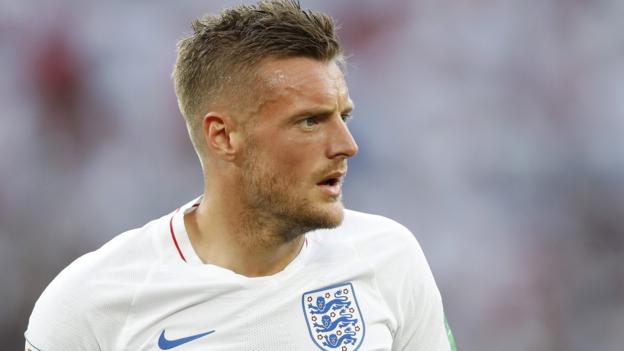
Leicester’s Jamie Vardy (right) made his England debut in 2015

Striker Jamie Vardy is stepping aside from international football to allow England manager Gareth Southgate to bring younger players in.

But the 31-year-old – who scored seven goals in 26 international appearances – and Southgate have agreed to “not shut the door completely”.

Leicester City’s Vardy says he first told Southgate of his intentions at the World Cup in Russia.

“This has been on my mind for a while,” Vardy told the Guardian.

“I’m not getting any younger and you can see, to be fair to the gaffer, he wants to make it more youthful, which obviously had its benefits during the World Cup.”

Vardy, who made his England debut against the Republic of Ireland in June 2015, made four appearances for England at this summer’s World Cup, where they reached the semi-finals.

He has told Southgate he also wishes to concentrate on his club football and his family.

“Gareth said that he felt I still had a lot to offer, and we’ve not shut the door completely,” he said.

“If the worst came to happen and everyone was injured, then obviously I wouldn’t say no.”

More to follow.

Read More

from Trusted eNews https://ift.tt/2PaUSXO
via IFTTT

Hamas: Between unity with Fatah and a deal with Israel

news image

On Saturday, a Palestinian Authority (PA) delegation departed for Egypt to discuss reconciliation with Hamas and the ongoing negotiations with Israel for de-escalation in Gaza. This visit comes after weeks of tensions between Ramallah and Cairo, marking the lowest point in relations between the two in recent years.

Reports have been circulating that Palestinian President Mahmoud Abbas has become increasingly angered by the Egyptian government, fearing its alleged role in the “deal of the century” and its disregard for Ramallah’s interests in Gaza.

Egypt has been given the green light by the United States and Israel to lead efforts to reconcile Fatah and Hamas and form a unity government meant to usher the PA back into power in the Gaza Strip. It has also been mediating in de-escalation negotiations between Israel and Hamas, which Fatah views with suspicion.

But given the increasing hostility and intransigence in relations between the two main Palestinian factions, it paradoxically appears that the Palestinians are more ready to conclude a truce with the Israelis than reconcile with each other. 

Why reconciliation talks are faltering

Last month marked the 11th anniversary of the political division between Gaza and the West Bank. In 2006, Hamas won the elections in Gaza, which Fatah refused to recognise. After clashes erupted between the two, Fatah supporters were expelled and Israel imposed its siege in Gaza in 2007.

Since then, there have been numerous attempts to broker a deal – by Egypt, Qatar, Saudi Arabia, and Yemen. Despite the signing of a number of agreements by Fatah and Hamas, the latest of which was in Cairo in 2017, effective reconciliation has not been reached and the political feud continues.

In late July, Egypt set up a reconciliation programme which outlined the steps the two political powers would have to take in order to complete the process. Hamas approved it, but Fatah recently announced that it would not abide by it. Instead, Abbas came out with a set of tougher demands, including Hamas’ complete surrender of Gaza. Ramallah now wants to regain full political, security and military control over the strip in exchange for reconciliation – a demand that Hamas will not heed.

Despite the involvement of various local and regional players in the dispute between Fatah and Hamas, it doesn’t seem that there is any progress towards dissuading Abbas from his decision to pursue this rigid position. His intransigence has contributed to the unusual low in his relations with Egypt.

In fact, Ramallah has only intensified its pressure on Hamas. In the past few months, the PA took a number of punitive measures against Gaza, including arbitrary cuts to salaries of state employees and a serious decrease in the operational budget of the Strip. This has pushed Gaza to the verge of collapse, which was the intended effect of these measures. Abbas hopes that when pushed to the brink, the Palestinians of Gaza will rebel against Hamas and take down its government.

Given that the reconciliation process along the lines Egypt is proposing has been approved by Washington, one could wonder why Abu Mazen is rejecting it so categorically and where he gets the courage to do so. In mid-August, the Palestinian president went as far as refusing to meet the head of Egyptian intelligence who was on a visit to Israel and was supposed to meet with PA representatives.

Perhaps the answer to this question can be found in Israel’s recent announcement that the intelligence arm of the PA has uncovered a plot to attack an Israeli military patrol in the West Bank. Abbas clearly feels confident that as long as Israel depends on him for security cooperation in the West Bank, he has enough freedom to manoeuvre and reject deals he fears could sideline or hurt his power.

De-escalation talks are on track

And while reconciliation efforts are failing, there is significant progress being made towards de-escalation between Hamas and Israel through the mediation of Egypt, Qatar and the UN. Advances have been made in that direction despite the absence and even opposition of the PA.

All sides in these talks consider the de-escalation a much-needed move to preclude other much more dangerous developments.

From one side, Hamas is trying to avoid any escalation which could prove much more deadly than any previous wars with Israel and could completely wipe out its military capabilities. More importantly, it could lead to the collapse of its power over Gaza, precipitating a period of political chaos or even the PA rolling into the Strip on top of Israeli tanks.

This would mean the loss of the last Hamas stronghold (after the movement was uprooted by the PA and Israel from the West Bank) and potentially the loss of its status as a major player on the Palestinian political scene. That is why Hamas is trying hard to avoid another major war with Israel and will never accept the terms Abbas is currently offering for reconciliation.

On the other hand, Israel too realises that a possible war with Hamas poses a high security, economic and political risk. Hamas has missile capabilities which might not be able to cause vast destruction but danger of a mass missile attack would surely paralyse Israel’s major cities.  The last war also demonstrated that the fighters of Gaza-based armed groups are capable of infiltrating and striking deep into enemy territory.

For Israel, this would mean heavy economic losses and dozens of soldiers and civilians killed and injured, which is a huge political risk for the government. At the same time, there is also the risk that Israel would fail to wipe out Hamas from the Strip and would face the very same uneasy stalemate in Gaza that it currently is in.

Also, both sides know full well that a fourth major war would decimate Gaza and result in an unimaginable humanitarian disaster. The vast destruction inflicted by the previous wars still debilitates life in the Strip and the international community has not had the chance to conduct any meaningful reconstruction.

Despite the obvious need for a de-escalation, there are still major barriers to the conclusion of a deal. One of the biggest challenges is the lack of agreement between the two sides on what this deal should entail. Hamas wants major steps made to alleviate the humanitarian situation in Gaza – such that the Palestinians living there would feel a difference in their lives. Israel, on the other hand, doesn’t want to allow that and instead hopes to get a deal in exchange for a modest amount of humanitarian aid.

There are also various opponents to the idea of a de-escalation, both among the Palestinians in Gaza and the Israelis. Within the Israeli government, for example, Prime Minister Benjamin Netanyahu is clashing with Defence Minister Avigdor Lieberman, who rejects any engagement with Hamas, arguing that it would give the armed group time to regroup, rearm and be better prepared for another war.  

It is also expected that the PA will not stand by idly if a de-escalation deal is reached.

Reports have been circulating in Israeli media recently that Tel Aviv is preparing for the possibility of Abbas announcing another set of escalation measures against Gaza, which could provoke Hamas. Such a move would aim to ensure that whatever relief comes through as a result of a de-escalation deal does not make a real difference on the ground and Gaza continues to face a humanitarian disaster and potential political instability.

Hamas has been trying to negotiate guarantees as part of the deal that it would be compensated for whatever additional financial cuts the PA decides to impose. This, however, would be difficult to achieve because it would contradict Israel’s strategy of allowing the bare minimum to trickle into Gaza and to keep the Palestinians there “neither dead nor alive”.

In the coming weeks, it is likely that we’ll see more efforts to thwart the de-escalation deal which will make Gaza the scene of more intense military and political developments. But, regardless of what happens, there seems to be a much better prospect for the conclusion of a de-escalation deal than reconciliation between Fatah and Hamas. 

The views expressed in this article are the author’s own and do not necessarily reflect Al Jazeera’s editorial stance.  

Read More

from Trusted eNews https://ift.tt/2wtfBzp
via IFTTT

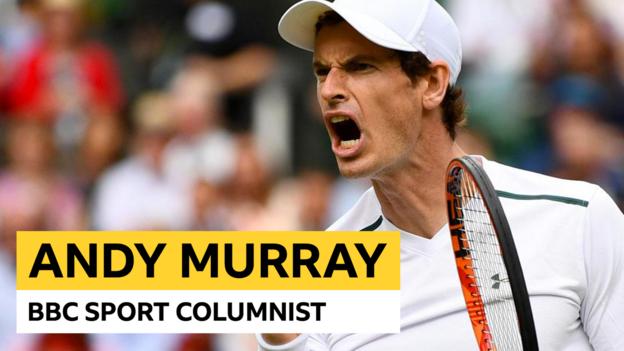
Andy Murray column: US Open victory on return & fuelling on sushi, bacon and porridge

news image

2018 US Open
Venue: Flushing Meadows, New York Dates: 27 August-9 September Coverage: Live radio coverage on BBC Radio 5 live sports extra; live text commentaries on the BBC Sport website

Andy Murray made his return to Grand Slam tennis with a four-set win against Australia’s James Duckworth in the US Open first round on Monday. In his regular BBC Sport column, the 31-year-old Scot talks about post-match pain in his hip, fuelling his body in the heat and humidity of New York and eating sushi at 8:30am.

Being back playing at a Slam tournament for the first time in 14 months was a great feeling and I’m very happy I managed to mark it with a win.

I played some good stuff, although spending three hours and 17 minutes on court was more than I would have liked.

In the fourth set I made things a bit harder than I needed to and I also had a chance to close out the first set.

But I got through it – that’s good news.

And the other positive thing is I felt better than I expected to at the end of the match.

When I’m going into the match I’m trying to prepare myself mentally that I’m not going to feel great physically after the match, or that my hip will feel painful, so I think about how I’m going to handle that.

Hopefully not feeling too bad at the end of the match continues and that my body adapts to the load I’m putting it through.

This is the first time I have played four sets in 14 months, so I just have to wait and see how I pull up.

‘Sushi, bacon and porridge’

After a match, and around my media interviews, I refuel by eating three boxes of sushi. I had two of them before I spoke to the press and then I save one for afterwards.

This time I chose spicy tuna sushi from the players’ restaurant at Flushing Meadows – it’s pretty good.

Sushi is something I eat regularly and I actually had sushi at 8:30am on Monday – that was odd.

That’s because I eat whatever is recommended to me. I have a nutrionist at home who will tell me to eat chicken, or rice, or pasta.

The morning before my match against James I also ate a bowl of porridge, and then I ate eggs, bacon, some gluten free toast.

When the weather is like it was in New York on Monday – hot and humid – I try to drink two litres of fluid an hour.

Then I have these energy gels which I eat every 20 minutes.

My team make up a sports drink before the match and as it goes longer I have saltier drinks to help with cramp or to prevent it.

The team study the humidity and the temperature and it all helps inform what and how much I drink.

Andy Murray said he felt “better than I expected” at the end of his victory over James Duckworth

‘Flushing Meadows can be noisy but I don’t mind it’

I really liked playing on the new Louis Armstrong Stadium – I think it’s a bit easier to play on than the old one.

It’s a little bit more sheltered from the wind, although you can get a breeze in there. Before it used to swirl a lot in the old Armstrong. Now it blows but tends to go in one direction.

Also, it’s shaded from quite early on in the day, which is nice for the players and also, I think, for the people watching.

There is still a constant hum of noise from the spectators when you’re on court here and it takes a while to get used to it.

At Wimbledon and a lot of the other tournaments the etiquette is you’re quiet during play but here it is not really the case.

It takes a bit of getting used to but five or six games into it becomes normal and you get over it.

I don’t mind noise during points – it doesn’t just happen here, it happens at most of the tournaments.

People arriving late to their seats happens quite a lot here too and that can be a problem if they’re behind the court.

When you’re having to track a moving object and people behind the court are wearing different colours or moving around it makes it very difficult to pick up the ball.

I wouldn’t say it is more of a problem at Flushing Meadows than anywhere else, maybe it was just because it was the first day of the tournament and the ushers were letting people in when it’s not an end change.

‘I’m still taking it one match at a time’

Fernando Verdasco beat fellow Spaniard Feliciano Lopez in three sets in the first round

Fernando Verdasco is my opponent in the second round – he will certainly test my movement, that’s for sure.

He has got a huge forehand and can do whatever he wants with that shot. He can hit angles, he can flatten out, higher balls.

He is never an easy guy to play against if he’s on his game.

It’s my job in that match to stop him dictating and hopefully I can be a bit more offensive and keep him on the back foot.

Before the tournament I said I wasn’t expecting to go far and I don’t think anything changes after beating James.

I’m still taking it one match at a time, but it’s great being back playing.

Read More

from Trusted eNews https://ift.tt/2MYGJ2C
via IFTTT

South Sudan rebel leader Machar ‘refused’ to sign peace deal

news image

South Sudan rebel leader Riek Machar along with other main opposition groups have refused to sign the latest draft of a peace deal with the government that would end a brutal civil war.

The opposition leader and South Sudanese President Salva Kiir signed a ceasefire and power-sharing agreement last month, one of a series of apparent breakthroughs in recent months.

But Machar’s refusal to sign the latest draft could be a sign of how difficult it will be to implement a full agreement.

“The main South Sudanese opposition groups, including the SPLM-IO (Machar faction), refused to sign the final document demanding that their reservations be guaranteed in it,” Sudan‘s foreign minister Al-Dierdiry Ahmed told reporters in Khartoum on Tuesday.

Previous peace deals have held for only a matter of months before fighting resumed. 

Kiir has blamed the collapse of previous peace agreements on foreign influence.

The warring parties have held weeks of talks in Khartoum in search of a comprehensive peace deal to end the conflict that has killed tens of thousands of people and displaced millions.

In June, an initial agreement was signed to end the fighting, but Machar rejected some proposals such as having three different capitals to distribute power.

“In 2015, the government changed the number of states from 10 to 32,” said Al Jazeera’s Hiba Morgan.

“Machar has opposed that vehemently and said he didn’t want 32 states. He wanted 10 so that he can have more control. This was one of the main sticking points between the two sides.

South Sudan‘s civil war erupted in December 2013, less than two years after the country gained independence from Sudan.

The war has uprooted a quarter of South Sudan’s population of 12 million, ruined the country’s agriculture sector and battered its economy.

On Saturday, South Sudan resumed drilling of oil at some abandoned oilfields to boost the country’s economy.

SOURCE: Al Jazeera and news agencies

Read More

from Trusted eNews https://ift.tt/2PcGWfT
via IFTTT

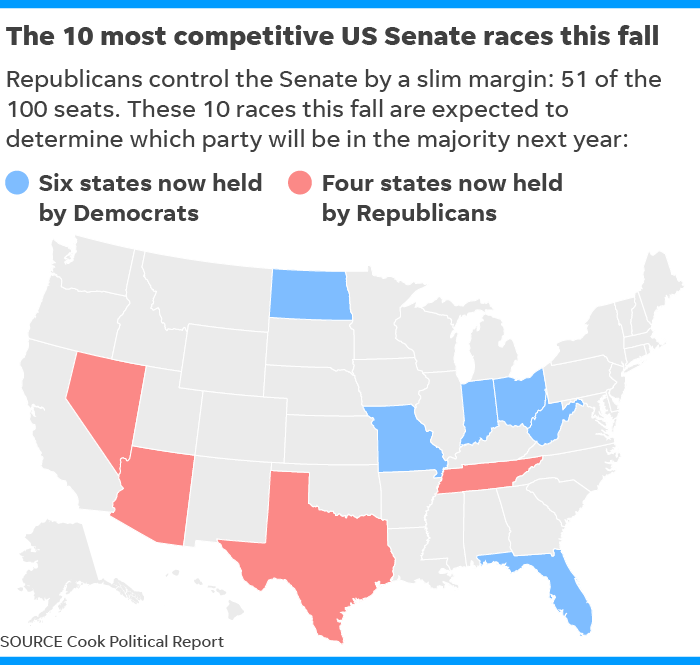
As Arizona mourns John McCain, can one of his fiercest critics win the GOP Senate primary?

news image

CLOSE

Here’s what you need to know about Arizona’s Senate candidates: Kyrsten Sinema, Deedra Abboud, Joe Arpaio, Martha McSally and Kelli Ward.
Carly Henry, The Republic | azcentral.com

WASHINGTON – Kelli Ward suggested an announcement about John McCain’s cancer was designed to hurt her campaign. After the senator’s death this past weekend, she doubled down on Twitter and blamed critics for taking her statements the wrong way.

But can the physician and former state senator win the GOP nomination to replace Arizona’s other GOP senator, Jeff Flake, in Tuesday’s primary? Polling shows Rep. Martha McSally, the establishment choice, ahead of Ward, and that’s good news for Republicans who believe McSally offers their best chance to keep the retiring lawmaker’s seat come November.

On Saturday – just one day after the McCain family announced the longtime senator had ended medical treatment for his brain cancer – Ward suggested the timing of the announcement was designed to hurt her campaign. McCain died that evening. 

Facing backlash over the comment, Ward remained defiant, tweeting early Monday, “Political correctness is like a cancer!” Later that day, she lashed out against the media and people offended by her comments.

“I do understand how many could have misconstrued my comments as insensitive,” she said. “And for this, I apologize.

“But again, the intention of my comments were in no way directed at Senator McCain or his family.”

Ward and McSally share the ballot with former Maricopa County Sheriff Joe Arpaio – who President Donald Trump pardoned for criminal contempt of court last August.

Democratic Rep. Kyrsten Sinema is predicted to win the Democratic nomination Tuesday night. Sinema is running against lawyer and consultant Deedra Abboud. Republicans concede Sinema will be a formidable opponent in November.

Arizona isn’t the only state where voters are going to the polls Tuesday. Florida has primaries – including a fascinating race on both sides for governor – and Oklahoma has a handful of runoffs.

Here’s what we’ll be watching for as the results come in Tuesday night:

Autoplay

Show Thumbnails

Show Captions

Arizona

Polls are open 6 a.m. to 7 p.m. Pacific Time/Mountain Standard Time.  

Both McSally and Sinema leave behind competitive House districts. In McSally’s 2nd Congressional District – one of the biggest battlegrounds in the country – voters split almost evenly between Democrats and Republicans and it’s a packed primary on both sides of the aisle.

Four people seek the GOP nomination, with Lea Marquez Peterson, CEO of the Tucson Hispanic Chamber of Commerce, favored by national Republicans. Meanwhile, seven Democrats want to flip the district back to blue. Two favorites lead the pack: physician Matt Heinz, who ran against McSally in 2016, and former U.S. Rep. Ann Kirkpatrick, who once represented a different district in the state.

Rep. Tom O’Halleran aims to keep his seat in Congressional District 1, one of just a handful of districts President Trump won in 2016 that is held by a Democrat. He has no primary opponent, but there are three Republicans vying for the chance to beat him in the general election: Wendy Rogers, a pro-Trump retired Air Force colonel; Tiffany Shedd, a lawyer and cotton farmer, and Steve Smith, a former state lawmaker. 

Rep. David Schweikert – a conservative member of the House Freedom Caucus – represents a district that has been red for years. But Democrats hope shifting boundaries and an ethics investigation into Schweikert’s conduct will put the district in play. 

Schweikert is unopposed on the Republican side for Congressional District 6. Anita Mali, who works in technology and communications; Garrick McFadden, a lawyer, and Heather Ross, a nurse practitioner, seek the Democratic nomination. 

CLOSE

Here is what you need to know about everyone running for governor in Arizona this year.
Carly Henry, The Republic | azcentral.com

GOP Gov. Doug Ducey is running for re-election. Even though the state has had a Republican governor for 21 of the last 27 years, Ducey faces headwinds in the general election because of energized Democrats and voters who are unhappy with problems in public education. Ducey faces a primary challenge from former Arizona secretary of state and Arizona Senate president Ken Bennett.

Three Democrats seek the nomination: state lawmaker Steve Farley, Kelly Fryer, former CEO of the YWCA of Southern Arizona, and Army veteran David Garcia.

Ducey will appoint someone to fill McCain’s seat until 2020. 

Autoplay

Show Thumbnails

Show Captions

Autoplay

Show Thumbnails

Show Captions

Florida

Polls are open 7 a.m. to 7 p.m. (part of the state is in the Central and part in the Eastern time zone).

If Arizona is one of the Democrats’ top offensive states this cycle, Florida offers one of the country’s biggest pickup opportunities for Republicans.

On Tuesday, race watchers don’t expect many surprises in the Senate primary. Democratic Sen. Bill Nelson is unopposed. On the GOP side, Gov. Rick Scott is the clear favorite, although he faces a challenge from perennial candidate Roque “Rocky” De La Fuente. President Trump tweeted his support for Scott Monday. 

The real state-level drama lies in the GOP primary for governor, where Rep. Ron DeSantis, a hard-line conservative and a founding member of the House Freedom Caucus, faces off against Adam Putnam, the state’s agriculture commissioner. Establishment Republicans are hoping Putnam pulls off a win because they see him as having the best chance of carrying the purple state in November.

Trump has other plans. After he endorsed DeSantis and rallied for him in Florida, polling shows DeSantis is ahead. A half-dozen other Republicans also are vying for the nomination, but the race is assumed to be between DeSantis and Putnam.

In a crowded Democratic field, former U.S. Rep. Gwen Graham, former Miami Beach Mayor Philip Levine and former Tallahassee Mayor Andrew Gillum seek their next job in government. Gillum would be the state’s first black governor if he were to be elected in November.

If the blue wave hits Florida, there are multiple pick-up opportunities for Democrats in the Sunshine State. Analysts are watching three races closely.

In one of two GOP-held districts won by Hillary Clinton in 2016 – Florida’s 27th – Rep. Ileana Ros-Lehtinen’s retirement offers Democrats a chance to flip a seat.

Ros-Lehtinen’s open spot inspired a packed primary on both sides. National Republicans recruited former Univision reporter Maria Elvira Salazar, but she must beat eight other candidates on the right.

On the Democratic side, Donna Shalala, secretary of Health and Human Services under President Bill Clinton and former president of the University of Miami, and state Rep. David Richardson have pulled in the most money, but they face additional hopefuls.

In the 26th District, Rep. Carlos Curbelo faces a tough challenge from his own party, but is expected to win. 

On the Democratic side, retired Navy Cmdr. Demetries Grimes faces Debbie Mucarsel-Powell, a health care advocate.

In District 18, GOP incumbent Rep. Brian Mast must make it past two challengers, entrepreneur Dave Cummings and physician Mark Freeman. Both Cummings and Freeman mounted bids after Mast called for a temporary moratorium on assault weapon sales.

On the left, former Obama foreign relations adviser Lauren Baer has the support of most national Democrats. Baer is running against Navy veteran and lawyer Pam Keith, who previously ran for U.S. Senate in 2016.

Oklahoma

Polls are open 7 a.m. to 7 p.m. Central time.

Oklahoma had its primary back in June, but the state requires a runoff if no candidate gets a majority of the vote. So there will be rematches for a handful of Sooner races. 

The GOP nominee for governor should be decided Tuesday between former Oklahoma City Mayor Mick Cornett and businessman Kevin Stitt.

If Democrats take back the House, it likely won’t be through Oklahoma, a state that has no Democratic members of its congressional delegation. Race handicappers say no Oklahoma seat is in much danger of turning blue.

But the state does have an open seat in the 1st Congressional District after former Rep. Jim Bridenstine was named director of NASA. Tuesday will cement that matchup. Tulsa County District Attorney Tim Harris and McDonald’s franchiser Kevin Hern will battle for the GOP spot. On the left, education advocate Amanda Douglas and lawyer Tim Gilpin will go head-to-head.

More: Georgia election officials reject plans to close polls in mostly black county ahead of midterms

More: Cybersecurity: States ramp up election protections ahead of midterms with $380 million in federal funds

More: Millennial women aren’t that excited about 2018 midterms. This company is working to change that.

Contributing: Ledyard King and Herb Jackson in Washington and Yvonne Wingett-Sanchez, Ronald J. Hansen and Richard Ruelas, The Arizona Republic.

Read or Share this story: https://usat.ly/2BPln3j

Read More

from Trusted eNews https://ift.tt/2PL2YYj
via IFTTT

Social Security recipients could see their biggest raise in years: A Foolish Take

news image

Most people who get retirement benefits from Social Security get the bulk of their income from their monthly benefits. Because they don’t have many other sources of money to pay for living expenses, the annual cost-of-living adjustments (COLAs) that Social Security gives participants every January play a vital role in helping people make ends meet — especially as the expenses they have to pay inexorably rise.

Over the past decade, Social Security has been pretty stingy in the COLAs it gives to retirees. But 2019 could be different. With a couple months left to go before we get a definitive answer, early indications suggest that Social Security benefits could go up by a greater amount than retirees and other participants have seen since 2012.

Graph showing Social Security cost-of-living adjustments for the past 10 years.

Data source: Social Security Administration. Chart by author. Note: Graph indicates increase that took effect in January of stated year. Estimate for 2019 is based on July inflation data and assumes flat Consumer Price Index readings for August and September.

Social Security calculates each year’s COLA by looking at the Consumer Price Index from July through September and comparing it to the previous year’s levels. So far, only the July figure is available, but if that reading were to stay flat in August and September, it would give retirees a 2.7% increase come January. If price levels rise this month and the next, then it’s conceivable that the COLA could reach 3%.

The trade-off, of course, is the same rising levels of inflation that produce larger increases to Social Security benefits also end up forcing recipients to pay more for the essential goods that they need. But when the costs of the things that you need as an older American always seem to go up regardless of what government inflation figures say — especially in areas like healthcare — then getting a boost to your Social Security is at least a bit of a consolation.

Read More

from Trusted eNews https://ift.tt/2LyDWbx
via IFTTT

Philippines: Duterte faces new ICC complaint over ‘drug’ killings

news image

Activists and families of eight victims of the Philippines “war on drugs” have filed a complaint with the International Criminal Court (ICC), accusing President Rodrigo Duterte of murder and crimes against humanity.

Tuesday’s 50-page complaint calls for Duterte‘s indictment over thousands of extrajudicial killings during his crackdown on drugs, which the activists and families said included “brazen” executions by police acting with impunity.

Critics of the campaign were being “persecuted”, they said, and cases filed by victims’ families had gone nowhere.

The latest move is led by a network of activists, priests and members of the poor, urban communities that have borne the brunt of a fierce two-year campaign in which police have killed about 4,400 people, causing international alarm.

“Duterte is personally liable for ordering state police to undertake mass killings,” Neri Colmenares, a lawyer representing the group, told reporters.

Duterte says he has told police to kill only if their lives were in danger.

In his annual address to the nation last month, he said the anti-drug campaign would be as “relentless and chilling” as its first two years.

In September 2016, an Al Jazeera investigation revealed that police officers were involved in attempted killings of unarmed drug suspects

And in December 2017, Al Jazeera recorded cases of children being killed by police officers.

‘I will arrest you’ 

Presidential spokesman Harry Roque said the latest petition was “doomed” because the Philippines’ was no longer covered by the ICC’s Rome Statute.

Duterte unilaterally withdrew from the ICC’s founding treaty in March, saying it skirted due process and the presumption of his innocence, and sought to portray him as a “ruthless and heartless violator of human rights.”

He even threatened to arrest ICC prosecutor Fatou Bensouda if she were to comes to the Philippines to investigate him, and said he would convince other countries to follow him in quitting the ICC.

“Ms Fatou, don’t come here, because I will bar you. You cannot exercise any proceedings here without basis. That is illegal and I will arrest you,” Duterte said.

Opposition lawmakers maintain that Duterte’s withdrawal from the treaty, which takes effect in March 2019, was illegal because it was done without Senate approval.

They have challenged it at the Supreme Court, which started hearing oral arguments on Tuesday.

Jurist groups say that regardless of how the court rules, Duterte is not protected from a possible indictment because the alleged crimes took place while the Philippines was a member of the ICC, and therefore covered by its jurisdiction.

The Philippines is a signatory to the Rome Statute, a multilateral treaty that created the international court.

However, Duterte maintains the Philippines never actually acceded to the Rome Statute in 2011, because it was not published in the country’s official gazette.

The ICC is a court of last resort that can exercise jurisdiction if states are unable or unwilling to investigate crimes, which Duterte’s spokesman said was not the case in the Philippines.

According to a Human Rights Watch (HRW) report published in January 2018, more than 12,000 people have been killed since Duterte took office in June 2016.

Other estimates put the death toll as high as 14,000. 

Duterte’s administration has disputed these numbers, claiming that 3,906 “drug personalities” were killed during police operations from July 1, 2016, to September 26, 2017.

SOURCE: Al Jazeera and news agencies

Read More

from Trusted eNews https://ift.tt/2ohDipA
via IFTTT

In a Catholic Church where even the pope covers for sexual abuse, everywhere is a bad as Boston

news image

Brett M. Decker, Opinion contributor
Published 5:00 a.m. ET Aug. 28, 2018

A damning allegation from Catholic leader charges Pope Francis of covering for Cardinal McCarrick’s despite knowing about his sexual abuse record.

A report released this weekend by a former Vatican ambassador to the United States charges that Pope Francis knew about sexual abuse by former Cardinal Theodore McCarrick, removed a suspension placed on him by Pope Benedict, and proceeded to make the known abuser one of his most trusted advisors. Pope Francis “knew from at least June 23, 2013 that McCarrick was a serial predator, [but] he covered for him to the bitter end,” wrote Archbishop Carlo Maria Vigano, nuncio to Washington from 2011-2016, before demanding the pontiff resign.

The pope knew.

That is a damning allegation coming from a very senior church leader. It also corresponds to anecdotal evidence piling up against Francis. Earlier this year, Pope Francis attacked Chilean sex-abuse victims for “calumny” and defended the bishop who covered up for a pedophile priest. The pope ignored complaints about the enabling bishop before promoting him in 2015.

There are accusations against Pope Francis

Even more profound is the charge by an Argentinian woman who says the sexual abuse of her son was covered up by this pope, who had her forcibly removed from his office when she tried to report the crime when he was archbishop of Buenos Aires, and then known as Cardinal Jorge Bergoglio. “Bergoglio was aware of my complaint,” says Beatriz Varela, whose son was awarded monetary damages from the church by a civil court. “Everyone knows and everyone remains silent, so they’re all accomplices.”

The charge that “everyone knows” caused me to reflect on my own firsthand experience with the McCarrick case. In late 2002, I was editing a book review of Paul Dinter’s upcoming release “The Other Side of the Altar” for one of America’s largest newspapers. In it, the former priest detailed a church culture of arbitrary power and secrecy that nurtured a dynamic where systematic abuse could occur unimpeded.

Dinter recounted the sexual transgressions of a then-U.S. cardinal and former New York auxiliary bishop who was notorious for taking groups of seminarians to his weekend home and sexually harassing or abusing them but was nonetheless promoted up through the ranks by Pope John Paul II. It took a few short minutes to figure out that the only cardinal who fit the description at that time was McCarrick.

More: Three ways Catholics can fight sexual abuse in the church

Donald Trump supporters, Catholics and African-Americans share a costly burden

Why — despite sexual abuse scandal — I am still a faithful Catholic

Outraged, I copied and highlighted the relevant pages of the book, attached a list of U.S. cardinals and McCarrick’s bio, which proved the priest described was him, and hand-delivered the package to the chancery of the Archdiocese of New York. I was assured the information would receive urgent attention, but I never heard back, and my follow-up calls were sent to an inactive voicemail.

That was over 15 years ago. McCarrick was finally, belatedly forced to resign from the cardinalate last month. For Church leaders to deny knowledge of notorious, serial abuses that appeared in print in prominently published books strains credulity.

McCarrick’s successor and current archbishop of Washington, D.C., Cardinal Donald Wuerl, denies knowing that Pope Benedict had censured his predecessor despite that he and McCarrick continued to live in the same city. “[He] lies shamelessly,” says Archbishop Vigano, the former nuncio. “I myself brought up the subject with Cardinal Wuerl on several occasions.”

Bishops aid priests instead of victims

Wuerl swears he knew nothing about legal settlements for McCarrick’s misdeeds. Wuerl likewise is playing dumb about a proliferation of coverups of clergy sexual abuse reported by the Pennsylvania attorney general that was perpetrated in the Diocese of Pittsburgh, where Wuerl previously was bishop for 18 years. “Cardinal Wuerl is not telling the truth,” insists Attorney General Josh Shapiro, who headed the investigation that found more than 1,000 cases of child abuse by more than 300 priests in the Keystone State.

A sentiment I’ve heard regularly in Catholic circles in Washington and elsewhere is: At least we’re not Boston. That refers to the far-reaching abuse scandals that rocked the nation and took down Cardinal Bernard Law, the late, powerful archbishop of Boston and favorite of John Paul II who was exposed for shuffling around pedophile priests.

The implication of the “At least we’re not Boston” attitude is that some places are worse than others, or recent abuse reporting protocols instituted by the bishops are effective. The harsh reality that all Catholics need to realize is that everywhere is like Boston. There are few protections when the predators are the bishops who are empowered to police themselves and instead cover up for each other, from the pope on down.

A trope of the last six papacies has been to extol the advances of a supposed “Springtime of Vatican II,” the revolutionary church council from 1962-65 that was called to open the Church to the modern world. Far from a spring flowering, the festering sex-abuse scandal shows that the Church of Rome is actually going through a long, cold, very dark winter.

Brett M. Decker, an assistant professor of business at Defiance College, is a former editor and writer for The Wall Street Journal and Washington Times. Follow him on Twitter @BrettMDecker.

Read or Share this story: https://usat.ly/2BTRdf5

Read More

from Trusted eNews https://ift.tt/2NqWcpd
via IFTTT

North Korean markets generate millions and may bring profound social change, report says

news image

Thomas Maresca, Special to USA TODAY
Published 5:00 a.m. ET Aug. 28, 2018 | Updated 5:21 a.m. ET Aug. 28, 2018

SEOUL — North Korea remains one of the most tightly controlled economies on earth, however capitalism is becoming an ever-larger force inside the isolated nation.

There are at least 436 officially-sanctioned markets located across the country, according to research released this week by the Center for Strategic and International Studies (CSIS), a Washington D.C.-based think tank. They sell everything from socks to cosmetics to noodles.

The markets bring in an estimated $56.8 million a year through taxes and rents paid by vendors to the state, and have “become an institutionalized part of North Korean society,” according to the research, which was done in partnership with the North Korea Development Institute in Seoul.

“The growth of markets is the single most significant socioeconomic development to occur in North Korea over the last 20 years,” wrote the study’s authors, Victor Cha and Lisa Collins.

The first official markets were allowed to operate in 2002, emerging in the wake of a black market economy that sprung up after the collapse of support from the Soviet Union and a devastating famine in the 1990s.

The markets range in size from a few thousand square feet to the massive 250,000 square feet Sunam market in Chongjin, North Korea’s third-largest city, which generates an estimated $850,000 a year for the government, according to the CSIS study.

North Korea, particularly the capital city of Pyongyang, has seen a nascent middle class emerging in recent years, able to shop for refrigerators and washing machines at the three-story Kwangbok Area Shopping Center, or sample hamburgers at a chain of fast-food restaurants.

More: They’re lovin’ it: Meet the man who introduced the hamburger to North Korea

In addition to official markets, a thriving black market exists. Originally supplying North Koreans with much-needed food and necessities, they have evolved over time to provide items such as cell phones and media from the outside world including South Korean television shows and Chinese films.  

North Korean leader Kim Jong Un has accelerated economic reforms since coming to power in 2011, and this year in particular he has emphasized developing North Korea’s economy. In April, he announced that the nation would be ending its dual-track policy of economic growth and nuclear weapons development and instead would “focus all of its energy on building a socialist economy.”

However, North Korea’s economy remains stifled by strict international sanctions imposed in reaction to its nuclear weapons program. The economy shrank by 3.5 percent in 2017, according to South Korea’s central bank – it’s worst showing in two decades.

Pyongyang has been desperate to find relief, but Washington has held a hard line, saying the sanctions won’t be lifted until North Korea achieves complete denuclearization.

The standoff has caused friction in a relationship that had seen a major boost from the historic summit between President Donald Trump and Kim in Singapore in June, where Kim committed to the “complete denuclearization of the Korean Peninsula” without providing specifics.

More: The handshake, denuclearization and another summit: Six things to know from the Trump-Kim summit

More: South Korean president calls for single economic community with North to bring peace, prosperity

Kim recently criticized “hostile forces” for “trying to stifle the Korean people through brigandish sanctions and blockade,” state-run Korean Central News Agency (KCNA) reported.

South Korea is also eager to expand economic relations with the North. President Moon Jae-in laid out a vision of a shared economic community with North Korea, and announced plans to reconnect road and rail connections between the two countries by the end of the year. 

Meanwhile, the North Korea markets have been steadily eroding the once-complete dependence of its citizens on the government.

In a micro-survey, CSIS found that 72% or respondents received almost all of their household income from markets, and 83% of said that outside goods and information had a greater impact on their lives than decisions by the North Korean government.

“When the government periodically represses market activity, society reacts angrily,” wrote Cha and Collins, who concluded that the markets may lead to more profound social changes ahead.

Combined with the growth of domestic cellphone connectivity and private transportation networks, “it may be possible to eventually imagine the growth of a nascent civil society,” the authors wrote. 

Read or Share this story: https://usat.ly/2wkpUFL

Read More

from Trusted eNews https://ift.tt/2wi6Oju
via IFTTT

Design a site like this with WordPress.com
Get started