Best lesbian dating sites (and why they work): HER, OkCupid, and more

news image

Online dating as a lesbian, for the most part, still involves having to deal with men. Many sites continue to surface guys as potential mates, despite setting your preferences otherwise.

Up until recently, some of the nation has acted as though lesbianism didn’t exist outside of porn and Ellen Degeneres, and acted as if girls only turn to dating women if they had a bad experience with a man. This, of course, is not true.

If you’re reading this, it’s probably because you’ve experienced the frustration with dating sites and apps that claim to be inclusive to all sexual orientations, only to realize that some closeted quirks make it obvious that the straights are the target.

Don’t worry. We’re here to help you out.

Our top picks for lesbians: HER and OkCupid

Our pick for the best app specifically for lesbians is HER: The fact that it’s made by queer women for queer women is a breath of fresh air, and knowing that men showing up is next to impossible is so nice. Not only can you find local matches that you never knew existed, but you can also get involved in local LGBTQ events, read LGBTQ news, and make friends through its social-media like feed. You can obviously find dates, but the lack of pressure to hook up or find a girlfriend is super inviting.

Our pick for the best mainstream app is OkCupid: Okay, we’re totally biased because of their sweet ad campaigns (how can you not be?), but the site has seen such queer-friendly updates in recent years (including expanded gender and sexual orientation options) that it’s clearly pulled out from the pack. The site’s in-depth questions and matching strategies push for lasting connections, and being one of the first dating sites ever, its trusted name brings along a massive lesbian following and tons of options.


Note: A good number of lesbian dating sites and apps do exist, but most face the same issues: They’re either made to sexualize lesbians and aren’t really for relationships at all, or it’s way too easy for guys to sign up and pretend to be women. Creeps are drawn to porn-ish names like Pink Flirt and Pink Couch, so if you’re wondering why we left most of the so-called female only apps out, that’s why. 


Obviously, there will be some discrepancies between apps that are specifically for queer women and mainstream apps that have options for queer women, but are open to straight people and men as well. We’ve picked out the best from each category and give an overall consensus of what they’re good for, because dating apps are clearly not a one-size-fits-all thing. (Remember that all can be used to find serious relationships, and all can be used to find hookups. We’re just saying what they’re best for.) Happy ice breaking.

Apps made specifically for lesbians and queer women

The places you can be pretty sure men aren’t gonna show up — whether they’re pretending to be a woman or whether you were tired of mainstream apps showing you men anyway. Language is inclusive, they aren’t advertised to be like the typical male fantasy, and they’ll help you widen your dating pool beyond the circles you already know IRL.

1. HER — best for people who are *over* heteronormative dating sites

The gist: Apps like Tinder and Bumble are technically for all sexual orientations — so why are they still giving you male matches when you’ve specified you only want women? Swiping through all of that is way too much work, and it shouldn’t have to be like that. LESBIANS EXIST. Claiming to the be the app that “introduces you to every lesbian you’ve ever wanted to meet,” HER is the award-winning mix of dating and social media that lets you meet girls you know are girls, as it requires a Facebook for signup and is solely for lesbian, bisexual, and queer women. It was also created by queer women, for queer women, which is glorious.

The setup: HER has a minimalist layout that encourages users to, you know, talk to each other rather than just creeping. While more intense dating sites will have you fill out a huge questionnaire, HER only asks for the bare minimum so that if you want to find out more about a person, you’ll have to ask. Instead of seeing one profile at a time and swiping, you’ll be shown a collage of nearby women and can start playing from there. In a review entitled “I tried HER’s Dating App Hacks and Didn’t Die of Embarrassment,” author Cassie Sheets writes that everyone on HER seems super cool and out of your league, so it might be hard to muster up the courage to send the first message. But don’t worry, they give tips for that. Side note: We totally encourage you to read Sheets’ whole story. The hacks (from HER CEO Robyn Exton) make so much sense and are proven to work, and the article is just a joy to read.

Why it works: Aside from the obvious reason that it’s one of the only dating apps specifically for lesbians and queer women without being some gross sexualized thing? Requiring Facebook to register solves one of the main issues that comes along with online dating as a lesbian: Desperate men posing as women, attempting to do…well, as much as they can, and being all around creepy and invasive. Eliminating fake and scammer profiles that often pop up on hookup apps gives a heightened sense of security, and makes HER much more inviting to women who may have shied away before. Even if you’re not looking for a relationship, HER is just a great place to make friends in your area if you are at capacity with straight friends.

Another refreshing aspect is that HER is so much more than a hookup app, and doesn’t even put on the pressure to find a romantic partner. While it can be used for coupling up, it focuses much more on the LGBTQ community in general. Your profile is more similar to a Facebook profile, and your feed is filled with things like local LGBTQ events, LGBTQ news in the media, new lesbian films or TV shows that mainstream Twitter will probably ignore, and tons more — all posted by women who you can talk to if something sparks you interest.

The bad news: We have seen a few women mention that HER’s reputation for being a “relationship app” has gotten so overbearing that it feels like your feed is just full of women complaining about being single. But this is probably dependent on your location, and we think that the good totally outweighs the bad here.

The cost: HER is free to download and there are no in-app purchases.

2. Fem — best for making sure you don’t get catfished

The gist: Being catfished is one of the most common horror stories across all online dating platforms, but is especially an issue for lesbians with creepy men lurking and trying to pass as women. No thanks. While requiring a Facebook approval is one way to combat the straight men, another way is to require a video instead of pictures, which is the unique route that Fem takes.

The setup: Fem encourages users to introduce themselves with video profiles as way to be personal right off the bat (and you’ll get to hear their voice before meeting IRL, which is a nice touch). Some of us are too shy for videos (raises hand), so Fem doesn’t require it, and you can just post your best selfies instead. Yes, we know it’s possible for someone to steal a video to catfish just as they would with a picture — but you’ll know something’s up if someone posts one video of herself and then refuses to do anything but send you pictures afterward. As of now, it’s pretty fool proof. Aside from the video aspect, Fem has most of the average features that you’d expect on any dating app and operates about the same, so there’s no weird learning curve.

Why it works: The videos. There’s nothing more comforting than knowing the person you’re about to go on a date with is the person you’ve already seen in a video — plus, you’ll have a way easier time picking them out of a crowd in public without accidentally saying hello to the wrong person. Fem also has a unique tool called “Rooms” where users can chat in a variety of different groups, send selfies, or talk about some deep shit. Current rooms include “Meet Locals,” “Makeup Talk,” and “Naughty or Nice,” which is definitely NSFW. Being a lesbian can be lonely, especially if you’re not out yet or are having a time making non-straight friends, and Fem gives an awesome opportunity to expand your circle and meet women with similar experiences.

The bummers: Because it’s relatively new and has experienced some technical difficulties, Fem has a small user database and doesn’t show people based on location, so women you meet might not be from your area.

The cost: Fem is free to download and there are no in-app purchases.

Best of the lesbian-friendly mainstream apps

These are the Tinders, Bumbles, and other mainstream dating apps of the world that started out for straight folks but that have made surprisingly large strides in being successful resources for queer women (or men, for that matter) too.

3. OkCupid — best for finding people who take online dating seriously

The gist: Our favorite of the non lesbian-specific options, OkCupid has truly upped its queer game in the last few years. The site launched a queer ad campaign around a year ago, so you’ve probably seen some woman/woman or man/man OkCupid ads on billboards or public transportation — and they look so good. As one of the biggest dating apps in America with extensive user profiles, OKCupid gives you a large dating pool and offers opportunities to find a lasting connection.

The setup: Similar to traditional players like eharmony or Match, OKCupid has in-depth user bios and sets of questions, making the setup process slower than its counterparts. What’s great about this though is that you can be more sure that you’re connecting over more than just thinking the other person is hot. It does use swiping like Tinder, but you have a lot more to go off of than just their picture and a quote from The Office as a bio. OkCupid is a more serious space, and most users are genuinely using their bios to attract lasting connections.

One thing that makes OkCupid more relationship-y is that matches are shown based on the percentage of things you had in common in the questions you answered — aka it doesn’t just show you every random person in your vicinity who happens to have the same page liked on Facebook. It’s not perfect, but it’ll help meeting in person go a lot smoother.

Why it works: As their slogan says, “Dating deserves better.” And they’re damn right — especially for non-hetero and non-cis people. OkCupid started out focusing solely on straight people, but has experienced an awesome queer-friendly revamp in the past years, with an expansion to 12 sexual orientations and 20 gender identities in 2014. Those who steered clear of online dating in the past due to a lack of inclusive language can now be themselves and find kindred souls without conforming to labels. OkCupid has also been around forever, and since it’s a trusted name means that it has a robust lesbian following. The massive pool may be overwhelming, but it’s ideal if you who want lots of options but would rather die than use Tinder.

The cost: OkCupid is free to register and download, and the most basic features that you’ll need (messaging, matching, etc.) are free. There are two monthly subscriptions as well: A-List Basic (starting at $4.95/month for six months) and A-List Premium (starting at $19.90/month for six months) let you boost your profile for more matches, have more advanced search options, see every user that has viewed your profile, remove ads, and more.

4. Plenty of Fish — best for 30+ women looking for serious chemistry

The gist: One of the first dating websites to launch ever, Plenty of Fish is one of those sites that everyone has heard of and is likely the first place people go to if they’re not into the Tinders of the world. While the registration process requires some pretty heavy duty question answering, it’s only because POF wants to help you find actual chemistry. (They’re a trusted name for a reason.) Like OkCupid, POF has a massive amount of users, so your dating pool will be huge and skimming through options might be overwhelming — but it’s worth it to find your kindred soul. POF’s advertising isn’t as aimed toward the younger crowd as OkCupid’s “Hey, we’re gay” billboards are, so POF’s audience is slightly skewed with a more mature audience. 

The setup: Plenty of Fish is one of the older sites out there, and its aesthetic honestly looks like it hasn’t been updated since 2003. The website isn’t very intuitive or nice to look at, but we’ll ignore that (the iOS and Android apps are much better looking than the desktop version). The matchmaking process is super in-depth: Aside from the usual questions about age, height, body type, etc., it will also ask questions about your longest relationship, how much lifestyle choices or physical appearances matter to you in relationships, and more of the like. We’re talking 70+ questions related to chemistry and personality, a 30-question psychological assessment, and more. Of course, you’ll also write a bio and add pictures as well. Our point? They really want to get to know you.

Why it works: Launched in 2003 (just a year before OkCupid), Plenty of Fish has been an extremely strong player in the online dating game and has one of the highest number of daily users (over 3.5 million). Chemistry is the name of the game here, and the multiple questionnaires are no joke. This isn’t a quick five-second set up like other apps, as POF truly wants you to dig deep so that they can give you the best quality matches. Not only does POF attempt to match you with people who you’ll statistically get along with based on answers to questions, it also wants to match you with people who are looking for the same thing as you. In the “meeting goals” section, you’ll specify whether you’re looking for something long term, looking to date but nothing serious, etc., and then POF will try to match you with others who answered similarly. That’s eliminating awkward “What are we” conversations and setting you up for success by pairing you with people with similar priorities. 

The bummers: It’s not bisexual friendly. Bisexual erasure is one of the most common letdowns we’ve seen across any dating site. A site with the M.O. that there are “plenty of fish in the sea” shouldn’t be blocking options because of a fish’s gender, but OK. Somehow, this isn’t hurting POF’s numbers at all, but it’s something to consider if you’re looking for both. After reading that, it’s also probably no surprise to you that POF only offers male/female gender options. 

The cost: POF is free to register and most of the must-have features are free, which is rare. A premium account will cost $13/month for three months, $9/month for six months, and $7/months for a year-long subscription.

5. Hinge — best for steering clear of randos and casual dating

The gist: We’ll start off by saying that Hinge refers to itself as the “The Relationship App,” but our personal favorite self-proclaimed nickname is the “anti Tinder.” Hinge has been around for a while, but a recent (and gorgeous, aesthetically pleasing) update has brought it to the top of the list of apps for young people of all sexual orientations. Instead of basing matches solely off location, Hinge takes your Facebook and will only match you with friends of friends. So if you’re tired of meeting really weird randos who are not who they say they are, Hinge wants to aid in pairing people who have mutual friends. You scroll and judge people off of pictures and small bios like you would on Tinder or Bumble, but it doesn’t deserve to be thrown in the “sketchy hookup app” category.

The setup: Hinge’s recent makeover that caused it to explode with popularity brings a professional new look to previously swipe-only dating apps. How? It’s literally like scrolling through Instagram, and there are no dead ends from a wrong swipe. Hinge’s CEO Justin McLeod has said that it’s like “Instagram profiles for dating,” and that beta testing has seen five times more conversation that it did when Hinge was a swiping app. 

Not swiping one by one is seriously nice if you’re making the jump from Tinder, and seeing a few matches in your daily batch gives you more time to consider options without making split decisions. Hinge requires Facebook syncing and imports things like pictures, last names, as well as relationship status as a way to weed out cheaters or straight couples looking for threesomes. To avoid people swiping at the speed of light and going through everyone in their area in an hour, Hinge starts out by only giving you seven matches per day. That can increase to 15 if you invite more friends to use the app, but this is Hinge’s way of slowing down the process and making it less about finding a quick hookup.

Aside from a bio, every user answers icebreakers that are featured on their profiles, giving anyone who wants to message them an easy in at thinking of a creative and relevant opening line. (AKA you won’t have to text a screenshot to your friends asking if your first message to someone is okay.) Hinge wants to encourage more early conversation, which in turn leads to more meeting IRL.

Why it works: There’s just something so comforting about knowing that others are taking this just as seriously as you are — and Hinge is the place to go if you’re tired of Tinder thinking you want to meet every damn person in the area. While Hinge started out as an app that shows you Facebook friends of friends, their algorithm has been getting smarter and smarter, and is now able to surpass friends of friends as a predictor of compatibility — so you won’t be matched with someone horrendous just because you know the same person. Rather, Hinge will help you get to know the other person more deeply than any new app has attempted, by revealing answers to juicy personality questions and detailed information like future plans, religion, and vices. Seems like a pretty good recipe for a strong connection past looks, right? According to Hinge, 75% of their first dates lead to second dates, and we totally believe it.

Plus, because you have a mutual connection, a double date with your mutual friend and someone else is a fun and not-so-nerve-wracking way to meet for the first time and could get things off the ground faster.

Unlike Tinder and Bumble, which seem to have a broken gaydar, Hinge won’t throw random guys into your feed when you’ve selected women only. THANK YOU.

The bummers: Hinge only has M/F gender options. The inclusivity is definitely annoying, but Hinge’s encouragement to actually talk to the other person to find out information gives you a way to smooth out discrepancies right off the bat.

The cost: Hinge is free to download and the basic features you’ll need (like messaging and matching) are free. If you’d rather have unlimited matches rather than original seven per day, you can pay $7/month to upgrade.

6. Bumble — best for people who need to leave their comfort zone

The gist: Again, Bumble is mostly hetero focused, but that doesn’t mean it’s completely worthless for the queer women of the world. For hetero matches, Bumble is known for their “girls have to message first rule,” but that obviously doesn’t apply to woman-woman matches. But here’s where the helpful part comes in: Bumble requires you to message within the first 24 hours, so if you’re tired of looking at a list of Tinder or OkCupid matches from six months ago and actually want to force yourself to get to know people, this could be a good comfort zone pusher.

The setup: Bumble’s yellow color scheme makes the app look serene and low pressure, which is a great start to users who are worried about feeling completely overwhelmed. Similar to Tinder, you’ll see pictures and short bios of potential matches in your area and can swipe right if you’re interested and left if you’re not. You’ll get a similar amount of information to what Tinder will give you in a similar setup.

You’ve probably also experienced the anxiety that comes with accidentally swiping left on a person who you wanted to swipe right for. Up to three times a day (without paying), Bumble will allow you to “Backtrack” and bring back the last user you saw simply by giving your phone a shake. Phew.

Why it works: Someone literally has to message within 24 hours, or the match goes away. So if anything, it pushes you out of your comfort zone and could give you a serious confidence boost when you start getting responses from those first messages. If you don’t say anything, you could possibly be un-matching with the love of your life, and that’s gonna bother you way more than possibly being ignored. Bumble also has a BFF feature, where you can find friends that are strictly platonic — so you won’t waste time talking to a cute girl for a few days just to find out she’s not looking for anything past friendship.

The bummers: Bumble tried to be feminist by forcing girls in male/female matches to make the first move, which we’re all for — but if they truly want to break the norm, they’re gonna need to be a little more inclusivity for non-hetero users. This means giving more than two gender options (seriously, are we in the dark ages?), and no more throwing male matches into the pools of girls who selected female matches only.  

The cost: Bumble is free to download, but has a premium subscription called Bumble Boost. For $7.99/month or $2.99/week, you can be “beelined” or notified any time someone likes you (before you’ve liked them), rematch an unmatched person, or take more than 24 hours to message someone with BusyBee.

7. Tinder — best for hookups, lots of options, and major fun

The gist: Like every other site that ranks queer dating apps, we’ve pretty much been bashing Tinder the whole time. While it does have its flaws and shallow reputation, we still couldn’t leave it off the list. Because of the sheer numbers and how dominant of a player it has become, it seems like we’re comparing everything to Tinder, and constantly asking “Does Tinder have this?” when comparing features on other apps. Seeing how it’s so popular, whatever it’s doing must be working. Yes, we know you’ve heard (or have had your own) horror stories, but you have to appreciate that Tinder makes you aware of potential boos in the area that you never knew existed before. It’s a little shallow, but it gets shit done.

The setup: We probably don’t have to explain this one as everyone and their mother has given Tinder a try at some point. You add pictures, set age ranges, and fill out a bio  — sometimes they’re serious, sometimes they’re funny, sometimes they’re straight up “I’m just looking to have sex.” Then swipe away. Yes, you’re technically judging the pool based solely on looks, but if we’re being real, that’s probably what’s happening when you go to the bar too. The concept sounds shitty, but it’s how our brains work.

Why it works: Tinder is seriously great at making people who are physically close aware of other close singles. Not many people can say that they don’t know a single person in a successful relationship where the couple met on Tinder (yes, even lesbian couples). It’s quick, easy, and everyone is on it — a lot of people will resort to re-downloading Tinder instead of taking time to make a new profile elsewhere. While it doesn’t really do strategic matching, options are virtually limitless with tons of women in the vicinity who you probably didn’t know existed. (Which is clutch, because one of the main lesbian complaints is that, um, there are none around.) Matches are close enough to meet within a day, so you don’t have to waste time on long distance or wait months to hang out. You already knew this, but this is the place to be for hookups — and if both women are down, then that is A-OK. In 2016, Tinder also began to offer 37 gender options (!!!), giving them a one-up on Bumble and leading to matches for over 250,000 trans people

The bummers: Like Bumble, Tinder still can’t seem to comprehend that homosexuality is a thing. Even if you have your preferences set to women only, guys are still going to be thrown into your mix (and there are some weird men on Tinder). Tinder also has a hard time giving you girls who actually want to meet girls romantically, and may accidentally filter in a girl that just happen to also be a fan of “The Office” on Facebook.  (But if you’re patient enough for a thumb workout to swipe past unnecessary guys, there’s really a high chance of you finding your dream girl in that giant selection.)

It’s also probably the app with the highest chance of meeting someone flighty — aka the girls just looking for women to experiment with or couples looking for a lesbian to join their threesome. If you’re cool with either of those scenarios then more power to you, but sometimes, you ain’t got time for that.

The cost: Tinder is free to download, but also has premium accounts if you’re really serious. Tinder Plus’s best features include letting you rewind if you accidentally swipe left on a hottie, and “passport,” which lets you swipe through people in a different location. Depending on where you live and how old you are, Tinder Plus costs between $3 and $20/month. For around $14.99/month, Tinder Gold will let you see who likes you before you’ve liked them.

Why women-only apps are important

There’s obviously still a lot of work to do when it comes to inclusivity, but we’re pretty proud of how far the online dating market has come in the past few years. Queer-only apps keep popping up, and previously straight-focused apps are starting to nix the male/female, gay/straight binary by adding countless new gender and sexual orientation options. They still have their flaws, but it’s a step in the right direction. We’re excited to see how dating apps for women, transwomen, lesbians, and nonbinary people continue to evolve in years to come. After all, love is love.

Read More

from Trusted eNews https://ift.tt/2N15Q5w
via IFTTT

Norm Macdonald Has a Show is okay, but the Jane Fonda episode is a must-see: EW review

news image


Norm Macdonald Has a Show


We gave it a B

Norm Macdonald has a show, which is a frequent topic of conversation on Norm Macdonald Has a Show. The Netflix series debuts on Friday, and Netflix itself is a regular part of the conversation. Four of Macdonald’s initial guests are siblings on the streaming service: Santa Clarita Diet‘s Drew Barrymore, Grace & Frankie‘s Jane Fonda, The Do-Over‘s David Spade, and David Letterman, who has that show with the endless title we all watched two episodes of.

“We’re both on Netflix!” Macdonald tells Letterman. “Isn’t that cool? We’re like a brotherhood!” He points to a glass-door refrigerator stamped with a red NETFLIX logo in the corner of his studio: “Ted Sarandos got me that.” Sarandos is the Chief Content Officer for Netflix, which means he is one of Hollywood’s ranking overlords this eon. Apropos of nothing — a phrase Macdonald must love — he talks with Barrymore about “this new paradigm that Ted has created here at Netflix.”

Is Macdonald part of that paradigm, or just a fortunate beneficiary of a ludicrous boom economy? Macdonald’s first guest is skeptical. “What else is Netflix recommending? Because they’re really not nailing it right now,” says Spade, midway through a deliriously slapdash pilot episode. “We just got the numbers, and it’s not doing well,” he continues, “Ted’s freaking out.” Conversely, Spade notes, The Do-Over “did well on Netflix, even though they don’t tout it every day.” That might be a joke — Spade’s bone-dry delivery has gone positively desiccant in middle age. But Letterman, who’s credited as a “Special Counsel” on this series, doesn’t sound like he’s joking when he offers some midseason assurance: “The Netflix people, they really love this show.”

“Love” seems like a strong word, but there’s a lot to enjoy here. Norm Macdonald Has a Show is a very meticulous mess, built with the opposite of frills. For 25-35 minutes, Macdonald sits at a desk, speaking to just one guest. Sidekick Adam Eget will say things, too. There’s no audience, but the crew laughs. There are no breaks, but Macdonald will pretend there are breaks. (He makes Spade tell the same story twice.) The vibe is “filmed podcast,” which makes sense: Norm Macdonald Live ran for three intermittent seasons this decade, with Eget as a co-host. There is one running segment, where Macdonald and the guests read (horrible) jokes off index cards.

It’s an appropriately low-key setup for Macdonald’s particular brand of humor. He’s still an original, somehow deconstructive and conversational, snarky yet humane. He was part of a couple notable SNL classes, gap-bridging Sandler to Ferrell, but he has a unique style that defies imitation. (Colin Jost claims inspiration, but that’s not Macdonald’s fault.) You can tell he wants his show to polar-oppose everything talk shows are now: anti-timely, personal not political, fully seated. Barrymore refers to doing James Corden’s show “the other night,” which happened in March, so how’s that for topical? There are no “bits” anyone would describe as “viral.” It takes precisely one minute in the first episode for Macdonald to namedrop The Tomorrow Show with Tom Snyder, a sainted example whenever anyone of a certain age discusses the lost art of talk in talk shows.

The episodes I’ve seen can be a bit too low-key, though, and repetitive. Do we need another show where comedians of a certain age recall the glory days of network television, the old days of NBC money, drink every time they say “Lorne Michaels”? Lorne Michaels is one of the guests. Barrymore talks about how fun it is to host Saturday Night Live. “We shared a room with Mike Judge at SNL,” says Spade. “Sure we did,” Macdonald confirms.

These are the bits of Norm Macdonald Has a Show that make me nervous, when you feel you’re watching the mummified carcass of 1993 star in a beer commercial that never ends. The series launches the same day as new seasons of Bojack Horseman and American Vandal. Those two twisty sitcoms reflect one of Netflix’s comedy techniques, an investment in exciting young talent and eccentric material that could never properly exist in the older broadcast model. But then also sometimes Netflix does the complete opposite, leafblowing money towards every kind of established comedy voice, giving them no obvious notes and no apparent runtime requirements.

Macdonald is finding his footing here, though. The leisurely conversation style lets him get away with questions so provocative that even just saying them is hilarious. “Do you miss cocaine?” is what Norm Macdonald asks Drew Barrymore, right after they discuss the fall of Chatroulette and the horror of sexting and what monkey brains tastes like. “Do you consider your mortality more than you used to?” he asks Jane Fonda. “You been thinking about your mortality a lot lately?” he asks David Letterman. I don’t know what kind of talk show you’re interested in, but I am interested in a talk show where famously accomplished people ponder the void.

And the Jane Fonda episode is, simply, one of my very favorite things that’s happened on television this year. Fonda has her dog, Tulea, on her lap most of the show. Macdonald is vaguely flirty (they initially seem to bond over speaking French) which would seem painfully weird if Fonda wasn’t so completely in the driver’s seat of this conversation. “Uh, who, ye, you love…who do you consider sexy?” is the first stammering question Macdonald asks her. Fonda laughs, flashes a Jim Halpert grin at the camera — and says “Blake Shelton.” Informed that he’s been declared People‘s Sexiest Man in America, she moans, “That’s so cliché of me.” From there, they’re off: ex-husbands, her favorite novel, which knees have been replaced, memories of Henry, the off-the-cuff revelation that Ted Turner maybe invented CNN when he was stoned, the words “Did he do you?” uttered by the star of Klute.

“You’re weird,” Fonda tells Macdonald early in the interview, looking nervous. And then, four minutes later, she says, “I think I like you,” laughing. Both reactions feel accurate. B

Read More

from Trusted eNews https://ift.tt/2x2Ocnk
via IFTTT

Why mandatory evacuations don’t always chase away everybody

news image

CLOSE

Satellite imagery from the ISS and NOAA show the powerful eye of Category 4 Hurricane Florence from space as it continues to track towards the southeastern U.S.
USA TODAY

With Hurricane Florence spinning through the Atlantic Ocean and threatening to slam into South Carolina later this week, Gov. Henry McMaster ordered mandatory evacuations for the state’s entire coastline beginning at noon Tuesday.

All lanes on multiple roadways will lead to safety, too. The Palmetto State, for the third straight storm season, will reserve lanes on multiple major highways – including Interstate 26 between Charleston and Columbia – to push all vehicle traffic away from an approaching hurricane that could be poised to become the southeastern United States’ next Hurricane Hugo.

“We are not going to gamble with the lives of the people of South Carolina,” McMaster said.

While evacuation orders are issued by states as a protective action in disaster events such as hurricanes and wildfires, they are sometimes ignored by people – whether it’s because they didn’t believe the warnings, didn’t have the financial means or refused to abandon friends, family or pets.

More: As Hurricane Florence intensifies, FEMA gears up for disaster response

More: The effects of Hurricane Florence could be devastating

In January, 17 people were killed in flash flooding and mudslides in Southern California, some of whom didn’t heed voluntary evacuation orders, The Associated Press reported. One woman whose parents were killed told the Chicago Tribune they decided against evacuating their “forever home.”

Six months later, the Carr Fire in northern California near Redding killed six people (and two firefighters), with law enforcement authorities blaming one death on the failure to heed evacuation orders, CBS News reported.

Some 7 million people, primarily in Florida, were asked to flee from Hurricane Irma last September, the largest mass evacuation in U.S. history, easily surpassing the 2.5 million who were ordered to evacuate during Hurricane Matthew in October 2016.

CLOSE

This is how “hurricane hunters” at NOAA are tracking down the potentially catastrophic Hurricane Florence.
USA TODAY

It’s unknown how many of those millions decided instead to hunker down.

As that storm pounded the Sunshine State, CNN talked to four locals in the Florida Keys who didn’t heed warnings, with one saying, “I’m prepared for the worst but hoping for the best,” and MSNBC’s live on-site weather report from Miami Beach was interrupted by a kite surfer riding hurricane-charged waves.

As of Monday night, Florence was 500 miles in diameter, considerably larger than the typical 300-mile-wide hurricane, with winds up to 140 mph. The storm, which intensified from the Category 1 to a Category 4 in a mere 13 hours on Monday, is tracking to make landfall on Thursday night or Friday morning.

In South Carolina, McMaster’s evacuation orders impact some 1 million residents and tourists across eight low-lying counties.

There are mandatory evacuations set for Virginia, too, where Gov. Ralph Northam has ordered about 245,000 people in flood-prone coastal areas to get out beginning at 8 a.m. Tuesday.

It’s unlikely everybody will heed the warnings. Those who don’t won’t face punishment, either, and that could be another reason behind peoples’ decision to weather a storm – no matter how dangerous.

Only three states have laws in place to enforce mandatory evacuations – California, New York and North Carolina, with violators facing misdemeanor charges. The California Emergency Services Act also includes possibilities of a fine up to $1,000 or imprisonment for up to six months.

Read or Share this story: https://usat.ly/2x4EAbx

Read More

from Trusted eNews https://ift.tt/2N7b9k7
via IFTTT

Public vigil for Mac Miller scheduled in Pittsburgh; toxicology results could take months

news image

CLOSE

Rapper Mac Miller reportedly died of an apparent overdose at the age of 26.
USA TODAY

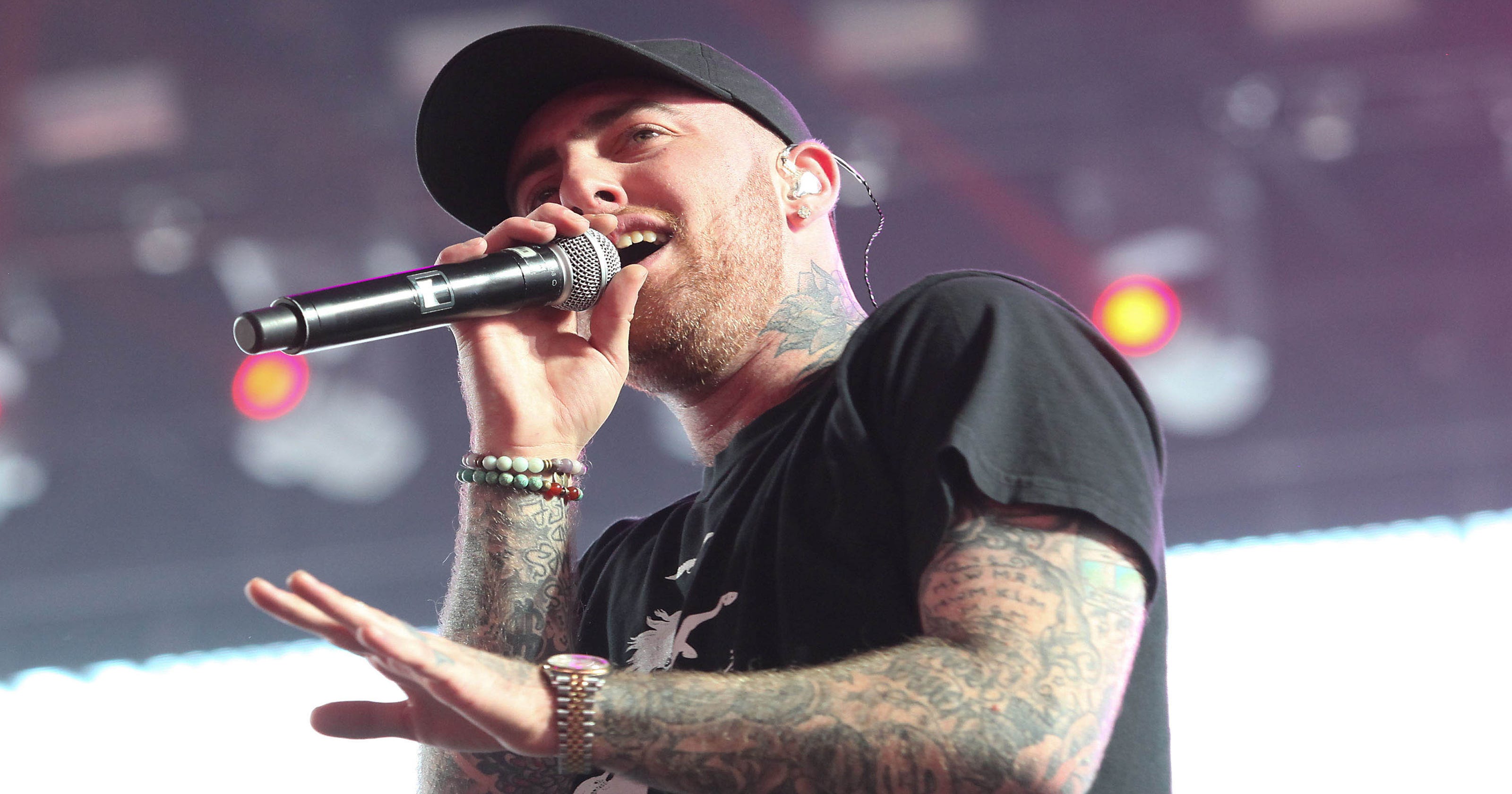
A public vigil is being held for Mac Miller in the park he named his 2011 debut album after, as questions remain over the rapper’s cause of death. 

An autopsy was completed and Miller’s body has been released to his family, Los Angeles County coroner’s office spokesperson Sarah Ardalani said Monday, but an official cause of death won’t be released until toxicology results come back. That can take months. 

Miller, born Malcolm James McCormick, was found dead at his Los Angeles home Friday. He was 26. 

The rapper and former boyfriend of Ariana Grande had reportedly struggled with substance abuse. (USA TODAY has reached out to Miller’s representatives for more information.)

It’s the struggle and the way he tried to deal with it – often in his music – that thousands of fans are gathering to honor and celebrate in Miller’s hometown Tuesday evening.

Reaction: Mac Miller’s family, celebrity friends mourn his ‘heartbreaking’ death

Autoplay

Show Thumbnails

Show Captions

Nightfall Records, a recording label based in Pittsburgh, will host the vigil beginning at 5 EDT at Frick Park, which is also known as Blue Slide Park, the name of Miller’s first album. 

“We would like to bring the city together in full force for this legendary icon,” the label announced on Facebook. “Mac deserves to be sent off with an evening of celebrating his life, discussing his struggles, and remembering his stories; most importantly for his iconic work that brought joy into the lives of everybody who listened.”

More than 2,000 fans confirmed they are attending.

Nightfall continued: “We are welcoming all artists to come and paint, create, draw, live tribute art for this event.” 

Miller released his fifth and final studio album, “Swimming,” in August, which debuted at No. 3 on the Billboard 200 chart. He was set to kick off a U.S. tour to promote the album next month.

Contributing: The Associated Press and Anika Reed

More: Childish Gambino, Elton John, G-Eazy pay tribute to Mac Miller onstage

Autoplay

Show Thumbnails

Show Captions


Read or Share this story: https://usat.ly/2x3aK81

Read More

from Trusted eNews https://ift.tt/2x1qSpT
via IFTTT

Nicki Minaj’s ‘Barbie Dreams’ video features a hefty amount of… puppets?

news image

Nicki Minaj’s latest video is the last place we thought we’d find a whole bunch of puppets, but here we are.

The rapper’s new Hype Williams-directed video clip for “Barbie Dreams” from her recently released album, Queen, features an exorbitant amount of costume changes and enough puppet characters to rival The Happytime Murders.

As if Minaj’s tongue-in-cheek naming and shaming famous male artists like Drake and 50 Cent wasn’t enough in the lyrics, you might recognise a few of Minaj’s puppet pals, with versions of Lil Wayne and DJ Khalid popping up in the clip.

It’s not really the first time puppets have appeared in a Minaj video, with her video for “Barbie Tingz” released in May seeing the rapper suspended as a marionette.

Read More

from Trusted eNews https://ift.tt/2x3rUT5
via IFTTT

9-1-1: Watch the intense new trailer for season 2

news image


9-1-1

type
TV Show
Genre
Drama
run date
01/03/18
creator
Ryan Murphy, Brad Falchuk, Tim Minear
performer
Peter Krause, Angela Bassett, Oliver Stark
broadcaster
Fox
seasons
2

Things are getting hot on the new season of 9-1-1.

The Fox hit returns with a two-part season premiere on Sept. 23 and 24, and is clearly ratcheting up the drama.

The latest trailer for season 2 has just been released, teasing both the relationships (Angela Bassett’s Athena and Peter Krause’s Bobby snuggle!) and the massive emergencies (EARTHQUAAAAAAKE!).

Viewers also get a peek at Jennifer Love Hewitt’s Maddie, the sister of Buck (Oliver Stark) who becomes a 911 operator. She sadly does not yet have former star Connie Britton’s Warby Parker-esque glasses or fishtail braid. Maybe season 3?

Read More

from Trusted eNews https://ift.tt/2MlDXA2
via IFTTT

9/11 victim identification: Seventeen years later, the largest forensic investigation in U.S. history continues

news image

CLOSE

The New York City Office of Chief Medical Examiner Missing Persons Unit performs DNA testing on remains from 9/11.
North Jersey Record

The bone had been cleaned, cut, pulverized, chemically treated and incubated five times before it produced enough DNA for a positive identification.

The first two attempts were nonstarters.

Forensic scientists with the Bode Technology Group in Virginia, where New York City sent many unidentified human remains in the aftermath of the Sept. 11, 2001, terror attacks on the World Trade Center, failed twice in 2002 to extract clear, liquid DNA that could generate a profile.

The bone, dehydrated and vacuum-sealed in a white package marked with an American flag and bar codes, came back to New York City’s Office of Chief Medical Examiner.

About 10 years ago, newly equipped with more advanced technology, the medical examiner’s Missing Persons Unit began trying again. And again.

Then, in July, a breakthrough: a complete DNA profile and a conclusive link to Scott Michael Johnson, a 26-year-old Montclair resident who worked on the 89th floor of the south tower as a securities analyst at Keefe, Bruyette & Woods.

“It was exhilarating,” said criminalist Carl Gajewski, a member of the unit.

The 10-person team made more than 100 identifications of 9/11 remains this year. Johnson was the only new discovery and the first victim to be identified since August 2017.

Andrew Schweighardt, a criminalist with the unit, said the finding briefly paralyzed him. He heard a description of Johnson before he heard his name and immediately thought of his cousin, Joseph Anchundia.

Anchundia also worked for a banking firm in the south tower. He was also 26 years old. His remains had also not been found.

Schweighardt felt his heart seize.

“Part of me is always hoping that one day, we’ll find something of him that we can recover,” he said.

That day could be a long time in coming.

Article continues below gallery.

Autoplay

Show Thumbnails

Show Captions

Of the 2,753 people killed in the attack on New York, 1,111 victims, about 40 percent, remain unaccounted for.

Nearly 22,000 human remains were collected from the rubble of the World Trade Center and surrounding utility manholes, roofs and streets between 2001 and 2010.

Most were either whole bodies or tiny fragments, heavily damaged by the fiery crash of the planes, the pressure of the towers collapsing and the tremendous amount of water used to put out the smoldering wreckage, said Jay Aronson, an associate professor of science, technology and society at Carnegie Mellon University and author of “Who Owns the Dead? The Science and Politics of Death at Ground Zero.”

Video: How to visit the 9/11 Memorial and Museum

Local: Cedar Grove flag display adds World Trade Center steel for 9/11 memorial

Casualties: Deaths from 9/11 diseases will soon outnumber those lost on that fateful day

“If you want to destroy DNA, the best way of doing it is with heat and moisture,” Aronson said.

The degraded remains did not stop the city’s chief medical examiner at the time, Charles Hirsch, from promising families that his staff would “do whatever it takes, for as long as it takes, to identify every victim of this tragedy.”

Seventeen years later, the largest and most complex forensic investigation in U.S. history continues.

“Our commitment to making these identifications is as great today in 2018 as it was in 2001,” said Mark Desire, assistant director of forensic biology for the Medical Examiner’s Office.

Identifications remain to be completed

As of early September, 14,549 remains, or 66 percent, have been identified, according to the Medical Examiner’s Office.

The remaining 7,356 samples are either too damaged to extract DNA from or have produced DNA profiles that cannot be matched to a databank of 17,000 reference samples from victims and family members. About 100 victims have no references, Desire said.

Johnson’s extracted DNA was compared with a sample from his toothbrush and confirmed with samples from his parents.

Remains that have DNA profiles but are not matched to a reference sample or are unclaimed are stored in an underground repository beneath the World Trade Center site, Desire said. The repository is closed to the public and can be viewed only through an adjacent reflection room for victims’ families at the National September 11 Memorial and Museum.

The medical examiner’s Charles S. Hirsch Center for Forensic Sciences holds some 4,000 unidentified, largely bone remains, said Timothy Kupferschmid, chief of laboratories.

They have been tested and retested up to 15 times, Desire said.

Bone is one of the toughest materials from which to extract DNA, he said. The difficulty is compounded by the bones’ exposure to fire, water, mold, bacteria, jet fuel and even sunlight.

Technological advancements

Forensic scientists in the city’s DNA crime lab, the largest of its kind in North America, could not generate DNA profiles for about 600 bone fragments this year, Desire said.

But they are not giving up.

Ongoing advances in techniques for extracting and identifying DNA samples continue to stretch previous limits of recovery, Desire said.

“We know we’re going to be able to do stuff, even next year, that we’re not able to do today,” he said. “Every year, we’re successful on remains that we had no hopes for in the past.”

Every identification made this year was impossible in 2001, when scientists had to manually grind bone samples into powder with a mortar and pestle, Desire said.

The Missing Persons Unit now works with a milling machine, which weakens the bone with liquid nitrogen and pulverizes it with a piece of metal.

The finer powder is more receptive to the chemicals that crack open cells to release DNA, Desire said, and allows for more DNA to be extracted.

Many of the advancements in forensic science have been developed in-house by the DNA crime lab as a direct response to the difficulties in identifying 9/11 victims, Desire said. The new methods and technologies have helped with other missing persons cases and have been shared with labs and police departments working on highly degraded bones around the world.

“Out of necessity, we’ve advanced the bone optimization protocol,” Desire said. “That has been one of the positives that has come from this.”

The Medical Examiner’s Office could not provide a cost estimate for the 9/11 identification effort, but Aronson, the Carnegie Mellon professor, pegged it at well over $80 million.

Aronson said Hirsch’s unprecedented promise in 2001 has placed an enormous financial and emotional burden on New York City and the Medical Examiner’s Office and forced remains to be kept in a repository reviled by many victims’ families rather than interred.

“I don’t think that any medical examiner will make the same promise in the future,” Aronson said. “This was unique. It was a political decision, in part, and an emotional decision, in part, but certainly not what I would consider a rational scientific decision. At a certain point, you’re getting diminishing returns. You have to ask whether it makes sense to continue to do this and whether it adds value to the families and to the city and the country.”

A sense of closure

Peter Killeen, a stress counselor for Port Authority police unions who worked with families and officers in the aftermath of 9/11, said the return of remains provides a sense of closure for some but may offer little value for others.

“Everyone grieves in their own way. Some people may have accepted the fact that they will never receive something of their loved one from that day and moved on as best they can,” he said, “while other families are hanging on for something that will be returned to them.”

Diane Horning of Scotch Plains received the remains of her 26-year-old son, Matthew Horning, twice.

She collapsed when she was told of the first identification several years after 9/11.

“When you get that notification, the reality is made tangible,” Horning said. “There’s always a part of you, if you don’t have any tangible evidence, that allows yourself to deny it, and once you get that call, you really can’t deny it anymore. You know it’s true.”

The Horning family decided it wanted to be notified of any future identifications. Some families choose never to hear from the Medical Examiner’s Office again.

“I’m not sure if it’s anything I can intellectualize. It’s just a gut feeling,” Horning said of her family’s decision. “It’s like if you lost a loved one in an overseas war, you want them brought back home. The Medical Examiner’s Office has been very kind and diligent in giving us that option. We felt we wanted it.”

Perhaps a few years passed between the first call and the second, and the family was finally able to bury Matthew Horning in a cemetery.

Horning said the Medical Examiner’s Office has not called in years.

Tom Meehan of Toms River said the recovery of his daughter Colleen Barkow’s remains six days after 9/11 provided answers to pressing questions.

“In a small way, we know what happened to her, the manner of her death,” Meehan said. “Having that knowledge gives us comfort.”

Barkow’s remains were cremated and buried.

Rosemary Cain considers herself fortunate to have been able to lay a small part of her son, Firefighter George Cain, to rest. But she believes more parts of him are among the unidentified remains and is dismayed that they have not been buried.

“Those bodies are sacred,” Cain said. “Whatever’s left of their mortal remains is very sacred to a mother or a father or a sibling.”

Sally Regenhard, who lost her firefighter son Christian Regenhard, and Jim McCaffrey, who lost his firefighter brother-in-law Orio Palmer, have never received remains.

They no longer think about the possibility of getting them.

They focus their energy now on shutting down the repository by the museum, which they describe as a money-making tourist trap, and entombing all unidentified remains in an above-ground memorial akin to the Tomb of the Unknown Soldier at Arlington National Cemetery.

“The important thing is not just identifying a fingernail, a sliver of DNA on a piece of dirt,” Regenhard said. “For me personally, the important thing is to have all these remains entombed in an honorable, respectful site so that I could say, ‘This is where you go if you want to pay your respects.’ ”

The only place Regenhard said she can do that today is at the Church of the Good Shepherd in the Bronx, where a small memorial garden contains a stone dedicated to her son.

She last went there on Aug. 26 to mark what would have been Christian Regenhard’s 45th birthday the day before.

The families of the missing live in a kind of suspended reality, Regenhard said. Without remains, there is no burial, and without a burial, there is no physical evidence of what happened to their loved ones.

“The knife in the heart of any parent or anyone with a loved one is if there is no evidence that this person has died,” she said, “then there is no evidence that they ever lived.”

Email: shkolnikova@northjersey.com, Twitter: @svetashko

Support our Signature Journalism

Become a NorthJersey.com subscriber today and get unlimited digital access and support stories like this one.

JOIN TODAY


Read or Share this story: https://njersy.co/2x5dYaC

Read More

from Trusted eNews https://ift.tt/2x19Zwm
via IFTTT

Raiders RB Marshawn Lynch sits during national anthem

news image

Share This Story!

Let friends in your social network know what you are reading about

Raiders RB Marshawn Lynch sits during national anthem

Raiders RB Marshawn Lynch was the only player who demonstrated during Monday’s anthem.

Loading…Post to Facebook

Posted!

A link has been posted to your Facebook feed.

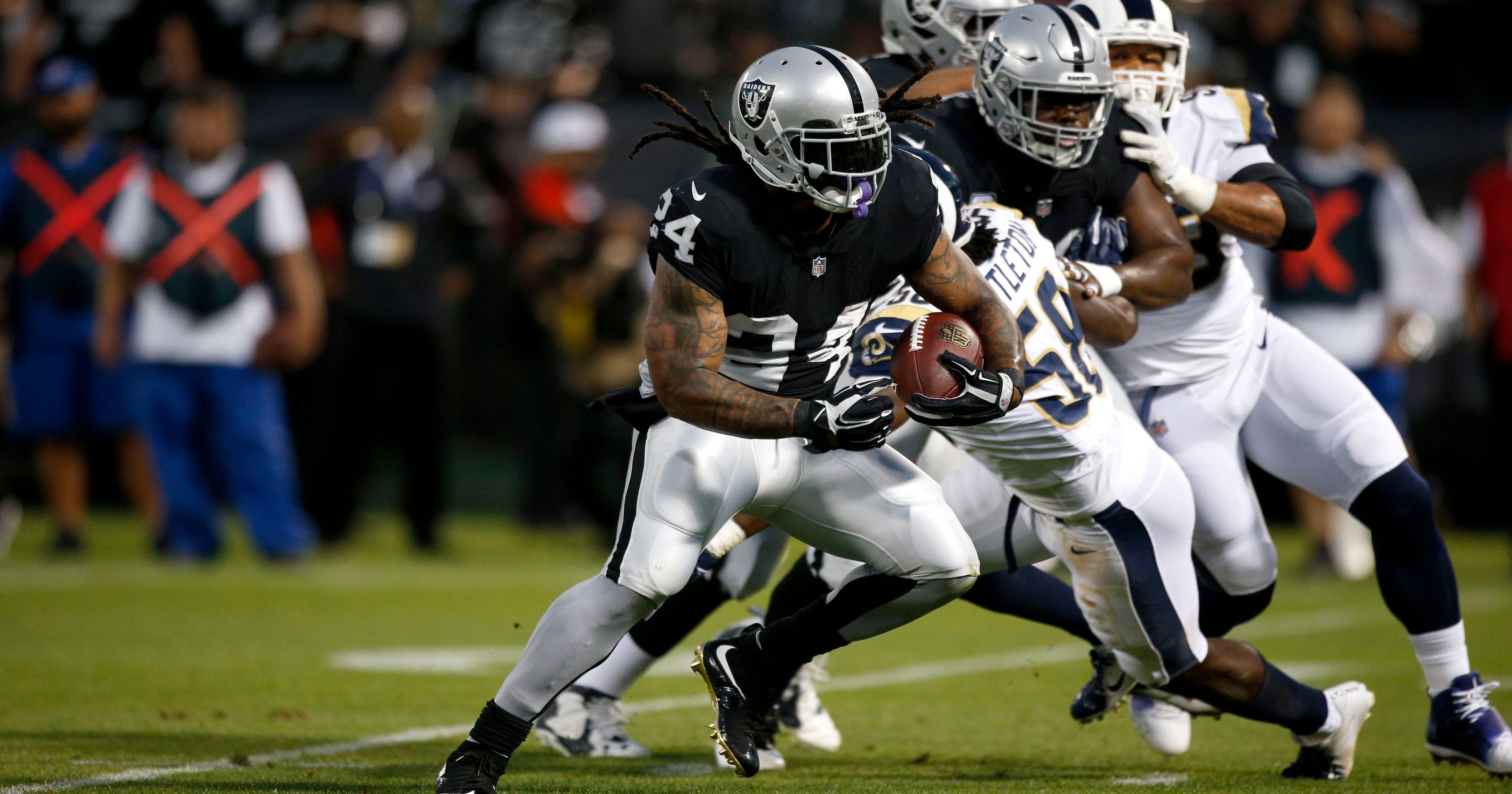
ALAMEDA, Calif. (AP) — Oakland Raiders running back Marshawn Lynch sat during the national anthem ahead of the team’s season opener.

Lynch declined to stand for the anthem before a game against the Los Angeles Rams on Monday night. Lynch also sat for the anthem all of last season but never gave a reason for his decision.

No other players on either team demonstrated during the anthem. Only a handful of players took some sort of action to protest police brutality and social injustice in America on opening weekend.

The league and the players’ union have yet to announce a policy for this season regarding demonstrations during the anthem after the league initially ordered everyone to stand on the sideline when “The Star-Spangled Banner” is played, or remain in the locker room.

More NFL

___

More AP NFL: https://ift.tt/2uRpK74 and https://twitter.com/AP_NFL

Copyright 2018 The Associated Press. All rights reserved. This material may not be published, broadcast, rewritten or redistributed.

Read More

from Trusted eNews https://ift.tt/2wWR9qf
via IFTTT

Harry Maguire: England and Leicester defender on his rise from League One to a World Cup semi-final

news image

Harry Maguire has made 11 starts and two substitute appearances for England

England v Switzerland, Tuesday, 11 September. Kick-off: 20:00 BST

How to follow:
Listen on BBC Radio 5 live; text commentary on the BBC Sport website

On 14 September 2013, Harry Maguire was part of the Sheffield United team that lost 1-0 at Carlisle in League One.

Fast forward five years and the 25-year-old Leicester City defender is set to walk out in front of his own club’s fans in an England shirt at the King Power Stadium.

Maguire has gone from the third tier of English football to the World Cup semi-final in double-quick time.

In an interview with BBC Radio 5 live’s senior football reporter Ian Dennis, Maguire discusses his meteoric rise as he prepares for his 14th appearance for the Three Lions in a friendly against Switzerland.

‘I do pinch myself’

Maguire spent four seasons in League One with Sheffield United before signing for Premier League Hull City in July 2014 in a move worth £2.5m.

He joined the Tigers on the same day they signed left-back Andrew Robertson, now at Liverpool, from Dundee United for £2.85m.

Maguire stayed at Hull three years before joining Leicester in a £17m deal. His England debut came against Lithuania last October, and he has just signed a new five-year Leicester contract.

“Obviously the last five or six years of football, I do pinch myself,” said Maguire.

“Playing in League One week in week out, then I get an England Under-21 call-up and I’m pinching myself with that.

“Then playing in Premier League, you pinch yourself again.

“The ladder just keeps going. It’s nice to sign a new deal at Leicester and to be rewarded for the great season we had last season as a team as well.”

World Cup 2018: Sweden 0-2 England highlights

‘Playing in League One helped shape me’

Maguire made his Sheffield United debut aged 18 towards the end of the 2010-11 season. The Blades were struggling in the Championship and were eventually relegated after finishing six points from safety.

Over the next three seasons he went on to make 129 League One appearances, and believes he would not have made it as far as he has without the experiencing lower-league football.

“To play in League One in every game when I was 18 was massive for my development,” he said.

“It’s something I’m very proud of. I have great memories and it was a great experience.

“If it didn’t happen for me back then, I probably wouldn’t be where I am now.”

Harry Maguire (right), then aged 19, in League One action for Sheffield United against Coventry City in February 2013

‘My family keep me grounded’

Maguire could be excused for allowing his rapid rise go to his head.

However, he said his family, friends and agent were all responsible for helping keep his feet on the ground.

“I’m really close to everyone. I support them all and they always support me and follow me around the country supporting me every game,” he said.

“If I do ever get a little bit too big for my boots, they kick me straight back down. I’m a grounded lad and I just look forward to see what’s going to happen in the future.”

‘England need to push on’

Maguire was involved in all seven of England’s games at this summer’s World Cup in Russia, scoring in the quarter-final win over Sweden.

He has established himself as a key member of Gareth Southgate’s team.

“You can see what we are building,” he added. “He is trying to put his style on the game. The big tournaments are the ones we are going to get judged on mainly.

Harry Maguire celebrates scoring Leicester’s winner at Southampton on 25 August

“You see in the summer we performed, we got to a level where we reached a World Cup semi-final.

“People say you have got to be patient, but it was pretty soon in terms of reaching a World Cup semi-final from where we were at in recent years.

“I think we are just building as a team and the way we are playing and I think we can push on now.”

Read More

from Trusted eNews https://ift.tt/2MkBmpR
via IFTTT

How to watch the World Cup live: Best streaming sites for sports

news image

NFL Game Pass is one of the best of the dedicated league services out there. We don’t have to tell you that NFL Sunday is one of the biggest modern traditions for sports fans, with friends and families gathering at the house, apartment, bar — wherever — to see how their teams will play that week.
provides the most die-hard fans with an avenue to keep up with every game, every week. This also includes replays of games you might have missed and the extensive NFL films archive, like HBO’s
Hard Knocks series. And, like most of the services on this list, offers a seven-day free trial to see how you like it.

It does come with a couple of catches, though. The biggest is that you cannot watch the Super Bowl live through Game Pass. This is due to network rotation between CBS, Fox, and NBC to air the Super Bowl. Also, given NFL and network practices, “local” games tend to suffer from blackouts in favor of the out of market games in
. That means that, say you live in Los Angeles and want to watch the Rams, you’ll have to go through Fox, CBS, NBC, or ESPN depending on where and when they’re playing. This is a common problem you’ll run into with any league-dedicated streaming service. Even so, the NFL Game Pass is probably the best value of them all.

Read More

from Trusted eNews https://ift.tt/2Qn9Mvk
via IFTTT

Design a site like this with WordPress.com
Get started