US Open 2018: Serena Williams catsuit row ‘10,000 times worse’, says Alize Cornet

news image

The 23-time Grand Slam champion said the outfit made her feel like a “superhero” at Roland Garros this year.

French player Alize Cornet said the decision to ban Serena Williams from wearing a catsuit at future French Opens was “10,000 times worse” than her on-court reprimand at the US Open.

Williams, a 23-time Grand Slam singles winner, said in May she wore the outfit to help her cope with blood clots.

Cornet, who received a code violation for removing her shirt on court, scolded her federation president.

“Bernard Giudicelli lives in another time,” she said.

“What he said about Serena’s catsuit was 10,000 times worse than what happened to me on the court on Tuesday, because he’s the president of the French federation and because he doesn’t have to do that.”

Giudicelli, in an interview with Tennis Magazine, said Williams had to “respect the game”.

“These kind of comments are totally shocking for me,” Cornet added.

The Frenchwoman also said she was stunned that the incident with her shirt during the defeat by Johanna Larsson had caused so much controversy.

Criticism of the umpire’s decision followed as he was accused of double standards.

US Open organisers said they “regret” that Cornet was given a code violation and had clarified their policy to “ensure this will not happen moving forward”.

“Everybody was pretty scared that I could get a fine for it,” added the world number 31. “I was also scared. They were telling me that if I get fined, we would all be together and see the WTA and make a revolution and stuff.

“I was, like, ‘Calm down. I’m going to get the information first and then we see if we make a revolution or not,’” said Cornet.

“I think it’s very fair from them to apologise to me. I think the umpire was probably overwhelmed by the situation.”

Read More

from Trusted eNews https://ift.tt/2LFrAOP
via IFTTT

Ryan Gosling’s ‘First Man’ premieres in Venice: Review round-up

news image

That’s one small step from Whiplash, and one giant leap away from La La Land

Academy Award-winning director Damien Chazelle is moving away from musicals at light speed with the premiere of his historical drama, First Man, at the opening night of Venice Film Festival. 

And critics are loving it. 

The Neil Armstrong biopic stars Ryan Gosling as Armstrong, House of Cards‘ Corey Stoll as Buzz Aldrin, and The Crown‘s Claire Foy as Armstrong’s first wife, Janet Shearon. Based on early reviews, the star-studded cast is just one of the film’s many assets.

First Man will receive a U.S. wide release on October 12. In the meantime, check out what critics had to say about their early Venice viewing below.

It shows early space travel from a fragile, first-person POV 

Michael Nordine, IndieWire

Chazelle is so successful at putting you inside the cold, claustrophobic spacecraft that Neil never truly leaves — we’re often just inches away from his face, whether behind a visor or not — that we’re sometimes at sea when it comes to understanding what exactly these men and why it’s so important. If you’d like to know the exact purpose of the Gemini 8 mission, look it up beforehand — “First Man” won’t tell you. It’s a kind of first-person procedural, less concerned with the nuts and bolts of these undertakings than one man’s experience of them.

David Rooney, The Hollywood Reporter:

The movie opens with the first of several white-knuckle sequences as Armstrong mans a solo test flight 140,000 feet off the ground, exiting and then re-entering the Earth’s atmosphere with a malfunctioning bounce on the way back. Chazelle immediately summons echoes of great space-exploration films from The Right Stuff to Gravity with the infernal noise and stomach-churning rattle of what seems like a tin can hurtling around in the void. The fragility of these vessels is a constant throughout. In what will become another recurring motif, there’s also a stirring tranquility in the interlude when Armstrong penetrates the atmospheric barrier. In scenes like this, Chazelle uses the beauty of sudden silence to tremendous effect.


The moon landing sans flag planting isn’t super patriotic 

Peter Bradshaw, The Guardian:

It is also a film that downgrades the patriotic fervour of the landing. Armstrong and his comrades are certainly shown to be deeply nettled by news of initial Soviet triumphs in the space race, but Chazelle abolishes the planting of the stars and stripes on the moon.

Jessica Kiang, The Playlist:

But amid all the things that “First Man” is, it’s also notable for what it is not. There’s minimal flag-waving here, making it a universal story about tenacity and sacrifice, rather than anything more overtly patriotic. That’s a good thing, but it means that politics are dialed right back in general, with only some Vietnam War footage playing on background TV screens and one moment in which Gil Scott-Heron‘s “Whitey On The Moon” sounds out, making a particularly pointed comment on the social context of the era. But then Chazelle is as little interested in that context as he is in the spiritual or philosophical potential of this story (this is a tale of lunar exploration in which a journalist’s question about “feeling the presence of God” is played for a laugh).


Gosling holds back in all of the right ways 

Owen Gleiberman, Variety:

Gosling gives a tricky, compelling performance that grows on you. He plays Armstrong as a brainy go-getter who has learned to hold most of what he feels inside (he wrote musicals in college, and is now ashamed of it). Yet he lets out just enough emotion, especially when someone crosses him, to exude a quiet command. Shortly after he’s chosen to be a Gemini astronaut, Armstrong is strapped into a spherical training simulator that looks like a cross between a carnival ride and a medieval torture device. It turns you every which way at once, which results in each astronaut passing out, then running into the bathroom to throw up. But by the time Armstrong gets to ride a rocket in Gemini 8, the simulation turns real: His mission is to dock his capsule to an adjacent rocket, which happens without a hitch, but then everything goes haywire. The capsule starts “rolling left” (i.e., spinning out of the control). Gosling makes Armstrong a figure of intensely contained can-do moxie whose ability to guide a ship, especially when it’s at death’s door, is the essence of grace under pressure.

Leonardo Goi, The Film Stage:

In one pivotal scene that predates Armstrong’s departure for the Apollo 11 mission, she snaps at his refusal to speak about the risks involved, and forces him to tell their kids he may never see them again. It’s a harrowing chat that Gosling half avoids through a press-conference style interview, his kids asking questions he laconically responds to, and in reinforcing a crucial rupture between First Man and Chazelle’s prior work, it crystallizes Gosling’s Armstrong as a far more fragile and intricate entry in the director’s pantheon of male heroes. “You’re a bunch of boys making models out of balsa wood,” Jan shouts to Neil’s superiors when things take a tragic turn. Watching Gosling struggling to hold the emotions in, a forced repression that can only be released away from other people’s eyes, her remarks reverberate with a sad echo. Contrasted with Jan’s indomitable and rational persona, there are moments when Gosling and his colleagues look like boys whose will to “make history” has trapped them in a protracted state of denial, and toy with vehicles whose lethal power is far clearer to their families than their own selves.

Https%3a%2f%2fblueprint api production.s3.amazonaws.com%2fuploads%2fvideo uploaders%2fdistribution thumb%2fimage%2f83117%2f73d596fb c78f 49db a1c2 3a7f11e2d222

Read More

from Trusted eNews https://ift.tt/2NwomPt
via IFTTT

DC streaming service launch date, plus new Titans photos revealed

news image


Titans

type
TV Show
Current Status
In Season
performer
Yasmine Bleeth, Casper Van Dien, Perry King, Victoria Principal
Producer
Aaron Spelling
broadcaster
NBC
Genre
Soaps

DC’s long-awaited streaming service has a launch date — plus, hey look, there are four new photos (below) from Titans and a premiere date for that show too.

First the service date: DC Universe will launch sooner than you think — in less than a month — on Sept. 15 (a.k.a. “Batman Day,” which celebrates the anniversary of the character’s first-ever appearance in the comics).

The service’s first big original series, Titans, will have its world premiere screening at New York Comic Con on Oct. 3 and then make its debut on DC Universe on Oct. 12. This news was revealed during the live stream event of DC Daily.

Check out the new photos:

Based on Teen Titans, the live-action Titans series from producer Greg Berlanti consists of 12 episodes and stars Brenton Thwaites as Batman sidekick Richard “Dick” Grayson / Robin, Anna Diop as alien princess Koriand’r / Starfire, Teagan Croft as empath Rachel Roth / Raven, and Ryan Potter as shapeshifter Garfield “Gar” Logan / Beast Boy. 

RELATED: DC Universe’s Titans says ‘F— Batman’ in moody first official trailer

The DC Universe service will cost $7.99 per month or $74.99 per year.

Upcoming shows planned for 2019 include Doom Patrol, Young Justice, Swamp Thing, Outsiders, Stargirl, and Harley Quinn.

Read More

from Trusted eNews https://ift.tt/2MYxHT8
via IFTTT

INSIDE IRAN

news image

USA TODAY foreign correspondent Kim Hjelmgaard gained exclusive access to travel to Iran this summer to explore the strained U.S.-Iran relationship. Inside Iran is a timely look at a country few Western journalists get to visit.

America’s contentious history in Iran leads to mix of anger, wonderment and weariness

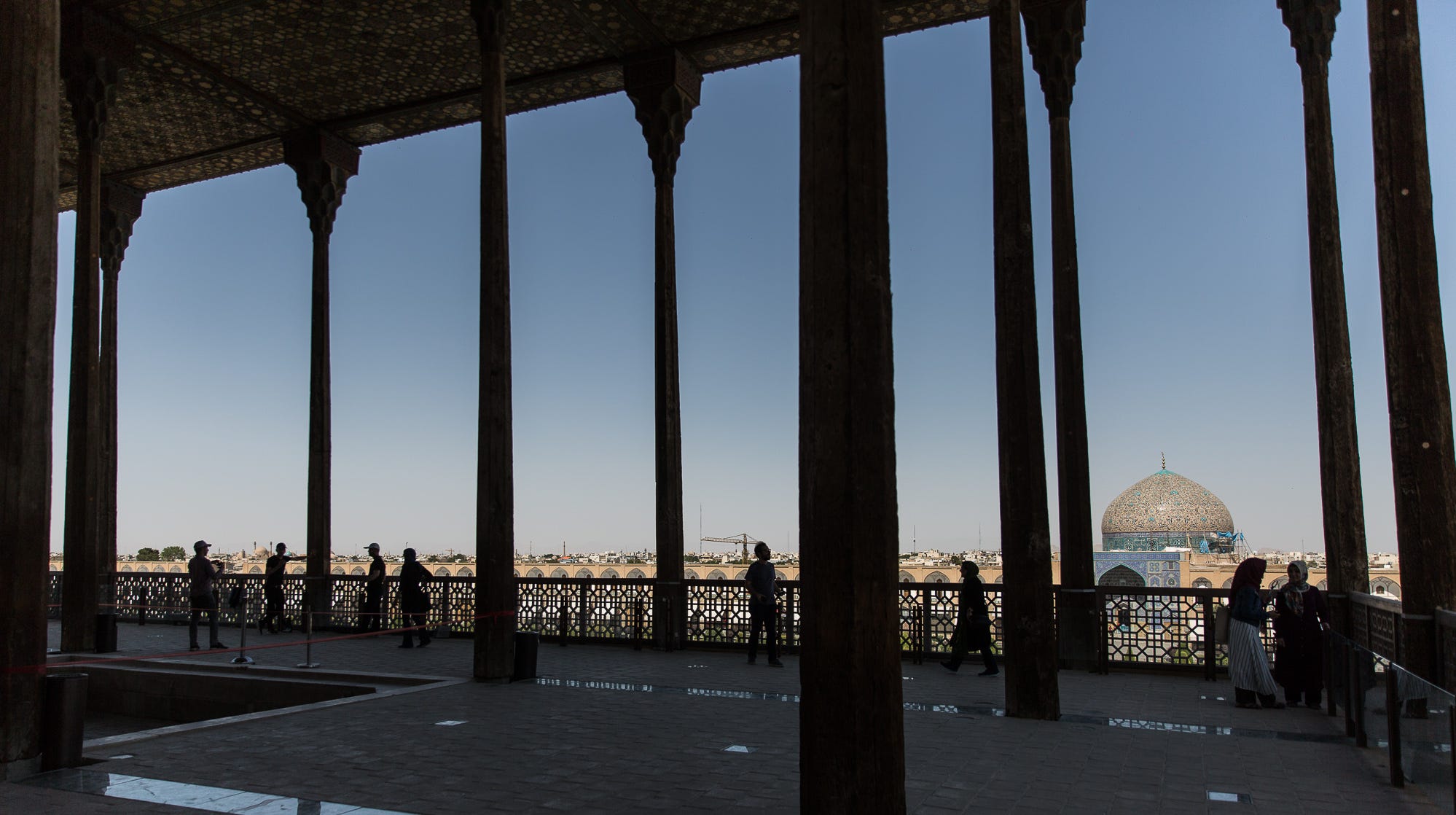
TEHRAN, Iran – For almost 40 years, a two-story brick building in the middle of Tehran has been the symbol of Iran’s revulsion toward the United States, an enemy it holds responsible for engineering a coup, throwing its military might behind its regional foes and limiting its prized oil industry.

The former U.S. Embassy, where 52 Americans were held hostage for 444 days beginning in 1979 amid the birth of the Islamic Republic, is now a museum to American treachery the Iranian authorities refer to as the “U.S. Den of Espionage.” Murals depicting the Statue of Liberty as Death and the U.S. flag in the form of a handgun line its exterior walls and interior hallways.

“This represents Iran’s side of the story,” a guide to the former embassy told USA TODAY as he showed off typewriters, secret meeting rooms, incriminating documents and even embassy stationery collecting dust inside the compound.

Foreigners are rarely allowed to roam the historic building, a stark physical reminder for Iran that the U.S. is its worst enemy and doesn’t take enough responsibility for meddling in Iran’s domestic affairs. “America doesn’t do that,” the guide said. 

In early August, when President Donald Trump reimposed sanctions on Iran after withdrawing from the 2015 nuclear deal negotiated over several years with world powers, another tense chapter was added to the story of two countries whose strained relationship is steeped in decades of mistrust and hostility. 

His moves risk further inflaming an already volatile Middle East and alienating American allies, and they run counter to majority opinion at home and abroad. They mean certain economic hardship for millions of ordinary Iranians.

But Trump has stood firm, saying the “horrible, one-sided” Iran nuclear deal “failed to achieve the fundamental objective of blocking all paths to an Iranian nuclear bomb, and it threw a lifeline of cash to a murderous dictatorship that has continued to spread bloodshed, violence and chaos.”

“To this day, Iran threatens the United States and our allies, undermines the international financial system and supports terrorism and militant proxies around the world,” he said this month in announcing the latest sanctions.

Iranian President Hassan Rouhani, responding in a speech on national television, said Trump was playing politics at the expense of the Iranian people.   

“The U.S. reimposes sanctions on Iran and pulls out of the nuclear deal and then wants to hold talks with us,” he said. “Trump’s call for direct talks is only for domestic consumption in America ahead of elections … and to create chaos in Iran.”

For Iran, the latest sanctions mean continued hard economic times. They will keep Tehran from acquiring U.S. dollars, restrict its ability to trade in gold and other precious metals, prohibit the foreign purchase of Iranian sovereign debt and punish the car industry with high tariffs. The United States is banning imports of Iran’s iconic Persian rugs. The biggest blow will come in early November, when sanctions on Iran’s lucrative oil industry swing back into full gear. 

For Washington, it’s a geopolitical gamble that swims against the tide of world opinion and much of the United States’ own foreign policy establishment. 

“If the Trump administration carries through with its threats to completely prevent Iran from exporting its oil by, for example, deploying the U.S. Navy in the Strait of Hormuz in the Persian Gulf to block Iran’s oil ships, then this moves beyond a conflict of words and posturing to a war situation. We’ll be at war. A real war,” said Nader Entessar, an Iranian-born political scientist at the University of South Alabama.

Iran will suffer 


Inside Iran, there is a mixture of anger and weariness at Trump’s decision to reimpose sanctions. Though Washington insists the sanctions are not aimed at Iran’s civilians, only its government and nuclear program, Iranians find that line of reasoning hard to accept; even though the sanctions don’t target them directly, restrictions on Iran’s use of the global financial system have led to severe shortages of cancer drugs, certain food supplies and key consumer goods. They also have led to an economic crisis that has severely affected salaries, prices and jobs.

“Please tell Mr. Trump that it will only get worse for ordinary Iranian workers and their families,” said Fereshteh Dastpak, head of Iran’s National Carpet Center. Dastpak lamented the likely effect of the sanctions on the 1.5 million people who earn their living in Iran’s rug industry. Nearly $100 million worth of Persian carpets were exported to the USA last year amid the lifting of sanctions tied to the nuclear accord negotiated during President Barack Obama’s tenure. The year before the deal? There were no carpets imported. “Trump needs to reconsider,” Dastpak said. 

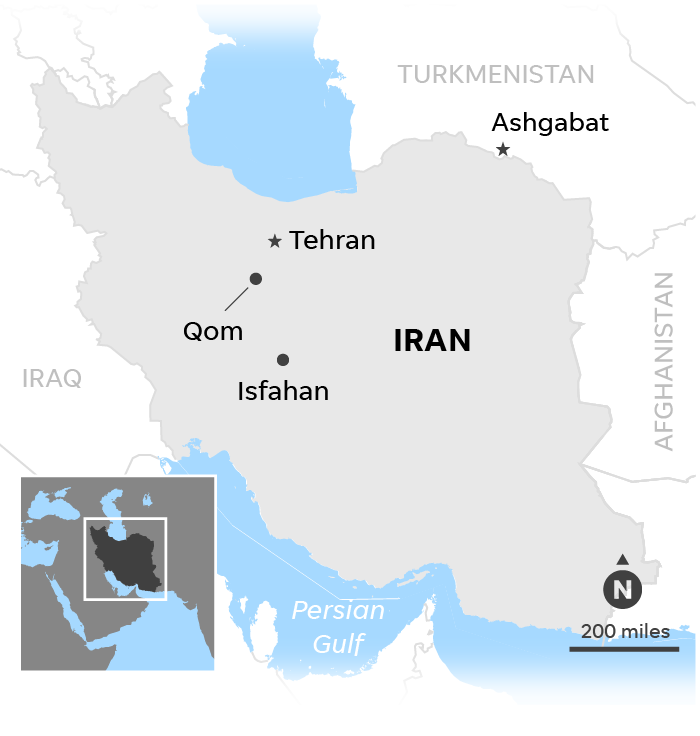
Several Iranians, including Ali, 26, from the city of Isfahan, told USA TODAY they would leave if they could. “There is no future for me here,” he said. Because Ali was highly critical of Iran’s government, his last name has been withheld.

Gholam Hossein Shafei, president of Iran’s chamber of commerce, said in an interview that “America is pulling out of an official and valid agreement negotiated by international institutions.” 

Shafei said foreign investment, economic growth and tourism in Iran would suffer before they even had the chance to get off the ground. “There needs to be an answer to this,” he said. 

So far, there hasn’t been one.


‘Biggest threat to the U.S. is its own president’

Trump is dropping out of the accord over the objections of other signatories to the deal, including China, France, Germany, Russia, the United Kingdom and the European Union. All have publicly expressed their disapproval and pledged to work with Iran but have failed to come up with specific proposals that would allow them to circumvent so-called secondary sanctions: those imposed on any countries or companies who do business with Iran.

The International Atomic Energy Agency said Iran was complying with the accord. Polls show a majority of Americans want the United States to stay in the deal.

Trump long has objected to an agreement hailed as the most significant foreign policy accomplishment of Obama’s administration. He says the accord does not go far enough in addressing Iran’s long-term nuclear ambitions, its conventional missile program and its financing of proxies in regional hot spots such as Syria and Yemen.

“I know (Iran is) having a lot of problems and their economy is collapsing,” Trump has said. “But I will tell you this: At a certain point, they’re going to call me, and they’re going to say, ‘Let’s make a deal,’ and we’ll make a deal. They’re feeling a lot of pain right now.” 

Iran has dismissed those words – including Trump’s tweets to reopen negotiations and threats against those who do business with Iran – as ill-thought-out propaganda.  

“Today, the biggest threat to the U.S. is its own president,” said Hesamodin Ashna, a senior adviser to Iran’s president. “Someone who sells lies and intimidation for a living is not only a danger to the American people but a danger to the international community.”

Experts in international relations are skeptical of Trump’s strategy.

“Iran is an issue that has unified Congress, and to a certain extent the American public, in terms of being hard-line on it. But being anti-Iran is an easy position to take,” said Dina Esfandiary, an Iranian national and policy expert at King’s College London. “Trump’s policies, or lack of policies on Iran, rather, stem from ‘anything that Obama did needs to be undone.’ That’s definitely a driving principle for Trump here.” 

Ali Ansari, founding director of the Institute for Iranian Studies at St. Andrews University in Scotland and a distant relative of Mohammad Reza Shah Pahlavi, a dictator the CIA installed as Iran’s leader in 1953 before his ouster in 1979, said, “By pulling out of the deal, Trump has given the Iranian authorities an excuse and allowed them to claim all of its problems can be sourced to America.” 

Anti-American animosity still visible

Pahlavi was ushered into power after Mohammad Mosaddegh, Iran’s democratically elected prime minister, nationalized Iran’s oil industry and showed little interest in dealing with the West. He maintained a pro-West foreign policy and fostered modern economic development, and his government officials boasted that he had turned Iran into a place where women were wearing miniskirts shorter than in Paris. That came at the price of autocratic rule and corruption. Pahlavi employed secret police to torture and execute people and stifle dissent.

When anti-American cleric Ayatollah Ruhollah Khomeini rose to become Iran’s supreme leader in 1979 and unleashed the hostage crisis at the U.S. Embassy in Tehran, the country was determined to break with American interference in its affairs.

Ansari, the policy expert at King’s College London, said Iran’s government has done little in the intervening years to help its own situation.

“After the nuclear deal, it signed a lot of MoUs (memoranda of understanding, an intent to do business), but nothing really materialized as different factions of the government argued about what they should give away and what they shouldn’t,” Ansari said. “If the Trump administration had stuck with this deal, it probably wouldn’t have been deliverable, but Iran’s hard-liners wouldn’t now have any cover. Trump has made it easier for them.” 

In December, there were weeks-long demonstrations in more than 80 cities across Iran. The protests followed a leaked government budget report that revealed Iran funneled billions of dollars to religious institutions, to the elite Islamic Revolutionary Guard Corps paramilitary unit and for military interventions extending from Lebanon to Saudi Arabia. The protests came during a time of spiraling costs for goods at home and severe water shortages.

Trump’s decision to exit the nuclear deal risks reinvigorating the “Great Satan” epithet, a slogan that has come to define Iranian-U.S. relations over the past several decades. The phrase, along with the “Death to America” chants that came to prominence under Khomeini, remain a staple at Friday prayers and political rallies under Supreme Leader Ayatollah Ali Khamenei.

This animosity is visible still in the state-sponsored anti-American signs and graffiti that dot Iran’s smog-filled capital, with its clogged roads, bustling marketplaces, bridges, tunnels, towers and largely concrete skyline set against the backdrop of the Alborz mountain range.

“You can’t trust the United States – never,” said an official with Iran’s Ministry of Culture and Islamic Guidance, who did not want to be identified because he was not authorized to speak to the media. “Whenever the United States makes promises, it eventually abandons them.”

Fatigue over failed diplomacy

At the “U.S. Den of Espionage,” the former American Embassy, the guide ended the tour by screening a brief video that purported to show myriad perceived U.S. crimes against Iran, from invading its immediate neighbors and building military bases there to shooting down a civilian passenger plane traveling from Tehran to Dubai in 1988, killing all 290 people on board, including 66 children. (The U.S. Navy said it mistook the plane for a fighter jet. Iran rejects that explanation.) 

Still, despite rhetoric from the Trump administration and some exiled Iranians – as well as praise for Washington’s withdrawal from the nuclear deal by Israeli Prime Minister Benjamin Netanyahu – the overwhelming sentiment on Iran’s streets is not revolutionary fervor but fatigue over decades of failed Iranian-U.S. diplomacy and the resulting economic struggles for ordinary Iranians. 

“We waited for so long for good news between our two nations,” a woman, 37, in a coffee shop told USA TODAY as she despaired over the renewed sanctions and breakdown in relations. Fearing for her safety, the woman did not want her name associated with a political statement in a foreign newspaper. “A lot of people in Iran are not satisfied with their lives,” she said. “What do we hope for now?” 

Years of international sanctions have taken a toll on Iran. About one-third of Iranian young people (ages 15 to 29) are unemployed, according to the International Iranian Economic Association. More broadly, the jobless rate is more than 13 percent, hyperinflation has evaporated the purchasing power of salaries, and Iran’s rial currency has lost half of its value against the U.S. dollar over the past four months. After the nuclear deal, Iran was able to restore oil production and exports, but it did so during a time of record-low oil prices. In November, Iran will have to weather large cuts to its oil exports once again. 

Although demonstrators in Iran may be occasionally emboldened to call for the death of Rouhani and Khamenei, they do not necessarily view support from Trump administration regime-change hawks such as national security adviser John Bolton as the answer. 

“Just look at our neighbors, Iraq and Afghanistan. After 6 p.m., you can’t go out. It’s too dangerous. This is what happens when Americans intervene in other countries,” said Mohammad, a merchant at Tehran’s Grand Bazaar, referring to two countries where the United States has spent billions of dollars on military occupations and long-term nation-building missions. “The reality is that we don’t want the U.S. interfering with our problems.” 

Still, USA TODAY encountered many Iranians who expressed disapproval of what they viewed as Trump’s brash leadership style and aggressive policies toward Iran but admired what  the president was achieving for his own country.

One was Hossein, 57, an English professor who, like Mohammad, the merchant, did not want his family name published. Hossein is trying to leave Iran for a job in Europe, and he worries his views could affect his application. 

“Whatever promises Trump gives his people, he fulfills,” he said, mentioning actions Trump has taken since entering office such as moving the U.S. Embassy in Israel to Jerusalem from Tel Aviv. “He’s a pragmatist. Trump only does things he thinks are good for his country. He started an economic war with China. He will succeed. He had a nuclear summit with North Korea. He will succeed. He’s started messing with Iran. He will succeed.”

  • INSIDE THE IRAN ENGIMA: “A USA TODAY journalist crisscrosses a country whose relationship with the U.S. is steeped in decades of mistrust.” Read story here. 

The team behind this series

Reporter: Kim Hjelmgaard 
Editing: Sergio Bustos, Kristen DelGuzzi 
Photography and videos: Farhad Babael 

Photo editing: Christopher Powers
Video editing: Elaina Kimes, Robert Lindeman, Daryl Bjorass
Motion design: Lindley Taylor

Graphics and illustrations: George Petras, Alex Gonzalez, Mitchell Thorson, James Sergent, Shawn Sullivan
Copy editing: Robert Abitbol, Jonathan Briggs, Susan Haas, Mark Hayes, Lauren Olsen, Mike Smith
Digital production and development: Ryan Hildebrandt, Kyle Omphroy, Stan Wilson, Annette Meade

Read More

from Trusted eNews https://ift.tt/2NyIgt4
via IFTTT

Detroit shutting off drinking water in all schools because of lead, copper contamination

news image

CLOSE

A USA TODAY motion graphic showing how lead can get into your drinking water.
Ramon Padilla, Karl Gelles and Shannon Green, USA TODAY

The Detroit school district is shutting off drinking water to all of its schools after test results found elevated levels of lead or copper in 16 out of 24 schools that were recently tested.

“Although we have no evidence that there are elevated levels of copper or lead in our other schools where we are awaiting test results, out of an abundance of caution and concern for the safety of our students and employees, I am turning off all drinking water in our schools until a deeper and broader analysis can be conducted to determine the long-term solutions for all schools,” Nikolai Vitti, superintendent of the Detroit Public Schools Community District, said in a statement Wednesday.


The move came even as officials from the city and the Great Lakes Water Authority sought to assure residents that water provided by the authority is safe to drink — pointing to the district’s infrastructure as the problem. 

Vitti, who will be creating a task force to determine the cause of the elevated levels and solutions, said he had initiated water testing of all 106 school buildings in the spring to ensure the safety of students and employees. Water at 18 schools had been previously shut off. 

Read more:

“This was not required by federal, state or city law or mandate,” Vitti said. “This testing, unlike previous testing, evaluated all water sources from sinks to drinking fountains.”

The district isn’t planning to test students.

“Dr. Vitti said … he has no evidence at all that children have been impacted from a health standpoint,” Chrystal Wilson, spokeswoman for the district, said later Wednesday, when asked by the Free Press.

The Free Press was shadowing Vitti on a day in May when the issue of water quality in the schools came up during a cabinet meeting. Earlier that day, Vitti had learned that test results at several schools had come back showing elevated lead levels.

“I’m not playing around with this. … it’s a safety issue,” Vitti said during that meeting.

The district’s building problems have been a constant source of frustration for Vitti. Earlier this summer, Vitti released details from a facilities review that found the district would need to spend $500 million now to fix the poor conditions in its schools. That price tag will rise to $1.4 billion in five years if the district did nothing.

In May, Vitti said the district didn’t make the right investments in facilities while it was under the control of state-appointed emergency managers from 2009 to 2016. Vitti became superintendent in May 2017.

“It’s sending the message to students, parents and employees that we really don’t care about public education in Detroit, that we allow for second-class citizenry in Detroit,” Vitti said then. “And that hurts my heart and it angers me and it frustrates me that I can’t fix it right now.”


Also at Freep.com:

At the 16 schools that had elevated copper and/or lead levels, the district took immediate action.

“I immediately turned off the drinking water at those schools and provided water bottles until water coolers arrive,” Vitti said.

The 16 schools bring to 34 the number of schools where the district has already shut off drinking water.

Wilson said the drinking water will be shut off at all schools likely by the end this week, and certainly before the beginning of the school year Tuesday.

District officials weren’t readily able to answer questions about how the testing was conducted.

Vitti said he had notified Mayor Mike Duggan of his decision to shut off the drinking water.

“The mayor’s office plans to partner with us to determine challenges with water quality in our schools and solutions to them.”

John Roach, a spokesman for Duggan, said the mayor is “fully supportive” of the approach Vitti has taken.

“We will be supporting Dr. Vitti in an advisory capacity through the health department and the DWSD (Detroit Water and Sewerage Department) has offered to partner with the district on any follow-up testing that needs to be done,” Roach said in a statement. “We also will be reaching out to charter (school) operators in the coming days to work with them on a possible similar testing strategy to the voluntary one Dr. Vitti has implemented.”

The water and sewerage department and the Great Lakes Water Authority also issued a statement that sought to assure “residents and customers of GLWA’s regional system that they are not affected by the lead and copper issues” the district is experiencing.

“Aging school infrastructure (i.e. plumbing) is the reason for the precautionary measure of providing bottled water,” the joint statement said.

The statement said water treated by the authority meets and surpasses all federal and state regulations.

“The water at GLWA’s treatment plans is tested hourly and DWSD has no lead service lines connected to any DPSCD building,” the statement said.

Wilson, asked whether the issue in the district is related to plumbing or water quality, said it’s an issue that will be studied.

“A task force will be formed consisting of engineering and water quality experts” who will help the district “understand the cause and identify solutions,” Wilson said.

These are the 34 schools where drinking water has been shut off (with the most recent 16 in bold):

  • Ben Carson
  • Breithaupt 
  • Bunche 
  • Detroit Collegiate Preparatory 
  • Edison Elementary School 
  • John R. King Academy 
  • Moses Field 
  • Thirkell Elementary School 
  • Thurgood Marshall 
  • Wayne Elementary School 
  • Burton International
  • Bow Elementary-Middle School 
  • Carstens Elementary-Middle School
  • Carver STEM
  • Clark Elementary-Middle School 
  • Detroit Lions Academy 
  • Sampson-Webber Academy 
  • Spain Elementary-Middle School 
  • Academy of the Americas Elementary-Middle School 
  • Adult Education- East 
  • Bates Academy 
  • Bennett Elementary-Middle School 
  • Cass Technical High School 
  • Roberto Clemente Elementary
  • Clippert Elementary Middle School 
  • Coleman Young Elementary School 
  • Davis Aerospace @ Golightly 
  • Dixon Academy 
  • Foreign Language Immersion 
  • Hutchinson @ Howe 
  • Keidan 
  • Noble Elementary-Middle School 
  • Marcus Garvey 
  • Renaissance High School 

Contact Lori Higgins: 313-222-6651, lhiggins@freepress.com or @LoriAHiggins. Staff writer Katrease Stafford contributed to this report.

Read or Share this story: https://on.freep.com/2MTAH3l

Read More

from Trusted eNews https://ift.tt/2MAGQlw
via IFTTT

Sam Allardyce: Undercover investigation ‘in public interest’, says report

news image

Sam Allardyce won his only match as England manager, a 1-0 victory in Slovakia on 4 September 2016

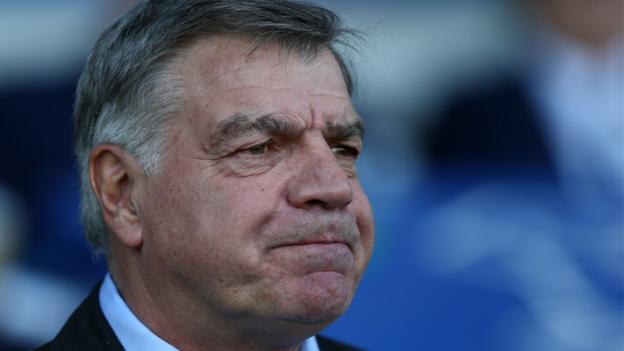
An undercover investigation that led to Sam Allardyce’s exit as England manager after 67 days was justified in the public interest, a report has found.

Allardyce left the England job in 2016 after the Daily Telegraph said he told reporters posing as businessmen how to “get around” player transfer rules.

The 63-year-old lodged 25 complaints about the story with the Independent Press Standards Organisation (Ipso).

Ipso found in the paper’s favour on 22 of those points.

Allardyce said that the level of subterfuge employed by the newspaper in its “Football for Sale” investigation had been unjustified and that it had published its findings in an inaccurate and misleading way.

Ipso’s complaints committee found that the Telegraph’s coverage was “generally accurate” but that the paper had breached the Editors’ Code on three specific points.

Allardyce was being filmed as part of a 10-month Telegraph investigation that separately unearthed evidence of bribery and corruption in British football.

The former West Ham, Blackburn and Everton manager claimed that the Football Association was too hasty in deciding he had breached his contract and that “entrapment won”.

Of the three complains upheld by Ipso, one related to a suggestion Allardyce had implied third parties could benefit from transfer fees, which was not true, and two wrongly implied Allardyce had offered to tell the Telegraph’s reporters how to break ownership rules. The Telegraph will publish a correction on Thursday.

However, Ipso ruled that the Telegraph’s use of subterfuge was justified.

What did Allardyce do?

In September 2016, Allardyce was filmed telling undercover reporters it was “not a problem” to bypass rules on third-party player ownership and claimed he knew of agents who were “doing it all the time”.

Third-party ownership – when someone other than the buying and selling club owns a stake in a player, typically an investor – has been banned by the Football Association and world football’s governing body Fifa.

It is a practice that has been described as a form of “slavery” by Michel Platini, the former president of European football’s governing body Uefa.

The Telegraph investigation claimed that a £400,000 deal was struck for Allardyce to represent the Far East organisation for which the reporters claimed to work, and to be a keynote speaker at events. Allardyce, though, stressed to the reporters he would first have to “run that by” his employers, the FA.

Allardyce also made fun of predecessor Roy Hodgson’s speech by referring to him as “Woy”, as well as criticising Gary Neville, one of Hodgson’s assistants, and making comments about FA president Prince William. He described another member of the Royal Family, Prince Harry, as a “naughty boy”.

The important elements of the complaint

  • The complaint made by Allardyce – along with his “financial adviser” Shane Moloney and his agent Mark Curtis – related to 15 articles published over six days, including news reports and comment pieces, which formed part of the newspaper’s 10-month “Football for Sale” campaign, which it described as an investigation into “corruption in English football”.
  • The complainants denied any prior wrongdoing which could have justified the subterfuge and said the publication of “serious and false claims” had grave consequences.
  • However, the Daily Telegraph said the level of subterfuge – which included hidden cameras and microphones and its reporters posing as businessmen from a fictitious company – had been essential to its investigation and that its actions were warranted and proportionate.
  • The paper said that, in spring 2015, an individual, who the newspaper had considered to be a credible and reliable source, had made a number of serious allegations against football managers, including Allardyce, and these allegations were later repeated by other sources, justifying further investigation.

Allardyce’s reaction to the ruling

In a statement, Allardyce said: “Had the FA stuck to their word and waited to see the Telegraph’s evidence (as they originally told me they would) they would have seen the allegations made against me were false.

‘It was of course the allegations about third-party ownership (TPO) that the FA stated were the reasons for my leaving. I will consider my position in this regard with my lawyers but I hope Martin Glenn [FA chief executive] and Greg Clarke [FA chairman] reflect on the lack of leadership they showed — not for the first time or I expect the last.”

The statement added: “Following a complaint made in November 2016 Ipso has now found (and stated that the Telegraph should make clear) that I did not suggest a model by which a third party could benefit from sharing in a player’s transfer fees; did not brief reporters on breaking the rules; and did not enter negotiations to provide guidance on how to get around rules on TPO.

“Ipso also found that the articles made no accusation of corruption against me and the Telegraph confirmed it made no such allegation.”

Analysis

Dan Roan, BBC Sport editor

Both sides in this dispute will hail this as a victory.

The Daily Telegraph will see this ruling as a qualified vindication of its journalism, with its use of subterfuge and secret filming crucially backed by Ipso. Its Complaints Committee found the coverage was generally accurate, and the investigation was justified in the public interest.

However, the fact that key inaccuracies in the paper’s reporting have been identified, with Ipso concluding that the proposal set out by Sam Allardyce “would not have resulted in the rules being broken”, means the former England manager can also claim to have won.

Significantly, this could also have an impact on his legal action for damages against the Football Association. In 2017, it was revealed that Allardyce was suing the governing body for the way it handled the fallout from his sacking as England manager in 2016.

He has always maintained the FA were too hasty in deciding he had breached his contract, and panicked in case further articles by the newspaper would further implicate him. That fear was unfounded however, and this ruling could strengthen Allardyce’s resolve, and improve his chances of success.

Sam Allardyce: 67 days in 67 seconds

The Telegraph’s statement

“On the major issues raised by Mr Allardyce, Ipso found for the Telegraph. It upheld our right to use subterfuge and secret filming, since there was a strong public interest in investigating and it was reasonable for the Telegraph to have believed that it could only obtain material evidence through subterfuge.

“Additionally, Ipso found that while it could not be demonstrated that Mr Allardyce had broken any Football Association rules, he appeared to show disregard for them and had spoken disrespectfully about them to people he had only just met. Further, although any intention of achieving any improper benefit was denied, he had explained a model that could reasonably be understood to result in a third party benefitting from a player’s transfer from one team to another.

“Save for three inaccuracies, two of which were contained in two comment articles, Ipso found that the coverage of the investigation was not in breach of clause one of the Code. The correction it has required the Telegraph to publish appears in our usual ‘Corrections and Clarifications’ spot today [Thursday].”

Read More

from Trusted eNews https://ift.tt/2N6rdSs
via IFTTT

Have war crimes been committed in Yemen?

“None have clean hands.”

That was the conclusion of UN human rights investigators who say all parties in the three-year conflict in Yemen may have committed war crimes

Their report said the governments of Saudi Arabia, the United Arab Emirates, and Yemen are guilty of human rights violations.

Air strikes by the Saudi-Emirati coalition are responsible for causing the most civilian casualties. But Houthi rebels are also blamed for recruiting child soldiers and using sexual abuse as a weapon of war.

The UN experts urged the international community to stop supplying weapons to those involved in the conflict that has killed at least 10,000 people – a figure that is likely far higher.

But do UN reports achieve anything? And will anyone ever be held to account for Yemen’s disaster?

Presenter: Hashem Ahelbarra

Guests:

Hussain Al Bukhaiti – Yemeni journalist

Elisabeth Kendall – senior research fellow at Pembroke College, Oxford University

Martha Mundy – retired professor of anthropology at the London School of Economics

Source: Al Jazeera News

Read More

from Trusted eNews https://ift.tt/2LFmBxB
via IFTTT

Trump claims his loss of Twitter followers proves anti-conservative bias

news image

Donald Trump is citing his "personal experience" of losing social media followers as evidence of anti-conservative bias from tech companies.
Donald Trump is citing his “personal experience” of losing social media followers as evidence of anti-conservative bias from tech companies.

Image: Robert Alexander/Getty Images

Just a day after taking to Twitter to complain that Google search results are biased against him, President Donald Trump is once again going after the search engine, as well as Twitter and Facebook.

This time, he’s citing his very personal experience of having lost followers on social media as evidence of a broad scale anti-conservative bias.

While talking to reporters at the White House today, President Trump was asked a question concerning his tweets from Monday. He’d accused Google of offering “RIGGED” search engine results to anyone looking up the phrase “Trump News.” The president complained that Google was deliberately censoring “Republican/Conservative media” and showing search results that were critical of him from what he called the “Fake News Media.” 

“I think that Google and Facebook and Twitter, I think they treat conservatives and Republicans very unfairly,” said Trump before explaining how this hits close to home: “I could tell you that I have personal experience. I have a lot of people on the various platforms.” 

How many?

“160 million people. I have numerous platforms. That’s a lot of people,” said Trump upon being informed by White House social media director Dan Scavino of his total follower count across his accounts on various social media platforms. “But I can tell you when things are different. And all of a sudden you lose people and you say, ‘Where did they go?’ They’ve taken off.”

“Now, I don’t know if it happens to the other side,” he said. The president then specifically called out Google, Facebook, and Twitter for this alleged anti-conservative bias.

Leaving aside the fact that Trump is conflating a search engine with social media platforms, from personal experience, we can say without a doubt that yes, people on the “other side” — Democrats, liberals, progressives, leftists — have lost Facebook and Twitter followers at one point in time. 

Not only can people choose to follow and unfollow whomever they want on Facebook, Twitter, and other social media platforms at anytime they like, we also have a very good example of this happening “to the other side” earlier this summer during the Twitter purge, when the site removed inactive accounts and fake profiles from users’ follower counts. When all was said and done, Barack Obama actually ended up losing many more followers than Donald Trump.

However, conservatives, backed up by the president of the United States, continue to accuse tech companies of unfounded bias. It’s something that’s really taken off in recent months, and doesn’t appear to be going anywhere anytime soon. 

In fact, at the time of this post, Donald Trump tweeted out this latest criticism of Google.

In case you were wondering, no, Google did not censor Trump’s State of the Union addresses. 

Https%3a%2f%2fblueprint api production.s3.amazonaws.com%2fuploads%2fvideo uploaders%2fdistribution thumb%2fimage%2f85967%2f5ac3511e 3588 47d0 817e 3d170500d683

Read More

from Trusted eNews https://ift.tt/2NsVA27
via IFTTT

Halle Berry calls out Prince Harry for having a picture of her in his dorm

news image

Halle Berry isn’t letting the Duke of Sussex slide.

When photos of Prince Harry’s boarding school dorm room recently resurfaced, the Oscar-winning actress spotted a cutout of herself pinned to an embroidered rug on the princeling’s wall and tweeted about it Wednesday.

“Ok #PrinceHarry, I see you!” Berry tweeted with a crying laughing emoji. She added, “#HalleBerryPosta @MissyElliott,” referencing the rapper’s memorable “Work It” lyric: “Don’t I look like a Halle Berry poster?”

Berry’s picture sits among other bikini-clad women in the photo of Prince Harry’s room at Eton College, along with a stereo, some normal teenage clutter, and a framed portrait of his mother, the late Princess Diana.

The prince was 18 when the photo was taken, not long after Berry won her Oscar for Monster’s Ball, and we can’t blame him for wanting his own Halle Berry poster.

Read More

from Trusted eNews https://ift.tt/2N6lvju
via IFTTT

Dramatic photo of Lake Michigan lightning bolt goes viral

news image

A dramatic photo of a thick lightning bolt illuminating the night sky as it seemingly touches Lake Michigan is racking up likes and shares on Facebook

Jack Brandenburg from Door County, Wisconsin, snapped the picture early Tuesday morning while aboard the Mesabi Miner, where he works as a mate. He used his Samsung cellphone camera and a long exposure 

The 1,004-foot ship was carrying iron ore from Duluth, Minnesota, to Indiana Harbor, Indiana.

“The weather wasn’t quite as dramatic as it looks in the picture though it was raining and lightning,” Chrissy Kadleck, who manages social media and public relations for the Ohio-based Interlake Steamship Company, said in an e-mail. 

Read more:

The Interlake Steamship Company has nine freighters that travel the Great Lakes delivering bulk raw materials for the power generation, steel-making and construction industries. 

The company  posted Brandenburg’s image on its Facebook page Tuesday morning. By Wednesday afternoon, it had been shared  6,300 times and liked more than 4,000 times. 

“This picture has blown all of our previous social media records out of the water,” Kadleck said. 

Contact Ann Zaniewski: 313-222-6594 or azaniewski@freepress.com. Follow her on Twitter: @AnnZaniewski. 


Read or Share this story: https://on.freep.com/2BXc3dI

Read More

from Trusted eNews https://ift.tt/2LFkb1U
via IFTTT

Design a site like this with WordPress.com
Get started