The best dating sites to find a connection this weekend

news image

Ah, online dating. If you’ve dated in the past 20 years, you’ve likely encountered one – or all – of the myriad dating sites in some form. 

And as we’ve increasingly moved our lives online, digital dating’s finally shed the stigma it once carried, leaving people free to meet others however they choose.

Julie Spira, dating expert and CEO of cyberdatingexpert.com says it wasn’t always so easy to meet people online. She would know: she’s been helping clients find love online since 1994.

“People didn’t have mobile phones and laptops, and the process was people would go home, log on slowly, see who had written to them and write back,” she says. “The courtship process was a lot slower, so it took quite a while to get from the first interaction to actually going on a date. Plus in those days, there was a stigma associated with online dating. You did not tell people you met your spouse, or partner, or even a date online.”

As we’ve changed, so has the online dating landscape. In the years since their initial launches, the forefathers of dating sites have forged ahead on mobile while holding on to their desktop roots.

Here are our top 5 dating site picks:

1. Best for international daters: Zoosk

What initially began as a Facebook app developed in 2007 has grown into a company with 35 million users in more than 80 countries

“Zoosk is fun and flirty,” Spira says.

Rather than asking its user for dating questions, Zoosk picks dates for its users based on a user’s on-site activity. If you shoot a message to Jake Doe, for example, Zoosk says it’ll use that action to determine which types of profiles to show you going forward.

“Zoosk is fun and flirty,” Spira says. “It does cater to a younger crowd – more of a millennial crowd.”

What you need to know:

  • Zoosk is free to sign up, but you’ll need a paid subscription to interact with other users. The company also uses its own form of currency called Zoosk coins that are available for purchase. Daters can use these for features like adding a “boost” to their own profiles in search or sending another user a “virtual gift.”

  • Users can browse the site on both desktop and mobile.

2. Best for all kinds of daters: Match

Before there were apps on which one could swipe right and left on a dizzying number of potential connections, there was Match. Yes, Match.com is the mother of all dating sites. Launched back in 1995, its decades in the business help it bring a ton of insight to the table for singles looking for all kinds of connections. 

“Match is the family brand,” Spira says.

And with its more recent push into mobile come a few new features that have helped make the ancient site more relevant, including its very own version of Stories, popularized by Snapchat and, uh … adopted by everyone else.

Match users can shoot little videos of their day or add voiceovers to photos and post them to their profiles for other users to check out.

“Match is the family brand,” Spira says. “It’s the one where someone could see their grandmother on, and someone could see their grandson on. It has the largest critical mass, and they have done a fabulous job of keeping up with the technology.”

What you need to know: 

  • It’s technically free to build a profile and browse for matches, but users who want to engage in direct messaging with their matches will have to upgrade to a paid membership, which costs on average about $20 per month. There’s also a free trial option.

  • Match users can browse on desktop and on mobile through its app.

  • Match also recently added Missed Connections which, like the app Happn, tells users who they’ve crossed paths with recently.

  • More than 25,000 new users join each day, apparently.

  • Spira says it “spans a lot of different relationship types,” from casual to serious.

3. Best for those looking to get hitched: eHarmony

Founded in 2000 by Dr. Neil Clark Warren, eHarmony is the site for serious daters. A spokesperson for the site says it’s been used by 54 million people, and is apparently responsible for 4 percent of U.S. marriages.. Users answer a lengthy questionnaire that helps eHarmony determine what it calls a “a select group of compatible matches with whom you can build a quality relationship.”

Spira says she’s always seen eHarmony as a “matrimonial dating site.”

“That doesn’t mean you’re going to walk down the aisle, but it certainly means that you’re looking for a very serious relationship that may or may not lead to marriage. It may lead to living together or at least being in an exclusive, committed relationship.”

What you need to know:

  • While it’s free to make an account, answer questions, and see your matches, you’ll need to select a paid membership to make contact. Prices start at $19.95 per month.

  • It’s available on both desktop and through its app.

  • It’s not recommended for users looking to date casually. “eHarmony will not cater to somebody who’s looking for a casual relationship or hookup– you will never see that on eHarmony,” Spira says.

4. Best for the opinionated: OkCupid

On OkCupid, users can offer a ton of information about themselves through the site’s Match Questions. Examples include: “Would you date someone who keeps a gun in the house?” or “Should the government require children be vaccinated for preventable diseases?” The answers to these questions help OkCupid determine which members might be a good match for one another. 

Of note: Per OkCupid’s own stats, liberal women in particular have luck on the site. And in 2017, the site offered users the chance to answer 50 “current events” questions that illuminate a user’s politics.

“OkCupid has been a favorite of mine for years,” Spira says. “I always liked OkCupid because they have a great critical mass and they have the thought-provoking questions that really allow you to think about how you feel about some of these issues, whether it’s politics or gun control, and how do you feel about your date’s answers. People spend a lot of time on site just perusing the questions that other people answer, and I like that. “

What you need to know:

  • OkCupid is free for the most part, but does offer some paid upgrades for features like increased search abilities, a “free automatic boost per day during prime time,” or even the option to browse privately in “Incognito Mode.”

  • It’s available on both desktop and mobile.

Plenty of Fish, sometime styled as POF, boasts 4 million daily active users, with 65,000 new users each day apparently, and claims users send 1 billion messages per month. After registering for POF, hopeful daters take a personality test that then helps POF determine what they call, “Your Relationship Needs.” Basically, it’s a way to make sure users know what they want from their love lives, and to ensure that it serves users with other profiles that meet that criteria.

One unusual quirk: The site recently launched a feature that allows users to message others through Google Home.

Says Spira: “They have a large user base, are a free site, and are very popular.”

What you need to know:

  • POF is pretty much entirely free, but does offer upgrades. Like Zoosk, POF offers “tokens” that let users “highlight” their profiles so that they stand out to other users, send a message that goes straight to the top of their inboxes, or send a “Super Yes” to users they’re particularly interested in.

  • It has both a desktop site, and an app.

Alright, daters – get your beautiful faces out there.

Https%3a%2f%2fvdist.aws.mashable.com%2fcms%2f2017%2f12%2f20c9b8c1 ba8b d824%2fthumb%2f00001

Read More

from Trusted eNews https://ift.tt/2wwSTp2
via IFTTT

Actor Gérard Depardieu accused of rape: Report

news image

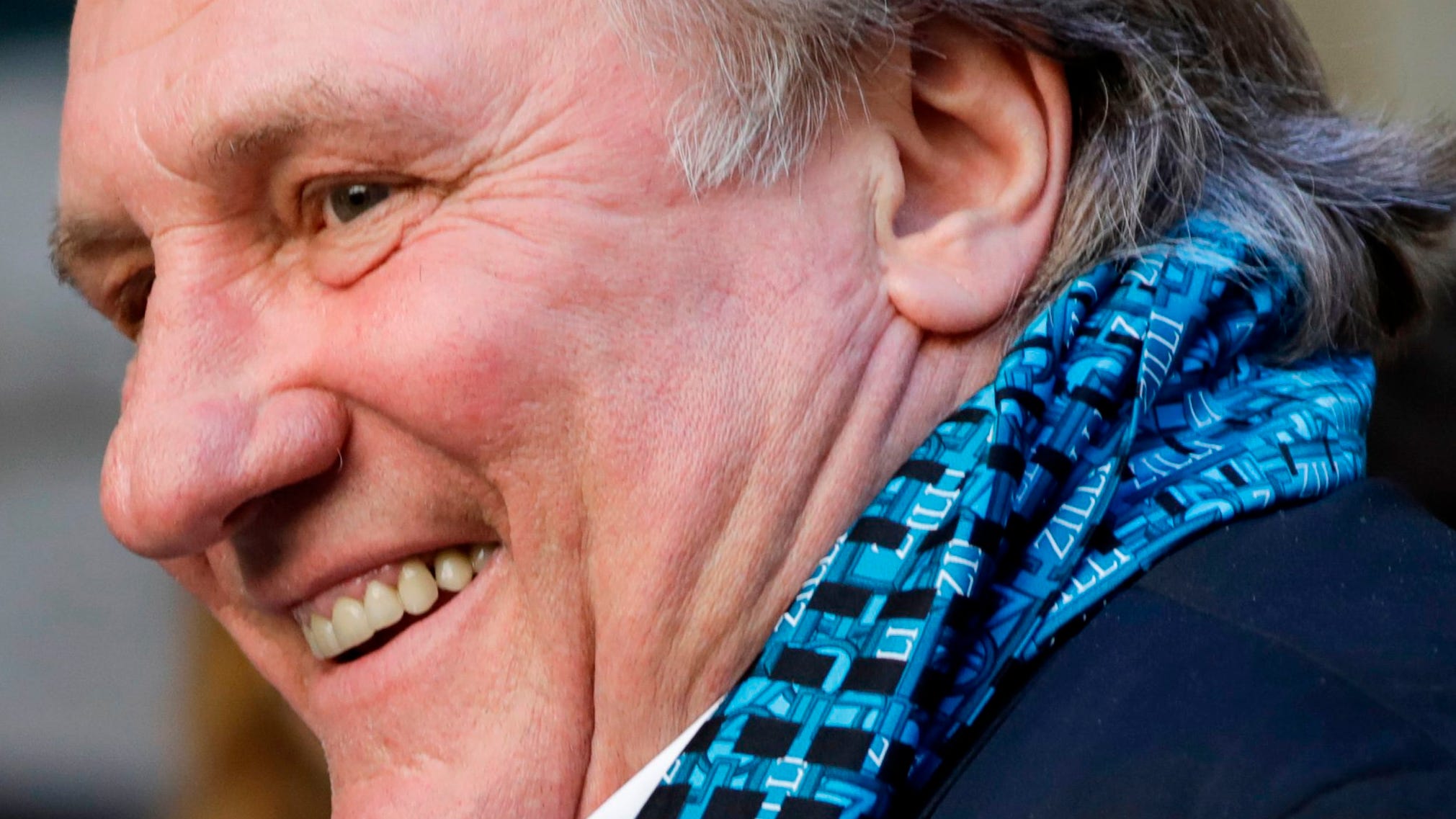
Gérard Depardieu, a French actor, was accused of rape and sexual assault by a woman to whom he was said to be offering professional guidance.

A unnamed woman, aged 22, filed a criminal complaint against Depardieu, 69, claiming he sexually assaulted her on Aug. 7 and Aug. 13, Holland-based news agency BNO News reports, citing French officials and sources speaking to Le Parisien newspaper.

“I regret the public nature of this process which poses a major prejudice to Gerard Depardieu, whose innocence I am convinced will be [recognized],” Depardieu’s lawyer Herve Termime told AFP News.

The lawyer noted that Depardieu “absolutely denies any attack, any rape.”

Termime’s office did not immediately respond to PEOPLE’s request for comment.

The alleged incidents reportedly occurred in Depardieu’s home, according to BNO News, that also reported the woman is an actress and dancer known to the actor, who was allegedly giving her professional advice. She reported her claims to police in Lambesc, and Paris prosecutors are now investigating, per the outlet.

Depardieu, a famed figure in French cinema, has worked on about 170 projects, including Les Valseuses (Going Places) and Welcome to New Yorkaccording to The Hollywood Reporter. He was nominated for an Academy Award for Best Actor for 1990’s Cyrano de Bergerac.

Depardieu made the news in 2011 when he urinated in the aisle of a plane in front of other passengers when he was told that he had to wait until takeoff to use the bathroom.

In a statement on Depardieu’s behalf, actor Edouard Baer told French press at the time, “Gerard was upset at this and offered to clean up the mess. He has prostate problems and it was very worrying and humiliating for him.”

Read More

from Trusted eNews https://ift.tt/2N5xr4W
via IFTTT

Joe Biden at John McCain memorial: ‘John’s code was ageless’

news image

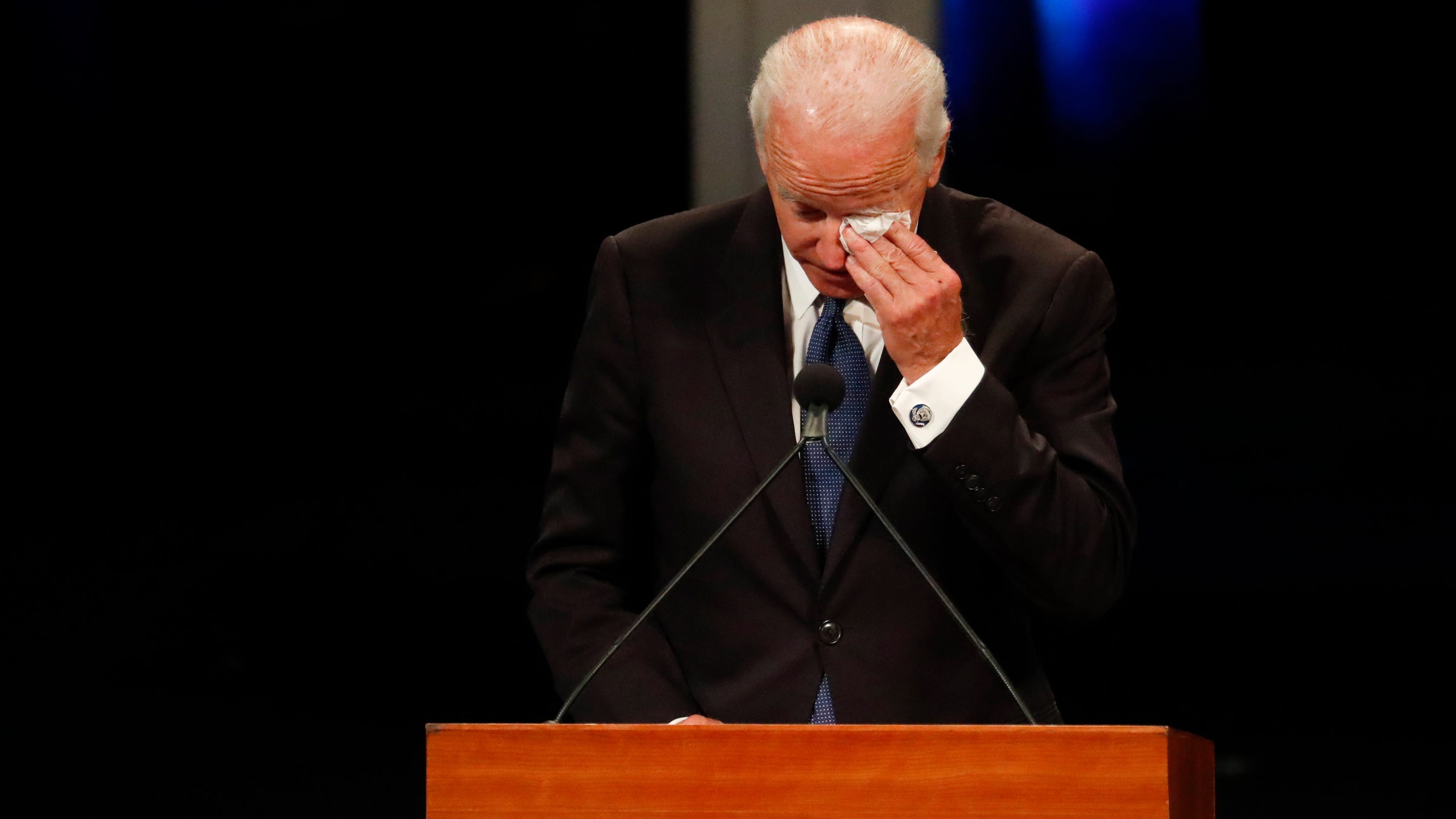
In a tribute that capped days of mourning in Arizona for John McCain, former Vice President Joe Biden said the senator exemplified values that will endure his passing.

Eulogizing his friend, with whom he traveled the world and on whom he leaned in times of personal pain, Biden spoke of the “McCain code,” values forged during his days in the Navy and lived every day afterward. Values that Biden said will endure.

With his voice rising inside the cavernous North Phoenix Baptist Church, Biden rejected the notion that McCain’s death reflects the end of an era.

“Things have changed so much in America, they look at him as if John came from another age because he lived by a different code, an ancient, antiquated code where honor, courage, character, integrity, duty mattered,” Biden said.

“The truth is John’s code was ageless, is ageless. It wasn’t about politics with John. You could disagree on substance,” Biden added. “It was about the underlying values that animated everything John did.”

RELATED: Joe Biden tribute to McCain: ‘John’s story is the American story’

“While others will miss his leadership, his passion, even his stubbornness, you’re going to miss that hand on your shoulder. The family, you’re going to miss the man,” Biden said.

“For that, there is no balm but time,” he said. “Time and your memories of a life lived well, lived fully.”

CLOSE

Former Vice President Joe Biden paid tribute to the late Sen. John McCain with stories about their friendship and service in the nation’s capital at a memorial service in Phoenix, Arizona. (Aug. 30)
AP

For them, Biden spoke not just as a Washington colleague, but someone who has lost a loved one to cancer. Biden’s son, Beau, died of a similar brain cancer in 2015 at age 46.

McCain’s funeral drew 24 members of the U.S. Senate and more than 3,000 others whose lives he touched.

It was the final public goodbye to Arizona for McCain, who died Saturday.

RELATED: Joe Biden to McCain children: ‘You are a living legacy’

The service began with McCain’s daughter Bridget reading verses from Ecclesiastes, “To every thing there is a season, and a time to every purpose under the heaven: A time to be born, a time to die.”

Former state Attorney General Grant Woods, a former chief of staff to McCain, then talked about his time working with him. Woods said McCain loved the people of Arizona, the diversity of the community and the state’s natural beauty.

CLOSE

Arizona Cardinals star Larry Fitzgerald gives a heartfelt speech at Senator John McCain’s memorial service in Phoenix.
USA TODAY

“If John McCain fell in love with Arizona, Arizona fell in love with John McCain. We ran a lot of races here, a lot of elections. We never lost,” Woods said. 

Woods kept those in the pews laughing, recounting stories about McCain’s occasionally errant driving and his legendary slight of a senior community.

He also reminded that McCain was a principled fighter for underdogs and for his country.

“He was resolute. He was courageous every step of the way,” Woods said. “He was America’s hero.”

RELATED: Grant Woods: Friendship with John McCain ‘the greatest honor of my life’

Tommy Espinoza, president of the Raza Development Fund Inc., remembered McCain as a good friend who kept his word.

McCain paid his first personal visit to his home, Espinoza said, on what turned out to be McCain’s birthday. McCain asked Espinoza to co-chair his first Senate campaign knowing he was a Democrat.

CLOSE

The motorcade escorting Sen. John McCain’s drives past scores of people lined Central Avenue on the way to North Phoenix Baptist Church, on Aug. 30, 2018.
Arizona Republic

And McCain showed an appreciation of the immigrant community, Espinoza said, adding in words with a political point:

“He did understand us. He understood all of us, whether it was white, black, brown or Asian. To him, it didn’t make any difference. What he knew is that we all make America great. We all make America great.”

RELATED: Tommy Espinoza: John McCain ‘really did reflect our country in its true form’

Arizona Cardinals wide receiver Larry Fitzgerald also paid tribute to McCain, saying it was an honor to know him.

“He was the epitome of toughness; and I do everything I can to avoid contact,” Fitzgerald said to laughs. “I have flowing locks; and, well, he didn’t. How does this unlikely pair become friends? I’ve asked myself the same question. You know what he answer is? That’s just who he is.”

CLOSE

Cindy McCain and family stand as Sen. John McCain is carried out of the Arizona State Capitol on Aug. 30, 2018.
Alyssa Williams, The Republic

“Ours was an unlikely friendship,” Fitzgerald said, “but it’s one that I will always cherish.”

The setting was the church where the McCain family has been part of the congregation for more than 25 years.

McCain attended the church for decades, though he was never baptized, according to a 2007 interview with McClatchy Newspapers. “I didn’t find it necessary to do so for my spiritual needs,” he said at the time.

RELATED:  Larry Fitzgerald: John McCain ‘cared about the substance of my heart’

He held at least one of his signature town halls there, in August 2009, when the nation was fixated on the then-pending Affordable Care Act, the legislation he saved in July 2017 with a dramatic thumbs down Senate vote.

But in 2009, when he opposed the bill, some in the crowd at the church denounced McCain. One man shouted, “Keep on lying McCain!” as he walked out of the event.

After the event, McCain offered an assessment of another Senate giant, Democrat Ted Kennedy, who had died the day before, from glioblastoma as well. He chose words similar to the ones now used to describe him.

“He was an honorable combatant. He fought for what he believed in,” McCain said in 2009. “I think he became an institution within the institution, and we’ll all miss him.”

Follow our live updates on the memorial throughout the day.

MORE ON MCCAIN:

CLOSE

Sen. John McCain’s children Doug, Sidney, Jimmy and Jack McCain, greet people who came to pay their respects to their father at the state capitol.
David Wallace, Arizona Republic

Read or Share this story: https://azc.cc/2LGCDHu

Read More

from Trusted eNews https://ift.tt/2wwSJOs
via IFTTT

Lindsey Graham: Trump’s negative remarks about John McCain ‘pisses me off to no end’

news image

WASHINGTON – John McCain’s best friend in the Senate, Lindsey Graham of South Carolina, said Thursday that President Donald Trump’s negative remarks about McCain “pisses me off to no end.”

“It bothers me greatly when the president says things about John McCain. It pisses me off to no end, and I let the president know it,” the Republican said on CBS This Morning.

Trump frequently criticized McCain, even questioning whether the decorated Navy pilot was really a war hero since he was captured by the North Vietnamese when his plane was shot down during the Vietnam War. McCain spent more than five years as a POW in Hanoi.

“He’s not a war hero,” Trump said in July 2015. “He was a war hero because he was captured. I like people who weren’t captured.”

More: President Donald Trump’s brevity on John McCain speaks volumes about their strained relationship

More: Report: President Trump scrapped official statement praising Sen. John McCain

More: White House flags return to half-staff to honor Sen. John McCain after outcry

As president, Trump repeatedly attacked McCain for the senator’s decisive 2017 vote against repealing Obamacare. Trump repeated that criticism at campaign rallies even after McCain was diagnosed with terminal cancer. The senator’s daughter, Meghan McCain, called Trump’s behavior “gross” in June.

Graham also said Thursday that he found Trump’s handling of McCain’s death “disturbing.” The president initially ignored tradition by refusing to immediately put out a proclamation honoring McCain, who died last Saturday of brain cancer.

The White House also raised its flags from half-staff to full-staff on Monday until heavy criticism from veterans groups pressured them to lower the flags again. The flags are now scheduled to remain lowered until after McCain is buried Sunday at the Naval Academy in Annapolis, Md. 

“The way he’s handled the passing of John is just, was disturbing,” Graham said about Trump on CBS. “We finally got it right. … I am not going to give up on the idea of working with this president. The best way I can honor John McCain is help my country.”

Graham said he didn’t call the president about bringing the flag back down to half-staff but “I called some people around him.”

Asked what Trump could learn from McCain, Graham said, “What I would tell the president: you’ve got a lot of people you think are treating you unfairly. Fight back.”

“But you’re going to have to be a big man in a big office,” Graham said. “John McCain was a big man, worthy of a big country. Mr. President, you need to be the big man that the presidency requires.”

Autoplay

Show Thumbnails

Show Captions


Read or Share this story: https://usat.ly/2PRdT2M

Read More

from Trusted eNews https://ift.tt/2ooJaxm
via IFTTT

Listen: US Open day four – Kerber taken to third set

news image

Listen to live US Open – Roger Federer, Novak Djokovic & Caroline Wozniacki in action – BBC Sport


<!–


<!–

<!–
<!–

<!–
<!–

<!–

<!–

<!–


Summary

  1. Benoit Paire v Roger Federer in second round
  2. Fourth seed Angelique Kerber beats Johanna Larsson 6-2 5-7 6-4 to reach third round
  3. Novak Djokovic v Tennys Sandgren (00:00 BST)
  4. Other matches include Lesia Tsurenko v Caroline Wozniacki
  5. Nicolas Mahut v Alexander Zverev & Gael Monfils v Kei Nishikori
  6. Use the play icon to listen to BBC Sport Radio 5 live sports extra commentary


Read More

from Trusted eNews https://ift.tt/2LFJNMc
via IFTTT

Unpacking South Africa’s fraught and complex land debate

news image

Johannesburg, South Africa – Last week, US President Donald Trump ignited a firestorm when he decided to wade into the sensitive land debate in South Africa.

Trump wrote in a tweet that he had asked Mike Pompeo, the US secretary of state, to look into “land and farm seizures” and “large scale killings of white farmers”.

Trump’s comment came after he watched a six-minute segment on the issue on Fox News, a conservative US broadcaster. The president was immediately condemned by the South African government and his comments raised the ire of many South Africans, a majority of whom, 24 years after the end of apartheid, are still waiting for land reform to take place.

The question of land remains among the most sensitive and divisive in the country.

Apartheid was, at its core, a system of separate and discriminatory development, with black South Africans either dispossessed or denied access to land, infrastructure and resources, while their white counterparts were given preferential treatment and access to the economy.

The legacies of apartheid persist to this day, with social and economic inequality preserved and perpetuated due to the lack of economic transformation.

Al Jazeera answers the key questions about the fraught and complicated land debate in the country.

Who owns land in South Africa?

Following the end of apartheid in 1994, the ruling African National Congress (ANC) said it would redistribute 30 percent of white-owned commercial farmland to black farmers.

“Our estimate is that [today] 9.7 percent of white commercial farmland has been transferred to black people since 1994,” Ruth Hall, from the Institute of Poverty, Land and Agarian Studies (Plaas), based in Cape Town, says.

Black South Africans black own more than 50 percent of agricultural land in just two of the country’s nine provinces [File: Siphiwe Sibeko/Reuters]

It is estimated that white South Africans, who make up around nine percent of the population, own around 73 percent of commercial agricultural land.

As it stands, black people own more than 50 percent of agricultural land in just two of the country’s nine provinces.

Are white farmers being targeted and murdered?

Claims that white farmers are being disproportionately targeted and killed, or that a “white genocide” is taking place in South Africa have been repeatedly refuted.

Agri SA, an agricultural industry association based in Pretoria, reported in June that 47 farmers were killed between 2017 and 2018 – the lowest in 20 years. Omri van Zyl, Agri SA’s executive director, told Al Jazeera that despite the numbers, the organisation still feels that there are a “disproportionate number of farm murders”.

Between 2016 and 2017, there were 19,016 murders in South Africa.

This translates into a murder rate of 34.1 people per 100,000 people of the population. Police statistics indicate that during the same period, there were 74 farm murders.

These include farmers and workers of all race groups.

Afriforum, a right-wing lobby group that has both welcomed and taken credit for informing Trump’s tweet, claims that the murders of farmers translates into a murder rate of 156 per 100,000 people, or 4.5 times higher chance of getting murdered than the average South African.

Fact-checking website Africheck has repeatedly refuted Afriforum’s statistics, arguing that given that it is not clear how many people live and work on farms, the group’s numbers are fundamentally flawed.

There remains no evidence to suggest that farmers as a group suffer more attacks than any other demographic in the country.

Why has land reform been so slow?

Since 1994, the government has followed a “willing-seller, willing buyer” model in which it has bought white-owned farms for redistribution. But this process has been slow, with the ANC accusing landowners of inflating farm prices and therefore hindering redistribution.

Experts, meanwhile, say the primary reason land reform has been slow is due to a lack of political will.

“Land reform has never accounted for more than one percent of the national budget. And this means the programme has been constrained by a limited budget.” Hall, from Plaas, says.

“The second reason is that the department of rural development is extremely weak. We don’t have a lot of state capacity to implement their policies … We estimate that six percent of all commercial farms are bought and sold each year, so we could be going a lot faster [if there was more money].”

Likewise, Tembeka Ngcukaitobi, author of The land is ours: Black Lawyers and the Birth of Constitutionalism in South Africa, says that the law was designed to help government redistribute land but “no explanation has been given as to why this has not happened”.

In other words, “the ANC tolerated a slow and failing land programme for more than two decades”, Hall adds.

Is the constitution to blame?

The ANC has been consistently reprimanded for its slow land reform policy. Pressure has been building on the ruling party, especially from the Economic Freedom Fighters (EFF), the third largest party in the country, who have turned the land issue into a key election campaign topic.

With national elections due to take place in 2019, the ANC are at pains to illustrate that they are taking the concerns of the large black majority – who remain poor, landless and on the fringes of the economy – on board.

“This has become a party political issue for the first time, and people are aligning themselves with parties based on their position on land,” Hall says.

At its national conference in December 2017, the ANC resolved to expropriate land without compensation as a means to speed up land reform. This then ushered in talk of amending Section 25 of the constitution in order to allow expropriation without compensation to take place.

“It has become pertinently clear that our people want the constitution to be more explicit about expropriation of land without compensation as demonstrated in the public hearings,” party leader and South African President Cyril Ramaphosa said.

Ramaphosa has pledged to amend the constitution to allow for the expropriation of land without compensation [File: Mike Hutchings/Reuters]

But legal experts say the constitution is not the problem.

“My own sense is that they are scapegoating the constitution for their failures… I don’t think the problem is legal, it is political,” Ngcukaitobi, the author, says.

“If, after 24 years of an enabling framework, you’ve done nothing to enforce it, it is very difficult to explain to the public why you have done nothing to enforce it … it easier to say the constitution constrains the government.”

Do black South Africans want white-owned farms?

The ANC’s call for amending the constitution has also ushered in hysteria, rampant misinformation and fake news, culminating in Trump’s tweet last week.

Experts say that while the narrative has centred around the fate of white farmers and the seizure of commercial farms, mostly due to the lobbying of Afriforum, the reality is that most black South Africans are not interested in rural land.

“Unfortunately, the conversation is being framed around white farmers … but white farmers will be largely unaffected, because the demand for land is in the urban areas,” Ngcukaitobi says.

Van Zyl, from Agri SA, confirmed that the demand for urban land was on the rise. He added that while farms were not being seized as reported, land occupations closer to urban areas were taking place.

More than 60 percent of South Africans now live in urban areas and the struggle over land is no longer a question of resolving historical dispossession but a matter of inclusion in the country’s economy.

“The political heart of the matter is located in the urban areas … in particular the big metros,” Hall says.

“Remember, apartheid kept black people out of the cities.”

With urban housing either too expensive or low-cost housing too far and inaccessible from the city, millions of black South Africans since the end of apartheid have resorted to occupying vacant plots of land, often belonging to the city or local government.

“People don’t look at land as purely a hard asset. People look at land as a mechanism to be closer to where they work,” Ngcukaitobi says.

“This is where the future of contestation over land is headed,” Ngcukaitobi adds.

At least 11 percent of all households in the country’s urban areas are located in informal settlements. In Gauteng province, considered South Africa’s economic hub, 19 percent of households are in informal settlements – often without proper water, sanitation or legal electricity connections. It is this demographic who consistently face eviction and displacement.

“Our cities are poverty traps 24 years after apartheid,” says Steven Friedman, director of the Centre for the Study of Democracy at the University of Johannesburg.

Friedman says that if one looks at other places around the world where progress has been made in the fight against poverty, one of the common dominators is the proximity of poor people to economic hubs. “Until we change that [here], the poor will simply continue selling things to other poor people,” Friedman adds.

Hall says that ordinary black people want action over land because they are well aware that it is they who are most likely to suffer displacement or dispossession.

“We see it in the urban areas: people from informal settlements are evicted by the state. On commercial farms, large numbers of black people are evicted by white farmers,” Hall says.

She cites cases where commercial farmers evict black workers and their families who have lived on these farms for generations due to financial pressure amid worsening economic conditions, as well as political reasons due to the perceived fear of robberies and violence.

“The rate at which black people are kicked out of commercial farms is faster than that rate at which they accessing land,” says Hall.

“Then in the communal areas, the traditional authorities are evicting people after they get into deals with mining companies … across these three spaces, the cities, the farms, communal areas, we see a process of black people being pushed off land and left in much more vulnerable and insecure positions.”

More than 60 percent of South Africans now live in urban areas, such as Cape Town (pictured) [File: Mike Hutchings/Reuters]

Ngcukaitobi warns that indiscriminate use of expropriation without compensation would hurt poor black families more than it would white families.

He cites the experience of the country’s preparation for the World Cup in 2010, where black families were forced to move to make way for a rail network, and the urban poor were pushed out of the cities in a bid to beautify the metros ahead of the football tournament.

In Durban, some families who were moved to make way for the stadiums are still living in transit camps.

“The likely targets of expropriation without compensation will be the poor and vulnerable and not white people in the suburbs, and we have to put in measures to ensure this does not happen,” Ngcukaitobi says.

Will South Africa become the ‘next Zimbabwe’?

Many commentators continue to point at the experiences of neighbouring Zimbabwe when the question of land reform is debated in South Africa. Former Zimbabwean President Robert Mugabe embarked on a series of land grabs in the early 2000s that led to the collapse of the country’s economy.

Even though there are concerns that land could be transferred to the politically connected, like in Zimbabwe, experts are clear that the situation in South Africa is very different, pointing out to the country’s vigorous civil society and independent judiciary as bulwarks of democracy.

“White people like the idea that they are being targeted,” Ngcukaitobi says, “but the reality is that this is not the case and that black people’s needs have moved from the countryside to the urban areas”.

Last week, David Mabuza, the country’s deputy president, looked to allay fears when he addressed the Land Summit in the northern Limpopo province. He said that no farms would be invaded or grabbed and that farmers did not have to fear for their well-being.

“As the leadership of the ANC and government, we are clear that the implementation of land reform measures must not result in social fractures and racial polarisation,” Mabuza said.

Responding to the address, van Zyl, the Agri SA executive director, said he believed Mabuza’s commitment was “authentic”.

“The problem is that in the rural areas, they [government] are not there. And that means its a practical issue,” van Zyl said.

“Farmers understand that transformation has to happen, and a lot of farmers are doing it already. But we need incentives and mechanisms … it has to be done in a commercially sound way, otherwise everything will implode.”

But it is not clear how government will decide who will get these newly released plots and for experts observing the process, this is what will matter most.

“There has been an astonishing lack of transparency about who the beneficiaries will be,” Ngcukaitobi says. “It has to be transparent.” 

Friedman, meanwhile, says that “Afriforum, like Trump, are only interested in protecting whiteness”.

The rage over land reform among ordinary South Africans is also a manifestation of a larger concern. In 2017, 30 percent of the black South Africans were unemployed compared to 6.7 percent of whites.

“What black South Africans are actually talking about [when they refer to land] is their sense that this is a minority-controlled economy,” Friedman says.

“This is what lies at the heart of a debate that is still not very coherent or straightforward.”

Read More

from Trusted eNews https://ift.tt/2N63bqk
via IFTTT

A seal became adorably obsessed with a butterfly at the Oregon Zoo

news image

Kaya, a harbor seal at the Oregon Zoo, became transfixed by a butterfly flying near her enclosure — and it is the most perfect thing I have ever seen.

Senior Keeper Micah Reese captured the moment while cleaning her enclosure, and shared the footage on Facebook last week. 

“Here’s something special that made my heart smile today,” Reese wrote in his caption. “I walked down to viewing before our next dive to check out our work after cleaning [the] seal exhibit this morning, and I found Kaya playing with her new friend.”

In the video, sweet sea angel Kaya can be seen following the butterfly as it flies by her tank. 

Kaya, completely mesmerized by the butterfly presses her nose up against the tank to get a better look. She even waves at the fluttering bug toward the end of the video, and it’s almost too much to handle.

Thank you Kaya and Reese for this wondrous gift. 

Read More

from Trusted eNews https://ift.tt/2NyO0TJ
via IFTTT

Doctor Sleep casts a ‘shining’ young star as Abra Stone

news image

Doctor Sleep (Movie)

type
Movie
Genre
Horror
release date
01/24/20
performer
Ewan McGregor
director
Mike Flanagan
Current Status
In Season

The Doctor Sleep movie has found its Abra Stone. Kyliegh Curran, the young actress who appeared as Nala in Broadway’s The Lion King and in the indie film I Can I Will I Did, has been cast in the key role for the film that’s based on Stephen King’s sequel to The Shining.

In the book, which was published in 2013, Abra is a girl with “the shining,” the same kind of psychic ability Danny Torrance (Ewan McGregor) retains.

Years after that fateful stay in the Overlook Hotel, Danny is all grown up and working as a hospice nurse. He’s using his powers to ease the suffering of patients, though he struggles with the same internal demons that afflicted his father. It’s during this time that he meets Abra, the new target of a nefarious cult that tortures children with “the shining” in order to feed off the “steam” they produce.

“Very excited about our Abra… shine on, Kyliegh,” writer-director Mike Flanagan confirmed on Twitter.

Courtesy Warner Bros.; Scribner

As King himself emphasized to EW when Doctor Sleep was first published, the story is a sequel to The Shining novel and not Stanley Kubrick’s film. “At the end of the Kubrick film, the Overlook is still there. It just kind of freezes. But at the end of the book, it burns down,” he said.

Curran joins McGregor in a cast that also features Carl Lumbly, Alex Essoe, and Zahn McClarnon in key roles, as well as Mission: Impossible – Fallout‘s Rebecca Ferguson as Rose the Hat, the leader of the cult.

Doctor Sleep will hit theaters on Jan. 24, 2020.

Deadline was the first to report the news.

Read More

from Trusted eNews https://ift.tt/2N0Zpi6
via IFTTT

NSC aide taken from White House in ambulance

news image

Share This Story!

Let friends in your social network know what you are reading about

NSC aide taken from White House in ambulance

NSC staffer taken from White House in ambulance

Loading…Post to Facebook

Posted!

A link has been posted to your Facebook feed.

WASHINGTON – A staff member for the National Security Council was taken by ambulance from the White House on Thursday.

The ambulance pulled up outside the West Wing at around 2 p.m. ET.

The identity of the staff member was unavailable. A spokesperson for the National Security Council declined to comment about the incident or provide information.  

Led by the national security adviser, John Bolton, the NSC advises the president on intelligence and military matters. It was created in 1947.


Read or Share this story: https://usat.ly/2BYisVS

Read More

from Trusted eNews https://ift.tt/2LH3D9Z
via IFTTT

Reports: French film star Gerard Depardieu ‘absolutely disputes’ raping young actress

news image

Actor Gerard Depardieu adamantly denies a young actress’ allegation that he raped her earlier this month, CNN and Britain’s The Guardian report.

On Monday, the woman, identified as an actress and dancer in her early 20s, filed a police report at a station in southeastern France saying she had been sexually abused on two separate occasions by the 69-year-old star at his home in Paris on Aug. 7 and 13. Police and prosecutors in Aix-en-Provence referred the case to investigators in Paris, The Guardian reports.

Depardieu, a French cinema icon and a friend of the woman’s father, had taken the aspiring actress under his wing. She said the assaults took place while they were rehearsing for a play. 

French-language media outlets Le Parisien and TV news channel BFM were the first to report the story. When the accuser was contacted by Le Parisien, a family member told the newspaper she did not wish to speak to the media.

Depardieu’s attorney, Herve Temime, confirmed to BFM that a report was filed Monday and referred to the Paris prosecutor two days later. He said his client was “totally stunned” by the allegation but acknowledges knowing the woman.

Temime told The Guardian that the his client “absolutely” refuted any accusation of assault or rape. “I regret the public nature of this process, which poses a major prejudice to Gerard Depardieu, whose innocence I am convinced will be recognized,” the attoney added.  

This is not the first time Depardieu’s behavior has been called into question. During the 1991 award season, when he was an Oscar nominee for his lead role in “Cyrano de Bergerac,” a Time reporter asked him to clarify a comment about having had “plenty of rapes, too many to count.” Asked if he had taken part in rapes, he said yes, adding the caveat, “but it was absolutely normal in those circumstances. That was part of my childhood.” 

After the Time interview, conducted in French, sparked outrage, the actor said he’d been mistranslated and had only witnessed rapes. He demanded a retraction, threatening a libel suit. The magazine refused, citing its recording of the conversation.

Autoplay

Show Thumbnails

Show Captions


Read or Share this story: https://usat.ly/2LJxRsO

Read More

from Trusted eNews https://ift.tt/2N5ZUHC
via IFTTT

Design a site like this with WordPress.com
Get started