Jeff and Nancy Heintz were driving on Interstate 5 from Seattle, Washington, to their home in Buckeye, Arizona, when they saw a large cloud of smoke in the distance.
It was Wednesday afternoon, and the Delta Fire was bearing down on the busy freeway.
Southbound traffic was still flowing smoothly. But 20 minutes later, it came to a standstill.
“It almost looked like an atomic cloud,” Jeff Heintz said. “I thought it was the Carr Fire.”
U.S. Forest Service officials said the fire broke out about 1 p.m. north of Lakehead, about 25 miles north of Redding. It quickly spread to the surrounding forest. In less than 24 hours, the fire charred more than 15,000 acres.
Smoke was getting heavy in front of their vehicle. They were still north of Lakehead, and the wind was blowing from the south, moving the fire toward them.
A huge wall of flames bore down, “burning trees like paper” in their path, Heintz said.
“All of the sudden, we saw big smoke and flames coming over the hill,” he said. “I was starting to get nervous when I saw the flames.”
A line of 25-30 vehicles in front of them prevented the Heintzes from going forward. And vehicles that came to a stop behind them essentially blocked their vehicle in, he said.
“We were just at the mercy of whatever happened,” Heintz said.
He estimated the flames were about 1,000 feet in front of them and approaching fast.
“My wife at this point was pretty hysterical, along with some other people who had left their cars and started to run,” he said.
Numerous photos and videos of the scene showed the fire crowning out in the tops of pine trees. The forest service said flame lengths reached as high as 300 feet.
As the flames raced toward them, the Heintzes found a way to escape.
A concrete divider separates the north and southbound lanes of the freeway in the area where the Heintzes were stopped. There was a break in the barrier just large enough for their vehicle to fit through, he said. They fled through the gap and went north.
“Once we were safe and our hearts started to slow down a little bit, our hearts went out to the people in front of us,” Heintz said of the others trapped on the freeway.
“It was quite a harrowing experience,” he said. “It got to the point where we were really close to getting out of our car and starting to run.”
The California Highway Patrol did not have an official count of the number of vehicles burned in the fire. But on Wednesday night, after the fire had moved through the area, two burned big rigs remained in the roadway. A few others also were abandoned on the freeway, which was closed to traffic.
A forest service spokeswoman said Wednesday night she hadn’t heard of any injuries connected to the fire.
The Heintzes had seen wildfires before and had driven through areas where brush burned along the sides of the road. But this was much more intense, Heintz said.
Lewes men’s and women’s teams already share a stadium
Women’s Super League
Date: Sunday, 9 September
Coverage: Watch Arsenal v Liverpool at 12:30 BST on BBC Sport online, the BBC Sport app and connected TVs. Listen to live commentary of Chelsea v Manchester City on BBC Radio 5 live at 14:00.
Is it feasible that the likes of Manchester United, Arsenal and Chelsea should have an ambition to pay women the same as men?
It should be a given, says Charlie Dobres, a volunteer director at Lewes FC, who are pioneering equality at their club.
In fact, they claim to be the only club side in the world paying their men and women the same.
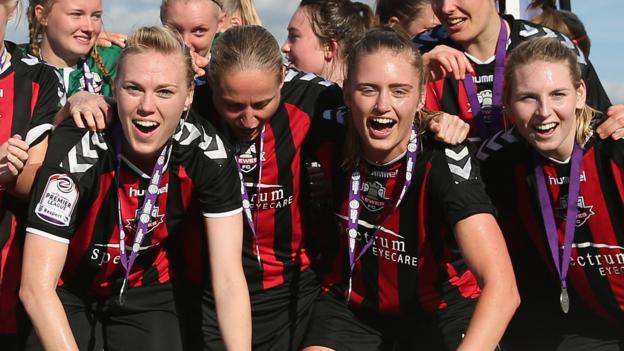
Lewes introduced equalised playing budgets last July, and both sides have since achieved success – Lewes’ men won their league and were promoted to the seventh tier (Isthmian League Premier Division), while the women were selected to be part of the newly formed Women’s Championship.
As Lewes Women prepare for their opening game of the season against Millwall on Sunday, BBC Sport went to the quiet East Sussex club leading this revolution on equality in football.
The Lewes vision
“You can’t say it’s impossible any more because we’ve done it.”
Lewes Women share their ground with the men’s team, so the move to equal pay was “the final thing to put in place”.
This season, the Women’s Super League is fully professional for the first time, while players in the Championship will be guaranteed eight hours of training a week.
In May, Lewes’ bid to be part of the new Women’s Championship was accepted, meaning they will face Manchester United Women and Tottenham Ladies in the league, and later in September they will play Arsenal Women in the Continental Cup.
“Obviously within a squad different people get different amounts, but they have the same allocation of resources,” says Dobres.
“To be clear, it’s not just some sort of moral crusade – although we do feel it’s completely how it should be – but also a very straightforward business decision. Men’s football is a relatively mature product, whereas women’s football is an incredibly exciting, fast-moving thing to be involved in.”
Dobres accepts their pioneering stance on equality was “probably part of the mood music” behind the Football Association’s decision to promote them.
But should the women actually be receiving more than the men, as they are higher up their respective football pyramid?
“We see it as a bit of a journey whereby we start by equalising things. If the women or the men forge ahead and bring in greater revenues, that’s money that comes to the whole family – think of it as a brother and sister – and we’ll allocate it accordingly,” added Dobres.
Since last summer both the New Zealand and Norwegian football associations have brought in equal pay for their national sides, but in England Lewes have broken the mould.
“Is it feasible that Manchester United or Chelsea or Arsenal Women will equalise their playing budgets by the end of next season? You’d have to be a fool to say that,” says Dobres.
“But you start with that commitment. That’s what it takes.
“We can do it much more quickly because the numbers here are so much smaller. But my challenge is: ‘I’m not saying you can do it next year but surely you should want to do it?’
“Try and pick a harder place on the planet to do it than in football, a heavily male-dominated sport. I think it’s a fantastic challenge to try and pull this off.”
The players
Lewes won the FA Women’s Premier League Plate in 2017, beating Huddersfield 4-0 in the final
“We feel like a massive part of the club, not just an add-on or a must have.”
Avilla Bergin joined Lewes shortly after they announced their equal-pay strategy last summer, and says that “straight away it makes you feel valued”.
Captain Katie McIntyre has been at the club since 2011 and was “really proud” when the club adopted equal pay.
She explains the money helps with petrol expenses and shopping, but is not enough to be able to move to working part-time. McIntyre works Monday to Friday, 9am until 5.30pm, then trains in the evenings on Tuesdays, Wednesdays and Fridays.
However, she says: “Knowing they’ve tried to narrow that gap is enough.”
Defender Rebecca Thompson says many of the players were shocked by the decision.
“You always know that women’s football is going in the right direction, small increments at a time,” she said. “But you don’t think this is going to happen, especially at a club like Lewes.
“Hopefully they’re paving the way for the future in terms of what women’s football can rise to.”
Nobbs & fellow players excited for new WSL season
The fans
“Some people said: ‘If you do this, people are going to turn away from you.’”
Lewes FC is a 100% fan-owned club, with all owners paying £30 a season to have a say in how the club is run.
The stance on equality was not universally accepted, and Dobres says that “there are some people on the terraces watching men’s football who don’t agree with it”.
However, she adds: “Attendances at men’s games are already up by 20-25% on last season.
“The women are starting from a low base, but last season we doubled attendances. We got a gate of nearly 1,000 for a women’s game when we played Everton in the FA Cup. That clearly demonstrates what’s available.”
Introducing pay parity has drawn a new demographic of fans to the club, such as Dobres’ wife Karen, who had never been to see football until she heard about their commitment to equality. She is now volunteer press officer for the team.
“I’d always thought of football as a men’s game and something that was a drone on the TV in the background,” Karen Dobres said.
“I came to a match and I really enjoyed seeing the women playing football. It was like a breath of fresh air because I was thinking of my daughter and thought what fantastic role models they are.”
She does not watch the men’s team, saying she cannot “relate in the same way”, but says watching the women makes her feel “stronger in herself”.
“It’s the centenary of suffrage so there’s been a lot of awareness in the public about the inequality of the sexes, and I was thinking about the #metoo campaign and the #timesup campaign and quite often you see all this in the media and you feel powerless,” she added.
“But there is something we can do – because we can support what Lewes are pioneering here.”
The biggest argument against equal pay in football is that women’s football doesn’t generate the same revenue, but Charlie Dobres points to the time it was banned by the FA as a reason for that.
“In the year it was banned, even though the men’s football had already been re-established in the league for two or three years [after the war], more people watched women’s football,” said Charlie Dobres.
“The men’s game has a bit of a lead – but give it a bit more time and I think the women’s game will catch up.
“More importantly, shouldn’t everyone want it to?”
UN-backed talks between Yemen’s warring parties ended before properly getting off the ground, with the UN envoy acknowledging that it had not been possible to convince the rebels to come to Geneva.
“We didn’t manage to get… the [Houthi] delegation from Sanaa to come here… We just didn’t make it,” Martin Griffiths told reporters in Geneva on Saturday.
He said it was “too early to say when next round of consultations will take place”.
Yemeni government representatives who had flown to Geneva to take part in the long-awaited UN-sponsored peace talks said they would return home on Saturday after the rebels failed to show up.
Speaking on condition of anonymity, the government representative said the delegation had decided to return home after the talks were put on hold for three days.
The Houthi rebel delegation had declined to attend until the United Nations met several demands including providing guarantees it would be able to return to the Yemeni capital Sanaa afterwards.
Editor’s note: Reporter Dave Boucher was one of seven state-required media witnesses at Irick’s execution.
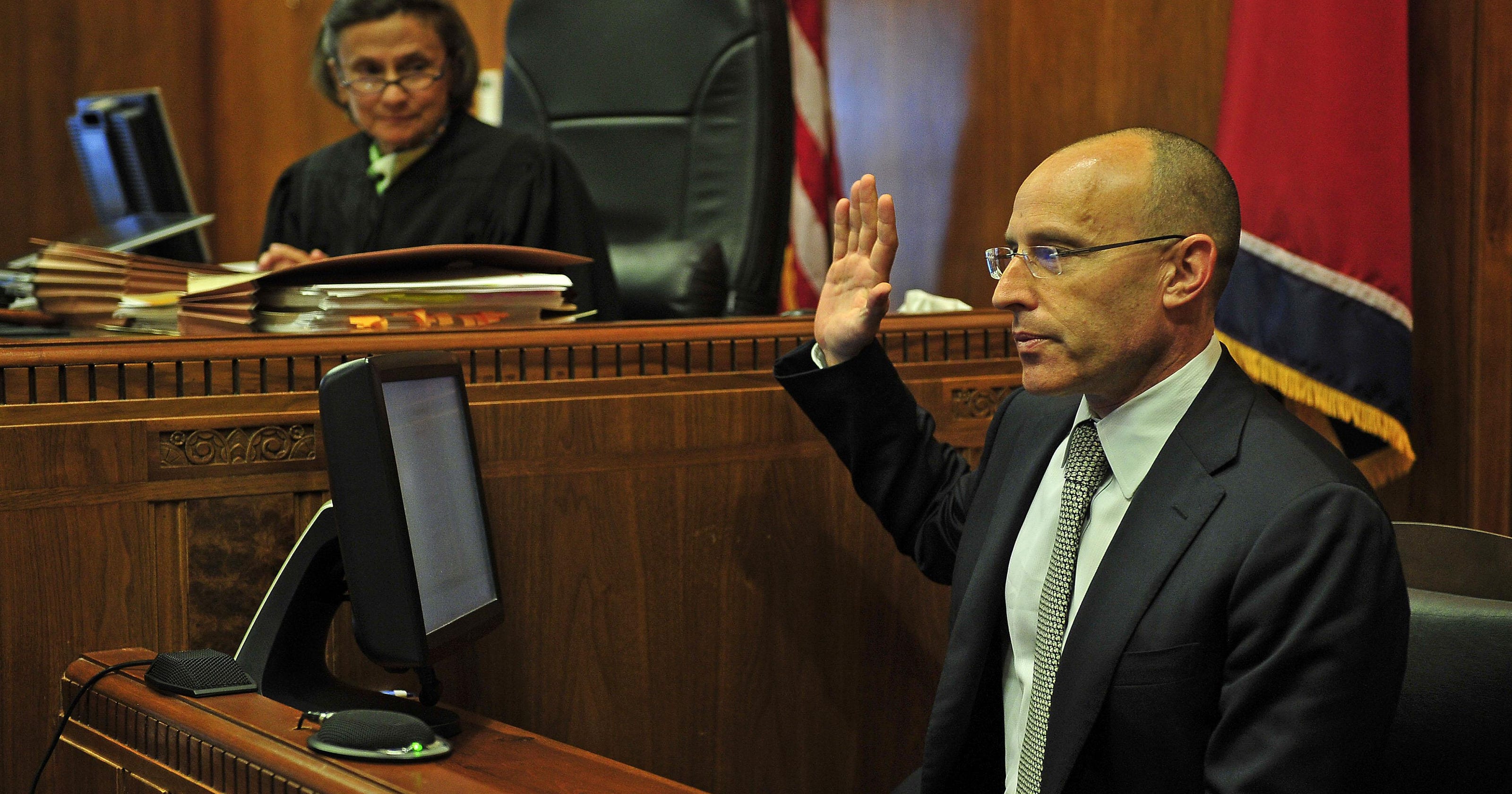
Billy Ray Irick felt searing pain akin to torture before he died in a Tennessee prison in August, but steps taken in carrying out his execution blocked signs of suffering, according to a doctor who reviewed information about the lethal injection.
In new court filings entered late Thursday amidst an ongoing legal challenge of Tennessee’s lethal injection protocol, Dr. David Lubarsky said statements from people who witnessed the execution indicated the controversial drug midazolam failed to ensure Irick could not feel pain during his death.
CLOSE
Billy Ray Irick was executed on Aug 9, 2018 Michael Schwab/USA TODAY NEWTWORK – TENNESSEE
As a result, the death row inmate “experienced the feeling of choking, drowning in his own fluids, suffocating, being buried alive, and the burning sensation caused by the injection of the potassium chloride,” Lubarsky wrote in the filing.
The document also says the state did not follow its own lethal injection protocol, raising questions about whether executioners ever intended to ensure Irick was unable to feel the pain caused by the second and third lethal injection drugs.
Irick and 32 other death row inmates sued the state this year arguing that Tennessee’s new protocol for lethal injections would subject them to pain so intense it would violate the U.S. Constitution. They questioned the use of midazolam, the first of the three drugs the state administers during executions.
Lubarsky, a Florida doctor, testified for the inmates during a two-week trial in July. He said midazolam, which is supposed to render inmates unconscious and unable to feel pain, doesn’t work as intended. He said midazolam sedates inmates but does not stop them from feeling the effects of the other two drugs, vecuronium bromide and potassium chloride.
Lubarsky and other medical experts are the backbone for the inmate’s appeal. The case is not about whether the death penalty is constitutional, attorneys for the death row offenders wrote in the 390-word brief. It’s about what the deadly drugs do to a body, and whether Tennessee citizens should approve of that likely tortuous outcome.
“This case is about whether it is constitutional to inject a human with a small bottle of acid—which will destroy the lining of their lungs and cause them to drown in blood—and then to inject them with a paralytic that will leave them conscious but expressionless—unable to speak or scream—feeling as if they are buried alive, and finally to stop their heart with an injection that will, in their last minute of life, cause them to chemically burn alive,” wrote Kelley Henry and other federal public defenders working on behalf of the death row inmates.
Davidson County Chancery Court Judge Ellen Hobbs Lyle agreed Lubarsky and other experts were well qualified, but she rejected their arguments in ruling against the inmates.
The remaining death row offenders continue to pursue their appeal of Lyle’s ruling even though no court stopped Irick’s execution.
The Tennessee Department of Correction, represented by the Office of the Tennessee Attorney General, argued it is following the law and using drugs available to carry out the required punishment for death row offenders. Department officials noted during trial that the U.S. Supreme Court previously allowed executions using midazolam to proceed, arguing the usage is now case law.
In the latest filing though, Henry and the other attorneys argue that case law is not settled. They point to new and more expansive medical evidence, presented to Lyle during the trial, that has never been considered by the full Supreme Court.
They also blast the state’s arguments in the new filing, writing: “Defendants’ repeated mantra, barely acceptable from a teenager, is that — ‘all the other states are doing it, so it must be ok.’”
Department spokeswoman Neysa Taylor declined to comment, citing the ongoing litigation.
It requires the state prepare primary and back-up syringes for each of the drugs used in the lethal injection.
However, documents obtained by the inmates’ attorneys show executioners did not prepare a back-up dose of midazolam. The report says executioners only prepared the one dose of midazolam used at 7:28 p.m., essentially the same time Irick’s execution began.
The protocol requires the executioner to inject the midazolam into a tube that runs into the condemn’s arm. After some time, the warden — who is in the execution chamber — is required to check to see if the condemned is conscious.
If the condemned is not conscious, the state protocol requires injecting a second dose of midazolam.
CLOSE
USA TODAY NETWORK – Tennessee journalists Dave Boucher and Jamie Satterfield were witnesses to Billy Ray Irick’s execution on Aug. 9, 2018. Nashville Tennessean
Riverbend Maximum Security Institute Warden Tony Mays conducted the consciousness check: he brushed Irick’s eyelids, yelled his first name twice and appeared to grab his shoulder. If he had determined Irick was conscious though, it’s unclear if the state could have or would have prepared another midazolam syringe.
“If Mr. Irick had responded to the consciousness assessment or there had been problems with the IV apparatus, the execution team would not have been prepared to carry out the contingency procedures in the manual,” Henry and the attorneys write.
“Defendants’ failure to follow the procedures in the manual indicates that the protocol is meaningless for purposes of Defendants’ carrying out an execution and therefore creates a substantial risk of severe pain and suffering for Plaintiffs,” the document says.
Taping Irick’s hands hid signs of pain, expert says
Throughout his statement, Lubarsky said witness statements from Irick’s execution supported the inmates’ legal arguments. Lubarsky said he was convinced “to a reasonable degree of medical certainty” that Irick was not properly anesthetized during his execution. Any inmate not properly rendered unconscious and insensate would feel the “torturous effects of the lethal injection process,” Lubarsky said.
Witnesses described Irick choking, snoring, gulping and gasping for air as the drugs were administered. They also said he jolted and appeared to push against the restraints at one point.
Lubarsky noted that Irick’s hands were taped to the gurney during the execution. His fingers were wrapped with a tape-like substance that prevented movement and limited visibility of the majority of his hands.
Lubarksy said the tape blocked prison officials from seeing important signs that Irick was aware of his surroundings throughout the execution.
“A trained observer knows that if a patient moves his fingers or hands that is a clear indicator that that they are not anesthetized,” Lubarsky wrote. “The taping of Mr. Irick’s hands affirmatively prevented the Warden from observing an important indicator that Mr. Irick was not anesthetized.”
Tennessee courts denied all of Irick’s legal requests, and appear poised to do the same ahead of the state’s next execution.
The Tennessee Supreme Court recently evoked a rare legal move to set the schedule for the lethal injection challenge within the Court of Appeals. The schedule is condensed, leaving far less time for attorneys to prepare their case compared toa typical appeal.
State Supreme Court Justice Sharon Lee admonished her colleagues after they set the schedule, calling it a “rocket docket” that jeopardized inmates’ chances for a fair trial.
In the new filing, attorneys ask the court to delay the appellate process.
Edmund Zagorksi, 63, is scheduled for execution on Oct. 11. He was convicted in 1984 of robbing and shooting John Dotson, of Hickman County, and Jimmy Porter, of Dickson, before slitting their throats, according to Tennessean archives.
Reach Adam Tamburin at atamburin@tennessean.com or 615-726-5986 and on Twitter @tamburintweets. Reach Dave Boucher at 615-259-8892, dboucher@tennessean.com and on Twitter @Dave_Boucher1.
LOS ANGELES – “Everyone get in here,” Sofia Vergara orders loudly to her “Modern Family” co-stars Jesse Tyler Ferguson, Julie Bowen and Sara Hyland.
Although the crew has worked together since 2009 on the ABC comedy, meeting up in the green room of the “Stand Up To Cancer” telecast Friday, at Los Angeles’ Barker Hangar, is reason to celebrate with a group selfie.
Even David Spade gets pulled into the rowdy mix as the grinning Vergara snaps away. The picture is such a hit that Ferguson, peering over Vergara’s shoulder as she inspects the final product, pleads, “Please, please send it to me.”
Three feet away, Josh Brolin, the star of every summer box office hit, holds court while reclined on a couch along with Rob Riggle and Ed Helms, talking about the joys of fatherhood (Brolin is expecting a baby daughter).
“It’s great to see people in this context,” says “Moonlight” star Mahershala Ali. “The vibe is so nice, and everyone is here for the same cause.”
The cause that has brought Hollywood stars to don SU2C T-shirts, answer phones and help raise money is the fight against cancer for the sixth “SU2C” telethon, airing on every TV network.
The celebrity-filled telethons have raised more than $480 million for cancer research even before Friday’s event. Katie Couric, one of the outspoken co-founders, personally thanks each star backstage (“I’m so happy things are going so well for you,” she tells Brolin).
A major part of the “Stand Up to Cancer” success stems from the killer disease that has touched virtually everyone’s life, from Matt Damon (who opened and closed the show) to Couric, who paid an emotional tribute onstage to her husband Jay Monahan, 20 years after his death from colon cancer.
Along with happy chatter backstage, there’s powerful emotions. Standing in a corner, Shannen Doherty’s eyes are visibly watery as she prepares to take the stage to discuss her two-year battle with breast cancer, now in remission.
“I feel blessed. But tonight is going to be a little overwhelming,” says Doherty, standing with her “oldest, dearest, bestest friend ” and cancer survivor Deborah Waknin-Harwin. “We’re going to talk about our journey on the stage, but I just started talking about it now, and I instantly started tearing up. It was like, ‘No, no, I’m not going to cry!’”
Doherty says she was determined to be part of the fundraiser to find the cure. “I feel honored to be here, and hopeful,” she says.
There were powerful stories, awareness raising, and plenty of laughs onstage, including Tony Hale revealing a ridiculous latex superhero suit with yellow wash gloves and black platform boots.
“This is so embarrassing,” Hale mutters as two attendants make final adjustments before his global reveal. But he shows no sign of shyness pulling off his super skit.
Afterward, he can only laugh. “I guess I’m Anti-Cancer Guy, I don’t know, Ed Helms told me to put this on.”
But Hale quickly lists off friends who died from cancer and his “Veep” co-star Julia Louis-Dreyfus, who has battled breast cancer. They inspire him.
“It’s been a very difficult year and Julia came out the other side, She’s so strong,” says Hale, taking another look at his suit. “And besides, I usually don’t get to wear this kind of thing with the parts I play.”
Hosts finish day one on 198-7 after fall of late wickets
England opener Alastair Cook said he was “so determined” to get “a score” in the fifth Test against India – his last before international retirement.
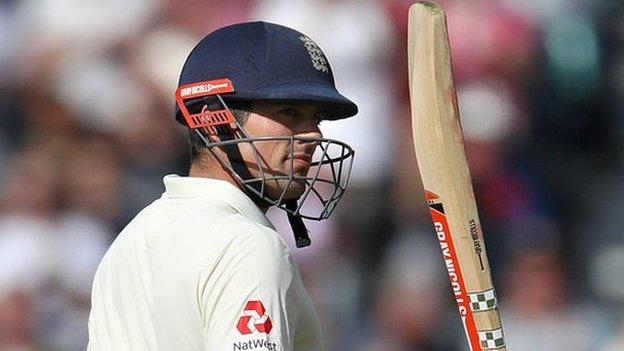
Former captain Cook, 33, was bowled for 71 on the opening day at The Oval as the home side closed on 198-7.
“There’s nothing worse than going out without contributing,” the Essex batsman told Sky Sports.
“I’m pleased I got a bit of a score, but I’m disappointed to get out when I did.”
Cook was bowled by Jasprit Bumrah, precipitating a collapse as England fell from a well-placed 133-1 after winning the toss to 198-7 at the close.
India paceman Ishant Sharma took 3-28 as the tourists – who have already lost the series – took control.
Cook was afforded a special reception – including a guard of honour from the opposition.
“The guard of honour was such a nice gesture but you’re focused on batting and you don’t have time to appreciate it,” he said.
“The reception I got was fantastic. It went on a bit and that makes you even more determined not to get out.”
‘Cook doubted his popularity – those thoughts were dispelled’
BBC Sport website reader Patrick Brennan sent this picture of “the Alastairs enjoying Cook’s final innings”
BBC cricket correspondent Jonathan Agnew: “On a personal level, it’s so far been quite a nice farewell for Cook. Naturally, he would have wanted a hundred, but he would have settled for 71.
“I was on the same underground train as Cook as he travelled to the ground with Keaton Jennings. I thought that was a really nice touch, the two of them getting to the ground early in order to work together. Not a passing of the torch, but Cook helping the man who will get the first crack at succeeding him.
“When his innings came, Cook gave us a reminder of what he did best. Eking out the runs, tapping back the spinner, flicking the ball off his pads, and even the odd drive through the covers. It was typical Cook, even down to showing us a familiar weakness – getting his feet in a tangle to offer an edge off Ishant Sharma that was dropped.
“Throughout all of the fuss that has gone with his announcing his intention to retire, he has been calm and at ease. Still, even he would have had to have been pretty cool to control the emotions at the beginning of the day when he was receiving a guard of honour from India and wonderful ovation from the crowd.
“Very few players have the opportunity to say goodbye in this way. I know there were times in his career that Cook doubted his popularity as an England cricketer. Those doubts would have been completely dispelled by the reception he got this morning.
“Yes, there are other stories in this Test, but you can’t help but focus your attention on Cook. We wait to see what he produces when he plays his final innings for England.”
Hope, anticipation & disappointment – how Cook’s day unfolded
When Joe Root won the toss for the fifth time in this series – to the mirth of Virat Kohli – Cook’s brief was simple.
In front of an expectant full house, on a decent Oval pitch and under an autumnal sun, he was to set up England’s chances of victory with a century.
It started with Cook walking to the middle through India’s guard of honour.
Alastair Cook receives guard of honour from Indian team in final Test
Once play started, Cook survived the first hour without much trouble – to the growing delight of the England supporters who dressed for the occasion…
In fact, seemingly free of the shackles of pressure, the Essex man treated us to a few of his lesser-spotted shots in recent years…
England – and Cook – reached lunch in a healthy position. They were 68-1 after 28 overs, with the left-hander unbeaten on 37. While the players took a break, TMS aired Jonathan Agnew’s in-depth interview with Cook reflecting on his storied career.
After lunch, the sense it would be Cook’s day grew when he was dropped at gully by Ajinkya Rahane. The runs were flowing too…
The half-century – only his second of 2018 – arrived with a punch back down the ground off Mohammed Shami and The Oval stood as one to applaud the achievement.
“The crowd is on its feet, it’s fantastic,” said Test Match Special commentator Daniel Norcross as two fans high-fived each other in the crowd. “Everybody is rising for Alastair Cook, which shows what great affection he is held in.
“A lot of people in the ground might never get the chance to see Cook bat again and they are making the absolute most of it.”
Former England captain Michael Vaughan added: “Cook has reminded us of what he’s done for 12 years – waiting for the bad ball and playing one of his three superb shots: off the hip, pull or cut.
“With a ball on off stump, he defends it. And that’s how he has scored more than 12,000 Test runs. I’m delighted he’s got a score.”
Alastair Cook reaches his fifty in final Test
It was set up beautifully.
Phil Tufnell’s premonition – as told to TMS listeners earlier in the day – that Cook would be out first ball didn’t materialise: he had been reprieved by a dropped catch and had seen off some good deliveries from the likes of Shami and his old nemesis Ishant.
But, just when the dream hundred looked on, Cook was bowled by Bumrah.
The crowd groaned, the India supporters cheered a much-needed breakthrough, and a spontaneous, heartfelt round of applause broke out from everyone inside the ground.
It wasn’t to be on Friday but, as Tufnell pointed out on TMS, the all-too-familiar collapse that followed his departure at least guarantees he will bat again in the second innings.
Until then, he and England will continue to dream. And supporters will continue to pay tribute…
TMS listener Adam Tood took time out from his holidays to draw a line or two of tributes into the sand…
Iraq‘s Prime Minister Haider al-Abadi has ordered an investigation into deadly violence in the southern city of Basra after protesters stormed the Iranian consulate there.
Abadi said late on Friday that he had instructed security forces to act decisively against the “acts of vandalism” that accompanied the demonstrations.
The order came after demonstrators set fire to the Iranian consulate on Friday as part of weeks-long protests over poor services and lack of jobs.
Thousands shouted anti-Iran slogans, condemning what they percieved as Tehran’s interference in their country’s politics, before breaking into the consulate’s offices and setting it alight.
The building was reportedly empty when the crowd burst in, and no staff were hurt.
Iraq’s Foreign Ministry said the storming of the consulate, which it deeply regretted, had nothing to do with protesters’ demands.
“The targeting of diplomatic missions is unacceptable and detrimental to the interests of Iraq,” said ministry spokesman Ahmed Mahjoub.
WATCH: Iraqi protest against unsafe water in Basra (2:29)
Iraq’s Joint Operations Command, which includes the army and police, said there would be a “severe” response with “exceptional security measures”, including banning protests and group travel.
Security officials have announced a city-wide curfew in Basra, a city of two million, warning that “anyone in the street” would be arrested.
Punishment
Iranian foreign ministry spokesman, Bahram Qassemi, blamed Iraq for failing to protect the building and said Baghdad had to “identify and punish the attackers quickly.”
The Iraqi ambassador to Tehran was also summoned to the foreign ministry.
The Iranian consulate was reportedly empty when it was torched [Haider Mohammed Ali/AFP]
Several foreign governments have consulates in Basra, including the United States and Russia.
In a statement, the US State Department condemned the violence and called on all parties “to uphold the right of peaceful protest and to protect diplomats and their facilities”.
The unrest in Basra and other cities is the most serious to hit Iraq’s oil-rich southern Shia heartland in years. Since July, protesters have been calling for an end to endemic corruption, soaring joblessness, and poor public services.
Protests intensified earlier this week, leading to clashes and leaving several civilians and police dead.
Demonstrators have torched government buildings, as well as political party and armed group offices since Tuesday, as anger boils over after the hospitalisation of 30,000 people who drank polluted water.
‘Anger against all’
Abbas Kadhim, a professor at George Washington University, told Al Jazeera that protesters hold Iranian-backed political parties responsible for mismanagement and poor services in the city.
“The anger is directed in every direction, against all,” he said.
“There is a lot of Iranian influence among Basra groups, whether they are in local politics or in the social groups, including the fighting groups,” he said.
Protesters torched the Iranian consulate in Basra as part of protests over poor public services [Haider Mohammed Ali/AFP]
The unrest comes at a politically volatile time for Iraq, with lawmakers still trying to form a new government, after an inconclusive election in May.
The new parliament finally met on Monday for the first time, but broke up a day later having failed to elect a speaker, much less name the next prime minister.
Timothée Chalamet is just like any other fan of The Office when it comes to the show’s star, Steve Carell.
The 22-year-old actor stars alongside the former Michael Scott actor, 56, in Beautiful Boy, a gut-wrenching story about a father and his drug-addict son. The movie also happens to star Amy Ryan, who played Michael Scott’s wife Holly Flax on The Office — a fact that didn’t escape Chalamet.
“I had to audition a number of times for this and the last time I came in was with Steve and I felt immediately well taken in, protected,” Chalamet tells PEOPLE and Entertainment Weekly at the Toronto International Film Festival. “But I will say, I had to get over the fact that I was such a huge fan and be chill about the whole thing. Like, I’m totally sitting up here with Michael and Holly, but I’m not gonna go near that. That was the small little thing I had to get over.”
Carell played Michael Scott for 7 seasons on the beloved NBC sitcom, with Ryan coming in during season 4 as Holly, a love interest for Michael. The longtime Dunder Mifflin manager eventually moves away (as Carell leaves the show) to be with Holly.
Carell also connected with the young actor, who earned his first Oscar nomination earlier this year for Call Me By Your Name.
“From my perspective, we connected instantly,” Carell says. “The first time we met. He’s, I mean, look at him. He’s such a kind, generous, warm, intelligent, funny. I’m not trying to make you feel weird, but we connected instantly. He’s a great, great guy. It was easy for him to feel as if we had a parent/son relationship.”
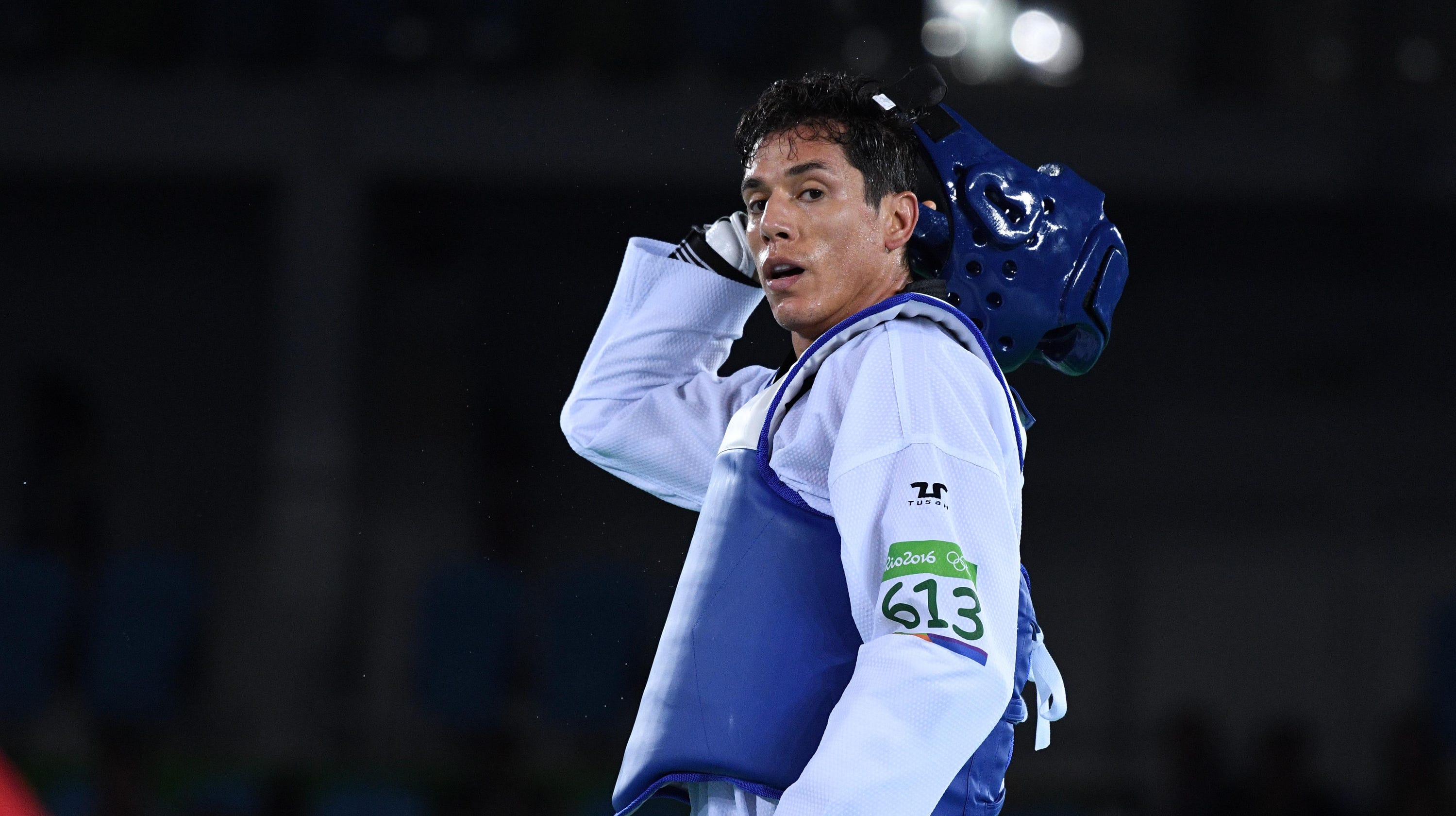
Two-time Olympic taekwondo champion Steven Lopez has been declared permanently ineligible after the U.S. Center for SafeSport found him in violation of its code for sexual misconduct involving a minor.
Lopez declined to be interviewed in the case, which meant SafeSport had no reason to question the allegations by Nina Zampetti. Regardless, the center found there was a “preponderance of … evidence” that Lopez had sexually abused Zampetti when she was 14, according to the SafeSport decision, which was obtained by USA TODAY Sports.
“I’m happy to finally be heard and taken serious,” Zampetti said Friday night in a text message to USA TODAY Sports. “I’m glad someone believes me, and after all these years of trying to tell my family that he was not who they thought he was, the truth is finally out.
“I feel like my life would have been different (for the better) if that never happened to me,” Zampetti added. “And all I ever wanted was for him to be held accountable for that.”
USA TODAY Sports does not typically identify victims of sexual assault, but Zampetti has given permission for her name to be used.
The decision was made Thursday night but did not become public until Friday. Lopez has five days to notify SafeSport that he wants to appeal, and attorney Howard Jacobs said he would.
“SafeSport’s issuance of a sanction is done without any hearing and without any review by a neutral fact-finder,” Jacobs said in a statement. “We expect that when a neutral fact-finder hears the case for the first time, Steven Lopez will prevail, because the allegations are false.”
Lopez is taekwondo’s biggest star and the most decorated athlete in that sport. He is a five-time Olympian with gold medals in 2000 and 2004 and a bronze in 2008, as well as five world titles. He has been coached throughout his career by his older brother, Jean, who also coached younger siblings Mark and Diana to medals at the Beijing Olympics in 2008.
Both Steven and Jean Lopez have been under investigation for sexual misconduct for the last three years, first by USA Taekwondo and then by SafeSport. On April 3, SafeSport declared Jean Lopez permanently ineligible after finding he had committed violations of sexual misconduct and sexual misconduct involving a minor. His ban has been stayed pending an appeal.
Steven Lopez was initially accused of sexual misconduct by Mandy Meloon, a bronze medalist at the world championships in 1997 and 2005, and Amber Means, a former member of the junior national team.
Meloon said she and Steven Lopez dated on and off for six years. In 2004, after a physical confrontation at Lopez’s parents’ home, Meloon said Steven Lopez followed her to her apartment, broke in through a window and sexually assaulted her. Meloon said Steven Lopez also physically assaulted her on several occasions.
Means says she was drugged three times and that Steven Lopez had sex with her while she was unconscious on one of those occasions.
Meloon and Means have joined two other women in a lawsuit against the Lopez brothers, the U.S. Olympic Committee, USA Taekwondo and SafeSport. The lawsuit alleges the women were victims of a sex trafficking operation, claiming the USOC and USA Taekwondo knew the Lopez brothers were sexual predators yet continued to send young women with them to camps and competitions across the world.
The lawsuit has put Meloon and Means’ complaints to SafeSport about Steven Lopez on hold. But Zampetti is not part of the lawsuit, and SafeSport said it banned Lopez solely on the basis of her complaint.
Zampetti’s family has been longtime friends of Lopez and his family, and she first met Steven Lopez, who is eight years older, when she was about 10. A year later, Zampetti began taking taekwondo lessons from Steven Lopez and his older brother Jean.
Zampetti told USA TODAY Sports that Steven Lopez engaged in frequent grooming behavior, paying special attention to her, holding her hand and asking her to sit on his lap. When she was 11, Zampetti said Lopez gave her a ring that she believed to be a “promise” ring.
Zampetti supplied several photos to SafeSport to support her claims, including one of her sitting on Lopez’s lap, one of his hands on her leg and another around her waist.
When Zampetti was 14, she told USA TODAY Sports that she was at the Lopez house when Steven Lopez asked her to take off her shirt and touched her breast. A short time later, he put his penis in her mouth and ejaculated.
Zampetti said she immediately told Steven Lopez’s sister, Diana, as well as another taekwondo athlete. She also told her sister, Connie, who corroborated Nina Zampetti’s account to both USA TODAY Sports and SafeSport.
“She has no discernible motive to fabricate a claim against Steven,” according to the SafeSport finding, “and, in fact, due to the close relationship between her family and the Lopez’s, her decision to reveal what occurred has been very difficult for her and has the potential to negatively impact long-standing personal and familial relationships.”