Tiger Tracker: Follow Tiger Woods’ third round at the BMW Championship

news image

USA TODAY Sports
Published 12:30 p.m. ET Sept. 8, 2018 | Updated 2:06 p.m. ET Sept. 8, 2018

CLOSE

SportsPulse: Golf insider Steve DiMeglio explains why Tiger Woods was an easy call for the Ryder Cup and how the U.S. has the deepest roster in decades, one that can win on foreign soil for first time since 1993.
USA TODAY

Tiger Woods has some work to do Saturday entering Round 3 of the BMW Championship at Aronimink Golf Club outside Philadelphia.

Woods, in a group of eight players at 8 under par, began the day five shots behind Xander Schauffele in the penultimate event in the FedExCup playoffs.

Woods entered the week ranked 25th in the FedExCup standings and will need to stay close to remain inside the top 30 to qualify for the Tour Championship in two weeks, the PGA Tour season’s finale. 

Woods teed off at 1 p.m. ET at with Ted Potter Jr. and Ryan Armour.

Because of overnight rain, the tournament moved tee times back 3 hours, 25 minutes and sent groups out in threesomes off both tees. Players will be allowed to lift, clean and place on the fairways. There are birdies to be made on moving day.

Hole 4 — par 4

An anxious Woods can’t will this tee shot, despite the body language, back on course. It finds the right rough, 292 yards down the fairway, 155 yards to the hole. Woods muscles his second shot out of the soggy rough and bounces it to the center of the green, but it’s a long way (35 feet) from the hole. The birdie putt was a beauty, missing by inches on the right for a tap-in par. 2 under through 4 (10 under for the tournament).

At the top of the leaderboard: Leader Xander Schauffele (-13) is on his way, and the pack is chasing. Rory McIlroy is 2 under through two to get to 11 under.

Hole 3 — par 4

Woods takes driver again off the tee and once again splits the fairway, 285 yards from the tee, 157 yards to the hole. The approach, with a wedge, gets a good hop at the edge of the green, and the rolls to within 12 feet below the hole. Another good look at birdie. Not to be this time; the putt slides by on the right. Par. 2 under through 3 (10 under for the tournament).

Hole 2 — par 4

Another fine tee shot, 294 yards to the center of the fairway, leaving 102 yards to the hole. Another solid approach 11 feet past the hole, although Tiger no doubt hoped to get get the ball to spin back toward the hole. The putt will be a bit downhill, but the greens are forgiving. Boom, and it’s a birdie-birdie start for Tiger. 2 under through 2 (10 under for the tournament).

Hole 1 — par 4

Tiger’s tee shot with driver finds the right side of the fairway. A good start. The approach, from 144 yards, lands on the soggy green and stops pin-high about 12 feet from the hole. The birdie putt finds the bottom of the cup. A good start indeed. 1 under through 1 (9 under for the tournament).

Autoplay

Show Thumbnails

Show Captions

Read More

from Trusted eNews https://ift.tt/2wXao1Z
via IFTTT

Report: Photos of Trump’s inauguration were edited to seem like crowd was larger

news image

A government photographer edited pictures from President Donald Trump’s inauguration to make the crowd size appear larger than it actually was after the president requested it, according to records obtained by The Guardian.

After repeated requests from the White House for new pictures, the photographer cropped the areas where there were no people to make it appear that the crowd filled the frame, according to The Guardian. The request came after Trump — on his first day in office — saw comparisons of his inauguration crowd compared to former President Barack Obama and became fixated on the size of the group.

According to The Guardian, there was an early morning phone call between Trump and then-acting National Park Service Director Michael Reynolds. White House press secretary Sean Spicer also dispatched repeated calls to NPS in an attempt to get a different set of photos. The call to Reynolds in search of more flattering photos and the new set was reported shortly after the inauguration in 2017 by The Washington Post. However, the documents obtained by The Guardianand reported Thursday provide new insight into how the new set of photos came out.

While no one said they were ordered to crop photos, accounts from multiple people involved in the day seemed to say that they assumed the new photographs needed to be edited.

According to The Guardian, a park service communications official told investigators that Reynolds called her and ordered up more photographs. She said “she got the impression that President Trump wanted to see pictures that appeared to depict more spectators in the crowd” because the images already released showed “a lot of empty areas.”

The official told investigators she “assumed” that meant the photographs needed to be cropped in order to show fuller crowd sizes, but that it wasn’t an official request, according to The Guardian. Another official had a similar account after a call from Spicer.

The photographer told investigators that he was told to “edit a few more” photos of the day. He said that he assumed he was supposed to crop the photos but that it wasn’t an official order. He told investigators he cropped out the sky and the bottom of the photos “where the crowd ended.” According to The Guardian’s documents, investigators said the photographer did so “to show that there had been more of a crowd.”

The NPS employees names were redacted in the report, according to The Guardian.

After new photos were sent to the White House, Spicer gave the infamous press conference falsely claiming to reporters that it was “the largest audience to ever witness an inauguration, period.”

Read or Share this story: https://usat.ly/2wShB42

Read More

from Trusted eNews https://ift.tt/2Ns0KyN
via IFTTT

England face Spain in Nations League

news image

England v Spain in Uefa Nations League – listen live – Live – BBC Sport


<!–


<!–

<!–
<!–

<!–
<!–

<!–
<!–

<!–
<!–

<!–

<!–

<!–


Summary

  1. England and Spain’s first Nations League game
  2. Shaw & Gomez start for England
  3. Croatia are other team in League A Group 4
  4. Teams drew 2-2 at Wembley in friendly in November 2016
  5. Sides not met in competitive match since Euro ’96


Read More

from Trusted eNews https://ift.tt/2wZf4oi
via IFTTT

Everything you need to know about the looming battle for Idlib

news image

On September 7, a three-way summit in Tehran failed to produce a clear agreement between Russia, Turkey and Iran on the fate of Syria’s Idlib province, the last stronghold of the Syrian armed opposition.

A ceasefire suggested by Turkish President Recep Tayyip Erdogan was rejected and a fully-fledged government offensive now seems imminent, in what is expected to be Syria’s deadliest battle yet.

Idlib is the last barrier standing between the Syrian government and its military victory against a rebellion that began more than seven years ago.

The northwestern province bordering Turkey was one of the four “de-escalation zones” agreed by Ankara, Moscow and Tehran in May 2017 during the fourth round of the Astana talks, launched earlier that year with the aim of pursuing a political solution to Syria’s conflict.

One by one, the other three areas – Homs; Eastern Ghouta; and Deraa and Quneitra – have been captured by the Syrian government forces and their allies. As Damascus clawed back opposition-held territory, thousands of civilians and rebel fighters from those areas were bussed to Idlib, dubbed a “dumping ground” for evacuees.

Amid persisting uncertainty, three scenarios are likely to emerge in Idlib: a massive onslaught; a protracted offensive; or infighting between rebels followed by a reconciliation deal with Damascus. But whatever actually occurs, it will be the civilians currently trapped in the densely populated province that will pay the highest price.

What countries are involved and what are their aims?

Five major players are likely to decide what happens next in Idlib: the Syrian government and its allies Iran and Russia, as well as Turkey and the United States.

Syrian President Bashar al-Assad, who has repeatedly has vowed to take back “every inch” of Syria, pursuing a “military solution” to the conflict. His goal is to regain complete control in order not to have to make any concessions to the Syrian opposition.

Taking over Idlib would mean that the opposition has no territorial presence and consequently no leverage in any future negotiation process.

In the short-term, the government wants to establish control over two major highways – the M4, which connects the port city of Latakia to Aleppo, Raqqa and oil-rich Deir Az Zor; and M5, which links the capital Damascus to Aleppo, and eventually to the trade route to Turkey and Europe.

Iran has no direct strategic interest in Idlib, especially since the completion of an evacuation process in the two Shia towns of Foua and Kefraya in July.

However, Tehran is backing the offensive with its militias as it shares the same goal with Damascus of eliminating the armed opposition. Iran’s military assistance goes hand-in-hand with its efforts to entrench its presence permanently in Syria despite pressure from the US, Israel and Russia to withdraw.

Moscow, like Damascus and Tehran, also wants Idlib captured, but it would prefer to have the opposition surrender and integrate into the Syrian military divisions under its control (such as the Fifth division) rather than fight a costly battle.

It hopes that the capture of the rebel bastion would force Turkey, the European Union and the US to negotiate a political solution along its goals, as well as give it more leverage in talks on the suspension of US sanctions and a resolution in Ukraine.

WATCH: Who’s shaping Syria’s future?

For its part, Turkey – Idlib’s guarantor power under the Astana agreement – is keen to prevent an offensive on the region and maintain some level of control over it. Already hosting over three million Syrians, Turkey fears a major crisis in northwest Syria would further strain its overwhelmed humanitarian capabilities and prompt the influx of more refugees onto its territory.

It also wants Hay’et Tahrir al-Sham (HTS, one of the two main armed group controlling Idlib) dissolved so that Russia has no justification to attack the province. Moscow has designated HTS a terrorist group.

At the Tehran summit, the leaders of Turkey, Russia and Iran expressed different opinions about the way forward in Idlib, but in a joint statement reiterated that the Syrian crisis can reach a final resolution through a “negotiated political process”.

The US, meanwhile, has no strategic interest in Idlib and has indicated that it does not oppose a limited offensive on Idlib. It also wants the HTS eliminated and has already targeted a number of its leaders through drone attacks.

However, Washington has threatened military action if the Syrian government uses chemical weapons. On September 3, US President Donald Trump warned in a post on Twitter that Assad “must not recklessly attack Idlib”, adding that it would be “a grave humanitarian mistake” for Moscow and Tehran to “take part in this potential human tragedy”.

The US worries about Iran’s presence in Syria and has demanded that Iranian forces and militias withdraw. The Trump administration, which earlier mulled a withdrawal of its troops from northeast Syria (territory under the control of US-allied Kurdish-led Syrian Democratic Forces), has now made provisions for their indefinite stay.


Is Idlib a ‘hotbed for terrorists’?

Idlib province is controlled by two major armed groups: HTS and al-Jabha al-Wataniya lil-Tahrir (the National Liberation Front, NFL).

Over the past few months, Russian officials have been calling for the elimination of HTS.

“This is the last hotbed of terrorists who are trying to speculate on the region’s status as a de-escalation zone, who are trying to hold the civilian population hostage as human shields,” Russian Foreign Minister Sergey Lavrov said recently.

HTS, formerly known as al-Nusra Front, has significant presence in Idlib city and other areas in the province.

Al-Nusra Front emerged in 2012 as al-Qaeda’s affiliate in Syria, but in July 2016 it renounced its pledge of allegiance and changed its name to Jabhat Fatah al-Sham. Last year, after it attacked other rebel groups in Idlib, it joined forces with a number of more hard-line factions and changed its name to HTS.

According to some estimates, HTS has some 10,000 fighters in Idlib, a large part of whom are foreigners. But Ahmad Abazeid, a Turkey-based Syrian analyst, says that figure is an exaggeration, instead numbering a few thousand.

In addition to HTS, there are also the smaller and more hardline al-Hizb al-Turkestani (the Islamic Party of Turkestan, made up mainly of Uighur fighters) and Heras al-Din (the Guardians of Religion, a splinter of HTS).

The other large player in the province is NFLa loose coalition of armed groups that are considered part of the moderate opposition.

Largely seen as the main Turkey-backed actor in Idlib, NFL includes a wide variety of groups – from the more hardline Nour al-Din al-Zinki and nationalist Islamist Ahrar al-Sham (the Free Men of the Levant) to Jeish Idlib al-Hor (the Free Army of Idlib), an affiliate of the Free Syrian Army (FSA), another organisation created in 2011 by officers who had defected from the Syrian army.

Some have suggested the NFL fighters number in the tens of thousands, but Abazeid also cast doubt on those estimates.

“NFL is the biggest force [in Idlib] in terms of numbers and geographical presence and weaponry,” he said. “But NFL is a local formation, not an organised army, and therefore it’s difficult to estimate its numbers.”

According to Abazeid, Turkey has been pressuring for some time now HTS’ leaders, as well as seeking to sow internal divisions, in a bid to dissolve the group and leave Russia and Assad with no excuse of attacking Idlib.

“[Turkey] renewed its efforts in this direction as Russia’s threats of an attack on Idlib intensified, but it failed. HTS, on its part, has said that it won’t dissolve itself because the attack on Idlib will happen anyway,” said Abazeid.

On August 31, Turkey officially designated HTS a terrorist group, fuelling speculation that it could consider engaging in a campaign against it or encouraging NFL to attack it.

What would be the human cost of the battle for Idlib?

Idlib province hosts more than three million people on a relatively small area of about 1,437 square kilometres. Given the high density of the population, an aerial campaign and a ground offensive is expected to result in death at a huge scale.

Erdogan has warned of a “bloodbath”, while Staffan de Mistura, the Syria envoy for the United Nations, has said that Idlib will be the “perfect storm” if an a large-scale assault is not avoided.

“If they shoot a bullet, it would probably kill two people,” said Syria researcher Marwan Kabalan, director of the Arab Center for Research and Policy Studies.

An offensive is also likely to result in mass displacement.

According to Fadel Abdulghani, founder of the Syrian Network for Human Rights (SNHR), about one million people would be uprooted in the event of major offensive.

“They would amass by the Turkish border or head to Jarablus or Afrin,” said Fadel, referring to the Turkish-controlled cities in northeastern Syria.

It is unclear whether Turkey, which sealed off its border with Syria last year, allowing only humanitarian aid to go through, will agree to admit any more Syrians into the country.

Idlib itself already hosts more than 1.5 million internally displaced people (IDPs), who fled the advance of the Syrian government in other provinces. Many of them reside in makeshift camps which lack basic services such as clean drinking water and access to uninterrupted electricity.

According to Ahmed Mohammed, a representative with Islamic Relief Worldwide who visited Idlib recently, many IDPs live in squalid conditions.

“Idlib is the last shelter for these people (IDPs), many of whom have moved from one place to another up to four of five times,” Mohammed said.

His organisation has documented “indiscriminate attacks” targeting civilian infrastructures and buildings, including schools and hospitals. At least seven hospitals and clinics in the region have been bombed and put out of service by government-led air raids during the past year, Mohammed said.

The medical infrastructure in the province will not be able to deal with a huge influx of wounded people in case of a large-scale assault.

Amid fears of a chemical attack, Idlib residents have started taking precautionary measures [Khalil Ashawi/Reuters]

Will chemical weapons be used during the battle?

In addition to the threat of conventional fighting, civilians also face the threat of a chemical weapons attack – a claim made by the United Nations, as well as various sides to the conflict.

The US has warned the Syrian government against using chemical weapons in Idlib.

“Let us be clear, it remains our firm stance that if President Bashar al-Assad chooses to again use chemical weapons, the United States and its Allies will respond swiftly and appropriately,” the White House said in a statement earlier in September.

Marine General Joseph Dunford, chairman of the Joint Chiefs of Staff, told reporters on September 7 that the US armed forces and the White House are developing a plan with “military options” in case chemical weapons are used in Syria.

Syrian and Russians officials have rejected the US claims and suggested that “staged” chemical weapons attacks are being planned to prompt Western intervention.

“Various provocateurs, including extremists and well-known provocateurs calling themselves the White Helmets [volunteer rescue teams operating in rebel-held parts of Syria], who are famous for staging chemical weapons attacks and blaming them on the Syrian government, in order to provide the western countries with an excuse to carry out attacks on Syria,” Lavrov told reporters last week.

According to Kabalan, these statements indicate that the Syrian government could be planning to use chemical weapons.

In the past, he said, the government saw it necessary to use chemical weapons in areas where conventional arms, including aerial campaigns, were not sufficient to make progress in the battlefield. In particular, the existence of underground shelters and tunnels has been a great challenge to Syrian government forces.

“The only way they manage to smoke people out of the tunnels is by using chemical weapons. Why did [Assad] use chemical weapons in Ghouta – because that was his only way to win,” said Kabalan.

Over the past three years, rebels have been building tunnels across Idlib’s urban areas. In the lead-up to the potential offensive, amid growing fears of possible chemical attacks, more tunnels have been dug and reinforced. 

A makeshift shelter in an underground cave in Idlib [Khalil Ashawi/Reuters]

What happens if Idlib falls?

At the Tehran summit, Russia, Turkey and Iran vowed to find a “negotiated political process” via the Astana diplomatic track.

However, it remains unclear what an upcoming political solution would entail.

Russia and Iran have insisted that Assad stays in power. The US, for its part, has suggested that he could not be part of a government acceptable to all Syrians.

With the main political opposition bloc rendered ineffective in negotiating on behalf of the Syrian people, those who oppose Assad are left without adequate representation.

It is also unclear whether Syrian refugees will be able to go back.

While Russia has encouraged returns, SNHR’s Abdulghani believes those who decide to do so will not necessarily find safety back home.

“These refugees will risk detention, torture and will be subject to forced disappearances by the regime,” he said.

There is also a possibility that refugees would have no homes to return to. In April, the Syrian government passed the so-called Absentee Property Law, or Law Number 10, which gave citizens 30 days to register property with the ministry of local administration or risk confiscation.

The legislation, which has not yet been implemented, could see the 13 million displaced Syrians – either within the country or abroad – stripped of the rights to their property.

The displacement of millions and the death of at least half a million Syrians has also deepened the country’s sectarian divides.

According to Kabalan, while Syria is unlikely to have another uprising, security will not return to the country.

Instead, Syria will witness a precarious security situation similar to the one in Iraq following the 2003 US invasion.

Without a just political solution, said Kabalan, Syria will not stabilise.

Read More

from Trusted eNews https://ift.tt/2NrcLUZ
via IFTTT

Watch this good dog patiently hold a hot dog in its mouth while its owner takes a picture

news image

This is One Good Thing, a weekly column where we tell you about one of the few nice things that happened this week.

Burt Reynolds died, people lit their Nike shoes on fire because they were unhappy with an ad, and Colton Underwood was named the next Bachelor. Clearly, this was a shit week.

But, before we get too overwhelmed, let us meditate on the one good thing the internet has given us: this GIF of a dog patiently sitting with a hot dog in his mouth while his owner takes his picture at a baseball game.

The baseball cap-sporting pup resists the urge to gobble up the stadium hot dog, only taking the most polite nibble, while his owner takes multiple photos of him. The restraint and obedience this dog has is astounding. He is truly a prince among dogs.

And clearly his efforts weren’t in vain. Just look at the glorious end result:

A perfect photograph of a perfect dog. Amazing.

This good dog was first seen in the Dogspotting Facebook group — where dog lovers share pictures and videos of dogs they’ve spotted — and from there, then it trickled down throughout the rest of the internet. 

The Facebook group tracked down the sweet hot dog holding pup (his name’s Dash!) and his owner Ande to inquire about the photo shoot.

Dogspotting shared the response they received from Dash’s owner Ande: “I live in Seattle and every summer our baseball team (go Mariners!) has a ‘bark in the park’ night where DOGS GET TO GO TO THE GAME WITH THEIR HUMANS 📷🚨 THIS IS NOT A DRILL AND OFFICIALLY MY BEST SPOT YET.”

I mean, I am booking my flight to Seattle now. 

Https%3a%2f%2fblueprint api production.s3.amazonaws.com%2fuploads%2fvideo uploaders%2fdistribution thumb%2fimage%2f86556%2f9ea22479 c580 4629 9626 285f374803fa

Read More

from Trusted eNews https://ift.tt/2oRkiyw
via IFTTT

I Dream of Jeannie star Bill Daily dies at 91: Read Barbara Eden, Bob Newhart’s moving tributes

news image

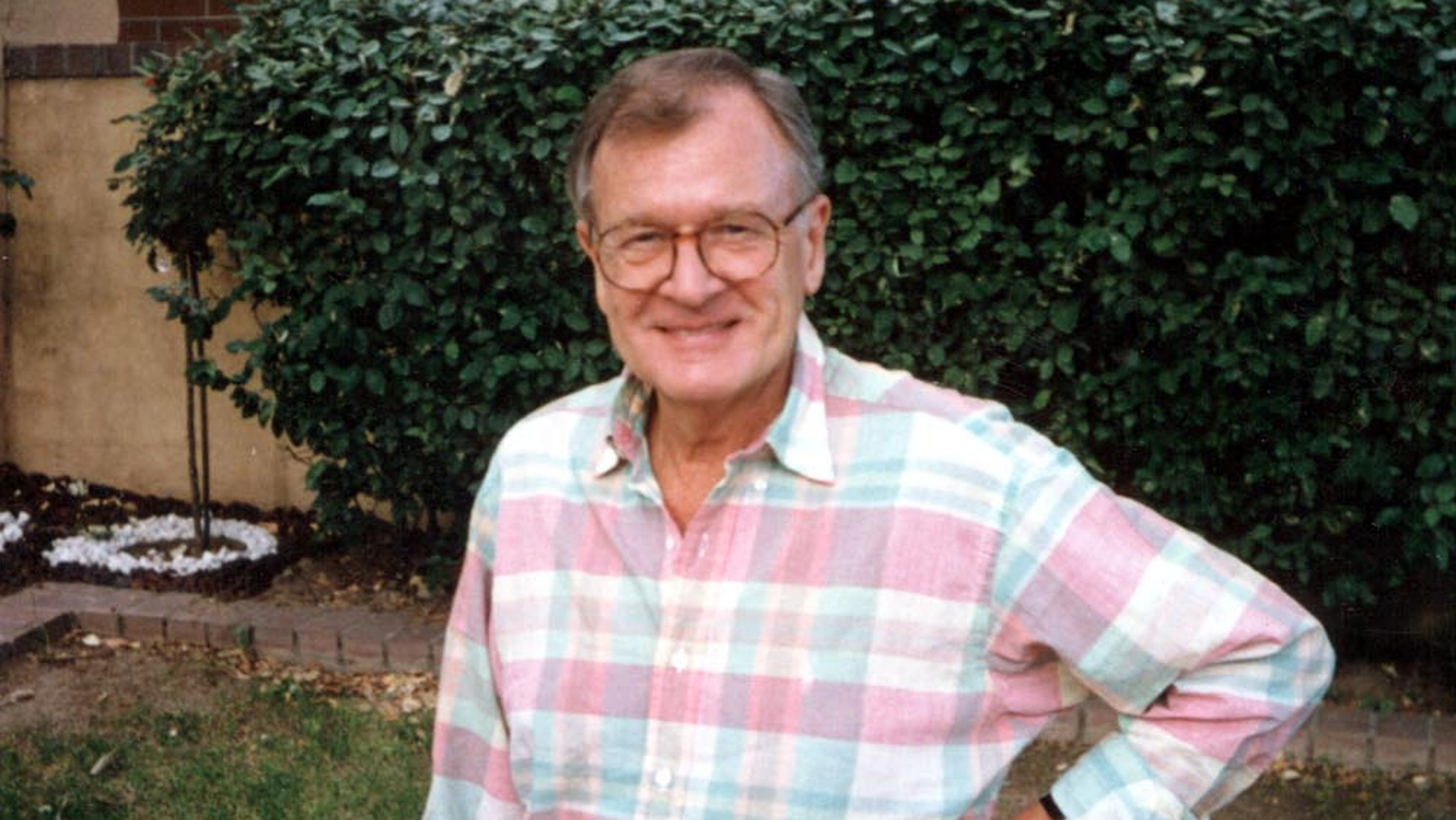
Bill Daily, the comic actor who found breakout success as Major Healey on the hit 1960s sitcom I Dream of Jeannie and also had notable roles on The Bob Newhart Show and Alf, has reportedly died. He was 91.

Daily’s son, J. Patrick Daily, confirmed the news to Variety and The Hollywood Reporter, saying that his father died of natural causes on Sept. 4 in Santa Fe, New Mexico. “He loved every sunset, he loved every meal,” J. Patrick told Variety of his father. “He just decided to be happy about everything.”

I Dream of Jeannie title star Barbara Eden remembered Daily on Twitter. Major Healey was a supporting character on all five seasons of the show, as the goofy best friend to NASA astronaut Anthony Nelson (the late Larry Hagman).

“Our favorite zany astronaut, Bill Daily has passed,” Eden, 87, tweeted, captioning a photo of them. “Billy was wonderful to work with. He was a funny, sweet man that kept us all on our toes. I’m so thankful to have known and worked with that rascal. Until we meet again Billy, xo.”

After Jeannie, Daily would spend all six seasons (and 140 episodes) on The Bob Newhart Show, playing Newhart’s dotty neighbor, airline pilot Howard Borden.

“Bill Daily & I go back to Chicago in the 50s,” Newhart, 89, wrote on Twitter. “He and I were both trying to get into standup.”

“Later, he joined The Bob Newhart Show. He was our bullpen guy — you could always go to him,” Newhart remembered of their time on the show, which wrapped in 1978. “He was one of the most positive people I’ve ever known. I will miss him dearly.”

Born Aug. 30, 1927, in Des Moines, Iowa, Daily’s first credited television role was Bewitched in 1964.

He would also have credited roles on Mary Tyler MooreCHiPs; The Love Boat; My Mother the Car; Getting Together; Love, American StyleAloha ParadiseStarting from ScratchCaroline in the City; and two of Newhart’s other shows, Newhart and Bob.

From 1987 to 1989, he recurred as psychiatrist Dr. Larry Dykstra on ALF. 

Daily would also have his own short-lived sitcom called Small & Frye. The 1983 series lasted for three months.

As himself, Daily would become a staple on game shows like Match Game and Hollywood Squares over the years. He also hosted several magic specials.

The star is survived by son J. Patrick, who works as a key grip for motion pictures.

Read More

from Trusted eNews https://ift.tt/2wY5TnM
via IFTTT

Bill Daily, ‘I Dream of Jeannie’ and ‘The Bob Newhart Show’ actor, dead at 91

news image

Bill Daily, the actor known for his roles on the sitcoms “I Dream of Jeannie” and “The Bob Newhart Show,” has died. He was 91.

Daily died Tuesday of natural causes in Santa Fe, New Mexico, his son, J. Patrick Daily told The Hollywood Reporter and Variety late Friday.

Daily played Major Roger Healey on “Jeannie” from 1965 to 1970 and played Howard Borden on “Bob Newhart” from 1972 to 1978.

His other work included appearances on the “Mary Tyler Moore” show in 1972 and “The Love Boat” in 1979. He also returned to his role as Healey for two “Jeannie” TV movie spin-offs in 1985 and 1991.

His death was met by heartfelt reactions from his former co-stars on social media.

Barbara Eden, who played Jeannie on “I Dream of Jeannie,” called Daily “our favorite zany astronaut” in a tweet Saturday.

“Billy was wonderful to work with. He was a funny, sweet man that kept us all on our toes,” she tweeted. “I’m so thankful to have known and worked with that rascal. Until we meet again Billy, xo -B”

Comedian and actor Bob Newhart tweeted Saturday that he would miss Daily “dearly.”

“Bill Daily & I go back to Chicago in the 50’s. He and I were both trying to get into standup. Later, he joined the Bob Newhart Show,” he said. “He was our bullpen guy — you could always go to him.  He was one of the most positive people I’ve ever known.”

More: Mac Miller dead from a suspected overdose at 26

More: ‘ER’ actress Vanessa Marquez killed by police after she pulled a BB gun on officers

Autoplay

Show Thumbnails

Show Captions

Read or Share this story: https://usat.ly/2wYYQeS

Read More

from Trusted eNews https://ift.tt/2oQatB5
via IFTTT

Dallas police chief: Officer who fatally shot man in his home will face charges

news image

USA Today NetworkWFAA-TV, Dallas-Fort Worth
Published 12:38 p.m. ET Sept. 8, 2018

DALLAS — The Dallas police officer who shot and killed a man when she entered the wrong apartment will soon be charged, according to Dallas police Chief Renee Hall.

An arrest warrant is in the process of being issued as of Friday afternoon.

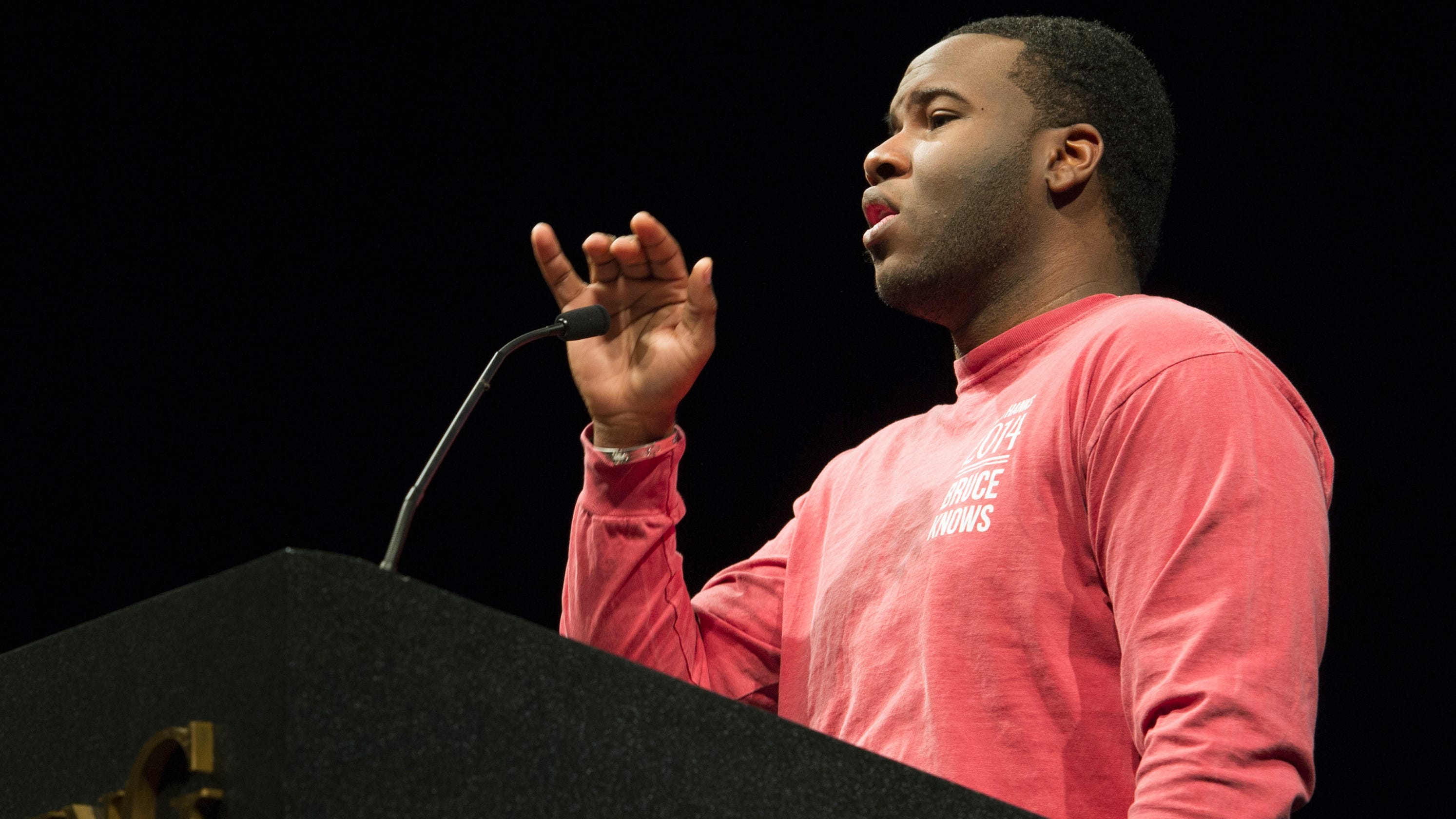
A five-year veteran, the officer was going home after a more than 12-hour shift and said she went to the wrong apartment, believing it was hers. At some point, she encountered 26-year-old Botham Shem Jean, who she shot with her service weapon. The details that led up to that moment are still not known.

The officer was in full uniform when the shooting happened just after 10 p.m. Thursday in the 1200 block of South Lamar, about a quarter-mile from the Dallas Police Department.

The officer called 911 and authorities responded and took Jean to the hospital, where he was later pronounced dead. According to Chief Hall, it’s unclear what the interaction was between the officer and Jean. At some point she did fire her weapon, ultimately striking Jean.

A blood sample was drawn from the officer to test for alcohol and drugs.

Chief Hall invited the Texas Rangers to conduct their own independent investigation. DPD says they’re conducting a joint investigation with the DA.

Allie Jean, Jean’s mother, said she wants transparency from the police officer who shot her son.

“Come clean. Speak the truth. I’m a Christian and I will forgive her, but she could never give me my son back,” said Jean’s mother.

Jean attended and studied accountancy at Harding University in Arkansas.

According to the university, Botham frequently led worship for chapel and for campus events. In a service this morning, Harding University President Bruce McLarty shared some memories of Botham with students in chapel.

In a Facebook post, Earl, Jean’s uncle posted a collage of pictures in remembrance of his nephew.

“How can this nasty world take you away from me…this is the worst day of my life thus far…uncle loves you so much,” he wrote.

Jean’s sister also took to Facebook posting the following: “Just last week I was thinking of what to get you for your birthday, now I have to go pick out your casket. You will always be my baby brother. I love you with all of my heart,” she wrote.

Read or Share this story: https://usat.ly/2wUXZeW

Read More

from Trusted eNews https://ift.tt/2wVDEq0
via IFTTT

Listen: US Open – Jamie Murray in mixed doubles final

news image

Listen to live US Open tennis commentary – Jamie Murray in mixed doubles final – BBC Sport


<!–


<!–

<!–
<!–

<!–
<!–

<!–

<!–

<!–


Summary

  1. Mixed doubles final: J Murray (GB)/Mattek-Sands (US) lose first set 6-2 to Mektic (Cro)/Rosolska (Pol)
  2. Serena Williams v Naomi Osaka in women’s final (21:00 BST)
  3. Use audio icon to listen to 5 live sports extra commentary


Read More

from Trusted eNews https://ift.tt/2oSXb6O
via IFTTT

The women of ‘Ozark’ redefine the male-centric crime genre

news image

Major spoilers for Ozark: Season 2 lie ahead. 

From Narcos to Breaking Bad, crime dramas have gained a reputation for using shallow female characters as little more than emotional fodder for male stories. Frequently minimized as damsels in distress and exasperating nags, women within the genre exist almost exclusively to portray girlfriends, wives, mothers, and victims.  

Season 2 of Netflix’s Ozark, however, champions female stories through all 10 of its episodes with an array of women that rivals the ensemble complexity of HBO’s The Sopranos.

Covering the good, the bad, and the ugly of cartel fallout, these five Ozark ladies exemplify the best the series has to offer.

Ozark

Image: Jessica Miglio/Netflix

Ruth Langmore

Actress Julia Garner deserves more than an Emmy nomination for her portrayal of Ruth Langmore, a Missouri native who is dragged through the worst of this season’s fallout. Ruth’s story takes root in multiple plot lines, allowing Garner to explore a complex, fully-formed human being. 

Multifaceted Ruth challenges the one-dimensional stereotyping of women in crime dramas.

Thanks to her relationship with Marty Byrde (Jason Bateman), Ruth faces the horrific presence of the cartel in the Ozarks on a survivalist level. Following a gut-wrenching waterboarding, viewers watch as Ruth attempts to keep herself aligned with the right people and learn the skills needed to have her own cards to play.

Simultaneously, Ruth navigates the ever-evolving, personal politics of the Langmore family. Although Ruth’s complicated relationship with her father is a monument to dysfunction, it pales in comparison to her relationship with her cousin, Wyatt, for whom she acts as a stand-in mother. 

In a surprising finale scene, Ruth admit to Wyatt that she killed his father (her uncle) in order to survive the events of Season 1—bringing her criminal and personal lives into collision. 

Both a protective maternal presence and an ambitious criminal, Ruth challenges the one-dimensional stereotyping of women in crime dramas by proving you can have your cake and run from the cartel too.

Wendy and Charlotte Byrde

This mother daughter duo is what Lady Bird would have been like if Greta Gerwig had skipped the coming-of-age narrative and opted for an absolute nightmare. Grappling with the realities of the family’s money laundering antics, Wendy and Charlotte struggle to integrate their respective coping strategies. 

Wendy and Charlotte exist as independent forces capable of influencing the story’s overarching narrative.

Wendy Byrde (Laura Linney), far from your typical mom, spends Season 2 as Marty’s equal by politicking in a way that could make anyone miss Season 1 of House of Cards. Despite genre history, Wendy’s smooth maneuvers are neither overly effective nor excessively sexualized. She exists in a real space. 

Her love for her children, dishonorable talents, sexual appeal, and careful calculation operate within a revolving door that allows Laura Linney to really sell Wendy’s decision making—particularly her finale verdict that the Byrdes won’t be leaving the Ozarks anytime soon. 

Alternative to Wendy’s leaning in, Charlotte Byrde (Sofia Hublitz) spends the latter half of the season fighting to get out. Unlike Meadow and AJ Soprano of The Sopranos, Charlotte doesn’t blindly accept what her parents have decide to do. Instead, she takes ownership of her autonomy as a young woman and makes moves to escape. It is unclear if Charlotte will make good on her promise to leave the Byrde family. However, her aggressive moves towards emancipation develop her capacity to maneuver effectively in future scenarios.

Rather than acting as set dressing for a male protagonist, Wendy and Charlotte exist as independent forces capable of influencing the story’s overarching narrative—with or without male permission.

Image: tina rowden & jessica miglio/netflix

Darlene Snell and Helen Pierce

These villainesses are two very different sides of the same coin. 

On one hand, you have the unhinged madness that is Darlene Snell (Lisa Emery.) Yeah, that chick who out of nowhere took out the main antagonist of Season 1 for “disrespecting” her home.

From shaving a 13-year-old’s head to murdering 22 people with fentanyl to make a point, Darlene is chaos personified. (The Episode 9 murder of her husband seals the deal on her irredeemability.)  

Ozark’s evil women prove that motherhood isn’t a one-size-fits-all trait of redemption.

On the other hand, you have Helen Pierce (Janet McTeer), the cartel’s Chicago-based lawyer. Similarly evil, but far more level-headed, Helen protects her client with a chilling exactness akin to a demonic Olivia Pope. Her torture sequences are grippingly deliberate, calm, and unhurried.

Darlene and Helen spend most of the season at odds, but with one important matter in common. Both Darlene and Helen express a fierce maternal instinct to protect and care for their children. 

However, unlike Serena Joy of The Handmaid’s Tale, Ozark’s evil women prove that motherhood isn’t a one-size-fits-all trait of redemption. Babies or no babies, Darlene and Helen are bad actors whose femaleness won’t undermine their antagonistic performances.

The future of Ozark is fantastically female

Going into Season 3, all of these Ozark women are still on the chess board. Ruth remains entrenched in Marty’s dealings. Wendy and Charlotte are (for now) still on Team Byrde. Darlene is settling in with baby Zeke. And, although she has returned to Chicago, there is no way Helen is out of the picture for good. 

If renewed, Ozark is set for a compelling return that should continue to effectively explore the female side of the crime genre. The success of these characters will (fingers crossed) encourage more behind-the-scenes female inclusion as well. (Currently, the director’s chair and writers’ room remain dominated by men.)

Moreover, one can hope that as Ozark‘s creators receive critical praise for mastering female narratives, they will reconsider the diversity of Season 3’s cast. Sure, this story takes place in Missouri, but PoC stories exist everywhere. And based on these five killer performances, tons of other media, and common sense, representation isn’t a concession—it’s an asset.

Ozark: Season 2 is now streaming on Netflix.

Https%3a%2f%2fvdist.aws.mashable.com%2fcms%2f2018%2f9%2fa6f35057 a28b 4964%2fthumb%2f00001

Read More

from Trusted eNews https://ift.tt/2MbCbkJ
via IFTTT

Design a site like this with WordPress.com
Get started