Serena Williams’ US Open controversy comes down to these two questions

news image

CLOSE

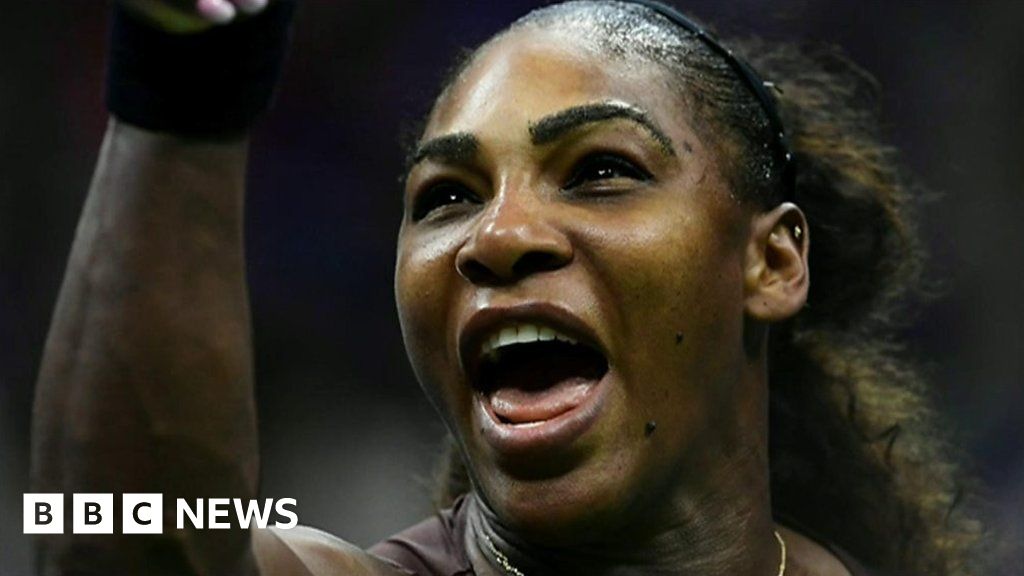
Naomi Osaka stunned Serena Williams to win the US Open, but Williams’ heated dispute with the chair umpire overshadowed the result.
USA TODAY

The chaos and controversy that enveloped the Serena Williams-Naomi Osaka US Open final will be discussed for as long as people talk about sports. There’s something for everyone in this one. We all have our opinions, and rest assured, everyone is giving them. 

But, as time passes, there are only two questions that will really matter:

Was Serena Williams treated differently than a man would have been treated for doing exactly what she did and saying exactly what she said?

And, if so, why? Is it solely sexism, the easiest and most logical answer? Or is it more than that? The chair umpire is the one person on earth not talking about this, so we are left to wonder: is it because Williams is a woman? An African-American woman? Is it because she’s so successful, so outspoken, such an important presence in our culture? What is it?

As we look back on what happened Saturday night as Williams was going for her historic 24th Grand Slam title, you can believe her behavior was wrong yet still believe there’s a terrible double standard for women when compared to men in tennis. Those thoughts are not mutually exclusive.

More: Instead of triumphing, Serena diminished herself with behavior at US Open

More: Naomi Osaka shows grace, class in first Grand Slam victory

It’s a fact that the sport that gave us John McEnroe and Ilie Nastase and Jimmy Connors and so many other bad boys has tolerated without penalty far worse behavior than the language Williams used Saturday evening. She said as much in her defense during the match and after, and others quickly agreed with her.

“I will admit I have said worse and not gotten penalized,” James Blake, the former top-ranked U.S. male tennis player, wrote on Twitter Saturday night. “And I’ve also been given a ‘soft warning’ by the ump where they tell you knock it off or I will have to give you a violation. He should have at least given her that courtesy.”

Mardy Fish, another former American men’s No. 1, also went on Twitter after the match:

“Two ridiculous calls today. I can promise you, that’s not coaching, racquet abuse no doubt, but the verbal abuse??? It’s the US Open Final!!!”

And Patrick McEnroe on Sunday’s Good Morning America: “It has to be said that she has a point when it comes to gender bias. I believe that a chair umpire who’s a man, against another man, would have said, whether it’s Rafael Nadal or Roger Federer, ‘Listen, you’ve got to pipe down now. You’ve got to be quiet. You’ve gotten two violations. If you get another one, you’re getting a game penalty.’ Nobody wants to see that happen, especially in the US Open final.”

So it appears the first question has an easy answer: Williams was treated differently than a male player would have been, especially at such an important moment in the match and, because of what was at stake, in the sport’s history.

We all know that old boys’ clubs still exist, but it’s especially telling that this happened at the US Open, the first Grand Slam tournament to pay women equal prize money, starting all the way back in 1973, decades before the other three majors did. If the US Open can’t penalize (or not penalize) male and female players equally, then probably no one can.

The powers that be in tennis have some significant work ahead of them on this one. They could start where it all began, by checking in with Billie Jean King. She’s the one who successfully fought for equal pay at the US Open. Saturday night, she said this on Twitter:

“When a woman is emotional, she’s ‘hysterical’ and she’s penalized for it. When a man does the same, he’s ‘outspoken’ and there are no repercussions. Thank you, Serena Williams, for calling out this double standard.”

This has been an instructive couple of weeks to chart the progress women are making in a sport that arguably treats them the best of any of the high-profile sports that men and women play at an elite level. And I don’t mean instructive in a good way.

The French Open banned Williams’ catsuit, which she wore as a message of empowerment for new mothers, while the US Open penalized Alize Cornet for quickly changing her shirt on court after she realized it was on backwards. The backlash against that one was so severe that officials quickly apologized and adjusted their rules.  

Autoplay

Show Thumbnails

Show Captions

And then chair umpire Carlos Ramos decided to do what a referee in any sport should never do: insert himself in dramatic fashion into a major sporting event rather than diffusing the situation and letting the players play.

First, he issued a warning to Williams for being “coached” from the stands, something that apparently every coach in the game does and gets away with, with no warnings — except for Williams’ coach Patrick Mouratoglou during the US Open final. Think about that for a moment.

When Williams later smashed her racket in anger, she appropriately received a penalty — then her second penalty — and therefore, the loss of a point. If there had been no coaching penalty, the racket abuse would have been her first offense and wouldn’t have cost her a point.

Then came the big one: Williams’ anger getting the better of her, calling Ramos a “thief” for taking the point from her. It was not a good moment for Williams, but tennis being tennis, does that even rank in the top 50 of terrible things said by a player to an umpire in the heat of battle in the history of the game — including by many players, long since retired, who are revered to this day?

To Ramos it sure did, and he made the unprecedented decision of taking an entire game from Williams in the crucial second set of a Grand Slam final. Would he have dared do this to Federer or Nadal in a similar situation? We weren’t born yesterday. We know the answer. Of course not.

So why? Why is the greatest player in history not given the leeway far less-accomplished male players say they consistently receive? Is it simply because she’s a woman? African-American? Controversial?

Is it because she is in many ways so much bigger than the game now? Beloved by thousands who aren’t normally tennis fans? Taking a stand on issues involving women and race?

Is it all those things? Some? Most?

Tennis, it’s your serve. It’s time to answer. What is it, and, more important, how do you stop it?

Autoplay

Show Thumbnails

Show Captions


Read More

from Trusted eNews https://ift.tt/2x1MNgS
via IFTTT

Nations League: Denmark v Wales

news image

Nations League: Denmark 0-0 Wales – Bale captain, Eriksen starts – Live – BBC Sport


<!–


<!–

<!–
<!–

<!–
<!–

<!–
<!–

<!–
<!–

<!–

<!–

<!–


Summary

  1. Listen on BBC Radio 5 live & online
  2. Gareth Bale to captain Wales, Ashley Williams not included
  3. Wales beat Republic of Ireland in Nations League Group B4 opener
  4. Denmark’s senior players available despite ongoing dispute with Danish FA
  5. France v Netherlands (19:45 BST) to follow


Read More

from Trusted eNews https://ift.tt/2wVfjBu
via IFTTT

Q&A: What’s next for Libya?

news image

On March 30, 2016, members of Libya‘s UN-backed Government of National Accord (GNA) sailed into Tripoli in an effort to unite rival factions and bring stability to the war-torn country.

In order to establish its authority, the GNA sought the support of a handful of militias already active in the city.

The gradual rise of these Tripoli-based armed groups, which kept their autonomy as they began dominating the formal security institutions, including the interior ministry, angered powerful militias outside the capital who felt marginalised and at risk of losing access to state funds.

Last week, fierce clashes broke out between groups from outside the capital and Tripoli-based militias, killing dozens of people and wounding many more.

The renewed fighting did not only lay bare Tripoli’s fragile security situation and GNA’s powerlessness, but also pushed major international powers – already at odds over how to resolve the long-running conflict – to change their tone.

In a speech at the Security Council on Wednesday, Ghassane Salame, the UN envoy to Libya, warned of the threat “predatory” armed groups pose to the country’s transition process.

“Indeed, members of some armed groups nominally acting under the ministry of interior have kidnapped, tortured and murdered employees of sovereign institutions, including the National Oil Corporation and the Libyan Investment Authority,” said Salame.

“Our public criticism of the predatory behaviour of armed groups in the capital was warmly welcomed by Libyans, who are fed up with living on the poverty line whilst their national resources are looted by gunmen-turned-millionaires.”

Salame also cautioned against opportunistic politicians in the country’s two rival administrations – the Tripoli-based GNA and the House of Representatives in the eastern city of Tobruk – who seek to prolong the country’s chaotic status quo for their own personal gain.

The violence also cast doubt at the prospect of holding nationwide presidential and parliamentary elections by December, agreed by rival Libyan leaders who met in May in Paris at the behest of French President Emmanuel Macron.

Italy has called for the launch of peace talks between rival groups, which it hopes can take place in November as a prelude to the planned December polls.

But Giuseppe Conte, Italy’s prime minister, acknowledged last month that Rome was in no rush to see elections happen. 

“Italy’s primary interest is to stabilise Libya and to hold the presidential and political elections with appropriate guarantees,” Conte told reporters last month.

Meanwhile, renegade General Khalifa Haftar, whose self-declared Libyan National Army controls much of eastern Libya, denounced Italy’s approach as counterproductive.

Al Jazeera spoke to Jalel Harchaoui, a political analyst and scholar, to get a sense of where Libya stands and what it needs to do to bridge political differences and move the legislative process forward.  

Al Jazeera: Do recent clashes in Tripoli present the international community with a new reality of the situation in Libya? 

Jalel Harchaoui: I think it’s more about the optics rather than a reality that would have been completely novel. A lot of what happened had been almost predicted by many political scientists.

What the international community was engaged in was a very strong and tenacious desire to believe that the equilibrium in Tripoli was tenable, viable and stable – that wasn’t the reality.

People detached from governments and the UN had enough information to conclude that, yes, there was an equilibrium in Tripoli but that it wasn’t tenable.

Foreign states are now forced to see what they were not willing to see: the fact that downtown Tripoli, the centre of the capital where all the embassies are, as well as other vital institutions, cannot be separated from the rest of Libya.

What we have seen over the last 10 days was that armed groups outside Tripoli, in the periphery, were not going to stand by idly while those in the capital take advantage of the opportunities for embezzlement. 

Al Jazeera: Can militia violence and their disproportionate influence over civilian authorities be reined in? 

Harchaoui: No one – neither the Libyans in the Tripolitania region, nor the foreign states nor the UN – has undertaken any real effort to build a state. On the contrary, what we have seen is a temptation, or even an interest, in working with militias.

These militias were smart enough to know that in order to receive support and please some of the actors, they were expected to conduct a political war against groups like the Muslim Brotherhood which they had already expelled from the city.

It is difficult to see how these convenient groups can be dismantled. They are useful to some outside parties with foreign agenda. 

At the same time, one must keep in mind that accepting a militia is not a good start to state-building efforts. A militia will continue torturing people, being opaque and corrupt, regardless of what it says.

In sum, we don’t know whether they can be reined in until we actually try. If you don’t question a militia, it means you are not interested in incorporating it into a structure of the state.

Foreign states are not the only culprits but it is important to highlight their role. The United Arab Emirates, Saudi Arabia and France, in particular, were all too happy to court the militias.

These three countries happily accepted the militias as legitimate actors to work with. They were deeply interested in coopting them because they thought these militias did not belong to the Muslim Brotherhood.

The militias in Tripoli did improve the security situation but they were also expected to wage a different kind of war, a political battle against Islamists and revolutionary militias in the capital.

The reason why I single out those three is because nobody seems to mention them. They were not denounced by the UN, civil society groups or NGOs. 

Al Jazeera: Do the latest developments give reason to Italy’s approach, as opposed to France’s, to the Libyan crisis which has emphasised national reconciliation before nationwide polls can be held? 

Harchaoui: In terms of Italy and France, no single approach is best.

Italy has a lot to do with the collapse that just happened and engaged in a strategy that it thought would be very productive but which in the end proved futile.

Rome tried to cultivate the status quo by talking to as many actors as possible, both inside and outside Tripoli.

They adopted a horizontal approach and they genuinely thought that they’d be able to control the whole thing and stich everything [militias] together into a functioning state.

France doesn’t know Libya nearly as well as Italy. They have no contacts in the cities of Sabratha or Misrata. They were not even able to invite Misratans to the May 29 summit in Paris.

But the French government’s approach is quite similar to Italy’s in Tripoli, where both celebrated the capital’s newfound stability and the four big militias that upheld it.

The difference has to do with the periphery but the Italians – by virtue of historical circumstances – have a much wider reach.   

The French looked at the developments in eastern Libya, where Haftar restored a semblance of normality, and at how central Tripoli also seemed to have been stabilised, and thought why not organise elections overlooking the simmering tensions in the capital’s outskirts.

Stability for Italy on the other hand is far more important.

It imports some 300,000 barrels of oil per day from Libya and the impact of instability, especially in terms of refugee flows, would be unbearable. 

They didn’t want anybody to rock the boat, as it were, and elections were a risky endeavour.

Al Jazeera: What can the international community do to move the legislative process forward? 

Harchaoui: France doesn’t just want elections. It is interested in creating the role of a president, knowing fully well that Libya has a parliamentary system at the moment. France is therefore extraordinarily ambitious and it’s asking for a lot.

This stands in contrast with the Italian, British and the United States’ approach, which is a lot more prudent and pragmatic: there is talk of parliamentary elections but not before June 2019.

To move the legislative process forward, one step that the UN can take, and the international community more broadly, is to break the taboo about the Emiratis and Saudis bypassing international efforts and interfering by supporting the militias that most suit their agenda.

The international community should be able to ask these two states to back off.

Many people talk about the run-ins and war of words between France and Italy but this isn’t that major of an issue.

It’s good to criticise Qatar and Turkey but the other two are never mentioned simply because they happen to be anti-Muslim Brotherhood which in my view is problematic.

Of course, there are other issues in Libya that have nothing to do with Islamism. They have to do with state construction and can be addressed once foreign meddling stops. 

This interview was edited for clarity and brevity.

Read More

from Trusted eNews https://ift.tt/2x61wr9
via IFTTT

‘Life Itself’ will get people talking, and not in a good way: Review

news image

As evidenced by the title, Life Itself has grand ambitions. 

It wants to be about the joy and love that are with us even at the worst of times, about the way death shapes our lives and gives them meaning, about all the twisting threads make up our fates, whether we know about them or not. I don’t have to guess here, because the movie says as much in so many words. 

What it actually delivers, though, is a big sloppy pile of WTF.

Life Itself is the new film directed by Dan Fogelman, best known as the creator of This Is Us and the screenwriter of Crazy, Stupid, Love. If you are familiar with his other works, you’ll know to look for some of his trademarks here. 

Shocking plot twists that are really just basic information about how the characters you’re watching are connected? Check. An almost unseemly fascination with death of a beloved family member? Yup, several times over. Extreme emotional manipulation? Oh, definitely check. Life Itself will not be happy unless you are sobbing into your popcorn.

But the tricks that have served him well in other stories fail Fogelman here. Instead of amping up the feels or delighting us with surprise reveals, they get in the way of any weight or emotion the movie might have carried otherwise. 

Life Itself is divided into five chapters, each focusing on a different character or group of characters. What they all have to do with one another won’t be clear until the end, though you’ll have plenty of opportunities to speculate while your mind is wandering during one of the film’s many tedious monologues. 

The first is the most distinctive, and the worst. It’s the very sad story of a man (Oscar Isaac, trying his best as always) whose wife (Olivia Wilde, who has to try even harder with even worse material) has just left him. Only it’s not really sad, because it’s aggressively quirky, peppered with Tarantino-lite flourishes like a ton of fucks, verbose rants about pop culture, and sudden bursts of violence. 

Does that sound like a really strange way to describe a movie that’s being marketed as a shorter This Is Us? Well, it’s a really strange way to frame a movie that seems to wish it were a shorter This Is Us

Everyone in Life Itself is so deliriously happy!! Except when they're crushingly sad!!!!!

Everyone in Life Itself is so deliriously happy!! Except when they’re crushingly sad!!!!!

The others don’t have a ton in common with the tone of that first chapter. But because Life Itself set such an aggressively sour tone early on, I kept bracing myself for something sudden and awful to happen. Up until the very end, I wondered if these characters were about to murder or assault another. 

It’s really anyone’s guess, since none of these people feel like coherent creations. They’re prone to off-the-cuff rants that seem less like something a real person would say and more like something an overeager student would whip up for an intro screenwriting course. “It’s like a movie, right?” is a thing that one of these characters says at one point. 

The men, at least, fare better than the women. The guys get to be epically romantic or foolishly proud or hopelessly lovelorn. They’re masters of their own destinies. When one meets the love of his life, it’s described as the most important day of his life – who knows or cares what the most important day of her life might be?

Life Itself is so mind-bogglingly misguided, it’s going to be great fun to talk about.

For all their cool-girl feistiness, the women of this film are really just there to be adored by the male leads, and to giggle attractively in the many, many, many, many montages that show how deliriously happy these couples are. “He loved his wife with an intensity usually reserved for stalkers,” says a voiceover at one point, with a tone that suggests we’re supposed to find this description cute rather than creepy.

There is one reason and one reason only to watch Life Itself, and it’s that, like Collateral Beauty and Book of Henry before it, Life Itself is one of those movies that’s so mind-bogglingly misguided, it’s going to be great fun to talk about.

Really, the question will be where to start. With the bizarrely casual references to child molestation, domestic violence, and sexual harassment? With the cringeworthy dialogue, which yields such groaners like “Life itself is the ultimate unreliable narrator?” With the confoundingly convoluted plot, which grows to be so punishingly bleak that Life Itself is basically Saw for emotions?

Life Itself may not have all the answers to all the mysteries of the universe or whatever, but it does have enough nonsense to fuel several cocktail parties’ worth of chatter. I guess that’s something.

Https%3a%2f%2fblueprint api production.s3.amazonaws.com%2fuploads%2fvideo uploaders%2fdistribution thumb%2fimage%2f84357%2f4f1b02bf b2d3 4a94 aac1 e717128872ee

Read More

from Trusted eNews https://ift.tt/2O14GDF
via IFTTT

Halloween is a faithful, fundamental sequel (and funny too): EW TIFF review

news image


Halloween (2018)

type
Movie
Genre
Horror
release date
10/19/18
performer
Jamie Lee Curtis, Judy Greer, Andi Matichak
director
David Gordon Green
distributor
Universal
mpaa
R


We gave it a B+

Long live Michael Myers, so maybe someone can finally kill him — in a big, funny, scary, squishy, super-meta sequel that brings it all back to the iconic 1978 original.

Forget whatever you know, or should have wiped from your browser history, about the other franchise entries that came in between. Director David Gordon Green and co-writer Danny McBride have brushed them aside for the core story of original survivor Laurie Strode (Jamie Lee Curtis), now a fierce grandma with a gun and a long, long memory. She has a semi-estranged daughter (Judy Greer), and a granddaughter too (Andi Matichak). And she knows Michael (Nick Castle) is being transferred after 40 years to another mental health facility.

Strangely, things don’t go well in the transfer. Soon Michael is on the loose in Haddonfield, Illinois, on the anniversary of his Halloween-night rampage four decades before, and the body count is piling up like so many churros on a taco cart. Green (All the Real Girls, Pineapple Express, Vice Principals), once an indie auteur and now a sort of genre journeyman, clearly loves his source material. He and McBride fill the script with comic riffs and referential winks to the original, even as the movie lets Michael slash, stomp, and impale his way through Haddonfield’s terrorized, poorly reflexed population.

The tropes are all here: teenager makeout sessions, frantic escapes through a dark wood, death by ax and steel-toe boot and bathroom stall. (Also the iconic score, the pumpkin-colored font of the credits, and a few original supporting characters.) In some ways, Green might even be too faithful; there’s no new Deadpool-y twist of fourth-wall breaking or this-is-why-he-cries back story.

Instead, the movie mostly works because it’s so fundamental, and funny too: Michael still never speaks; his mask and his slow, deadly, deliberate walk say everything they need to. At 59, Curtis seems to have fully arrived in her role as a midnight-madness queen, and she has a great time in jeans and a gaey fright wig, swinging her shotgun around and screaming at everyone to get in the safe room.

By the end, she might even have finally gotten her guy — but true hate never really dies, as any good horror knows. And neither, if the box office is strong enough, do boogie men. B+

Read More

from Trusted eNews https://ift.tt/2wYxoOS
via IFTTT

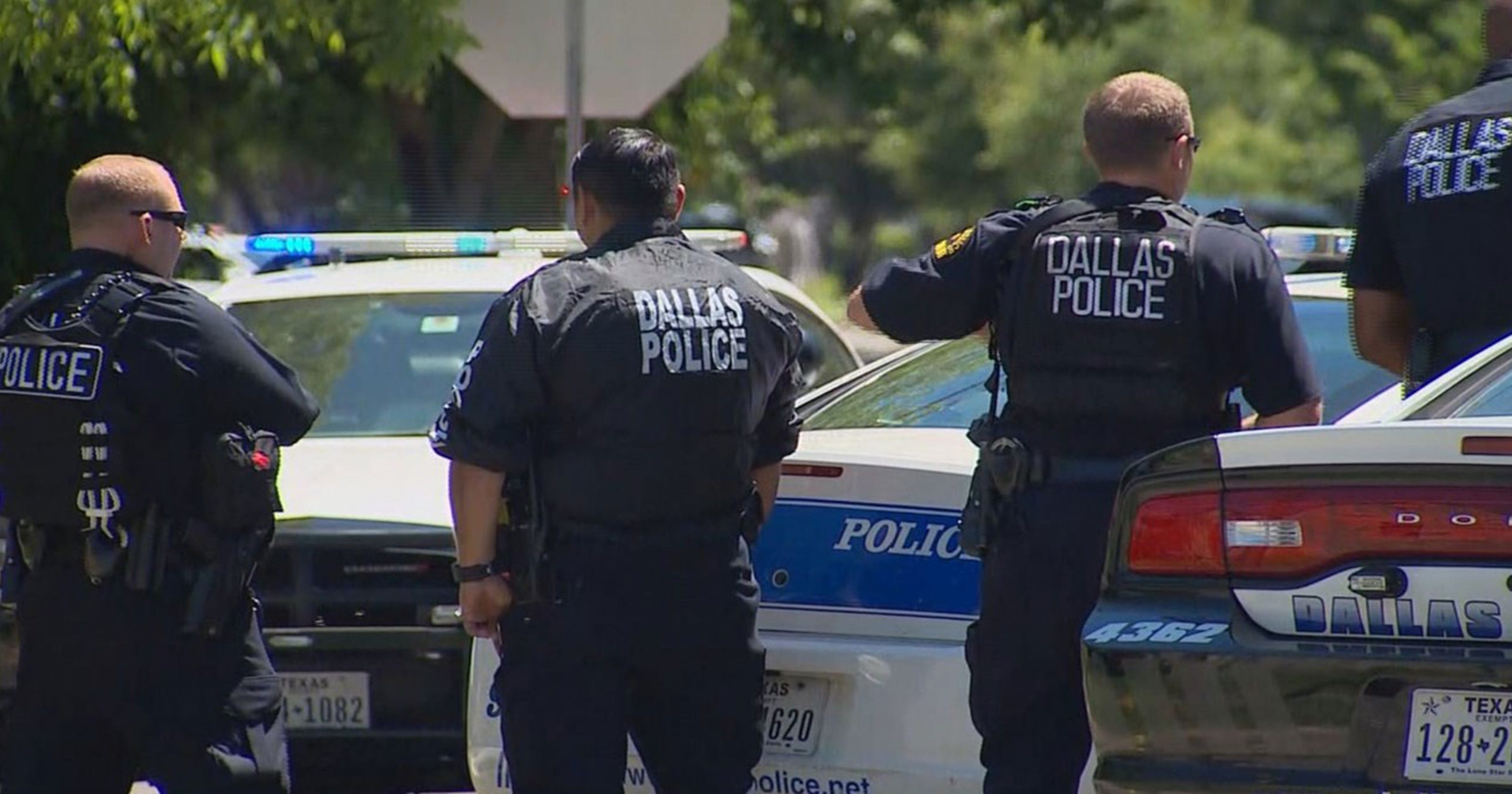
Dallas officer Amber Guyger, who killed a black man in his apartment, shot a man last year

news image

CLOSE

A Dallas police officer returning home from work shot and killed a neighbor after she said she mistook his apartment for her own, police said Friday. (Sept. 7)
AP

The Dallas police officer who says she fatally shot a black man in his apartment believing that it was her own apartment also shot a man last year, according to court documents.

Police say Amber Guyger, a four-year veteran of the force, told investigators she was returning home from her shift Thursday night and accidentally entered Botham Jean’s apartment. Guyger, who is white, believed Jean was an intruder and shot him, police said. Police have released few other details.

In May 2017, Guyger was called to assist another officer searching for a suspect. An affidavit indicates a man identified as Uvaldo Perez got out of a car and became combative with Guyger and another officer. A struggle began and Guyger fired her Taser at Perez, who wrested the weapon away from her. Guyger then drew her gun and shot Perez in the abdomen, the affidavit says. Guyger was not charged in the case.

Jean’s family is demanding charges against Guyger in Jean’s death.

“This family is frustrated,” attorney Lee Merritt said. “This family is grieving that it (an arrest) has not happened yet. We believe the fact that that has not happened yet is a reflection on deferential treatment for law enforcement officers.”

More: Dallas police officer fatally shoots man after entering wrong apartment

Police Chief Renee Hall on Friday announced that investigators were preparing a warrant for a manslaughter charged. She also turned the case over to the Texas Rangers, citing the need for transparency in the investigation.

A day later, however, she said the Rangers had asked her to hold off on the charges. The Rangers, she said, had interviewed Guyger and wanted to further investigate information obtained from her.

Jean’s mother, Allison Jean, flew to Dallas from the family’s native St. Lucia after the shooting. 

“This is the worst call any mother can get,” she said. “This is the worst pain.”

Contributing: WFAA-TV in Dallas, The Associated Press

Read or Share this story: https://usat.ly/2x5HtZV

Read More

from Trusted eNews https://ift.tt/2McNkC6
via IFTTT

15 US cities where you can afford to buy a home if you earn less than $40,000 a year

news image

If you want to become a homeowner, you don’t need to earn six figures. But you may need to live in the right place.

div > div.group > p:first-child”>

Using the National Association of Realtors’ Metropolitan Median Area Prices and Affordability and Housing Affordability index from the second quarter of 2018, CNBC Make It identified 15 cities where the qualifying income to purchase a home with a 10 or 20 percent down payment is an annual salary of $40,000 or less.

The data assumes a 4.7 percent mortgage rate for all areas and a monthly principal and interest payment limited to 25 percent of a resident’s income.

While buyers may still need to pay down debt, save up cash and qualify for a mortgage, the bottom line is that buying a home on a middle-class salary is still possible — in some places.

Below, check out 15 cities where you can become a homeowner while earning $40,000 a year or less.

Read More

from Trusted eNews https://ift.tt/2wVtK8n
via IFTTT

Serena Williams’ US Open court outburst

news image

Serena Williams has accused the umpire of sexism in docking her a game in the US Open final and denied cheating.

She received a code violation for coaching, a penalty point for racquet abuse and a game penalty for calling the umpire a “liar” and a “thief”.

Afterwards the American said it was “sexist” to have been penalised a game.

READ MORE:Rants, jeers and tears – how did we get to ‘most bizarre match’?

READ MORE:‘Tennis is the loser – but Williams has a point’

Read More

from Trusted eNews https://ift.tt/2O4FDzL
via IFTTT

In the good ol’ days, we forced politicians to do the Macarena

news image

As President Donald Trump’s election proved, it doesn’t take much to get elected anymore. In the ’90s, the bar was higher: politicians were at least forced to dance the Macarena.

You’ve probably seen gifs from the infamous ’96 Democratic National Convention, where Hillary Clinton was made to dance to the song. Friends, I’m pleased to report that the full video is incredible, and the trend runs so much deeper.

It’s proooobably worth mentioning that the song is about a girl named Macarena who cheats on her boyfriend with two friends while he’s being drafted into the military.

And this is the song we once witnessed Secretary of State Madeline Albright dance to at the United Nations:

To be honest, Secretary of State Colin Powell did a much better job in 1996:

That same year, Clinton at the DNC Convention gave Powell a run for his money.

Listen, dancing has never been Clinton’s strong suit, but look at all these Democratic party nerds going so so hard for the camera with no sense of rhythm or shame.

We never witnessed then-Vice President Al Gore do the traditional Macarena, but at the convention he did claim to invent something he called the “Al Gore version of the Macarena.” (3:13 in).

Pretty impressive, nerds. But when it came to dance trends, I think Russian President Boris Yeltsin destroyed us hard. 

I’ll never forget Yeltsin’s greatest moment — behind that whole “ending the Cold War” thing — where he danced on stage in 1996 (though not to “La Macarena.”)

If Trump wants to bring back anything from America’s “great past,” let “La Macarena” be it.

Https%3a%2f%2fblueprint api production.s3.amazonaws.com%2fuploads%2fvideo uploaders%2fdistribution thumb%2fimage%2f86133%2f03b6244f 17f4 4bf6 ad87 84a7094f9daa

Read More

from Trusted eNews https://ift.tt/2MdGImI
via IFTTT

Will growing scenes of hurricanes, wildfires and volcanoes make us a go-bag people?

news image

CLOSE

An explosive wildfire closed down dozens of miles of a major California freeway. The Delta Fire erupted Wednesday afternoon and within hours devoured nearly 8 square miles on both sides of Interstate 5 near the Oregon state line. (Sept. 6)
AP

Will repeated exposure to vivid scenes of natural disaster — Western wildfires, a global heat wave, Hawaiian volcano eruptions, the 2017 hurricanes’ anniversary and a suddenly active 2018 season — finally turn America into a go-bag nation, prepared for calamity and ready to flee it?

Experience counsels skepticism. So does human nature. 

The sight of a 30-story-high wave of fire consuming a Colorado subdivision, or a California “fire tornado” as long as three football fields, may rivet a national audience. But it probably won’t change national attitudes about how to prepare for an emergency or when to evacuate.

Experts say people aren’t really motivated by disaster until it comes to, or through, their door. “I don’t know what it’ll take,’’ says Jay Baker, a retired Florida State University geographer who has studied evacuation behavior, “but disaster scenes are not enough.’’

More: Tropical Storm Florence creeps closer to US, to head toward East Coast as major hurricane

Take the case of Lauren Sand.  

When she was a kid her family built a house on the west side of Los Angeles. This was shortly after the Bel Air Fire of 1961, one of worst wildfires in California history.

When she moved into the neighborhood, the hillsides were still charred. On the next ridge, a row of chimneys marked where houses had stood before the fire.

As an adult, Sand created Grabbit the rabbit, a cartoon mascot for emergency preparedness. She marketed Grabbit-themed products, such as a kids’ backpack stuffed with necessities for a quick escape.

But last December, when a pre-dawn wildfire came roaring toward the same home where she grew up, Sand was taken by surprise. She learned of the fire only when a friend saw it from the freeway and called to warn her.

Sand grabbed her laptop, purse, phone and some papers, and hopped into her car. When she looked in the mirror, she saw a wall of black smoke rolling down the street. She gunned her Prius like it was a Maserati.

She escaped, but without a coat, toothbrush, cherished family records and photos, and the architectural plans for her house (which, unlike several on the street, was spared). She left the pool uncovered and found it, when she was able to return three days later, filled with ashes.  

Grabbit would not be impressed.

A land of natural hazards

America is riddled with fault lines and bordered by storm-tossed oceans, with two great north-south mountain ranges but none running east-west to keep Arctic air from flowing south and tropical air from going north.

There are hurricanes in the Southeast and nor’easters in the Northeast; tornadoes on the lower Plains and blizzards on the upper Plains; earthquakes and volcanoes along the Pacific Coast, which also is vulnerable to tsunamis; sinkholes and lightning in Florida; avalanches in the Rockies and flash floods in the Appalachians; hail from Minnesota to Texas and ice storms from Wyoming to Maine; lake-effect snow from the Great Lakes and the Great Salt Lake; and monsoons in Arizona.

In the first half of this year, six natural disasters each caused at least $1 billion damage and killed a total of 36 people. This came after 2017, the costliest year on record. It included California’s Wine Country fires, which killed 44 and destroyed 10,000 homes; Washington State blazes that dumped ash on Seattle like snow and pushed the air quality index in Spokane to “hazardous;’’ and three hurricanes — Harvey, Irma and Marie — so bad their names were retired.

Global warming makes wildfires hotter and probably will make hurricanes bigger. And the number of people living in harm’s way, including active earthquake and volcano zones, is increasing.

Yet, as FEMA administrator Brock Long observed  this year, America lacks a “culture of preparedness.’’  

We mostly don’t stock up on batteries, candles and water; we don’t prepare a family emergency plan or buy a hand-cranked radio; we don’t listen carefully to warnings and often don’t understand them when we do.

Or obey them. A survey in Florida after Hurricane Irma by Mason-Dixon polling found that only 43% of those under mandatory evacuation orders actually evacuated.

A 2015 study by the National Center for Disaster Preparedness at Columbia University found that two-thirds of Americans said they were not prepared to evacuate in an emergency. But Irwin Redlener, the center’s director, believes the situation is actually worse.

Sometimes, when he’s speaking to groups of emergency preparedness specialists, he’ll ask how many have a personal or family evacuation plan. Only a few hands go up, and most of their plans turn out to be half-basked.

Redlener thinks he knows why: It’s hard. A plan sounds like a good idea until, say, you face the question of what to do about your kids at school in case of a disaster. Do you go get them? Does your spouse? Traveling could be risky, so what are the school’s plans in an emergency? And how do you find out?

Suddenly, you notice the lawn needs mowing.

Last year two Wharton business school professors, Howard Kunreuther and Robert Meyer, published The Ostrich Paradox: Why We Underprepare for Disasters. They identify six unconscious biases that undercut our ability and willingness to prepare.

1.      Myopia: We focus on the short term and have difficulty understanding long-term consequences, such as the 100-year flood.  

2.      Amnesia: We forget the past. We buy a condo in complex built where a storm once blew away a shopping center.

3.      Inertia: We do what we’re doing until something drastic happens, when it’s too late. See New Orleans and Katrina in 2005. 

4.      Selectivity: We don’t look at all the information, or simplify to the point of inaccuracy. If we have an emergency check list, we lose interest after covering a few items, without making sure they were the most important.

5.      Herding: We make choices based on what the other person is doing. And so we both wind up treading water.

6.      Optimism: This most American of traits leads us to underestimate risk, ignore worst-case scenarios and think bad things will only happen to others. It’s a great attitude for someone starting a business, not so much for someone living in a flood zone.

There are others factors, such as cost. Some people living in disaster-prone areas don’t move because they can’t afford to. Even assembling a comprehensive go-bag can be prohibitively expensive for some families.

And there’s always sheer ignorance. Many people living along the New Jersey coast during Superstorm Sandy in 2012 had no idea what hurricanes do to barrier islands until they found their roads clogged with four feet of sand.   


A hard habit to change

Viral internet images and nonstop TV news coverage of this year’s disasters and disaster anniversaries have inspired some hope that Americans will begin to focus more on preparing for emergencies, rather than just reacting to them.

But Baker, the evacuation expert, says there’s little evidence that evacuation behavior is influenced by such things.

In 2005 he was conducting a survey of public evacuation attitudes on Long Island when Katrina struck New Orleans. He assumed that news of the disaster would ruin his study, skewing Long Islanders’ attitudes artificially and temporarily. Instead, he got the same kinds of responses after the storm as before it.

He says most people won’t change unless they’ve experienced something like a living room with six feet of water. But many Americans never face anything more perilous than a thunderstorm or a blizzard.

A New York Times analysis this year of Small Business Administration data concluded that a relatively small part of the country has sustained most of the damage from major natural disasters; about 90% of the losses occurred in ZIP codes with less than 20% of the population.

The Wharton professors called their book The Ostrich Paradox because of a common misimpression. The bird reacts to danger not by sticking its head in the sand — the way many humans deal figuratively with the prospect of natural disaster — but by running at speeds of up to 43 mph.

That was about how fast Lauren Sand was driving when she fled the wildfire last December. Now, despite the expert pessimism, she thinks attitudes can change. “Everyone feels vulnerable,’’ she says, “not invincible anymore.’’

More: Rare volcanic ‘fire tornado’ caught on camera


Read or Share this story: https://usat.ly/2N2mQIM

Read More

from Trusted eNews https://ift.tt/2oSuEOF
via IFTTT

Design a site like this with WordPress.com
Get started